Health & Fitness
UT Researchers Find School Calendar, Cold Virus Combine To Trigger Asthma Hospitalizations
Research dispels the belief that air quality in schools and other environmental factors caused a spike in asthma cases among children.


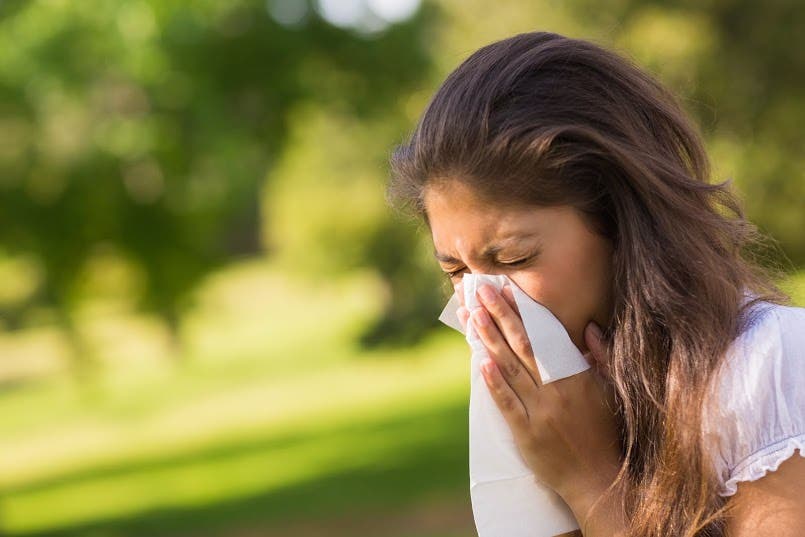
AUSTIN, TX -- Asthma attacks among children are most prevalent when schools reopen after a break and are most often triggered by cold viruses, researchers at the University of Texas at Austin have found.
To achieve the findings, researchers reviewed seven years’ worth of hospital data from the state’s largest metro areas, including Austin-Round Rock. From the data entries, researchers found 66,000 asthma-related hospitalizations recorded.
The upshot: Children with asthma exhibit the worst symptoms during the same periods of the year -- when school starts in the fall and after extended breaks such as Spring Break or summer vacation.
Find out what's happening in Austinfor free with the latest updates from Patch.
Prior to those findings, it was thought that environmental factors such as air quality in schools might be the culprits for the spike in asthma hospitalizations. But the new study confirms the primary trigger leading to children being hospitalizations is the common cold virus.
“This work can improve public health strategies to keep asthmatic children healthy, Lauren Myers, professor of integrative biology and statistics and data sciences at UT-Austin said. Myers was the senior author of the paper, published this week in the journal “Proceedings of the National Academy of Sciences.”
Find out what's happening in Austinfor free with the latest updates from Patch.
Worsening asthma symptoms -- dubbed “exacerbations” in the medical parlance -- result in millions of missed work and school days and $50 bills in direct healthcare costs in the United States every year.
“The school calendar predicts common cold transmission, and the common cold predicts asthma exacerbations,” says Meyers. “And this study provides a quantitative relationship between those things.”
What is the mechanism behind this relationship? The study’s authors speculate on that question.
When children are out of school, they tend to spend less time with their peers, and are thus exposed to fewer viruses. This causes their viral immunity to decrease.
But when they return to school, children are exposed to viruses at a higher rate, yielding the most susceptible time for asthma attacks.
In the course of their study, researchers also found that for adults, unlike children, the primary driver or asthma exacerbations is the prevalence of the flu virus.
The research team developed more accurate rates of transmission of cold viruses than those produced by previous studies. That data could shed light on the spread of the common cold, informing ways to protect people most vulnerable.
The paper’s first author is Rosalind Eggo, a former postdoctoral researcher at UT-Austin who is currently a research fellow at the London School of Hygiene & Tropical Medicine. She conducted the primary analyses in the study.
The paper’s other authors are James Scott, an associate professor of statistics and data sciences and business at UT Austin; and Alison Galvani, professor and director of the Center for Infectious Disease Modeling and Analysis at Yale School of Public Health.
This research was funded by the National Institute of General Medical Sciences.
Get more local news delivered straight to your inbox. Sign up for free Patch newsletters and alerts.