Community Corner
Flat Rack Containers: A Houston Business Guide to Shipping Heavy and Oversized Cargo
Houston manufacturers and exporters shipping oversized industrial equipment regularly rely on flat rack containers

This is a paid post contributed by a Patch Community Partner. The views expressed in this post are the author's own, and the information presented has not been verified by Patch.
Port Houston closed 2025 as the busiest year in its history, handling 54.5 million short tons of cargo across its public terminals. A share of that volume — oilfield modules, pressure vessels, fabricated steel, and industrial machinery — never touches a standard shipping container. It moves on flat racks, and for Houston businesses that deal in heavy or oversized freight, knowing how these units work is genuinely useful.
What Is a Flat Rack Container
A flat rack is a reinforced steel platform with fixed or collapsible end walls and no roof or side walls. Houston manufacturers and exporters shipping oversized industrial equipment regularly rely on flat rack containers to move loads that exceed the physical limits of a standard box. That open structure allows loading from the top, sides, or — with collapsible ends — from the front. Standard sizes follow ISO dimensions: 20-foot and 40-foot lengths, with a floor width of roughly 2.2 meters.
The Three Main Types
Each variant suits different cargo profiles:
- Fixed-end flat racks: End walls are permanent and rigid, making these the most structurally stable option for dense, heavy loads like compressors or pump skids.
- Collapsible flat racks: End walls fold down flat, allowing empty units to be stacked, which reduces repositioning costs for carriers and can translate to marginally better rates for shippers.
- Platform flat racks (also called bolsters): No end walls at all, suited for extremely long cargo like pipe bundles, wind turbine blades, or bridge sections that extend beyond the unit's length.
If you choose the right type upfront, you can avoid surprises at the terminal gate — and Port Houston's terminals inspect cargo securing before acceptance.
Why Houston Businesses Use Flat Racks
Houston sits at the center of U.S. energy production and industrial manufacturing. The industries concentrated along the Ship Channel and in surrounding areas — petrochemicals, oilfield services, steel fabrication, heavy construction — regularly produce cargo that standard containers simply cannot accommodate.
Industries That Rely on This Equipment
The cargo categories that move most frequently on flat racks from Greater Houston include:
- Oilfield and drilling equipment: Blowout preventers, wellhead assemblies, rotary tables, and mud pump components from manufacturers in the Energy Corridor and Midtown industrial districts.
- Pressure vessels and heat exchangers: Fabricated in facilities across Deer Park, Pasadena, and La Porte, these units routinely exceed standard container height limits.
- Power generation equipment: Transformers, generators, and turbine components heading to Latin American and Middle Eastern project sites.
- Construction and lifting machinery: Cranes, excavators, and other heavy equipment exported through Barbours Cut and Bayport terminals.
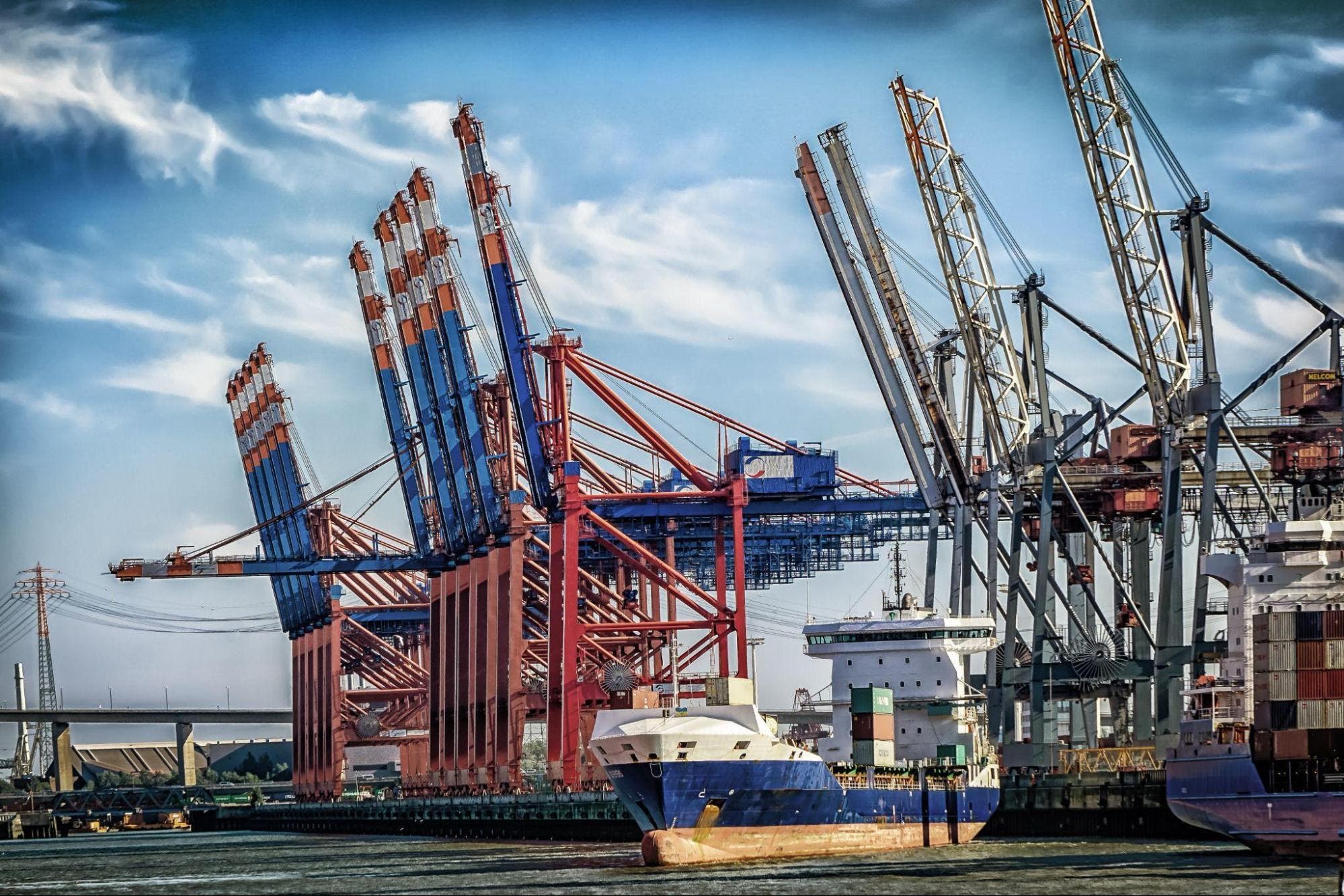
Port Houston's multi-purpose terminals handled over 4.1 million short tons of steel alone in 2025, much of it moving in and out on open-top and flat rack equipment.
What Shippers Get Wrong
Most flat rack shipping problems are avoidable with preparation. The open design creates flexibility, but it also transfers more responsibility to the shipper than a standard container move does.
Load Distribution and Securing
Total weight is only part of the equation. Flat racks have specific load-per-axle limits that vary by unit and carrier, and a load within gross weight limits can still be rejected if the weight is not distributed correctly across the floor. Beyond that, lashing and securing is the shipper's responsibility. Chains, straps, and dunnage must be in place before the cargo reaches the terminal — Port Houston terminals do not secure freight on arrival.
Out-of-Gauge Declarations
When cargo extends beyond the flat rack's own footprint in any direction — width, height, or length — it becomes out-of-gauge freight. This requires advance approval from the shipping line, special vessel stowage, and additional fees. Declaring this at booking rather than at the gate avoids delays and rate disputes.
Houston in 2026: What the Numbers Show
Port Houston opened 2026 with its busiest January on record for container volumes, with loaded exports rising 5% year over year. The Houston Ship Channel expansion — Project 11 — is 76% complete as of March 2026, and the port has already eliminated longstanding nighttime vessel movement restrictions. That infrastructure improvement directly benefits heavy and oversized cargo shippers, since larger vessels and more flexible scheduling expand options on Gulf-to-international routes.
The broader project cargo industry tracks Houston closely for exactly that reason. Breakbulk Americas 2026 takes place September 22 and 23 in Houston Breakbulk, bringing together project cargo professionals from across the Americas. It is the longest-running event of its kind in the region, and its continued home in Houston is a practical reflection of where this freight activity is concentrated.
For Houston businesses moving heavy or oversized cargo internationally, the infrastructure, the expertise, and the port access are all here. Getting the details right on flat rack selection, load securing, and out-of-gauge declarations is what separates a smooth shipment from an expensive delay at the gate.
This post is an advertorial piece contributed by a Patch Community Partner, a local brand partner. To learn more, click here.