Schools
Nobel Prize-Winning Researcher Began His Scientific Work At UT-Austin
Michael W. Young became laureate on Monday for his work on circadian rhythms which had its earliest stages at UT-Austin 40 years ago.


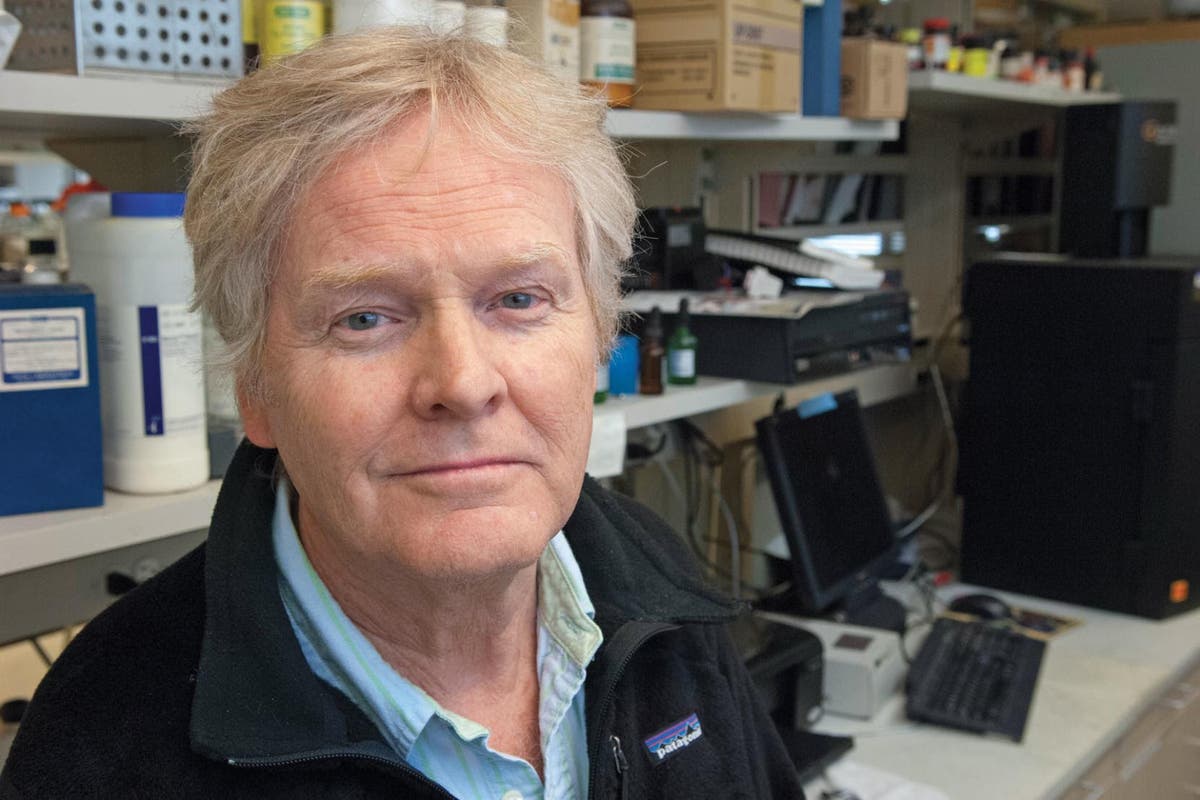
AUSTIN, TX — One of the scientists awarded the 2017 Nobel Prize in Physiology/Medicine on Monday began the roots of his research into circadian rhythms at the University of Texas at Austin, officials said.
As a researcher at UT-Austin examining genetics using fruit flies more than 40 years ago, Michael W. Young was awarded the Nobel Prize this week. The prestigious award recognized his pioneering research in the same insects he studied at UT that led to the identification of a gene that determines circadian rhythms in living beings.
Young received his B.A. in biology in 1971 and his Ph.D. in zoology in 1975. His dissertation on the genetics of the fruit fly (“Non-essential sequences, genes, and the polytene chromosome bands of Drosophila melanogaster”) provided an early window into his later work. He is now a professor and the vice president for academic affairs at The Rockefeller University.
Find out what's happening in North Austin-Pflugervillefor free with the latest updates from Patch.
On Monday, Young and two other researchers, Jeffrey C. Hall and Michael Rosbash, were declared the winners of the year’s top scientific prize in the life sciences. The three studied molecular mechanisms sometimes referred to as life’s “biological clock” — the rhythms driven from within the cells that are responsible for patterns experienced over the course of the day in plants and animals. In people, circadian rhythms help to regulate everything from sleep to metabolism to response times to body temperature, researchers noted.
"Dr. Michael Young's scientific discoveries have unlocked fundamental knowledge about life," UT-Austin President Gregory L. Fenves said. "And today, the world recognizes and celebrates his accomplishments. Everyone at UT is proud of Dr. Young and congratulates him as a Nobel Laureate.”
Find out what's happening in North Austin-Pflugervillefor free with the latest updates from Patch.
The Nobel awards are arguably the most prestigious prizes in the world and have been distributed for achievements in physics, chemistry, physiology or medicine, literature and peace since 1901 by the Nobel Foundation in Stockholm, Sweden. Young will receive a medal, cash prize and diploma at a ceremony in Stockholm in December.
This is the second Nobel Prize in Physiology or Medicine with a UT Austin connection that involves genetic research and, in particular, mutating genes in fruit flies, university officials noted. In 1946, the same prize was given to Hermann J. Muller, a former professor at the university. Ninety years ago, Muller discovered that X-rays could induce genetic mutations in fruit flies, a discovery that also applied to other types of life and that helped change our understanding of the way evolution occurs, officials said.
Research done by Young and his colleagues in fruit flies involved mutating a single gene called period, without which the flies lost their natural circadian rhythms, officials explained. After first singling out the gene in 1984, the team went on to identify a system of proteins linked to circadian rhythms and the role of period in determining how these proteins are built up or broken down over the course of a day, according to researchers.
“The discoveries made by our alumnus Michael Young have transformed what scientists and medical researchers know about the basic biological clock that dictates how living things — including people — function in rhythm with the rotation of our planet,” said Linda Hicke, dean of the College of Natural Sciences and a molecular bioscientist. “His legacy as a researcher has earned him this deserved prize. Dr. Young is a testament to the spirit of discovery that drives so many members of the Texas Science community.”
>>> Image: Michael W. Young (B.A., '71, Ph.D. '75) received the 2017 Nobel Prize for Physiology or Medicine for his research into circadian rhythms. Photo courtesy of The Rockefeller University
Get more local news delivered straight to your inbox. Sign up for free Patch newsletters and alerts.