Crime & Safety
Bus Driver Tried Evacuating Passengers Before Crash Killed Bastrop Senior Center Members: NTSB
Four seniors were killed while on a casino gambling tour in Biloxi, Miss., when their van got stuck on railroad tracks before being hit.


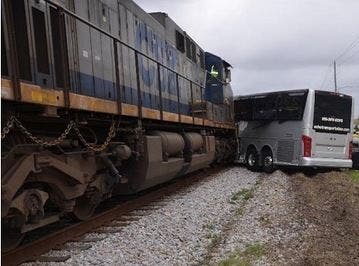
AUSTIN, TX — The National Transportation Safety Board on Monday released findings from a preliminary investigation into what may have caused a collision last month between a motor coach and a freight train that killed four members of s senior center in Mississippi.
The main findings: Alcohol or drug consumption played no role in the fatal crash, but more study related to railroad grade crossings, signage and maintenance are required before a final assessment is made, officials said.
Just after 2 p.m. on March 7, a Van Hool motor coach operated by Echo Transportation carrying 49 members of the Bastrop Senior Center located on the outskirts of Austin became lodged on railroad tracks in Biloxi, Miss. The van's occupants were on a casino gambling excursion when the collision occurred.
Find out what's happening in Across Americafor free with the latest updates from Patch.
Four people died, three on impact and a fourth after being hospitalized for injuries sustained. Another 39 passengers sustained serious to minor injuries, and six passengers were uninjured. The 60-year-old motor coach driver suffered serious injuries, and the train engineer was uninjured.
See also: Four Dead In Biloxi Crash Involving Bastrop Senior Center Bus Chartered From Texas
Find out what's happening in Across Americafor free with the latest updates from Patch.
The NTSB report yields a harrowing narrative, describing actions the driver of the motor coach took in a desperate attempt to dislodge the vehicle from the train tracks.
"The motor coach approached and stopped in advance of a high vertical profile (humped) highway-railroad grade crossing," the report reads in describing the scene. "The crossing was marked with 1) a crossbuck sign, 2) warning lights, 3) a gate, and 4) a low ground clearance grade crossing warning sign with a low ground clearance plaque."
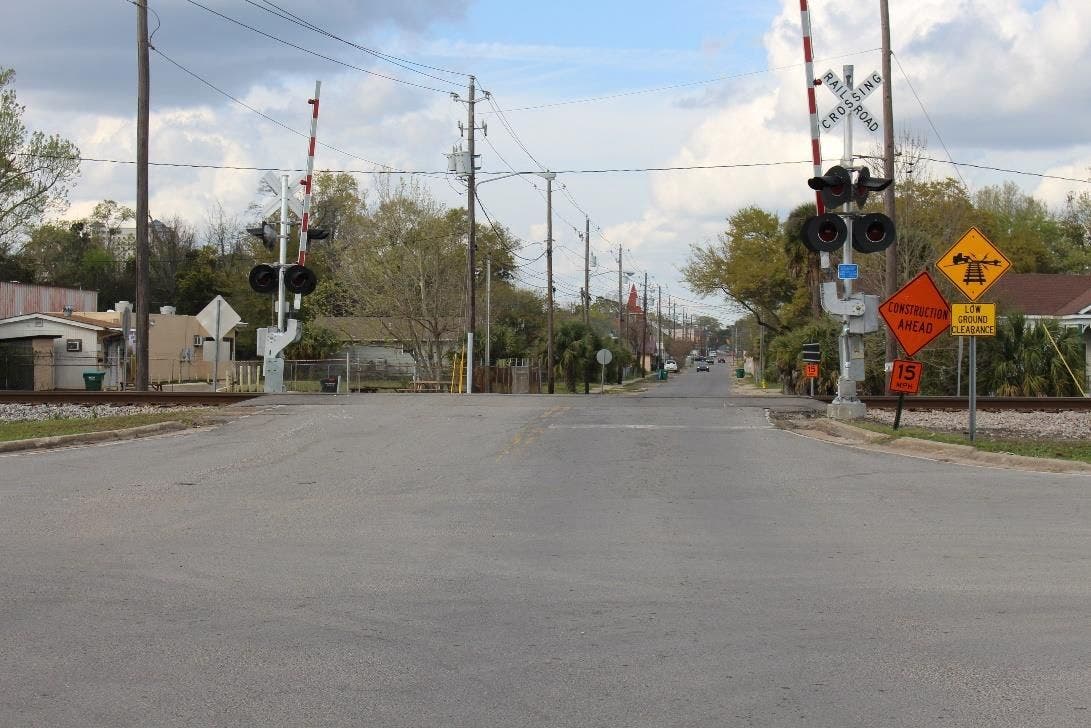
After trying to cross the tracks, the van got stuck, according to the report: "As the motor coach attempted to traverse the crossing, its frame became lodged on the tracks. The driver attempted to free the motor coach by trying to move the vehicle backward and forward. At the same time, an eastbound freight train operated by CSX Transportation—composed of three locomotives, 27 loaded cars, and 25 empty cars—was approaching the crossing at a recorded speed of 26 mph. Upon seeing the approaching train the motor coach driver opened the entry door and told the passengers to evacuate. The train engineer sounded the train horn and put the train into emergency braking about 510 feet west of the crossing. The train had decelerated to about 19 mph when it struck the left side of the motor coach, pushing it about 203 feet before coming to a stop with the motor coach still engaged to the lead locomotive."
Investigators noted the driver of the van that day opted to alter the tour's route, straying from that of other vans carrying tourists along Interstate 10. The routing change would prove fatal.
The tour’s normal trip routing followed a route along Interstate 10," the report reads. "On the day of the crash, the tour operator changed to a more scenic route along the coast, an alternate route that had been used in previous trips."
Per investigative protocol, the driver underwent toxicology testing, but was negative for alcohol and other drugs, according to the report. "The train crew was not tested nor were they required to be tested," investigators added.
NTSB investigators, along with Biloxi Police Department personnel, documented the mechanical condition of the motor coach, the crash location, and the physical characteristics of crossing. Additionally, the track and operational characteristics of the crossing signals were examined and documented.
But more analysis is required, NTSB officials reported, before a final report is issued.
"NTSB investigators continue to examine issues related to the railroad grade crossing signage and maintenance, as well as the crashworthiness of the motor coach. Investigators are also following up with additional passenger and witness interviews, and gathering factual information related to motor carrier operations, driver and train crew experience, hours of service, and trip routing."
>>> Photos of crash scene provided by NTSB
Get more local news delivered straight to your inbox. Sign up for free Patch newsletters and alerts.

![Taking Your Dog Everywhere Can Cross A Line Even Animal Lovers Draw [The Question]](https://patch.com/img/cdn20/shutterstock/790386/20261023/092028/styles/patch_image/public/shutterstock-2847904315___23090759374.jpg)