Business & Tech
Beer Bucks: How Much Moola Suds Bring To Every American Community
A new report shows how the beer industry impacts every local economy in America.


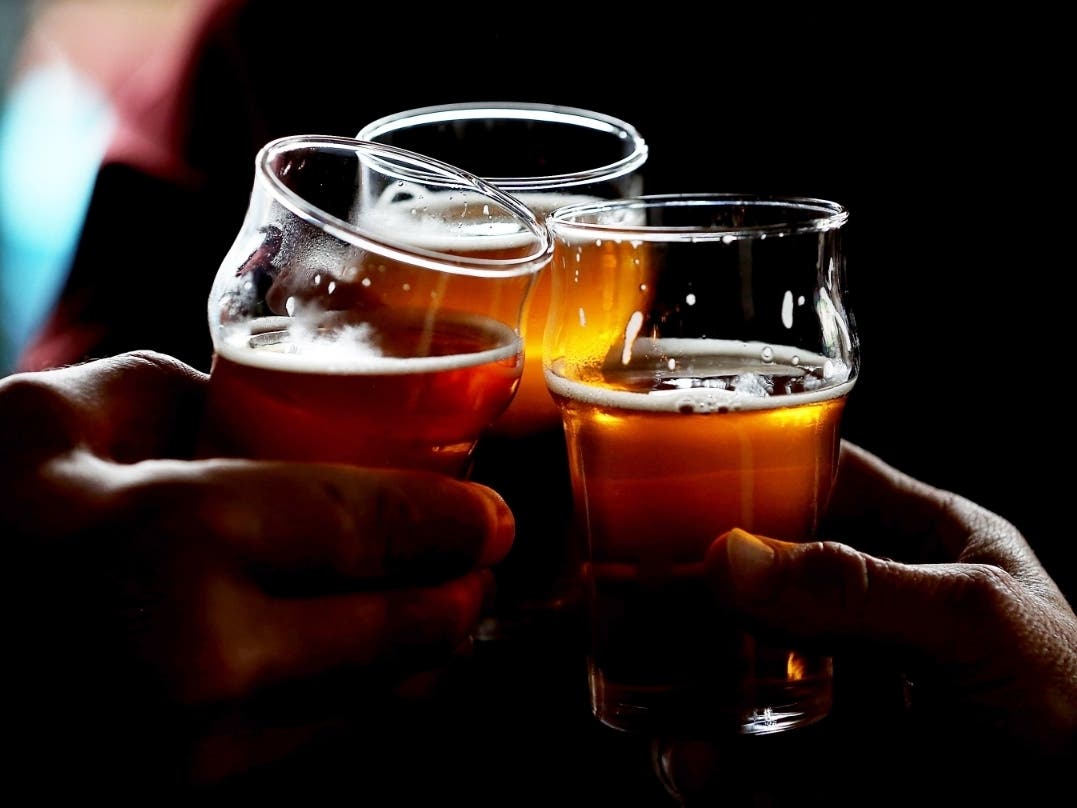
NEW YORK, NY — The long holiday weekend is officially in the rear-view mirror, but Memorial Day marked the unofficial start of summer, which means beer season. The sound of cold ones cracking open is cracking swooshing across the country.
Beer, though, isn't just satisfying for the soul; it's a local economy driver. And a new study by the Beer Institute and National Beer Wholesalers Association shows just how beneficial beer is to communities across the country.
These beer groups may have their reasons for touting the non-alcohol-related benefits of their product, but their conclusions are pretty sobering when it comes to flat cash. Craig Purser, president and CEO of the wholesalers association, told Patch this week that the beer industry is the "biggest little industry you’ve never paid any attention to."
Find out what's happening in Across Americafor free with the latest updates from Patch.
"It puts a lot of food on a lot of peoples' tables," he said. "In addition to providing great, liquid refreshment for all, it really is the economic engine that can."
And the facts seem to bear that out.
Find out what's happening in Across Americafor free with the latest updates from Patch.
Nationwide, the beer industry contributed $328.4 billion in economic output, the report found. That’s roughly the same amount as the GDP for all of Denmark. Beer also generated about 2.19 million jobs in the country, while production and sales created $58.6 billion in tax revenue.
But while it's useful to be able to talk about the beer industry from the national standpoint, the report delved into local data to better tell the whole story. The researchers also measured local economic output down to state, congressional district, state house district and state senate district. Total economic impact consisted of direct, supplier and induced output.
"Being able to dial that in and take it down to a very local level has great value," said Purser, adding that it allows people to be able to visit their local lawmakers" offices and be able to provide hard facts and figures on local jobs and other economic effects.
"It really makes a difference," he said. "Not all industries operate in such a local manner, and it has become a lot more local with the proliferation of breweries."
The direct economic impact category looked at people working directly in the industry, whether that’s in making beer or distributing it to retailers. Supplier looked at jobs that produce and sell beer-related goods, such as grocery store workers. Induced activity, meanwhile, involved what is known as the "multiplier effect." This looks at spending by workers in the beer industry and those of supplier companies whose jobs are dependent on beer sales and production. This includes housing, food and educational services.
The number of distribution jobs nationwide has increased by more than 19 percent over the last 10 years to nearly 141,600. Purser credited the increase in distributing jobs to the overall increase in number of breweries over the last three decades.
"Those jobs are helping to get beer made in Maine on the shelves in California," he said.
By contrast, despite the increase in breweries, the number of brewing jobs actually fell over the past two years. Brewers and beer importers have roughly 70,000 U.S. workers, the study found, and Purser said the slight decrease is likely because breweries are becoming more efficient.
"Frankly, in some cases, it’s those smaller breweries getting established," he said, adding that to get those products across the country, they use distributors.
The study noted there has been a shift away from cheaper beers to more expensive local and craft beers in bars and restaurants, as well as to imported beverages. Indeed, craft breweries have grown and now account for about 13 percent of the overall U.S. market. With the rise of craft beer, retail jobs overall fell slightly. While on-premise retail was up slightly, those gains were offset by losses in off-premise retailing, reflecting how more beer is being sold through
local brewery taprooms and restaurants.
"Consumers purchase smaller volumes of these higher priced beers than they do of less expensive domestic light lagers and pilsners, suggesting that fewer employees are required to serve beer in a given bar or tavern," the study said.
Even so, big brand names still have a stranglehold on the industry. Even with declines in recent years, Bud Light owned a 15.4 percent market share in 2017, double that of America’s second most popular beer, Coors Light.
Messages left with Anheuser-Busch, MillerCoors, Constellation Brands and D.G. Yuengling & Son weren’t immediately returned.
Get more local news delivered straight to your inbox. Sign up for free Patch newsletters and alerts.