Politics & Government
Electoral College Vote: Trump Elected President With Texas Vote, 7 Electors Defect (UPDATES)
A somewhat dramatic electoral college voted Monday to officially elect Donald Trump as the country's 45th president. (PHOTOS and VIDEOS)


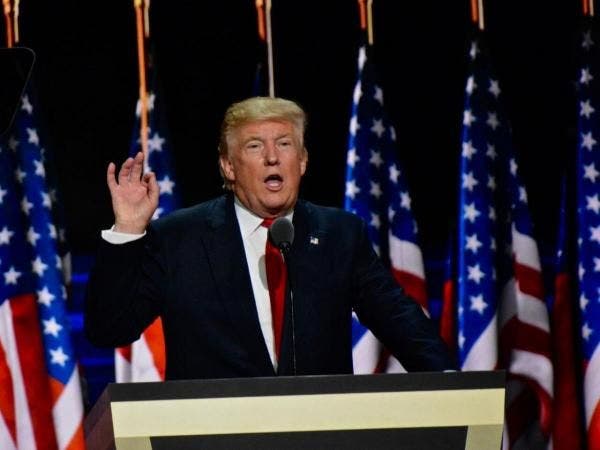
The electoral college voted Monday and with the increased scrutiny on the college in 2016, citizens watched closely to see if there would be a so-called revolt amongst the electors to keep Donald Trump from securing the presidency. Save for seven electors who successfully defected (more defected against Clinton than Trump), voting went smoothly and as expected with Trump officially elected the 45th president of the United States when the electors in Texas cast their vote, despite two of them changing their vote.
The six electors who defected came from Washington and Texas. In Washington, four of the state's 12 electors cast their vote for someone other than Hillary Clinton. Former Secretary of State Colin Powell bagged three of those votes and a fourth went to "Faith Bald Eagle." The Texas vote started with some drama, with four of the electors having to be replaced because they were not present, but the reason for their absence was nothing particularly dramatic. Once they were replaced, 36 of the state's votes went to Trump, one to libertarian Ron Paul and another to Ohio Gov. John Kasich. And just as voting was winding down, an elector in Hawaii changed his vote to Vermont Sen. Bernie Sanders. Mike Memoli, a journalist at the LA Times' D.C. Bureau, reported that the elector's vote would stand.
Hawaii election official tells me there's no statute requiring electors to follow statewide vote. Bernie's vote stands
— Mike Memoli (@mikememoli) December 20, 2016
Electors in at least three other states who tried to defect did not succeed. An elector in Maine who cast his vote for Sanders changed his vote back to Clinton. In Colorado, a faithless elector who voted for Kasich was rejected. Similarly, in Minnesota, a faithless elector who voted for Sanders was replaced.
Find out what's happening in Across Americafor free with the latest updates from Patch.
Here's the #faithlesselector ballot that was rejected in Colorado today, with @JohnKasich written in. It's against CO election law. #9NEWS pic.twitter.com/4tfa2DrC5G
— Brandon Rittiman (@BrandonRittiman) December 19, 2016
Protesters gathered across the country at various state capitols in an effort to persuade electors to stop Trump from winning the presidency, but they came to little use, except for making a statement. (Some photos and videos from the protests can be seen at the bottom of this post.)
With the Russian interference in the election, concerns about Trump's judgement and qualifications to be president and Clinton's massive 2.8 million popular vote lead, some electors had come under pressure to switch their vote. But despite these efforts to persuade electors, the electors had not said they would be voting differently than what was expected of them. One Texas elector, Chris Suprun, wrote an editorial in the New York Times saying he would not be voting for Trump. The Clinton campaign has put the blame on the Russians and FBI director James Comey, largely not taking any responsibility for the defeat.
Find out what's happening in Across Americafor free with the latest updates from Patch.
Electors are technically not bound by federal law to vote according to the popular vote in their states. However, some states have separate laws and other electors are bound by informal pledges to their parties. The so-called faithless electors may be charged a fine or even prosecuted. According to the final tally by The Associated Press, Trump won 304 votes, Clinton 227, three for Colin Powell, one for Ron Paul, one for John Kasich and one for Faith Bald Eagle.
Despite there being no large scale revolt, the seven defectors are notable. As The New York Times notes, this is the most number of electors who have ever voted for someone other than their party's nominee.
Trump sent out a tweet thanking his supporters.
We did it! Thank you to all of my great supporters, we just officially won the election (despite all of the distorted and inaccurate media).
— Donald J. Trump (@realDonaldTrump) December 19, 2016
Below is a live blog of interesting happenings during the electoral college vote:
Update: Texas electors have cast their vote, officially electing Donald Trump as the 45th president of the United States. After some drama, with four electors missing and having to be replaces in the lone star state, 36 of the state's 38 electors voted for Trump. One of the votes went to Ron Paul and another to John Kasich.
Electoral College in Texas: 36 of 38 votes to Donald Trump. One went to Ron Paul, one went to John Kasich.
— Anna M. Tinsley (@annatinsley) December 19, 2016
For more about the electoral college vote in Texas, Patch's Tony Cantu has the report out of Austin.
Update: More faithless electors are switching their votes but not against President-elect Donald Trump, as protesters would have hoped.
In Washington, four faithless electors went against the popular vote with three voting for Colin Powell and one for "Faith Spotted Eagle."
8 WA electors voted for state popular-vote winner Clinton; 3 for Colin Powell & 1 for Faith Spotted Eagle.
— Secretary of State (@secstatewa) December 19, 2016
In Colorado, one faithless elector voted for John Kasich. Brandon Rittiman, a political journalist in Colorado, reported that the elector, Michael Baca, will be referred to the Colorado Attorney General for possible prosecution.
NEW: @ColoSecofState will refer elector Micheal Baca's alleged breaking of state law to AG @CynthiaHCoffman for poss prosecution. #9news
— Brandon Rittiman (@BrandonRittiman) December 19, 2016
Any Democratic electors choosing to switch their votes from Hillary Clinton are not just engaging in tomfoolery. As the Guardian explains, the idea behind Democratic electors switching their votes is that by doing so they might be able to convince their Republican counterparts to compromise on an alternate candidate to stop a Trump presidency.
And in Texas, where Republican elector Chris Suprun declared he will not vote Trump, there was some drama. Four electors did not show up for roll call and had to be replaced. Once the state votes, Trump will have officially been elected the 45th president of the United States.
Four of the 38 Texas Electoral College voters are not present and will need to be replaced. The 34 present electors take Oath of Office.
— Anna M. Tinsley (@annatinsley) December 19, 2016
Texas has finally chosen its four replacement electors.
— Ed Morrissey (@EdMorrissey) December 19, 2016
According to the latest tally from The Associated Press, Trump has 256 of the 270 electoral votes needed to win the presidency while Hillary Clinton is at 139.
Update: So far the voting process is going as expected with no defectors save for one elector in Maine, who cast his vote for Bernie Sanders, and another in Minnesota. Despite protests, electors in states like Pennsylvania, Ohio and Wisconsin that helped put President-elect Donald Trump over the edge all voted as expected.
The "faithless elector" from Maine, David Bright, had this to say about why he chose Sanders.
Just in: Maine elector David Bright voting for @BernieSanders today. #mepolitics pic.twitter.com/AMPUkNog3e
— Michael Shepherd (@mikeshepherdME) December 19, 2016
Bright has since changed his vote back to Hillary Clinton, the Portland Press Herald reports.
The faithless elector from Minnesota, Muhammad Abdurrahman, was replaced. Associated Press journalist Kyle Potter reports Abdurrahman was a Sanders delegate to the Democratic National Convention.
Abdurrahman was a Bernie delegate to the DNC https://t.co/KafG1DZEiy
— Kyle Potter (@kpottermn) December 19, 2016
Former President Bill Clinton, an elector from New York, had this to say about his vote:
1. Bill Clinton, after casting his vote as a NY elector said it was bittersweet: "But I've never cast a vote I was prouder of ...
— Yancey Roy (@YanceyRoy) December 19, 2016
2. " ... she battle through that bogus e-mail deal ... and be vindicated in the end. She fought through everything ...
— Yancey Roy (@YanceyRoy) December 19, 2016
3. Bill Clinton: "She prevailed against it all. But in the end, we had the Russians and the FBI deal. She couldn’t prevail against that ...
— Yancey Roy (@YanceyRoy) December 19, 2016
According to the latest tally from The Associated Press, Trump has 134 of the 270 electoral votes required to formally win the presidency. Former Secretary of State Hillary Clinton has 43 electoral votes.
Electors in all 50 states and the District of Columbia gather Monday to officially seal the 2016 presidential election. In any other election year, this process would have gone along smoothly, but the Electoral College has come under the spotlight this year, with electors facing pressure to switch their votes from President-elect Donald Trump, who won 306 of the 538 electoral votes, safely above the margin of 270 needed to clinch the election.
The intelligence community in the United States is all but in agreement that Russia's intent behind interfering in the 2016 election was not just to diminish faith in the election process but to help Trump win the presidency. Since the information came to light, several electors, mostly Democrats, demanded intelligence briefings before they cast their votes, a move that was supported by John Podesta, who served as chairman for Hillary for America. That request was denied. "Saturday Night Live" even aired a skit titled "Hillary Actually," where Clinton is seen pleading with an elector to switch her vote.
And to further the ire of those calling on the electoral college to switch their votes, not just to Hillary Clinton but essentially to anyone else, is the fact that Clinton won the popular vote by a margin of more than 2.8 million votes.
As electors meet Monday at their respective state capitols, electoral votes in several states have already been cast. In a last-ditch effort to try to make electors switch their votes, protesters have gathered across the country at state capitols to make their case for why Trump should not be elected president.
Technically, electors are not bound to vote according to popular vote results in the state they represent. As the New York Times explains, some state laws bind electors to vote according to the popular vote tally, while others are bound by informal pledges to a party. Some state laws allow for so-called "faithless electors" to be fined or even disqualified and replaced.
Below are some scenes from the protests taking place, spread out over the country:
A look at the #ElectoralCollege protesters who've converged on the Pennsylvania Capitol Rotunda pic.twitter.com/0iNNDjTtyi
— Wallace McKelvey (@wjmckelvey) December 19, 2016
The scene on the Capitol steps in the morning the electoral college meets pic.twitter.com/LFCpKVCycu
— Jan Murphy (@JanMurphy) December 19, 2016
The scene outside state capital in Harrisburg, PA right now - among several chants, "we must reject the president-elect" @ABC @ABCPolitics pic.twitter.com/nV3pSwQyze
— Ali Dukakis (@ajdukakis) December 19, 2016
Albany electoral college protest pic.twitter.com/qSpY0MDBlf
— Aaron Bentley (@BentleyAa) December 19, 2016
People already starting to gather to protest at Capitol #CBSAustin pic.twitter.com/GiQaiCSy1F
— Juliette Dryer (@JulietteDryer) December 19, 2016
Protestors outside the electoral vote in Indiana. pic.twitter.com/gBlSz2x3xL
— Becca Costello (@becca_costello) December 19, 2016
At Kentucky's State Capitol today, protesters hope to persuade U.S. electors not to cast their ballots for Trump. pic.twitter.com/YTz5CA3jJ3
— Morgan Watkins (@morganwatkins26) December 19, 2016
Protestors in Raleigh are asking NC's 15 electors not to vote for @realDonaldTrump today. They cast ballots at noon pic.twitter.com/V0ywVtcCoJ
— Briana Conner (@BrianaReports) December 19, 2016
About 20 protesters (from as far away as Pensacola & Tampa) huddled in rain to urge #Florida electors to vote against Trump. pic.twitter.com/UmHNIab1Zc
— Kristen M. Clark (@ByKristenMClark) December 19, 2016
Protestors moving inside out of rain/chill. Signs read "Save us" & "Anybody but Trump." pic.twitter.com/MxIN46z0yC
— Kristen M. Clark (@ByKristenMClark) December 19, 2016
Trump protesters are starting to march around the state Capitol two hours for the state's electors will meet in the Senate chambers. pic.twitter.com/yQEGWFGdNi
— Chad Livengood (@ChadLivengood) December 19, 2016
"No justice, no peace," protestors shouting @wachfox pic.twitter.com/UPiM5qcw2f
— Shelli Adamczyk (@ShelliAdamczyk) December 19, 2016
Unusually big crowd at the CT State Capitol for #ElectoralCollege vote. Dozens of protesters outside Capitol too pic.twitter.com/kVSnEN3Cxg
— John Craven (@johncraven1) December 19, 2016
Patch will update this report.
Image Credit: Rick Uldricks/Patch
Get more local news delivered straight to your inbox. Sign up for free Patch newsletters and alerts.