Weather
Gas Prices Rising Thanks To Harvey, Says AAA
Gas prices rose 4 cents last week, one of the largest one-week national gas price surges seen this summer.


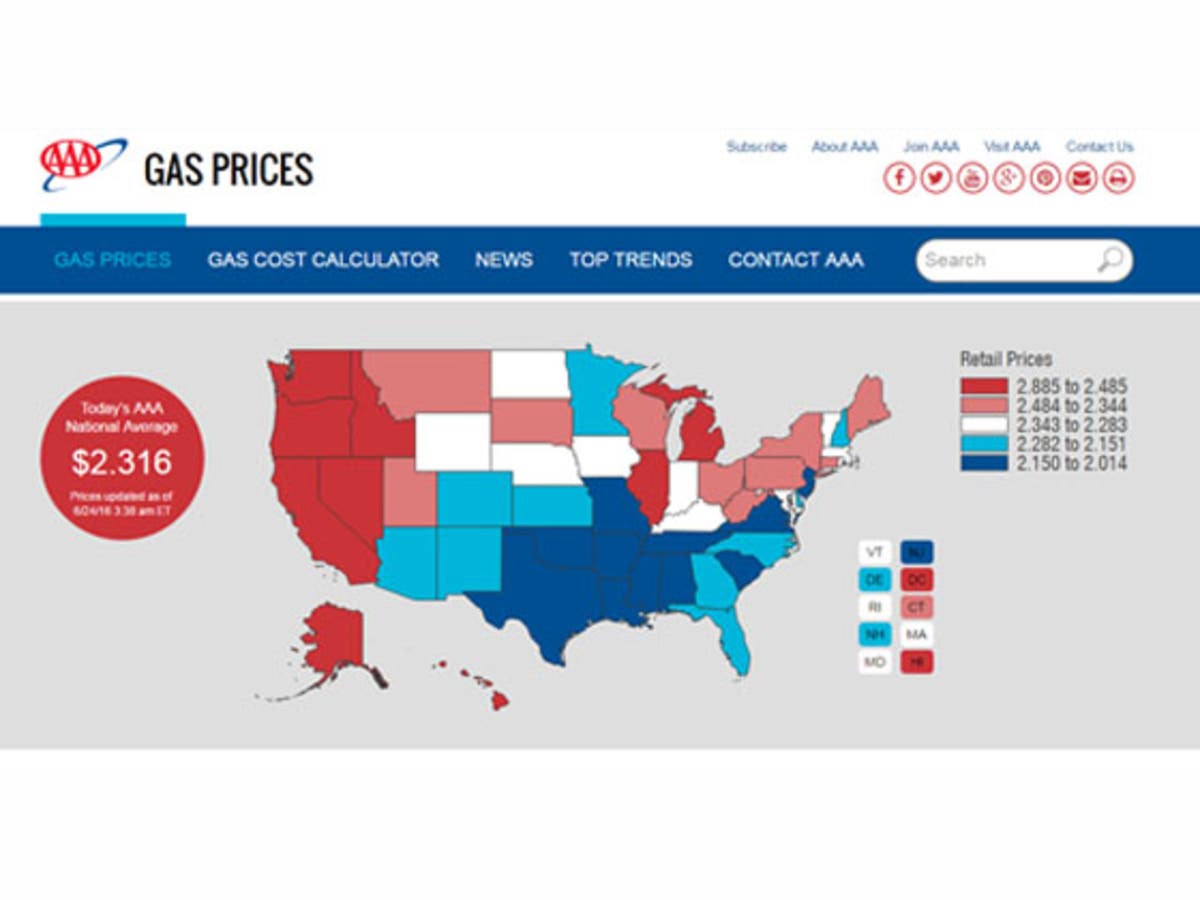
While Hurricane Harvey was bearing down on Texas and the Gulf Coast, drivers looking to fill up their tanks were greeted at the gas station with one of the largest one-week surges in gas prices this summer, according to AAA. Prices increased 4 cents to a nationwide average of $2.37 per gallon.
"No doubt, Harvey has impacted operations and access to refineries in the Gulf Coast," said Jeanette Casselano, AAA spokeswoman. "Despite the country's overall oil and gasoline inventories being at or above five-year highs, until there is clear picture of damage and an idea when refineries can return to full operational status, gas prices will continue to increase.
"However a clear understanding of overall damage at the refineries is unknown."
Find out what's happening in Across Americafor free with the latest updates from Patch.
Eight refineries were forced offline because of the storm, as Patch previously reported. They produce about one-third of the nation's fuel supply.
How Might Hurricane Harvey Impact The Oil Industry And Environment?
Find out what's happening in Across Americafor free with the latest updates from Patch.
Casselano says that largest hikes were seen in:
- Indiana, 11 cents
- Ohio, 9 cents
- Florida and Michigan, 7 cents
- Illinois and Washington, 6 cents
- Georgia and South Carolina, 5 cents
- Washington D.C. and Texas, 4 cents
Ironically, while South Carolina had one of the largest hikes, it is still one of the cheapest markets with an average price per gallon of $2.11.
The AAA says that the nation's other cheapest average gas prices can be found in:
- Alabama and Arkansas, $2.12
- Oklahoma, $2.13
- Missouri, $2.14
- Virginia, $2.15
- Louisiana and Tennessee, $2.16
- Texas, $2.17
The nation's most expensive gas can be found in Hawaii, where the average is $3.09 per gallon, followed closely by California at $2.99 per gallon.
AAA says that as news of the impending storm first developed last week, prices actually began to fall because less oil is generally consumed when an area is hit by catastrophic flooding.
That leads to refineries shutting down until the storm passes and damage assessments can be done. That then leads to prices rising.
"All of this uncertainty has made the market jittery," the AAA said in a release."It is still too soon for the market to know how badly damaged energy infrastructure is from the storm, but the coming days will offer more insight into how long recovery and restoration may take.
"Demand shifts based on the storm and countermeasures the market will take to meet a new supply and demand landscape will also be evaluated."
Casselano said the organization would rather have seen prices remain in check until the crisis passes.
"As in any national or local state of emergency, AAA expects gas prices to be held in check up and down the gasoline supply chain, including prices set by refiners, distributors and dealers unless there is a clearly justifiable reason for an increase,” she said.
Graphic via AAA
Get more local news delivered straight to your inbox. Sign up for free Patch newsletters and alerts.