Community Corner
Nobel Physics Prize: US Trio Wins For Detecting Gravitational Waves
The winners' work meant "we can study processes which were completely impossible, out of reach to us in the past."

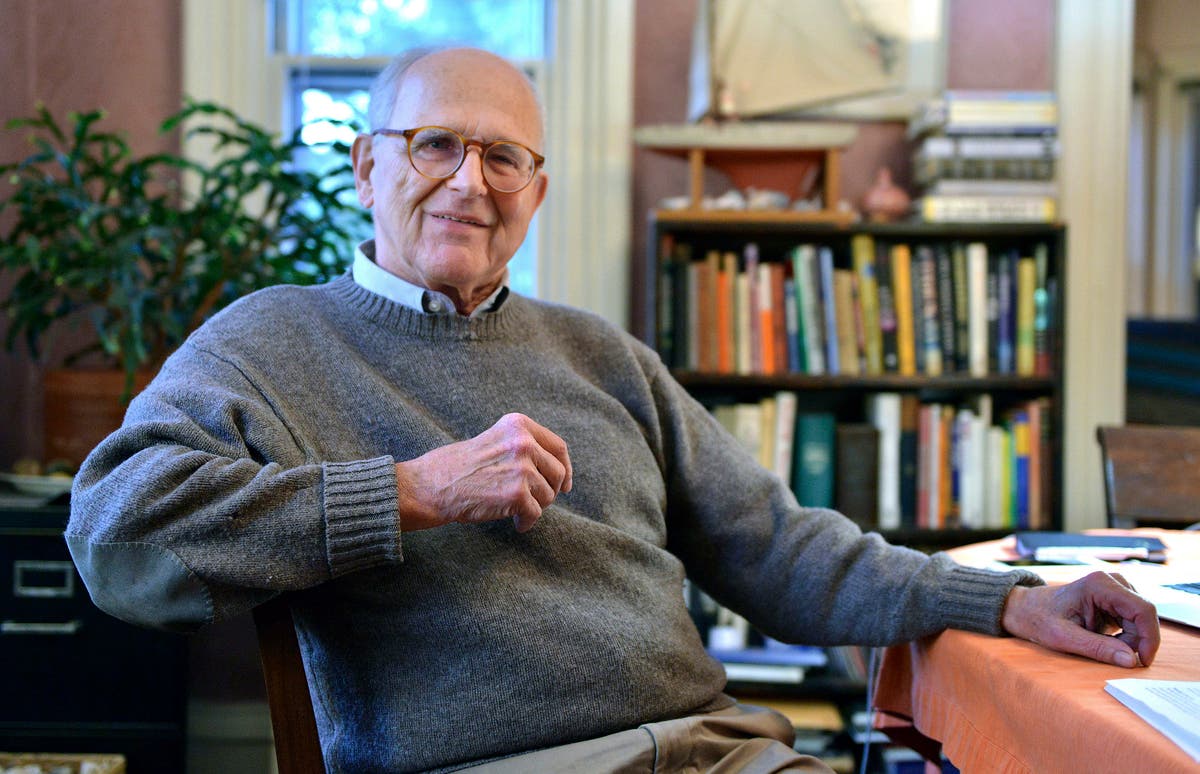
Rainer Weiss of the Massachusetts Institute of Technology and Barry Barish and Kip Thorne of the California Institute of Technology won a Nobel Physics Prize on Tuesday for their roles in detecting faint ripples flying through the universe — gravitational waves that Albert Einstein predicted a century ago. The three were key to the first observation of gravitational waves in September 2015.
The groundbreaking find was announced several months later and became a sensation among scientists and the general public. The scientists were recognized for a combination of highly advanced theory and ingenious equipment design.
"It's a win for the human race as a whole. These gravitational waves will be powerful ways for the human race to explore the universe," said Thorne, speaking by phone with The Associated Press from California shortly after the announcement. (For more information on the gravitational waves and other Across America stories, subscribe to Patch to receive daily newsletters and breaking news alerts. If you have an iPhone, click here to get the free Patch iPhone app.)
Find out what's happening in Across Americafor free with the latest updates from Patch.
Watch: Nobel Prize Awarded For Historic Detection Of Gravitational Waves
Ariel Goobar, of Sweden's Royal Swedish Academy of Sciences, said the winners' work meant "we can study processes which were completely impossible, out of reach to us in the past."
Find out what's happening in Across Americafor free with the latest updates from Patch.
"The best comparison is when Galileo discovered the telescope, which allowed us to see that Jupiter had moons and all of a sudden we discovered that the universe was much vaster than we used to think about," Goobar said.
With the technology that the three developed, "We may even see entirely new objects that we haven't even imagined yet," said Patrick Sutton, an astronomer at Cardiff University in Wales.
Weiss, in a phone call with the announcement news conference at the Swedish academy, said, "I view this more as a thing that recognizes the work of a thousand people."
Gravitational waves are extremely faint ripples in the fabric of space and time, generated by some of the most violent events in the universe.
The waves detected by the laureates came from the collision of two black holes some 1.3 billion light-years away. A light-year is about 5.88 trillion miles.
The waves were predicted by Einstein a century ago as part of his theory of general relativity. General relativity says that gravity is caused by heavy objects bending space-time, which itself is the four-dimensional way that astronomers see the universe.
The prize is "a win for Einstein, and a very big one," Barish told the AP.
The German-born Weiss was awarded half of the 9 million kronor ($1.1 million) prize amount, and Thorne and Barish will split the other half.
Weiss in the 1970s designed a laser-based device that would detect gravitational waves. He, Thorne and Barish "ensured that four decades of effort led to gravitational waves finally being observed," the Nobel announcement said.
The laser device, called an interferometer, must be both exquisitely precise and extremely stable. "The beam must hit the mirrors precisely. They should hardly shake at all, not even when leaves fall from nearby trees," according to a prize background paper.
The announcement said Einstein was convinced that gravitational waves could never be measured. The laureates used laser devices "to measure a change thousands of times smaller than an atomic nucleus."
In a moment of poetry aimed at making the distant and infinitesimal phenomenon understandable to non-experts, the academy announcement said gravitational waves "are always created when a mass accelerates, like when an ice-skater pirouettes or a pair of black holes rotate around each other."
For the past 25 years, the physics prize has been shared among multiple winners.
Last year's prize went to three British-born researchers who applied the mathematical discipline of topology to help understand the workings of exotic matter such as superconductors and superfluids.
By JIM HEINTZ and DAVID KEYTON, Associated Press
Photo credit:Josh Reynolds/Associated Press