Crime & Safety
Texas Hot Air Balloon Crash: Early Evidence Suggests Balloon Hit Utility Wire
Investigators with the NTSB begin review to find out what caused the balloon to go down, killing all 16 people on board.


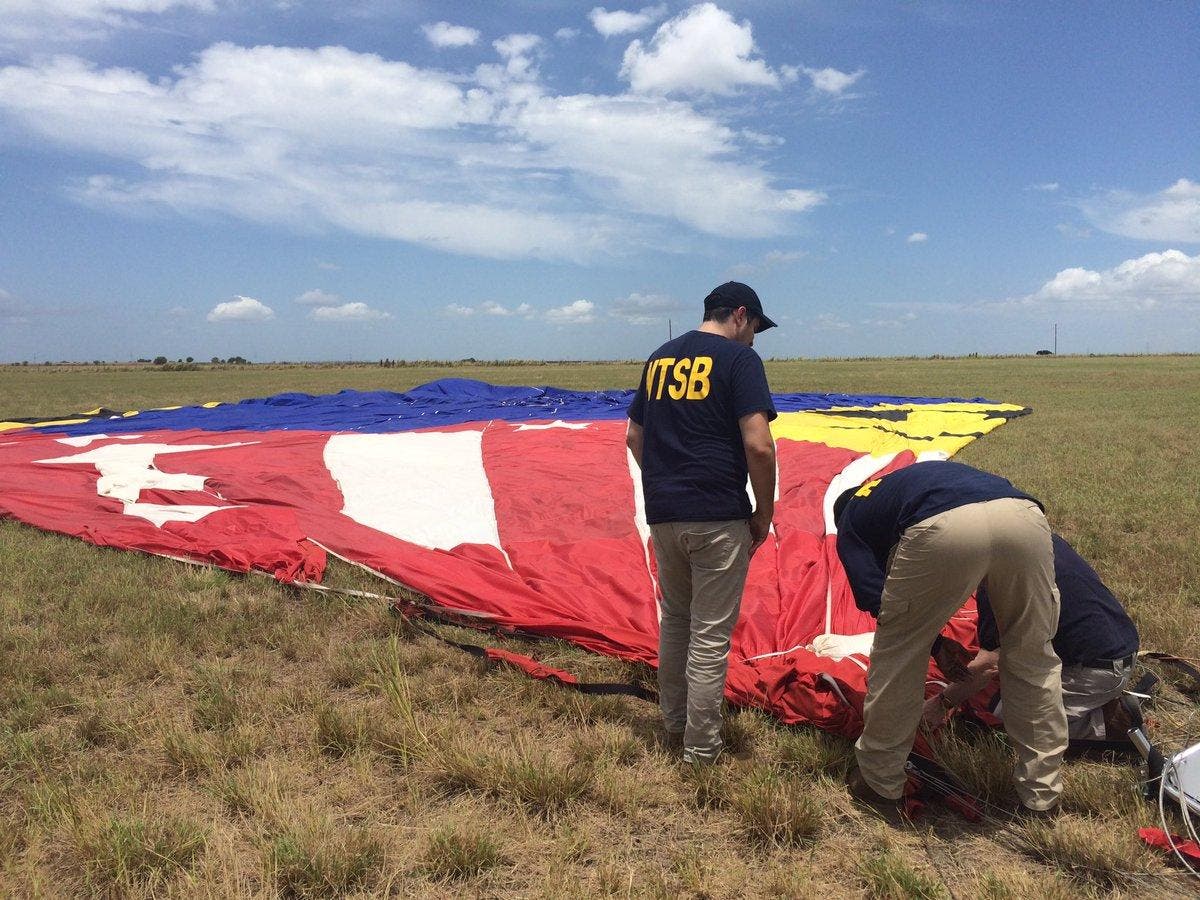
LOCKHART, TX — In the deadly aftermath of a hot air balloon crash in Central Texas that killed all 16 people on board, investigators with the National Transportation Safety Board have few answers as to what went wrong and caused the balloon to go down and crash near power lines.
The group riding in the balloon Sunday met at a San Marcos Walmart parking lot and then traveled together in a van to the launch site. In a press conference Sunday afternoon, NTSB board member Robert Sumwalt offered his condolences to the victims of the crash. The full go team from the NTSB landed in Austin Sunday morning after a flight delay in Washington, D.C., and then made its way to the crash site. The team is tasked with investigating major accidents, able to quickly assemble needed technical expertise.
Sumwalt told reporters investigators were there to find out what happened so they can prevent such a tragedy from ever happening again. He provided a brief overview of the steps the investigation would take, saying the three elements investigators will look at are "human, machine and environment" to try and understand what contributed to the crash. A fire investigator has also been brought in to examine the fire element of the crash.
Find out what's happening in Across Americafor free with the latest updates from Patch.
SEE ALSO:
The balloon itself is a "kubicek" model bb85z that is manufactured in the Czech Republic and was operated by the Heart of Texas Hot Air Balloon rides. The balloon had four propane tanks and three burners.
Find out what's happening in Across Americafor free with the latest updates from Patch.
Scheduled to take off just before sunrise at 6:49 a.m., the balloon had a delayed liftoff. Sumwalt said investigators would be looking into why the balloon didn't depart on time. The crash site is approximately 8 miles northeast from where the balloon took off, and it appeared that it crashed directly into the power line and not into the tower.
The first power line rip was reported at 7:42 a.m. by the electric company and the first 911 call came in roughly a minute later.
Investigators have recovered 14 personal electronic devices, including cameras and cellphones, from the scene that will be sent to the NTSB laboratory to be analyzed.
Sumwalt said investigators would be looking into the pilot's history and have requested all his records from the FAA. The pilot had a commercial pilot certificate with a balloon rating and was not authorized for any other kind of flight. Sumwalt was unable to answer a reporter's question about whether the pilot had a criminal history, saying it was being looked into.
The NTSB will also be reviewing the company's procedures and maintenance of the balloon itself. Through the investigation, officials hope to understand whether the balloon caught on fire before or after hitting the power lines.
Right now the agency is focused on documenting the wreckage and capturing perishable evidence like interviews with witnesses. Sumwalt urged any witnesses to come forward and provided the following email address for any potential witnesses - witness@ntsb.gov.
About two years ago, the NTSB urged the FAA to tighten regulations of hot air balloon operators. However, it remains unclear whether any of the regulations would have prevented Saturday's deadly crash.
The names of the victims have not yet been released.
Lockhart is located less than 30 miles south of Austin and 70 miles northeast of San Antonio.
Image via NTSB
Get more local news delivered straight to your inbox. Sign up for free Patch newsletters and alerts.