Politics & Government
Trump Defends Order On Immigrants, Refugees, Says It Is 'Not A Muslim Ban'
President Trump issued a statement Sunday after facing intense backlash over an executive order banning some immigrants and refugees.


Facing a growing backlash over an executive order that temporarily bans immigrants from several countries from entering the United States, President Donald Trump issued a statement Sunday to repudiate claims that an executive order signed on Friday was in any way a "Muslim Ban."
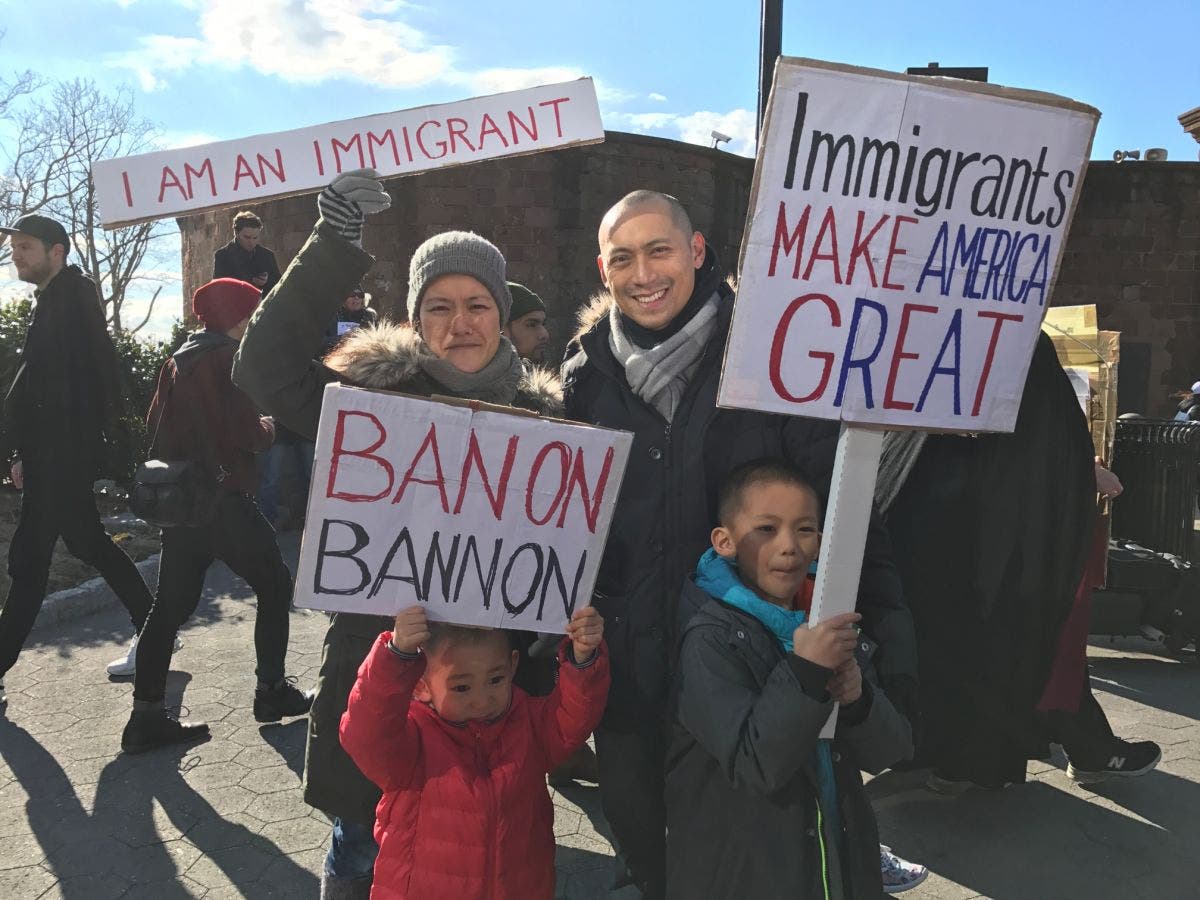
Protests against the ban, meanwhile, were held at international airports, parks and streets across the country as handfuls of immigrants with valid visas remained detained and in legal limbo. Like many of Trump's executive orders, the immigrant ban was signed with no immediate warning, causing concern within the GOP and seemingly within his own administration.
Trump said in a statement that the United States would continue to show compassion to those fleeing oppression but would do so while protecting its own citizens and borders.
Find out what's happening in Across Americafor free with the latest updates from Patch.
While the statement was measured, the president attacked GOP senators John McCain and Lindsey Graham, who issued a joint statement earlier in the day saying the executive order may do more to help terrorist recruitment than improve security.
"The joint statement of former presidential candidates John McCain & Lindsey Graham is wrong - they are sadly weak on immigration," Trump tweeted.
Find out what's happening in Across Americafor free with the latest updates from Patch.
In a follow-up Tweet, Trump said the two should focus on ISIS, illegal immigration and border security instead of always "looking to start World War III."
In his official statement, Trump said his policy was similar to what President Obama did in 2011 when he banned visas for refugees from Iraq for six months. He also noted that the seven countries included in the ban, Iraq, Iran, Somalia, Sudan, Libya, Yemen and Sudan, had previously been identified by the Obama administration as sources of terror.
An exclusive report by ABC News in 2013 quoted federal officials saying the State Department stopped processing Iraq refugees for six months in 2011, a move prompted by the discovery of two apparent terrorists living in Kentucky as refugees. That halt in admission, though, was limited.
Trump's executive order is a lot more far-reaching than that, barring even people with green cards or valid visas from entering the country.
However, White House Chief of Staff Reince Priebus said on Sunday the order would not apply to green card holders. Senate Minority Leader Chuck Schumer, a Democrat from New York, similarly said that Department of Homeland Security Secretary John Kelly had told him that the order would no longer apply to green card holders.
A Department of Homeland Security press release from 2016 announces the addition of Libya, Somalia and Yemen as countries of concern. The department said it would limit Visa Waiver Program travel for certain individuals who have traveled to these countries. Countries already included on the list included Iran, Iraq Sudan and Syria.
"To be clear, this is not a Muslim ban, as the media is falsely reporting. This is not about religion - this is about terror and keeping our country safe," Trump said in the statement. "There are over 40 different countries worldwide that are majority Muslim that are not affected by this order. We will again be issuing visas to all countries once we are sure we have reviewed and implemented the most secure policies over the next 90 days."
The order signed Friday bans nationals from seven countries from entering the United States for 90 days. Trump's order also bans the resettlement of refugees for four months and indefinitely suspends the entry of Syrian refugees.
"I have tremendous feeling for the people involved in this horrific humanitarian crisis in Syria," Trump said in the statement. "My first priority will always be to protect and serve our country, but as President I will find ways to help all those who are suffering."
When signing the order, Trump said he was introducing "new vetting measures" aimed at keeping out "radical Islamic terrorists."
The effects of the order were felt immediately. Those traveling to the United States on Saturday who were covered by the ban found themselves detained at airports or were not allowed to board flights. An emergency stay issued by a federal judge in Brooklyn on Saturday prevents the government from returning anyone being detained at airports to their home countries.
The ruling does not allow those detained at airports and those in transit Saturday to enter or re-enter the United States. The judge also ordered the federal government to turn over a list of everyone currently being detained.
She did not rule on the constitutionality of Trump's order. Similar rulings have since been made by judges in three other states.
Among the many impacted by the tumult include: an Iraqi man who worked as a translator for the U.S. military for 10 years and had been granted a visa; another Iraqi man trying to join his wife and son who are both legal permanent residents in Texas; an Iranian student whose parents were on their way to meet her and a Sudanese doctor at Cleveland Clinic who was denied entry into the country.
It remains unclear how many people are still being detained at various airports. Sen. Schumer said Secretary Kelly told him that 42 people being detained fit under the court order issued Saturday and would be processed and allowed entry.
Meanwhile, protesters gathered at airports across the country demanding that anyone who was being detained be released. The crowds chanted "USA! USA!" and sang Woody Guthrie's "This Land Is Your Land" as detainees were released. People showed up in the hundreds and thousands at airports in New York City, Chicago, Virginia, California and Washington standing in solidarity with the detainees.
The Department of Homeland Security issued a statement saying it would comply with judicial orders but would also continue to implement Trump's executive order.
Image Credit: Marc Torrence/Patch
Get more local news delivered straight to your inbox. Sign up for free Patch newsletters and alerts.