Politics & Government
U.S. Department of Justice Officials Sending Personnel To Texas In Safeguarding Voter Integrity
In the wake of the Texas Voter ID law being ruled unconstitutional, DOJ workers will be sent to Dallas, Harris and Waller counties.


AUSTIN, TX -- U.S. Department of Justice officials announced Monday they would be sending personnel to monitor elections in the Texas counties of Dallas, Harris and Waller counties for the general election.
While such monitoring is a typical move by the Justice Department to safeguard the integrity of elections, the move comes in the wake of Texas civil rights advocates' reports of voter intimidation in various parts of Texas. Voters complained that some poll workers weren't sharing accurate or complete polling information in the wake of a modified Texas Voter ID law that replaced a previous one passed in 2011 that was deemed unconstitutional by a federal court earlier this year.
“The bedrock of our democracy is the right to vote, and the Department of Justice works tirelessly to uphold that right not only on Election Day, but every day,” U.S. Attorney General Loretta Lynch said in a prepared statement. “On Election Day itself, lawyers in the Civil Rights Division’s Voting Section will staff a hotline starting in the early hours of the morning, and just as we have sent election monitors in prior elections, we will continue to have a robust election monitors program in place on election day."
Find out what's happening in Across Americafor free with the latest updates from Patch.
Yet Texas isn't the only state where Election Day monitors will be sent. The U.S. DOJ's Vicil Rights Division will deploy more than 500 of its personnel to 67 jurisdictions throughout 28 states to monitor polling places Tuesday, officials said.
No specifics were offered as to the places targeted for monitoring, save to say that the focus will be at sites where "..."there are concerns about racial discrimination in the voting process; other times monitoring is done to ensure compliance with bilingual election procedures."
Find out what's happening in Across Americafor free with the latest updates from Patch.
A federal appeals court in July ruled that the 2011 Texas Voter ID law was in violation of the Voting Rights Act, and effectively discriminated against minorities. Since that time, Texas was ordered to implement a more relaxed set of standards to allow those without a photo ID to vote through the use of supplemental documentation — paycheck stubs, utility bills, bank statements and the like — to cast a ballot.
As part of that court order, Texas was forced to produce new educational literature and television and radio spots outlining the new array of acceptable documents in order to vote. Still, there has been a smattering of complaints from voters saying they were either turned away or given a hard time by poll workers for lack of a photo ID.
"As always, our personnel will perform these duties impartially, with one goal in mind: to see to it that every eligible voter can participate in our elections to the full extent that federal law provides," DOJ officials wrote in their announcement. "The department is deeply committed to the fair and unbiased application of our voting rights laws and we will work tirelessly to ensure that every eligible person that wants to do so is able to cast a ballot.”
DOJ officials will focus on a number of areas related to voting, key among them compliance with Voting Rights Act guidelines, officials said.
"The department will gather information on, among other things, whether voters are subject to different voting qualifications or procedures on the basis of race, color or membership in a language minority group; whether jurisdictions are complying with the minority language provisions of the Voting Rights Act; whether jurisdictions permit voters to receive assistance by a person of his or her choice if the voter is blind, has a disability or is unable to read or write; whether jurisdictions provide polling locations and voting systems allowing voters with disabilities to cast a private and independent ballot; whether jurisdictions comply with the voter registration list requirements of the National Voter Registration Act; and whether jurisdictions comply with the provisional ballot requirements of the Help America Vote Act."
To further assist in such inquiries, the DOJ will deploy Spanish-speaking monitors as well as those fluent in Asian and Native American languages, officials said. Contact with local election officials will be maintained throughout the process, officials added.
During their monitoring, Civil Rights Division staff members will be available by telephone to receive complaints related to possible violations of the federal voting rights laws, official said. The toll-free number to call with complaints is 1-800-253-3931 or 202-307-2767 or TTY 202-305-0082). Voters also can report complaints by fax to 202-307-3961, by email to voting.section@usdoj.gov 0r via the department’s website: www.justice.gov/crt/votercomplaint.
The 67 jurisdictions to which DOJ personnel will be sent are:
- Bethel Census Area, Alaska;
- Dillingham Census Area, Alaska;
- Kusilvak Census Area, Alaska;
- Yukon-Koyukuk Census Area, Alaska;
- Maricopa County, Arizona;
- Navajo County, Arizona;
- Alameda County, California;
- Napa County, California;
- Siskiyou County, California;
- East Hartford, Connecticut;
- Farmington, Connecticut;
- Hartford, Connecticut;
- Middletown, Connecticut;
- New Britain, Connecticut;
- Newington, Connecticut;
- West Hartford, Connecticut;
- Hillsborough County, Florida;
- Lee County, Florida;
- Miami-Dade County, Florida;
- Orange County, Florida;
- Palm Beach County, Florida;
- Fulton County, Georgia;
- Gwinnett County, Georgia;
- Hancock County, Georgia;
- Chicago, Illinois;
- Cook County, Illinois;
- Finney County, Kansas;
- Orleans Parish, Louisiana;
- Quincy, Massachusetts;
- Dearborn Heights, Michigan;
- Detroit, Michigan;
- Hamtramck, Michigan;
- St. Louis, Missouri;
- Douglas County, Nebraska;
- Mineral County, Nevada;
- Washoe County, Nevada;
- Middlesex County, New Jersey;
- Cibola County, New Mexico;
- Kings County, New York;
- Orange County, New York;
- Queens County, New York;
- Cumberland County, North Carolina;
- Forsyth County, North Carolina;
- Mecklenburg County, North Carolina;
- Robeson County, North Carolina;
- Wake County, North Carolina;
- Benson County, North Dakota;
- Rolette County, North Dakota;
- Cuyahoga County, Ohio;
- Franklin County, Ohio;
- Hamilton County, Ohio;
- Allegheny County, Pennsylvania;
- Lehigh County, Pennsylvania;
- Philadelphia County, Pennsylvania;
- Pawtucket, Rhode Island;
- Providence, Rhode Island;
- Bennett County, South Dakota;
- Jackson County, South Dakota;
- Oglala Lakota County, South Dakota;
- Shelby County, Tennessee;
- Dallas County, Texas;
- Harris County, Texas;
- Waller County, Texas;
- San Juan County, Utah;
- Fairfax County, Virginia;
- Prince William County, Virginia, and
- Milwaukee, Wisconsin.
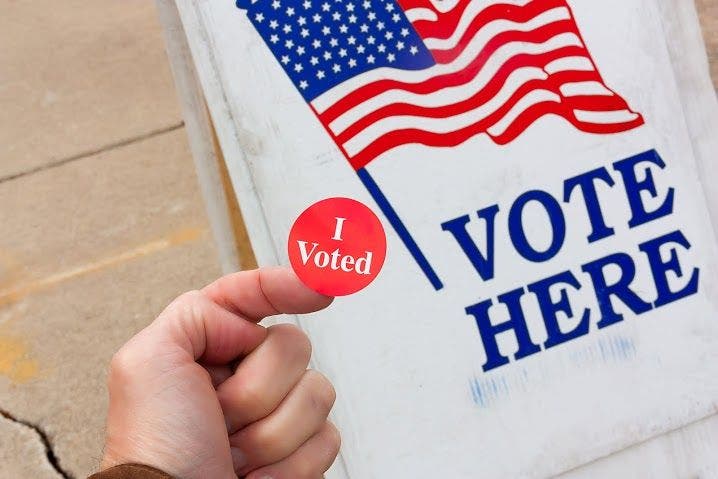
>>> Image via Shutterstock
Get more local news delivered straight to your inbox. Sign up for free Patch newsletters and alerts.