Community Corner
Veteran Suicide: One Woman Shares Her Story Hoping To Save A Life
Carla Almaraz was in the Air Force. Since then, she has has had three bouts with suicidal depression.


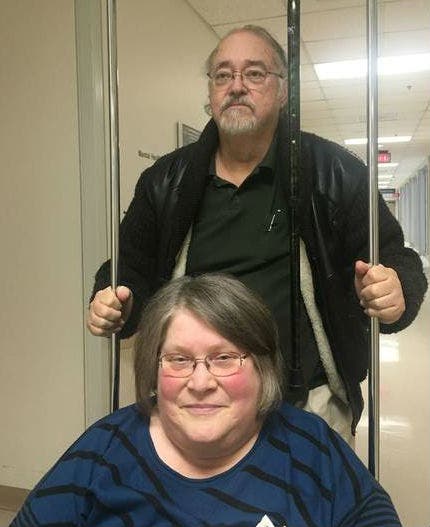
Meet Carla Almaraz, a veteran who spent four years in the Air Force. If it weren't for an unexpected phone call from a former co-worker, Carla would be part of a gruesome statistic that hangs over our country and indicates how we treat our veterans.
In 2013 – the year that Carla lost her job, brought a gun to a park, and was ready to turn it on herself – 22 veterans committed suicide every day. That’s one every 65 minutes, according to a study by the Department of Veterans Affairs.
Given that 29 states, including three of the five most populous, didn’t provide information for the study, officials believe the number was considerably higher.
Find out what's happening in Across Americafor free with the latest updates from Patch.
“I would be dead,” Carla says. “A statistic. But as I held the gun and was ready to bring it my head, my cell phone rang. It was a former co-worker. I didn’t answer it. But the ringing phone snapped me back.”
When she listened to the message later, the co-worker had wanted to know how she was doing.
Find out what's happening in Across Americafor free with the latest updates from Patch.
“That call saved my life. The fact that someone was reaching out to me was the line that I needed.”
A Life In The Military
Carla, who worked as a radar technician on AWACs planes for the Air Force, had seen the military as a way to accomplish something, a way to escape.
“I grew up in northern Idaho in a town of 600,” she says. “There were no jobs, There was nothing for me there. The military offered me a way out. I did really well on my aptitude tests and had a chance to write my ticket to some degree.”
She did well enough that the Air Force promoted her to Senior Airman Below-the-Zone, an elite program open only to 15 percent of a given class that put her six months ahead of others. That led to one of the ultimate opportunities.
“I was sent to Boeing to conduct the final inspection on one of the AWACs,” Carla says. “It’s my signature on the paperwork that accepted 77-0352 into the Air Force.
“It’s my plane.”
While hard work and being good at what she did brought promotion and opportunity, it did not stop her from being physically attacked.
“I was basically raped,” she says. “It is the kind of thing that stays with you.” And, she says, often does not lead to justice. “You try to keep moving,” she says. “Just keep moving.”
Where To Go Next
After the Air Force, she went to work for Honeywell Training in southern California. There she met Luis, also an Air Force veteran. He became her husband. What he was not able to do for a long time was truly become her confidant.
“One of the things you learn in the military is to internalize, keep it inside,” she says. “You are part of a mission that is much larger than you as a person. It becomes hard to recognize what you’re going though.”
They grew apart, eventually separating for about five years.
“That plunged me into a depression,” she says. “Only I didn’t recognize just how bad.”
It was so bad that it brought her to the brink of suicide. One of three times that she would reach that threshold. “There were different triggers,” she says. “There was us separating, there were financial issues. And there was the time that I lost my job.”
That was what brought her to the park with the gun.
“I had always excelled at what I was doing,” she says. “In the Air Force, in jobs, I was good at what I did. And then I was in a job, I was doing a good job, I thought. But someone complained that I had marginalized them. I was demoted.”
She went to the park with the gun. She held it in her hand, ready to end it all. Then she got the phone call.
“That’s why I’m still alive,” she says.
Getting Help
“I had no idea that she had taken the gun,” Luis says. “I just didn’t know that that is where she was at.”
Carla says that at that time she didn’t know how to tell him. She started to get help, seeking out groups for help, eventually ending up at the Wise Warriors program that meets every Friday at the Veterans Administration Hospital in Portland.
“It made me realize that I have another family,” says Carla, who lives in nearby Hillsboro. “Every Friday, I am with people who have been through similar things. We are there for each other, helping each other focus on the positive.”
The group was there for her when Luis had a heart attack followed by a quadruple bypass. They reminded her to also take care of herself. That led to a new hobby – making soap.
“They have changed my life,” she says. “It’s not that everything is perfect but I know there are people there if need them.” While she talks, Carla fidgets with a bracelet. “It has a phone number for the hotline.” she says. “Just knowing they’re there makes a huge difference.”
The Wise Warriors program is part of increased efforts by the Department of Veteran Affairs to reach out and educate veterans about the services available.
While nationwide, the department’s 24/7 Veterans Crisis Line has answered 3 million calls over the years, there is still a long way to go. That fact is driven home by the fact that despite all the administration’s talk of the importance of honoring veterans, the Portland VA Hospital only recently increased the number of staff working on suicide prevention.
And to do so, they had to carve out money from their existing budget.
“There’s more outreach to do,” Carla says. “I’m normally a shy person but this is so important. If one person reads that I was able to get help and is inspired to do the same, it’s worth it.”
Top photo: David Beale via Unsplash
Get more local news delivered straight to your inbox. Sign up for free Patch newsletters and alerts.