Schools
Back to School Study Tips
September is the time to get back into the studying groove. Students who study independently may benefit from these three tips.

School is back in session for Fairfax County Public Schools, Northern Virginia Community College, and George Mason University. No matter what stage of their education students are in, good study skills are always good to have. While technology certainly helpful to students, it unfortunately also tempts many students with distractions. Here are a few ideas to help students get their homework done efficiently.
1. Don’t Study Where You’re Comfortable
Many people have probably fallen victim to the homework-boredom-induced-nap. If you start doing homework sitting up in bed, on the couch, or in a comfortable recliner, it can be a recipe for disaster. One second, you’ll be trying to read a textbook; the next, you’re waking up with a pencil in hand and a textbook still open in your lap, and you’re wondering how much time you have wasted.
Find out what's happening in Annandalefor free with the latest updates from Patch.
There is an easy solution to this: Don’t study at home. Make use of the public library, or your school’s library or common areas if you have them available to you. If you try to do homework in a place that is too familiar and comfortable, it’s much easier to get distracted or even fall asleep.
By studying in a public place (especially one where you don’t have access to a computer – or at least facebook), there is more pressure to get your homework done as quickly as possible so that you can return home where you are able to relax.
Find out what's happening in Annandalefor free with the latest updates from Patch.
If you cannot make it to a public place, try studying in a room of your home where there is not a TV or too comfortable a chair, like your kitchen or an office.
2. Do Research Papers Old School Style
Many individuals who were in college in the 1970’s can reflect on the days where you went to the library to do research and brought index cards to put your notes on, with reference info on the back. These days, many students do all of their research online unless their teachers requires books – and even so, the student will include the bare minimum quantity of books that the teachers want.
What is wrong with this picture? Most teachers prefer research papers to be based on printed books. Why? Because it’s a lot harder to write an inaccurate reference book and get it published in print than it is to register a domain name, put whatever you want online, and calling them “facts.”
Try using some oversized index cards and go to the library. Write any questions your teacher wants answered about your topic on the tops of the index cards, and get as many books as you can find about it. Then, as you find information, put the answers on the front of the cards with the reference information for the book on the back. (Or even just the page number, paragraph number, and ISBN – during the writing process, search the ISBN on Amazon to get the publishing information).
Can’t find everything you need to know in the books? That’s okay. After you have looked in all of your books, you can fill in any blanks with trustworthy online sources.
Luckily, this method serves more than one purpose: not only does it get all of your research organized, but it can also serve as an outline for your paper. Just put the cards in the order you want the paragraphs to be, and write them in order.
3. Don’t be Afraid of Color
Color isn’t just for art class. Try to use colored pens or pencils to your advantage whenever you can. Color is a great way to organize information or help it stick into your head.
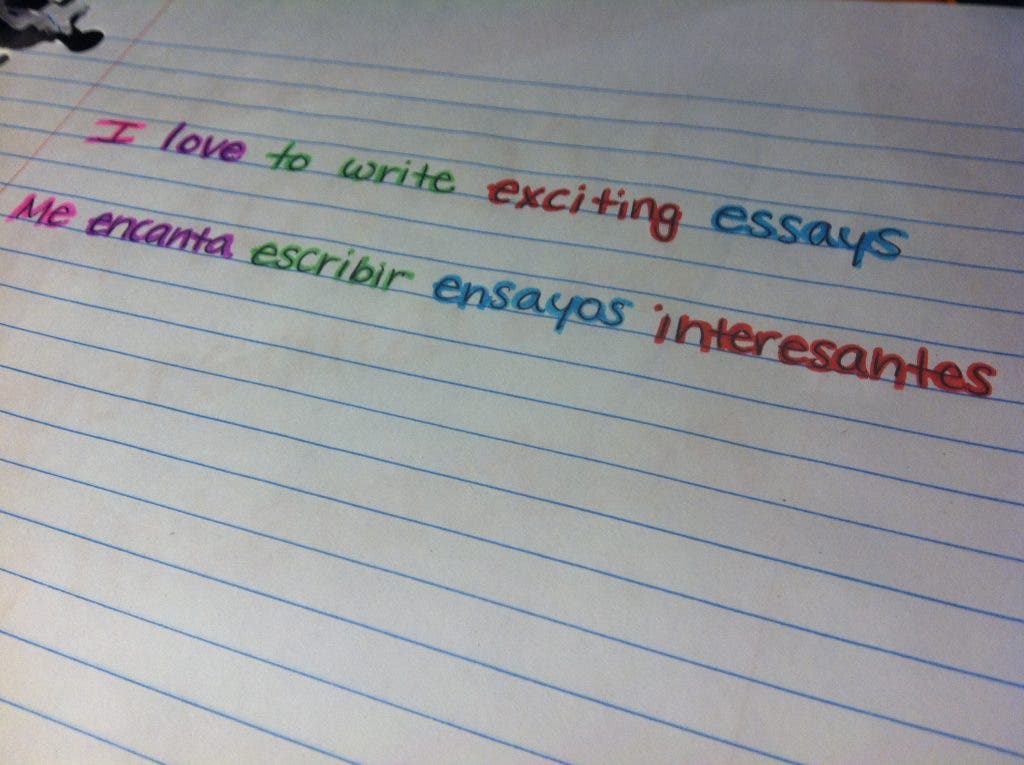
Are you learning a language? To learn more about sentence structure, write sentences in both your native language and your new one. Then, use color to make it more clear how the sentences differ. Color nouns one color, adjectives another, verbs another, and so on. This not only helps you see how sentences differ, but also makes it easier not to forget parts of the sentence when translating.
This can also be helpful with the index card research paper method. Assign each different book a color, and highlight each quote on your cards with the corresponding color. That way, when citing your paper later, there is no confusion as to where your quotes came from. Also, after you’ve written the reference information the first time, there is no need to do it again.
These are only a few different study methods that individuals can use, and they may not work for everyone. However, until you’ve tried it, you never know if it will actually work.
Jennifer Souther is an honors undergraduate student at George Mason University.