Weather
Tropical Storm Gert Could Hammer Virginia With Swells
The National Weather Service says that Gert, which may strengthen to a hurricane tomorrow, could cause dangerous riptide conditions.


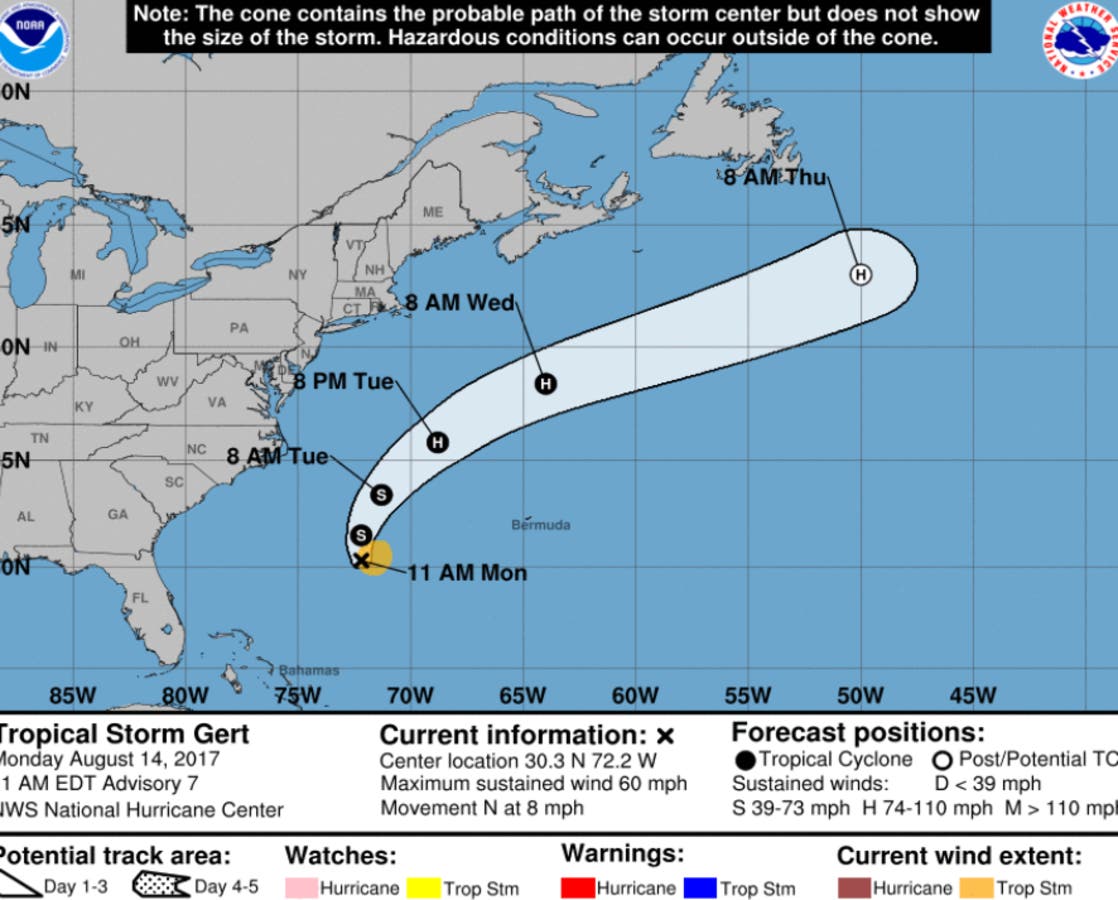
The newly formed Tropical Storm Gert is continuing to strengthen in the Atlantic Ocean, and while it's currently projected to head Northeast without threatening landfall on the United States, it could be close enough and powerful enough to cause major swells on the Virginia coast.
The National Hurricane Center predicts that Gert, which is located between Florida and Bermuda, will reach its closest point to the U.S. coast at around 8 a.m. on Tuesday, when it will be just southeast of North Carolina and Virginia, and it could turn into a hurricane as it moves out to sea Tuesday night.
Currently, Gert has maximum sustained winds of 60 mph -- 74 mph is the threshold for a Category 1 hurricane -- and is moving north at 8 mph.
Find out what's happening in Arlingtonfor free with the latest updates from Patch.
The National Weather Service said in a tweet that while there was no immediate impacts to land, "the rip current threat will increase in VA/MD on Tuesday."
Swells from Gert will start to affect Virginia later in the day on Tuesday.
Find out what's happening in Arlingtonfor free with the latest updates from Patch.
The 11am EDT update on Tropical Storm Gert. No immediate impacts to land, however the rip current threat will increase in VA/MD on Tuesday. pic.twitter.com/apGp7sd2lP
— NWS Wakefield (@NWSWakefieldVA) August 14, 2017
In addition to Gert, forecasters are keeping an eye on a disturbance off the coast of Africa as the hurricane season starts getting busy. That system is on a path that could threaten the Caribbean and Florida.
Gert is the seventh named storm of the 2017 Atlantic hurricane season. The National Oceanic and Atmospheric Administration forecast a 45 percent chance of an above-normal season this year, and the number increased to a 60 percent chance last week.
Storm Preparedness Tips
Before a Storm
- Build an Emergency Supply Kit, which includes such items as non-perishable food, water, a battery-powered or hand-crank radio, extra flashlights and batteries.
- Make a Family Emergency Plan. Your family may not be together when disaster strikes, so it is important to know how you will contact one another, how you will get back together and what you will do in case of an emergency.
- Continually monitor the media (radio, TV or internet) – Be aware of storms which could impact your area.
- Know how you will be warned in an emergency (NOAA Weather radios with a tone alert are a good option).
- Ensure your home is ready. Bring in or secure outdoor items that could become projectiles in high wind.
- Turn the refrigerator and freezer to the coldest setting in anticipation of a power outage. Open the door only when necessary and close quickly. Frozen food in a half-full freezer should remain safe for up to 24 hours, and in a full freezer, up to 48 hours.
During a Storm
- Follow instructions and emergency advice from officials or heed shelter or evacuation requests made through announcements on radio/television.
- Keep an eye on the sky. Look for darkening skies, flashes of light or increasing wind. Listen for the sound of thunder. If you can hear thunder, you are close enough to be struck by lightning.
- Blowing debris or the sound of an approaching tornado may alert you. Tornado danger signs include a dark, almost greenish sky; large hail; a large, dark, low-lying cloud or a loud roar, similar to a freight train.
- Gather family members, bring pets indoors and have your emergency supply kit ready.
- Close outside doors and window blinds, shades or curtains. Close all interior doors. Stay away from doors, windows and exterior walls. Stay in a shelter location (small interior room, closet, or hallway on the lowest level) until the danger has passed.
- During lightning, do not use wired telephones, touch electrical appliances or use running water. Cordless or cellular telephones are safe to use.
- During a power outage use flashlights and battery-powered lanterns for light. Avoid using candles which pose a fire risk.
- Ensure a supply of water for sanitary purposes such as personal cleaning and flushing toilets. Fill a bathtub or other large container with the water. This is particularly important for those whose water runs off of an electrical system.
- If your residence could flood, store valuable and personal papers in a waterproof container.
- Do not walk through flowing water. Drowning is the number one cause of flood deaths. Six inches of swiftly moving water can knock you off your feet.
- Do not attempt to drive through a flooded road – you can become stranded or trapped. Six inches of water can cause loss of vehicle control and stalling. Twenty-four inches of rushing water will carry away most vehicles, even SUVs and trucks. Remember, "Turn Around, Don't Drown."
- Stay indoors and limit travel only to absolutely necessary trips. Listen to radio/television for updates.
After a Storm
- Stay off roads to allow emergency crews to clear roads and provide emergency assistance.
- Help injured or trapped persons. Do not attempt to move seriously injured persons unless they are in immediate danger of death or further injury.
- Use the telephone only for emergencies.
- Use care around downed power lines. Assume a downed wire is a live wire.
- Watch out for overhead hazards such as broken tree limbs, wires and other debris.
- Look for hazards such as broken/leaking gas lines, damaged sewage systems, flooded electrical circuits, submerged appliances and structural damage. Leave the area if you smell gas or chemical fumes.
- Clean everything that gets wet. For food, medicines and cosmetics; when in doubt, throw it out.
- Make sure backup generators are well ventilated. Never use grills, generators or camping stoves indoors.
Image via National Weather Service
Get more local news delivered straight to your inbox. Sign up for free Patch newsletters and alerts.