Politics & Government
VA Democratic Candidates For Governor Participate In 1st Debate
All the Democratic candidates for governor, except for former Gov. Terry McAuliffe, were part of a virtual event, the "People's Debate."


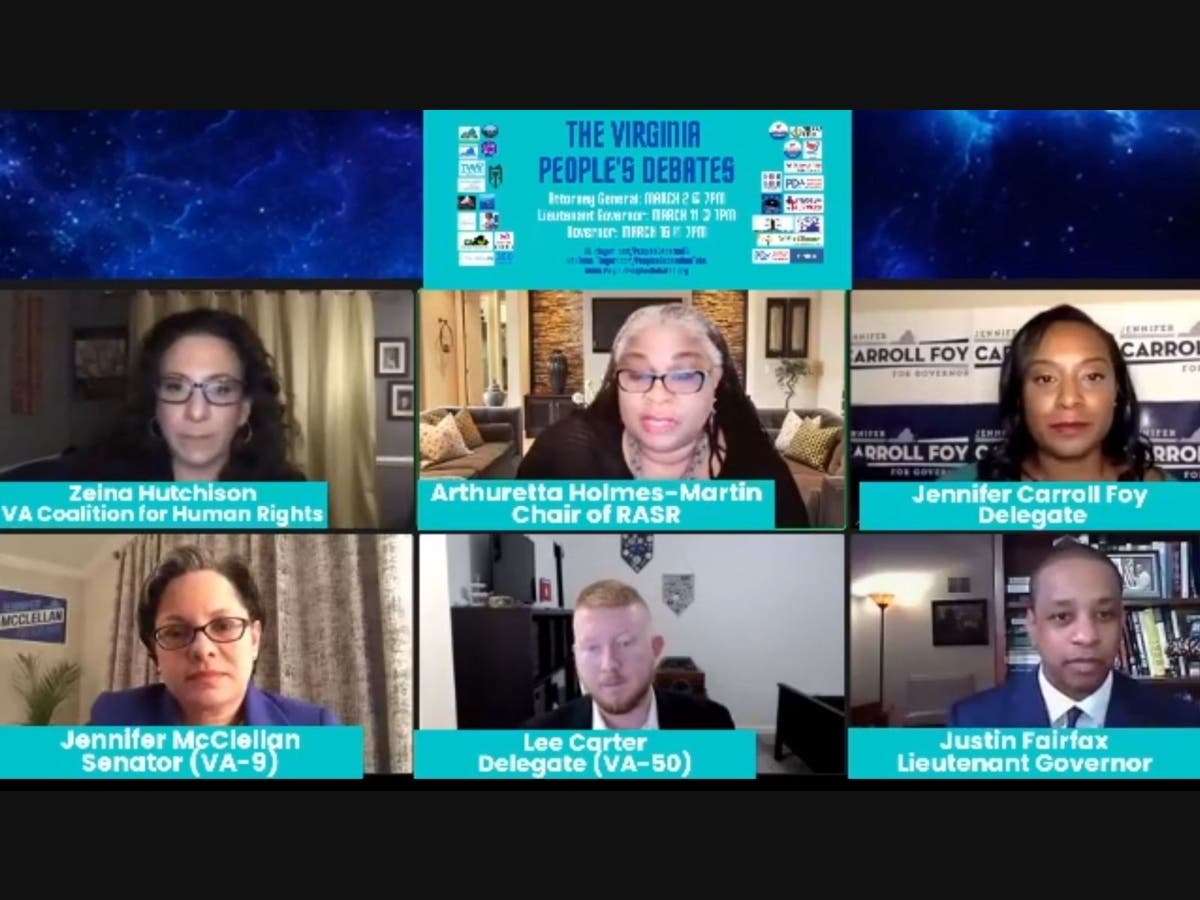
VIRGINIA — Democratic candidates seeking the party’s nomination for governor participated in their first debate Tuesday night, with the candidates offering their vision on how they would build on the momentum from the past year to make further reforms and advances in the areas of criminal justice, housing and environmental policy.
State Sen. Jennifer McClellan, former Del. Jennifer Carroll Foy, Lt. Gov. Justin Fairfax and Del. Lee Carter participated in the debate. Organizers of the virtual event, called the "People's Debate," said they contacted the campaign of former Virginia Gov. Terry McAuliffe several times to participate in the debate, but he declined the invitation. He was the only Democratic candidate not to participate in the event.
Dozens of Democratic and progressive organizations sponsored the debate, with a goal to get the candidates to offer their policy positions on a variety of issues, from racial and economic justice to the environment.
Find out what's happening in Arlingtonfor free with the latest updates from Patch.
The Democratic Party primary is scheduled for June 8. Early voting begins on April 24. Under Virginia law, Gov. Ralph Northam cannot seek election this year. Virginia governors are not allowed to serve consecutive terms.
The candidates did not attack each other, except for a couple of instances when McAuliffe was called out for his decision not to participate in the debate.
Find out what's happening in Arlingtonfor free with the latest updates from Patch.
McClellan, who represents the 9th Senate District, which contains the city of Richmond and parts of counties to the east, said the new Democratic majority in the state Senate and House of Delegates allowed the party to make “transformative change” over the past year.
“But we still have far to go,” McClellan said. “Too many people are being left behind because their needs, their problems, and their perspectives are being ignored. That was true before COVID. It is even more true today.”
Carroll Foy, who represented parts of Prince William and Stafford counties in the House of Delegates before resigning her position to run for governor, said the progressive legislation she helped to pass during her time in the General Assembly “delivered real results for working families.”
SEE ALSO: Virginia Governor's Race Turns Into Battle Over Endorsements
The next Virginia governor will need to build on these progressive changes made in the state, she said. “We need a new leader who will move Virginia forward and not back,” Carroll Foy said. “And frankly, we need a leader who will show up, unlike Terry McAuliffe who chose not to be here tonight.”
Fairfax highlighted the many people across the state who are struggling to pay rent and feed their families due to the COVID-19 pandemic. “There are people all around the commonwealth of Virginia in this moment who are hurting, who are facing significant challenges in their lives, their families in some cases on the verge of losing everything, small business owners who are suffering,” he said.
The struggles of many Virginians in 2021 offer an opportunity to reflect on the racial injustice and inequality that dominated the first 400 years of Virginia’s history, according to Fairfax.
“Now we’re at a critical moment in our history where we have to decide how we’re going to move forward into the next 400 years of Virginia,” Fairfax said. “And that next 400 years has to be marked by creating opportunity for all … including those who have been left out in our debate and our discussion.”
Carter, who represents the 50th House district in Manassas and parts of western Prince William County, emphasized he is the only candidate in the race for governor who has never accepted a campaign contribution from any for-profit corporation or industry interest group during his time as delegate and in his campaign for governor.
On the issue of marijuana legalization, all four candidates at the debate said they support full legalization of marijuana use by adults and expungement of all criminal convictions for marijuana use. They also expressed disappointment that the legislation passed in the General Assembly did not provide for the legalization of the sale and recreational use of marijuana earlier than 2024.
In January, a bill that would make it easier to sue police officers for violating a person’s constitutional rights died in the Virginia General Assembly. The effort to eliminate qualified immunity in the state first came to the forefront following the death of George Floyd last May, which sparked months of racial justice protests and calls for police accountability.
At Tuesday night's debate, each of the Democratic candidates for governor said they supported ending qualified immunity for cases of police misconduct.
One area where there was disagreement was on how fast Virginia can shift its electric power grid to 100 percent renewable energy sources.
Carroll Foy noted she was a chief co-patron of the Virginia Clean Economy Act, which outlines a path for Virginia to get to zero carbon emissions by 2050. But Carter responded that he voted against the Virginia Clean Economy Act because he believed "it wasn't fast enough," noting the Biden administration has set a carbon pollution-free power sector by 2035.
McClellan, who sponsored the bill in the state Senate, defended the Virginia Clean Economy Act, saying it began the process to shift the state toward greater use of solar and wind energy projects.
"If we're not unleashing the power of renewables, which we weren't doing in Virginia at all, then we cannot get to 100 percent ever. But we can get there faster, and we will get there faster, but we have got to address both the supply side and the demand side," McClellan said.
All four Democratic candidates said they would support a moratorium on new fossil fuel infrastructure in Virginia and on permits for pending fossil fuel projects. Despite hundreds of environmental violations by the developers of the Mountain Valley Pipeline, regulators at both the federal and state levels have yet to cancel the permits for the natural gas pipeline project.
In the portion of the debate on good governance in Virginia, each of the four candidates said they support a ban on all corporate contributions to candidates.
"I wrote the bill, yes," Carter responded when asked whether he supports such a ban.
In her closing comments, Carroll Foy focused on the choices she has made in her career, including choosing to become a public defender to fight for people who cannot afford an attorney and choosing to run for the House of Delegates because she knew "change couldn't wait."
"Terry McAuliffe chose not to be here tonight because this is the People's Debate and Terry McAuliffe doesn't align himself with the people but with big corporate interests," Carroll Foy said.
Early voting in the Democratic primary begins on April 24. During the early voting period, voters will be able to vote at every locality's voter registration office. Many localities may also have satellite locations open for voting in addition to their regular voter registration offices. For more information, visit the Virginia Department of Elections website. Democratic primary election day is June 8.
Get more local news delivered straight to your inbox. Sign up for free Patch newsletters and alerts.