It started for me when I took a photo of my extended family chowing down at a holiday dinner. Click, wait, flash. The new camera displayed a message. “Did someone blink?” “Wonderful! How smart is that," I thought.
Over the years, further advances in photographic facial recognition technology have been made. The most recent are in social media.
When I recently posted a photo on Facebook, the software tried to match the people in the photo with my Facebook Friends. I could accept the identification Facebook had made or could overwrite it. “How clever,” I thought.
Find out what's happening in Burkefor free with the latest updates from Patch.
It was odd that Facebook insisted in a group shot taken at my Uncle's reunion that one particular 90-year-old gentleman was my 45-year-old female colleague. Facebook made the incorrect match consistently.
Carrying the theme of facial recognition technology further, let’s consider the new type of Virginia drivers’ license. The photos are shades of grey and drivers are told specifically NOT to smile. Your drivers’ license photo can haunt you for 10 years even through a renewal cycle. My husband commented on his new license photo that he resembled a sketchy, down on his luck old man. Not the look one is hoping for when turning 64.
Find out what's happening in Burkefor free with the latest updates from Patch.
On a more serious note, facial recognition technology has shown to be beneficial to public safety employees and in the judicial system.
When technology gets too far ahead of public policy, it’s time for a check. The public policy issue is privacy. What concerns/impacts are there? Are there special considerations for individuals under the age of 21?
West Virginia Senator John D. Rockefeller IV, who chairs the Commerce, Science and Transportation Committee, has asked the Federal Trade Commission to report on security impacts of this technology by February 9, 2012.
It is heartening that steps are being taken to review the use of these technological advances compared to individuals’ expectations.
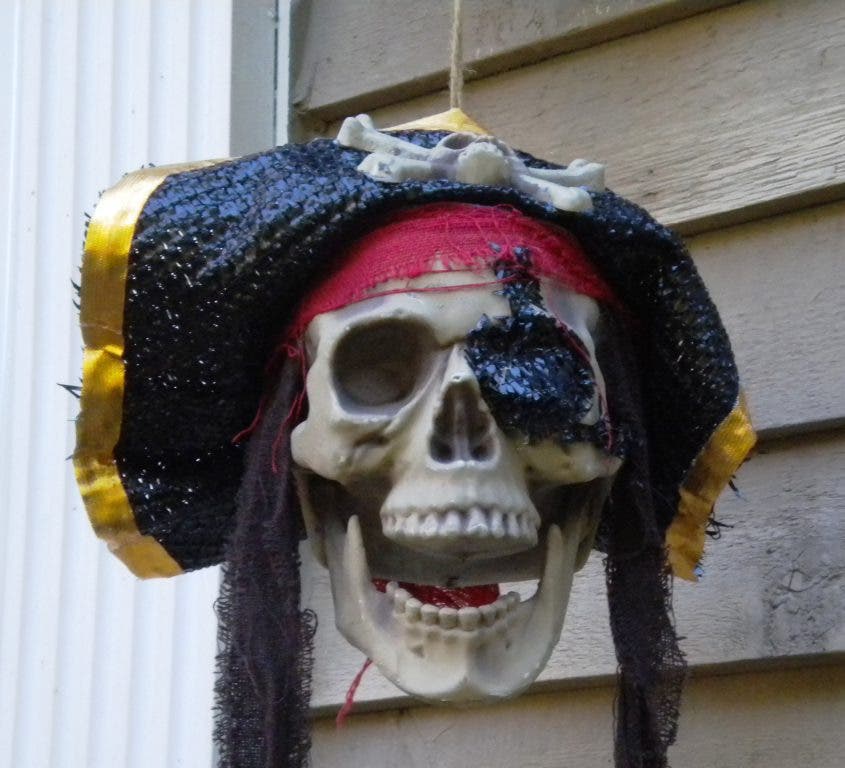
Now if Facebook identifies the Halloween figure in the photo accompanying this article as my husband, he may just don his pirate costume and go trick-or-treating.