Politics & Government
Scientist: Plan for High Energy Costs, Food & Fuel Shortages
Environmental scientist discusses possible outcome of global warming at Centreville Regional Library
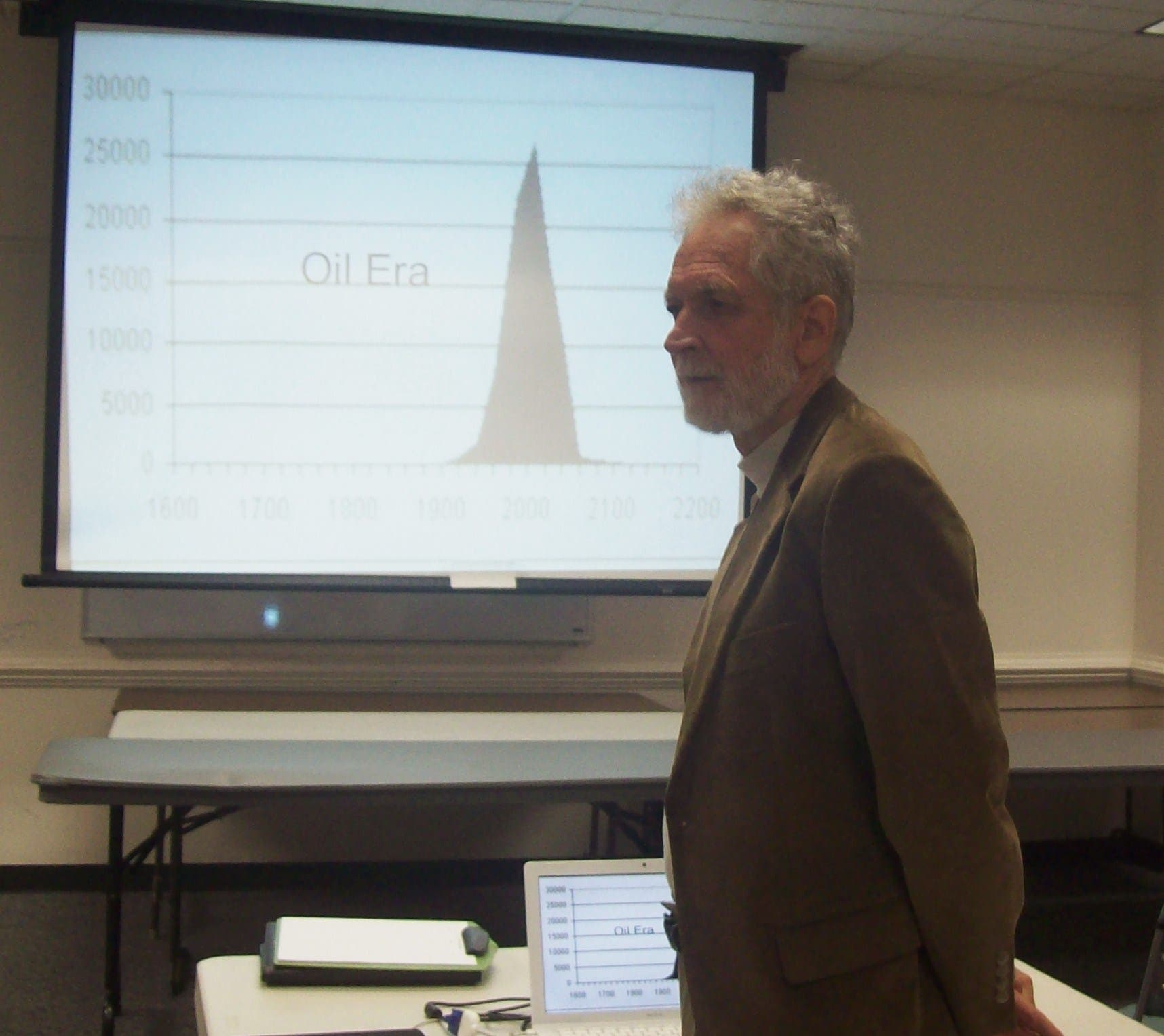
If communities are to weather future environmental catastrophes, they will have to re-invent themselves by putting vegetable gardens in their back yards and electric cars in the driveway, an environmental scientist told a Centreville group on Wednesday night.
Environmental scientist Jackson D. Harper, of Clifton, spoke about the possible double whammy of global warming and the depletion of fossil fuels to a crowd at the Centreville Regional Library. Global warming has accelerated over the past three years and some predict a significant drop in liquid fuel supplies within the decade, Harper said.
However, the government has fumbled plans to either deal with global warming or find a way to wean Americans from an addiction to crude oil, Harper said. And large corporations seem mostly focused on short-term profit.
Find out what's happening in Centrevillefor free with the latest updates from Patch.
That leaves it up to communities to plan for rising energy costs and possible fuel and food shortages, Harper said.
"We need to prepare and move to living with less energy," Harper said. "Awareness is the issue and we need to get people ready for this transition."
Find out what's happening in Centrevillefor free with the latest updates from Patch.
Harper offered practical solutions that can begin at the local level. Communities can sponsor neighborhood gardens and help residents learn how to grow their own food in the backyard, he said. With fuel prices expected to skyrocket as supply dwindles, it will be important for communities to be near their own food supply. Moving to electric cars, or some other more sustainable form of transportation like mass transit, would also be a big help, he said.
"You can't expect people to know how to prepare the soil and grow food immediately; they will need time to learn these hands-on skills," he said.
Centreville a Transition Community?
Centreville could also join a growing coalition of 76 U.S. "Transition Communities," where citizens support each other to find ways to live with less energy, he said. One city, Portland, Ore., is the "poster child" for such communities, passing laws to use only renewable energy in its city fleet and promoting energy-efficient construction techniques for new projects, he said.
Virginia got its first Transition Community recently when a group of citizens launched one in Staunton, in Augusta County. Like other such efforts, they want to use energy in a smarter way and making more of stuff they use every day closer to home.
"Each Transition Community is distinct and built on the needs of the local community," Harper said. "But they are a good start."