Politics & Government
Arlington Cemetery Using Smartphones to Digitally Catalog Remains
The Gravesite Accountability Task Force is charged with correcting discrepancies in records.
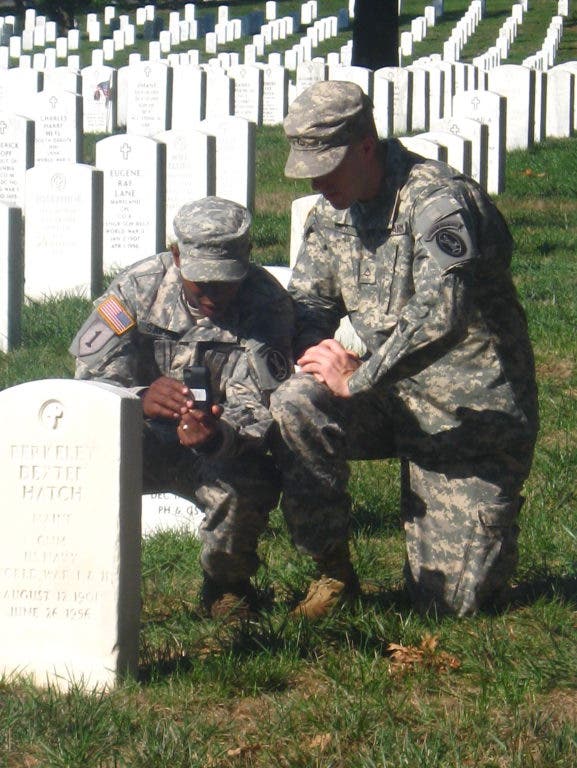
Using smartphones and digital mapping, soldiers at Arlington National Cemetery are photographing every headstone at the country's most hallowed ground to correct discrepancies in cemetery records.
The Gravesite Accountability Task Force will standardize the record-keeping for the 259,654 graves on site, but for Pfc. Chris Bodell, the assignment means much more.
“I know, personally, if I was buried here, I would want my family to know where I was,” Bodell said.
Find out what's happening in Clarendon-Courthouse-Rosslynfor free with the latest updates from Patch.
The task force, which was conceived in October 2010, is being implemented in accordance with a law passed by Congress last year mandating that the cemetery verify its records. The archival work, which began on June 1, will focus on creating the most accurate digitized grave records possible.
After a failed attempt in 2005, this is the first successful effort to digitize the gravesite information at the cemetery, which began interments in 1864.
Find out what's happening in Clarendon-Courthouse-Rosslynfor free with the latest updates from Patch.
The task force will digitally scan all available documents. Then, a technician will compare the information on each document, including a photograph of the gravesite’s headstone, searching for discrepancies.
Should a discrepancy be found, the gravesite record in question will be further examined and cross-checked with an external personal record or document. In the event that no external record can be found, an investigative deep research team will get involved.
A critical component of the task force is the photographing of each tombstone and columbarium in the cemetery.
Since the task force began, members of the Army’s Old Guard, a military unit responsible for memorial affairs, have been dispatched nightly to walk the cemetery, photographing the front and back of each headstone. The photographs are taken and cataloged using iPhones containing an exclusive archiving application.
Once the task force is finished, the cross-referenced information will be made available to the public through the cemetery’s website, allowing families of fallen soldiers to access their loved one’s gravesite location through the archival records and on Google Maps.
So far, the task force has processed 43 percent of the gravesite records. They expect all data will be archived by late October.
The task force is not part of the into the mishandling of remains — a national embarrassment that includes the disposal of crematory urns, discovery of a mass grave and the placement of several bodies in the wrong graves.
“If — and this is an ‘if’ — anytime in the process, though, we get a ‘who is where’ question, it bypasses us completely and goes directly to the executive director because that is such a critical information need,” said Col. John F. Schrader, co-chair of the accountability task force.