Politics & Government
Paying Homage to Arlington's History
Officials hope new list of historic buildings will allow development without sacrificing the past.
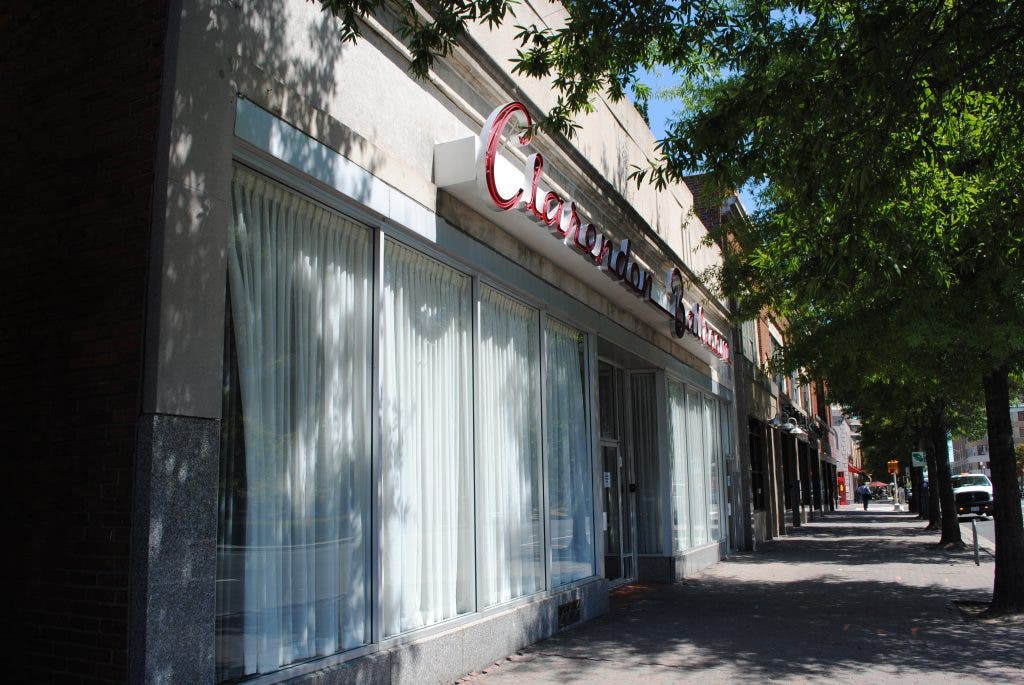


In a community that emphasizes smart growth and values development, Arlington County officials are making an effort to acknowledge the past even while surging ahead.
That acknowledgment came this month in the form of a list of 393 commercial buildings and garden apartments ranked for their historical significance.
Twenty-three properties were rated as "essential" historic properties, and 134 as "important," based on factors like architecture, condition and the buildings' surroundings. Many of those buildings are in the Rosslyn, Courthouse and Clarendon neighborhoods.
Find out what's happening in Clarendon-Courthouse-Rosslynfor free with the latest updates from Patch.
The historical value of a building is relative, said Michael Leventhal, Arlington's historic preservation program coordinator. While buildings here might not be as renowned as Charlottesville's Monticello or nearby Alexandria's Old Town, they are important to local history.
"We don't have rows upon rows of plantations, or rows upon rows of Victorian homes, or colonial townhouses," Leventhal said. "Arlington was a farming community that was turned into a residential bedroom community, and that's just as important."
Find out what's happening in Clarendon-Courthouse-Rosslynfor free with the latest updates from Patch.
Many of Arlington's garden apartments were part of a revolution in housing for what Leventhal calls the "worker bees" of government agencies around the time of the New Deal.
The Courthouse Manor apartment building on North Courthouse Road is an example of the United States Housing Authority's effort to promote affordable housing for government workers, with multiroom apartments and parklike grounds within walking distance of shopping centers and other amenities. Courthouse Manor and neighboring Wakefield Manor are notable because they were designed by prominent architect Mihran Mesrobian.
Colonial Village Shopping Center on Wilson Boulevard, now home to and , was once part of the effort to establish self-sufficient communities in Arlington's residential areas. Not far from the , the shopping center was an amenity for the residents as well as a draw for homeward-bound traffic along Wilson Boulevard, one of the oldest thoroughfares in Arlington.
The 393 properties evaluated on the list are a slice of the 10,500-plus buildings at least 50 years old that have been documented over the past 11 years as part of the Arlington County Historic Preservation Program.
Future lists will include private residences, county-owned buildings and industrial properties, though officials say the office is months away from beginning the second list.
The need to look back, Leventhal said, is amplified by the county's surging development. By the time the county's master list of 10,500 properties was finalized, a quarter of those 393 chosen to be evaluated had been demolished.
County officials hope that in the future the list will help developers recognize the significance of the properties.
"The point of it is, people who own property and would like to develop it will know early on how the county views their property," Leventhal said.
Often, developers spend time and money making plans and sending them through the county's approval process long before historic preservationists get involved.
"We were always coming in at the eleventh hour to try to save a building and work with a developer on the plans," said Cynthia Liccese-Torres, a historic preservation planner for the county. "By then, it's really too late."
The list, though it does not change a building's zoning or development regulations, is a tool to let developers know how the county views the properties.
The next step, said Liccese-Torres, is to work with the county board to come up with policies to protect these buildings.
"The next phase of the effort is to come up with tools to assist with preservation, if we're going to take full advantage of the work that's been done," said County Board Member Jay Fisette.
One way to help preservation is to provide developers with incentives for transferring their development rights from historic properties to other properties by allowing much higher-density development
"We can't tell someone, 'You can't tear that down,'" Fisette said. "What we hope is that we can provide enough information, education, alternatives and incentive to allow someone to benefit from preserving that site."