Neighbor News
New Bill Mandates Captioned Showings in Theaters Across Virginia
Virginia legislator Phil Hernandez has drafted a bill that will improve open caption availability in movie theaters.
Whenever I would ask my dad if I could watch tv as a kid he would respond by saying "Only if closed captions are on". My dad isn't deaf, he has no known disabilities, and English is his first language, he just likes to use captions. In addition, he believed closed captions would help my siblings and I learn to read.
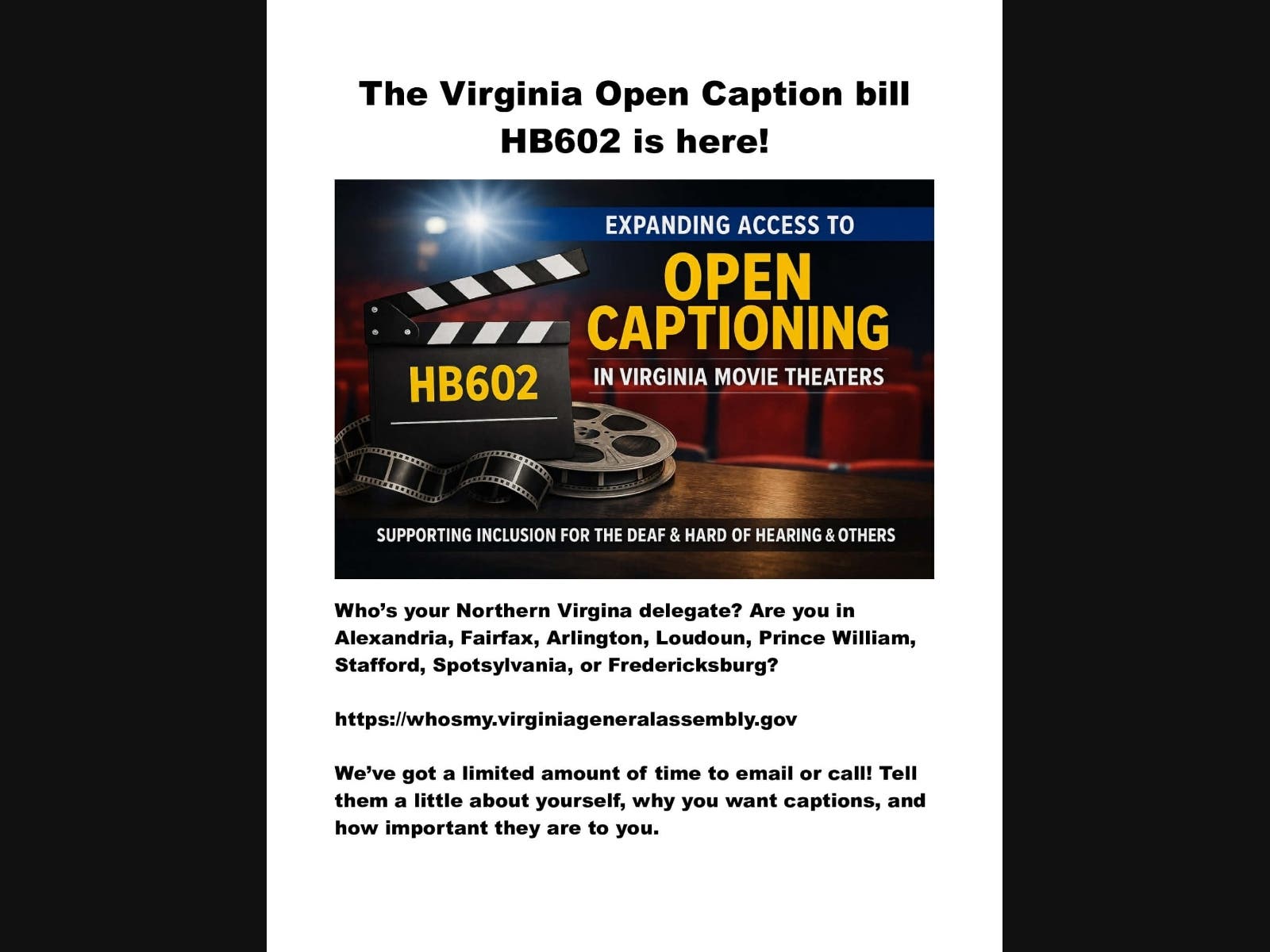
If you live in Virginia, please consider supporting the open captions bill (HB602). This is for showings with on screen closed captions for all to see in movie theaters. This is a summary of what it mandates:
- The bill only applies to theater chains with five or more locations in Virginia. (Drive in movie theaters are exempt).
Find out what's happening in Dale Cityfor free with the latest updates from Patch.
- Requires at least four open caption screenings in the first two weeks of a film's release. (Which means that the majority of screenings in the first two weeks will not have open captions)
- Of those minimum four open caption screenings, at least one must be during peak times. Peak time is defined as being after 10:59 a.m. and before 11:01 p.m. on a Saturday or Sunday, or after 5:59 p.m. and before 10:01 p.m. on a Monday through Thursday, or after 5:59 p.m. and before 11:01 p.m. on a Friday.
Find out what's happening in Dale Cityfor free with the latest updates from Patch.
- After those first two weeks of a film's release, theaters must provide an open caption screening within 72 hours (3 days) of receiving a request for an open caption screening.
- Theaters with four or less locations in the state have to provide an open caption screening within eight days of receiving a request for an open caption screening.
Captions are beneficial for everyone, because it helps build vocabulary, increases retention, and dialog can be caught even if the theater is noisy. But for Deaf people, captions are necessary for access. Surprisingly though, Deaf people are not the primary open captions theater attendees. The following groups of people benefit and even rely on captions:
-The Deaf and Hard of Hearing Community
-Senoir Citizens
-English as a Second Language
-Children learning to read
-People with various disabilities (aphasia, auditory processing disorder, dyslexia, adhd, autism, noise sensitivity, etc)
-Those who simply prefer to have closed captions on
Those who say "But we have caption glasses" or "My movie theater has a personal screen for those people". These options are not comfortable, nor accessible to most people. Not only are staff ill prepared to handle these requests (the devices aren't charged, they're broken, etc), they also cause neck pain and headaches. The glasses are difficult to use with prescription glasses.
There is no con to this bill, because those who don't like captions can simply go to regular showings. However, those who need captions, would have more opportunities to enjoy movies, and there will be more awareness about open captions availability. (Do you know if your local theater offers open captions showings? Mine does!).