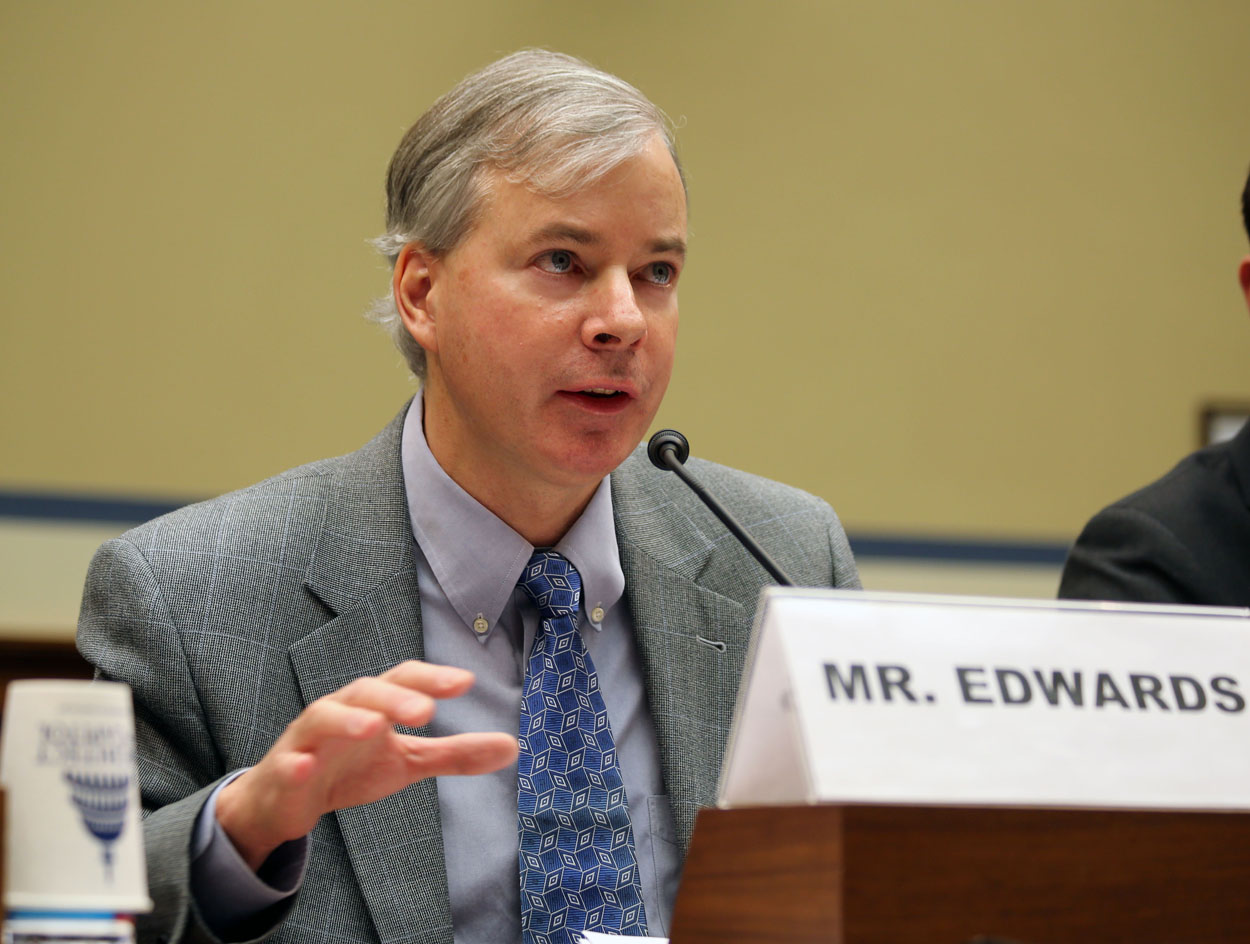
While trolling the Cato At Liberty website, I came across this interesting article written by Chris Edwards, the director of tax policy studies at Cato. Chris is discussing wasteful spending and includes examples such as $1 million for a gold-plated bus stop in Arlington, Virginia. Check it out for yourself.
"In my testimony last week to the House Oversight Committee, I focused on aid-to-state programs as a major source of waste in the federal budget.
The federal government spent about $560 billion on aid to the states in 2013, making it the third largest item in the budget after Social Security and defense.The aid system includes more than 1,100 different programs for education, housing, community development, and many other things.
Find out what's happening in Fredericksburgfor free with the latest updates from Patch.
The aid-to-state system is rife with waste and inefficiency. So I was not surprised to see that many of the 100 programs in Senator Tom Coburn’s new wastebook are aid programs. Federal aid stimulates overspending by state and local governments and encourages them to put money into dubious projects that they would not spend their own money on.
Here are some of the wasteful aid-to-state projects profiled by Coburn and his expert staff:
Find out what's happening in Fredericksburgfor free with the latest updates from Patch.
- $1 million for a gold-plated bus stop in Arlington, Virginia
- $50 million for a fancy parking lot (“transit center”) in Maryland that has quintupled in cost
- $65 million for New York and New Jersey to advertise that they are (supposedly) good places to do business
- $3.5 million for a New Hampshire airport to buy solar panels, which will save less than the cost of the project, and which are creating dangerous glare for pilots
- $67 million for the Alaska Bridge to Nowhere
- $195,000 from a substance-abuse program to throw a Hollywood party
- $8 million for an unfinished, unneeded, and overbudget transportation conference center—which is named after a congressman—at South Carolina State University
- $140,000 in housing aid to fix up some random house in Patterson, New Jersey, on which the city already spent $260,000, and which is only worth $171,000
- $3.9 million on a tiny airport in St. Cloud, Minnesota, which has no daily commercial service
- $1.25 million for the State of Florida to settle a lawsuit with one of its contractors
- $532,000 to beautify one block on main street in Rossville, Kansas (pop. 1,150), which Google streetview indicates is a rather empty place
- $30 million for “coastal conservation” in Mississippi, which is partly being spent on non-conservation items such as an art museum
- $800,000 for Las Vegas to award a prize to someone who has a good economic development idea
- $368,000 of “community development” money to an electric golf cart maker in Montana.
The money for all of these projects initially flows to Washington from taxpayers who live in the 50 states. It travels through the federal bureaucracies and funds generous salaries for many paper pushers, and then a reduced amount flows back to chosen state and local governments. Those governments treat the funding coming from the distant national capital as free, and they proceed to fritter it away on low-value and often hare-brained public and private schemes.
The bottom line is that the federal aid system is a roundabout and inefficient funding method for state, local, and private activities. Cutting aid programs would be a great way to reduce government waste.”
About Chris Edwards
Chris Edwards is the director of tax policy studies at Cato and editor ofwww.DownsizingGovernment.org. He is a top expert on federal and state tax and budget issues. Before joining Cato, Edwards was a senior economist on the congressional Joint Economic Committee, a manager with PricewaterhouseCoopers, and an economist with the Tax Foundation. Edwards has testified to Congress on fiscal issues many times, and his articles on tax and budget policies have appeared in the Washington Post, Wall Street Journal, and other major newspapers. He is the author of Downsizing the Federal Government and co-author of Global Tax Revolution. Edwards holds a B.A. and M.A. in economics, and he was a member of the Fiscal Future Commission of the National Academy of Sciences."
After reading Chris’s article and discovering how wasteful our government is being with our money, I thought it wise to share the points he made with the Rappahannock Libertarians blog followers here on Fredericksburg Patch.
If you like what you just read and wish to stay in the loop, please follow us on Facebook or join one of our upcoming events via our group calendar on Meetup. We would love to meet you and discover your thoughts on this issue.
Respectfully,
Jason Feimster
Chair-Rappahannock Libertarians
.