Politics & Government
Dominion Announces Plans For New 3-Gigawatt Gas Plant In Cumberland County
If state and local permits are approved, the company anticipates the plant will come online in 2033 or 2034.
May 7, 2026
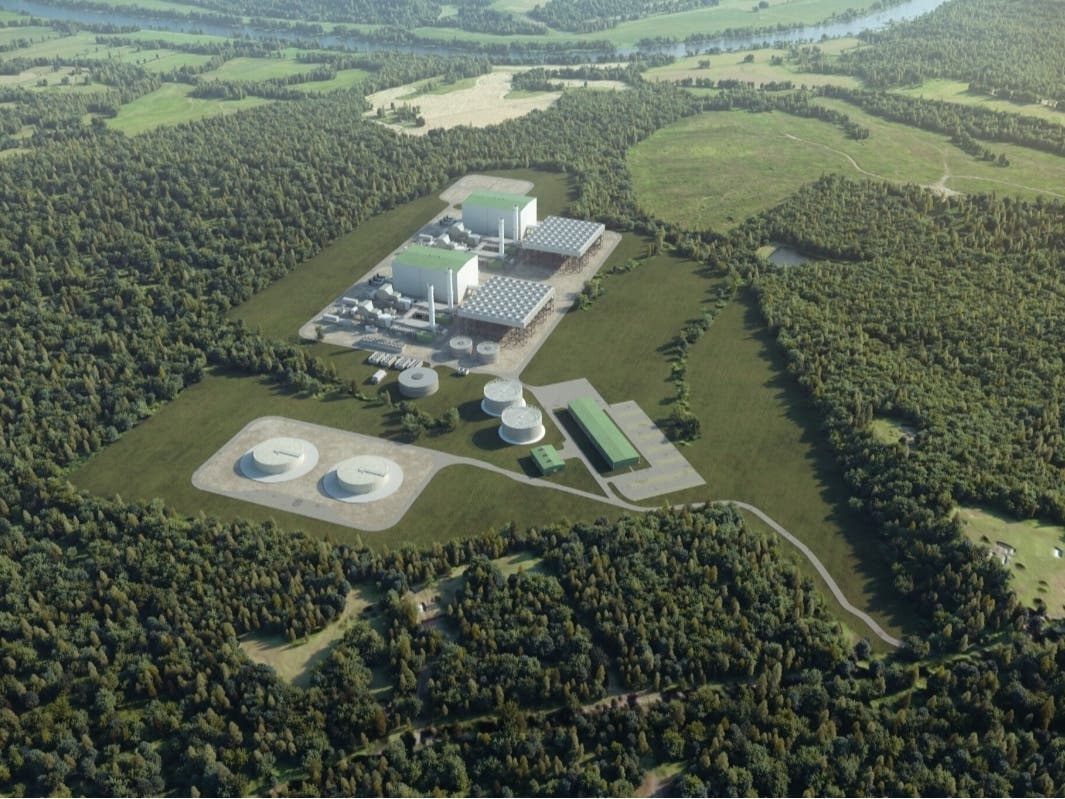
Dominion Energy is aiming to expand its portfolio of energy sources in Virginia with a massive 3,000 megawatt (3 gigawatt) combined cycle natural gas plant in Cumberland County. The utility is now preparing to seek state and local regulators’ approval of the plant, slated to be operational in less than 10 years.
Find out what's happening in Across Virginiafor free with the latest updates from Patch.
The plant will produce base load energy around the clock and will be able to provide power for up to 750,000 homes. If approved, it will be, by far, the largest natural gas facility in Dominion’s Virginia fleet.
The proposed facility will outsize the Coastal Virginia Offshore Wind project, now in its early stages of activation and slated to produce 2,600 MW of power when complete. The company said the new project is necessary to meet soaring energy needs statewide.
Find out what's happening in Across Virginiafor free with the latest updates from Patch.
“PJM (the regional electric grid operator) is forecasting that our demand will grow on average by about 5% annually over the next 20 years and more than doubling by 2045,” Jeremy Slayton, a representative for Dominion, said Thursday. “To meet this unprecedented demand growth reliably and affordably, we are going to need to generate twice as much energy to keep up with that demand into the future.”
The utility is just beginning the application process for the plant, planned to be located on 900 acres on Duncan Store Road in the northern region of Cumberland, bordering the James River.
Before the plans can move forward, the project will have to receive approval from the county through a conditional use permit, get the green light from the State Corporation Commission and secure a Department of Environmental Quality air permit.
This process is expected to take about two years with construction anticipated to start in 2029. It will afford several opportunities for the public to voice their opinions on the plant, as energy costs and reliability remain a top concern for residents.
Dominion’s recent projections show that in order to meet the growing energy demands in the region, the company will have to build an estimated six natural gas plants, on top of other renewable energy sources, over the next 20 years. These estimates have met with significant public criticism and concerns about environmental impacts.
In Dominion’s most recent integrated resource plan, where the company must explain to the SCC their long-range energy production roadmap, the utility estimated that solar will be its largest growth sector, representing 53% of new energy sources. Natural gas is the second largest with 25%, wind will comprise 10%, battery storage will be 6% and small nuclear reactors will be 6%.
“What matters most to our customers is that when they go home and they flip that light switch, the power comes on,” Slayton said. “We are pursuing projects like the Cumberland Energy Center to ensure that we are providing a reliable and affordable grid and affordable and reliable energy for our customers.”
The full cost of the new plant is yet to be determined, but Dominion said it will be a “multi-billion dollar project.” Slayton confirmed that it will cost more than the Chesterfield Energy Reliability Center (CERC), a 944 MW gas peaker plant that is priced at $1.47 billion.
The CERC project faced years of fierce community pushback due to concerns over health impacts from the particulates that would be released into the air from the plant, as well as a push for more renewable energy sources to be utilized over fossil fuels.
Compared to other natural gas plants such as those in Greenville and Brunswick, Dominion said, the technology underpinning the new plant has advanced.
The Cumberland plant would include two sets of two gas turbines paired with a steam turbine that captures the residual energy from burning the gas, which will also be used for power generation.
The turbines will be hydrogen-capable, should that be a useful future energy source. A hydrogen recycling plant is operational in Petersburg and the state is working to build out the industry in Southwest Virginia.
“Because the life of these assets is over 30 years, we want the units to be as capable to be able to accept alternate fuels when and if they become available,” said Brandon Martin, Dominion’s director of generation development. “In the event that the future says hydrogen is now economic or viable for our plants, we’d like them to be able to accept hydrogen.”
Dominion estimates the project will create 450 local construction and operation jobs and will generate about $500 million in local tax revenue over the life of the project.
If permits are approved, the company anticipates the plant will come online in 2033 or 2034.
Dominion is also beholden to the Virginia Clean Economy Act that mandates the retirement of carbon emission energy production by 2045, unless the SCC approves a plant to remain in service to ensure grid reliability.
“I think as the SCC signaled with the approval of CERC late last year, there is a reliability need in the future,” Slayton said.
The utility mailed letters to residents who live around the proposed site for the project with details about the plant. There will be two informational meetings in the county with Dominion representatives later this month and in June.
Once the conditional use permit for the project is submitted to the county board of supervisors, it will later be scheduled for public hearings and a vote.
This story was originally published by the Virginia Mercury. For more stories from the Virginia Mercury, visit Virginia Mercury.com.