Crime & Safety
Customs Officers At Dulles Airport Seize New Type Of Synthetic Cannabinoid Compounds
Dulles forensic scientists identify a substance found in two parcels from China as a new type synthetic cannabinoid compound.


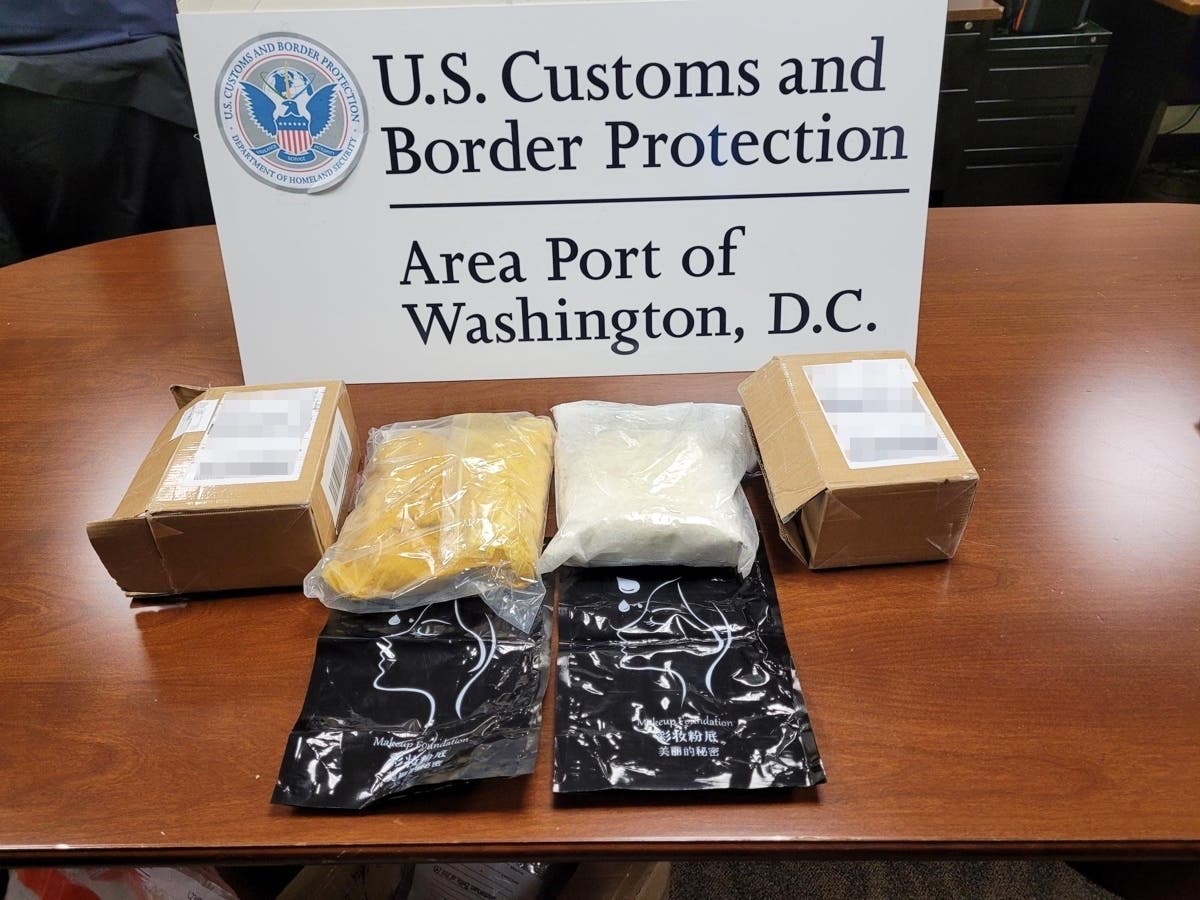
DULLES, VA —U.S. Customs and Border Protection in the Baltimore-Washington, D.C. area intercepted two new synthetic cannabinoid compounds recently, according to a release.
CBP officers seized a shipment of BZO-4en-POXIZID, also known as 4en-pentyl MDA-19, and ADB-FUBIATA, also known as AD-18, on Feb. 11 at Washington Dulles International Airport. Although CBP officers have found similar MDA-19 compounds at other U.S. ports of entry, this is the first time the agency has encountered the 4en-pentyl variant.
CBP officers originally discovered the compounds on Nov. 14, 2021, when they inspected two parcels at an express delivery center in Maryland. Manifested as "curtain wall banners" and "tennis shoes," the parcels had just arrived from China and were bound for addresses in Washington, D.C. and Prince George's County, Maryland.
Find out what's happening in Herndonfor free with the latest updates from Patch.
When a CBP officer opened one of the parcels, they found a sealed bag of white power inside plastic makeup packaging. Three more sealed bags were found in another makeup package.
An examination of two sample-sized baggies containing the substances determined that they were "bath salts," which is the street name for synthetic cathinone. The two larger Ziplock bags, which weighed 1 kilogram each, were sent to CBP's Laboratories and Scientific Services at Dulles for analysis.
Find out what's happening in Herndonfor free with the latest updates from Patch.
Forensic scientists from the lab reported to CBP officers at IAD that the bags contained ADB-FUBIATA and BZO-4en-POXIZID. Following additional tests, the scientists confirmed that both substances were emerging synthetic cannabinoid analogues.
Based on this analysis, CBP officers at IAD seized the synthetic cannabinoids. The bath salts and synthetic cannabinoids were then destroyed.
“The discovery of these two emerging synthetic cannabinoids highlights the collaboration between Customs and Border Protection’s frontline officers and forensic scientists to identify and intercept products that may be potentially harmful to American consumers,” said Daniel Escobedo, CBP’s area port director for the Area Port of Washington, D.C. “Our officers and scientists can take pride in knowing that their discovery may help save lives.”
Get more local news delivered straight to your inbox. Sign up for free Patch newsletters and alerts.