Health & Fitness
The Church Celebrates Ordinary Time Season
While Jewish celebration revolves around the Exodus from Egypt, the Christian Church year focuses on the life and ministry of Jesus.

While Jewish celebration revolves around the Exodus from Egypt, the Christian Church year focuses on the life and ministry of Jesus. The sequence of festivals from Advent to Easter Sunday establishes an annual spiritual journey for worshippers.
It was the Lord Jesus Christ at the time of His ascension who commanded His disciples to tarry in the Upper Room and wait for the Holy Spirit in order to receive power to transform the Church. The result was Pentecost and the birth of the Church. The season of Pentecost is a time in the church year for thanksgiving, growth and renewal. It is also for reflecting on the power of the Holy Spirit.
Find out what's happening in Herndonfor free with the latest updates from Patch.
The Easter season includes Ascension Day and lasts a full fifty days, ending with the Day of Pentecost. The Easter season (March 31 to May 19) is behind us. We are currently in the church season of Ordinary Time (May 26 - Nov 24, 2013). This remainder of the year following Easter and Pentecost comes from the word "ordinal," which simply means counted time (Subsequent Sundays are numbered 'after Pentecost' until the First Sunday in Advent). Ordinary Time is used to focus on various aspects of the Faith, especially the mission of the church in the world. Some church traditions break up Ordinary Time into a Pentecost Season, (Pentecost until the next to last Sunday of August) and Kingdomtide (last Sunday of August until the beginning of Advent).
During Ordinary Time we experience the culmination of our Lords's teachings. The word "growth" best sums up the purpose of the six month long season. Now it is required for us to grow and mature as a result of the Lord's teachings. We celebrate God's ability and intention to provide His flock with a new lease on life. To that end we gather with God's beautiful people to be instructed by the Word and nourished in the blessed sacrament.
Find out what's happening in Herndonfor free with the latest updates from Patch.
The ascended Christ has not left us as orphans (John 14:18). We who are disciples of the Risen One are now empowered by the Holy Spirit to make Christ known “to the ends of the earth” (Acts 1:8).
Images of sowing and growing reflect the vitality of God’s Kingdom.
The mustard seed becomes a great shrub that shelters the birds, recalling ancient images of the tree of life. We’d expect a cedar or a sequoia, but Jesus finds the power of God better imaged in a tiny, no account seed. It’s not the way we expect divine activity to look. Yet the tree of life is here, in the cross around which we gather. The tree into which we are grafted through baptism, the true vine that nourishes us with its fruit in the cup we share. It may not appear all that impressive, but while nobody’s looking it grows with a power beyond our understanding.
O God, you are the tree of life, offering shelter to all-the world. Graft us into yourself and nurture our growth, that we may bear your truth and love to those in need through Jesus Christ, our Savior and Lord.
Mark 4:26-34
26 [Jesus said,] "This is what the Kingdom of God is like. 27 This Kingdom of God is as if a man were to scatter seed on the land and would sleep and rise night and day and the seed would sprout and grow, he knows not how. 28 The earth produces of itself, first the stalk, then the head, then the full grain in the head. 29 And when the grain is ripe, he wields the sickle at once, for the harvest has come.”
30 He said, “To what shall we compare the Kingdom of God, or what parable can we use for it? 31 It is like a mustard seed that, when it is sown in the ground, is the smallest of all the seeds on the earth. 32 But once it is sown, it springs up and becomes the greatest of all shrubs and puts forth large branches, so that the birds of the sky can dwell in its shade.” 33 "With many such parables He spoke the word to them as they were able to understand it, 34 He did not speak to them except in parables, but he explained everything in private to his disciples."
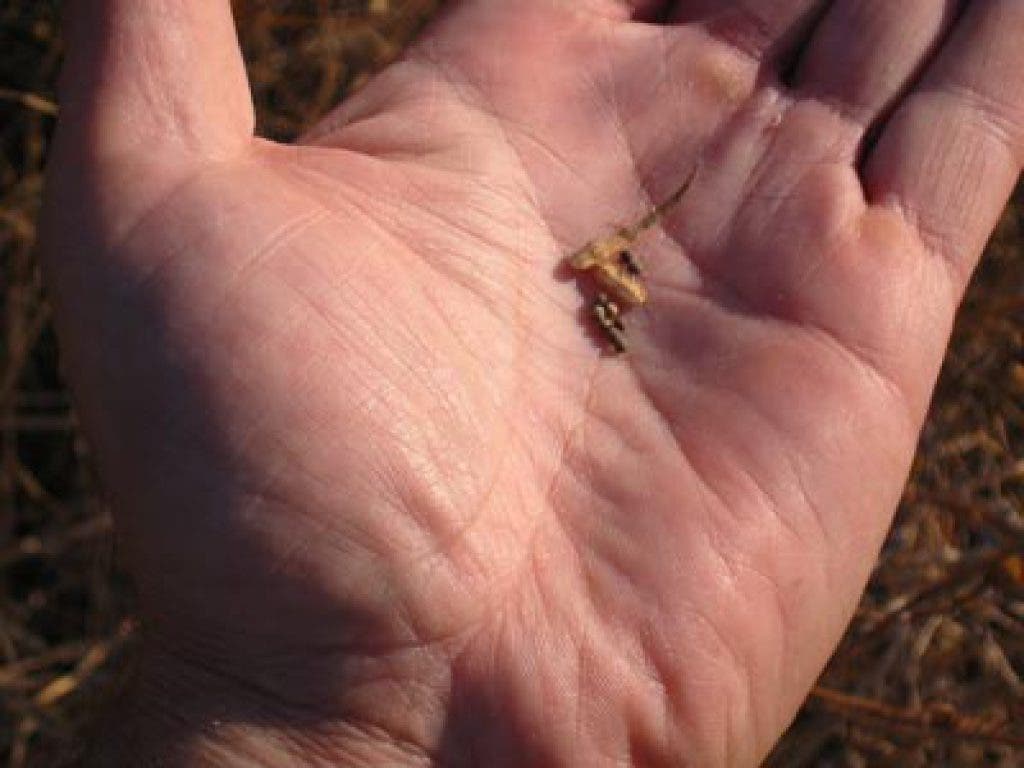
The seed of the mustard plant is among the smallest of seeds, yet from this small seed grows a large shrub. Jesus used the analogy of a mustard seed to show how something small and seemingly inconsequential can rapidly grow and have a powerful influence on all the world. The mustard seed has faith, power and transformational properties within it.
A tree, whose large branches offer a sanctuary for birds, was a familiar Old Testament symbol for a mighty kingdom which gave shelter to the nations. The tree represents earthly greatness and refuge to the nations. The tiny mustard seed, growing to be a tree, symbolizes Jesus’ offer of refuge and life in God’s Kingdom.
Note: The way God loves is totally different than from the way we love. His is an everlasting love. In other words, the love He bestows on us is continuous and there is absolutely nothing that can interrupt or interfere.
God's love is so much more empowering than the fleshy world's concept of love. Disagreements and broken promises can cause people to cease giving love. However, God’s love is based not on a feeling, but on His very nature (1 John 4:8), and as such, it is perfect, unchangeable and trustworthy. What’s more, His love is unconditional. We do not deserve or deter it. We never have to wonder if God does indeed, loves us. Believe you are worthy of receiving God’s love and recognize that God’s love is the greatest love of all.
Mark Gunderman can be reached at gunderman2001@aol.com.
><((((º> .· `·.. ><((((º> .· `·.. ><((((º> .· `·.. ><((((º>.