Community Corner
Frederick Washington’s Life In Segregated Herndon
Remembering Herndon's History: Frederick H. Washington talks about growing up in a segregated town.


By Barbara Glakas
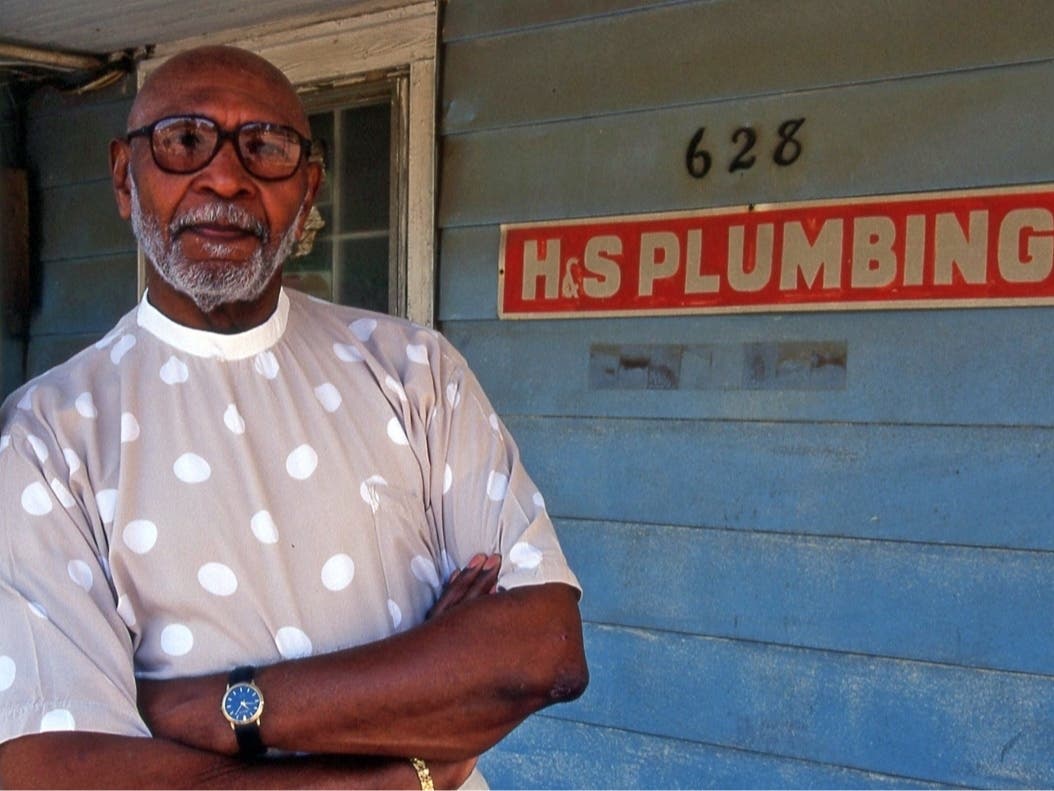
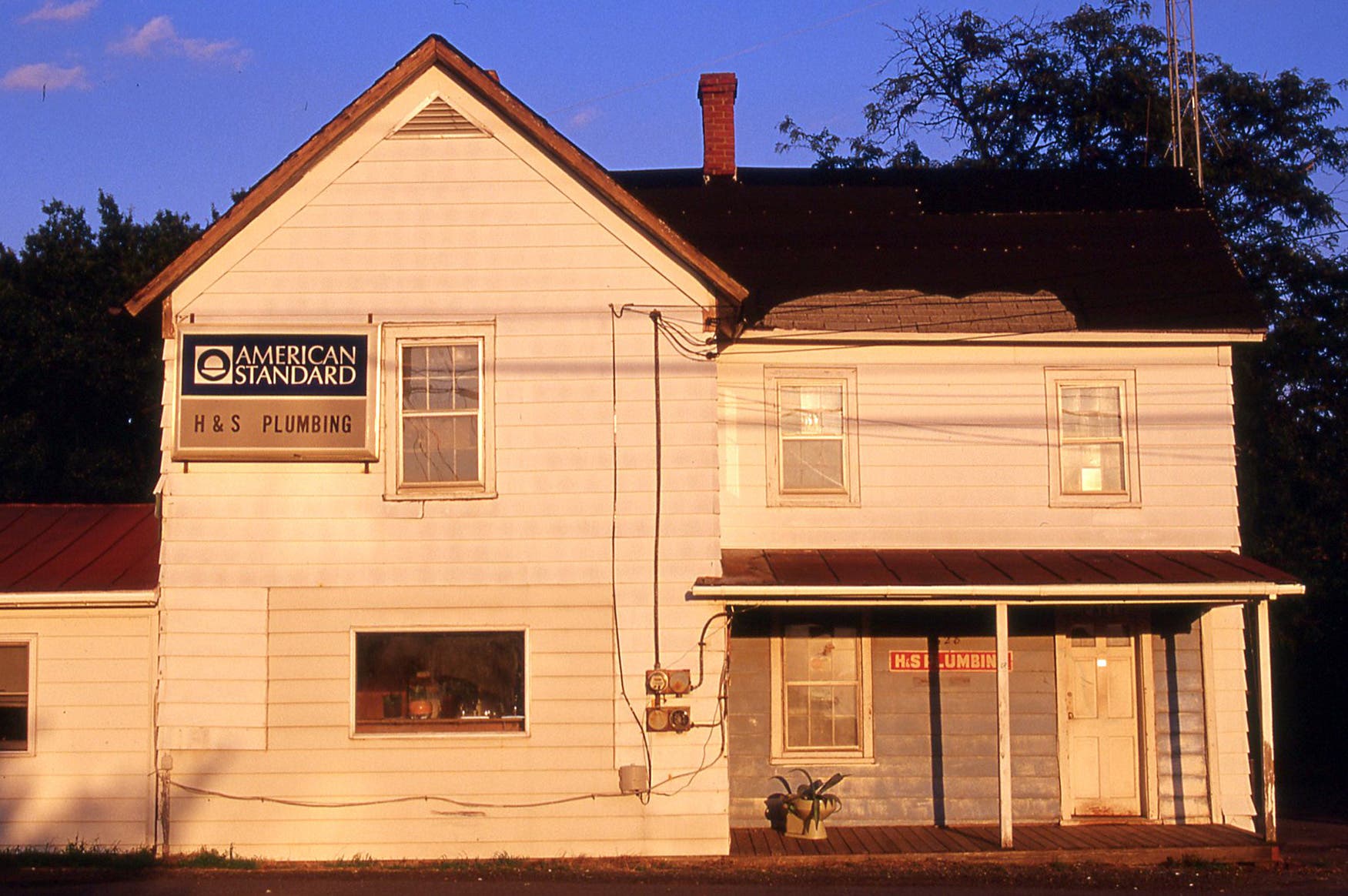
Frederick H. Washington was born in Herndon in 1926. His childhood home later became the location of the H&S Plumbing Store, formerly at the corner of Grove and Grant Streets. That building has since been torn down and H&S now has a new brick building on Grove Street, next to the business’s original location.
The fact that Washington grew up in downtown Herndon is unusual, as most African American families of that time almost exclusively lived in two areas of Herndon: Oak Grove or Cooktown. Oak Grove was located on the west end of town, between Sterling Road and the Washington & Old Dominion Railroad, near the present location of Oak Grove Baptist Church. Cooktown was located at the far north end of Monroe Street, on the north side of Herndon Parkway.
Find out what's happening in Herndonfor free with the latest updates from Patch.
In the 1920s and 1930s, African Americans represented about 10 percent of the total Herndon population. Washington associated with, and went to school with, the children and other African American families of Oak Grove and Cooktown, often then referred to as the two “colored settlements.” The school and church for African Americans were both located in the Oak Grove neighborhood. Kids who lived in Cooktown would walk to Oak Grove to go to school, two neighborhoods that were separated by about a mile and a quarter, as the crow flies. Washington’s house was near the railroad track, so he was lucky enough to be able ride the train from his house out to Oak Grove.
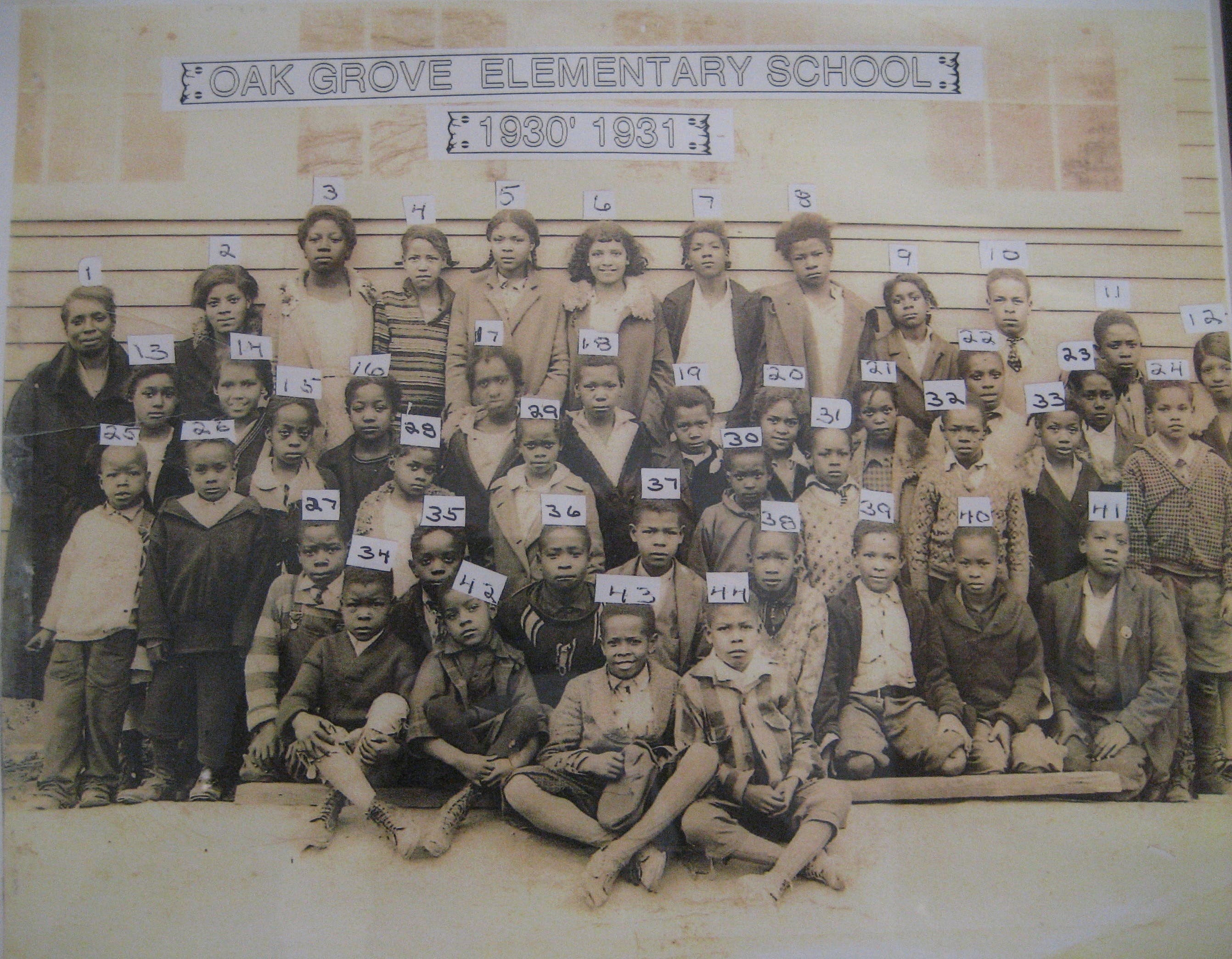
The Oak Grove School only went up to seventh grade. There was no high school in Herndon for black students. In order to go to high school, the black students would have to travel to either Washington, D.C., or Manassas. Washington attended high school in Manassas. By the 1950s, Fairfax County built its first high school for black students, Luther Jackson High School in Falls Church.
Find out what's happening in Herndonfor free with the latest updates from Patch.
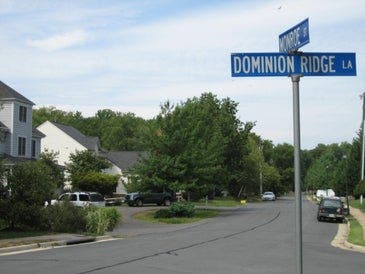
Oak Grove got its name due the stately oak trees surrounding the church grounds. It is believed that Cooktown’s name is attributed to Frederick Cook who, in 1893, had purchased three acres of land along Monroe Street in the area that later became referred to as Cooktown.
In 2001, Herndon Historical Society member, Chuck Mauro, interviewed Washington. The quotes in this article are from that interview.
“I was born March the 8th, 1926, in Herndon, VA., which is now H&S Plumbing Store at the corner of Grove and Grant. In that particular building, my maternal grandfather built that house, that best that I can tell, it had to been around 1891. Because my mother was the youngest of nine children and she was the only one born in that house. And she was born in 1892. When my mother married she moved away, some place, Oak Grove, Herndon, some place in that area. In 1925, my mother and father took it over [the house at Grant and Grove] and moved there. My parents were Charles Henry Washington and Clara Margaret Lewis Washington. I’m the youngest of six children. I’m the only one that was born there in that house. And the doctor that delivered me was Dr. Myers, who lived out on Monroe Street. Prior to that, very few people prior to my time, had a physician attending them, they was delivered by midwives.
“Mr. [Shirley] owned two or three houses on Grove Street during my time here, but due to the segregation in Herndon, he could not rent them to blacks. Mr. Shirley was a black man. During my time here, to live in Herndon, as a black, you had to own your property. And the only owner I’m aware of during my 75 years, was my family (who) owned that house.”
Herndon was very segregated in the early 20th century. In 1923, the Town Council approved an ordinance “prohibiting the sale of property within the corporate limits to non-whites without council permission.” That may be why the Washington family was able to own their own house in downtown Herndon, because they had owned the property since the 1890s, prior to that ordinance taking effect. Also during that time period the only known black-owned business in town was that of Pete Simms, who had a blacksmith shop.
“My father worked on the Washington & Old Dominion Railroad. And there was no schools in Herndon where blacks could go. So we had to go to Oak Grove. There was an elementary school up in Oak Grove, which is not there now. It’s up past the old Oak Grove Church. It’s right on the bike trail now, the school that I went to. It’s been torn down. We were able to ride the train from Herndon to Oak Grove, get off up here and go to school. That’s was the way my entire siblings went to school.
“But as far as going to Manassas, my brother just older than I, he went to Manassas also. But to get there, Fairfax County did not have a bus coming into Herndon for the black children. He caught the train and rode to Vienna. Fairfax County provided a bus for the students in Vienna, Fairfax, Falls Church, Bailey’s Crossroads, and all of that area to go to Manassas. So my brother had to catch the train in Herndon, and ride to Vienna, about 6:30, 7:00 o’clock in the morning. The bus would come through, pick him up and carry him to Manassas. And from Manassas back to Vienna that evening, and wait for the 6:30 train came up from Washington, and bring him back to Herndon. He was spending twelve hours approximately to go high school.
“I started to Manassas in 1940 and graduated in ‘44. When I started to high school, my mother, and several other concerned parents, petitioned to get a bus to come to Elden, Locust, and Sterling Road. We used to call that Cronfeld’s corner. At Cronfeld’s corner waiting for the bus, if it came, because we were riding buses that were handed down, some had windows, some didn’t have windows. That’s as close as it would get into Herndon. We had to walk from what is now H&S Plumbing up to that corner. The process of getting up there was a story in itself. Because mother done domestics, laundry work primarily, so she done laundry for practically any of the prominent whites that lived in Herndon at that time. So I had to deliver the clothing. Pick up on the way to school, from school, whether the weather had snow on the ground or not, I had a sled. I would pull the sled in the mornings. I would deliver a basket that my mother had done the day before, that night before.
“The buses would bring the white children in from outlying areas, to Herndon, and they would ridicule us ... spit at you, throw insults at you, throw things at you. We would be standing, about five of us kids, standing there, huddling, waiting for the bus to come, so we caught hate at that point from them. At that point it didn’t bother us greatly because that’s the only life we knew. Growing up in a segregated society, I’m telling you, until you were exposed to something else, it was OK. Not OK, because it was life, it really was. So that’s the way I had to go high school.
“Oak Grove was the only church. Interestingly, my mother was christened as a Catholic. As a child but she could not go to Catholic Church in Herndon, to my knowledge. Because my father worked on the railroad, she was able to ride the train into Rosslyn. The train stopped in Rosslyn, Va., and catch a street car and go across the bridge and visit her sisters and brothers that lived in Washington and she would go to church, Catholic Church in Washington. At that time, but in Oak Grove and Herndon, the only church blacks could attend would be a Baptist Church up in Oak Grove.
“But as far as in Herndon, we owned our property. Mr. Pete Simms owned his. Mr. Shirley owned his property. And the Harrison Morton’s, there were no street names, but I would say it was between Van Buren and Grant somewhere, north of Elden, was where the Mort[e]n’s lived. Right in Herndon, those were the five families that owned and lived right in Herndon until you went to Cooktown.
“Cooktown was in the town of Herndon, but it was composed of all blacks. At that time, Mr. Young had a big farm down there, a white man had a big farm, but beyond that it was all blacks.
“If you lived right in Herndon like we did, you were privileged to have the sanitation taken care of. We had an outside building. No holes were in the ground. Not a pit for the toilet. They supplied us with a can, oh, about so tall, maybe a foot and a half high, diameter of maybe about twenty inches. There was a black man that had one leg. We called him Dade, Tom Dade, who lived in Cooktown. He and his wife had a horse and wagon, and they would come around to every house in Herndon, pick up the full can, and leave a fresh can. And that was done at least once a week, or once every two weeks. But that’s the way, living in Herndon, you had that privilege, everybody. I don’t think they had sewage at that time [in Cooktown]. So we was privileged to have that service. And Mr. Tom Dade, we called him 'Peg Leg Tom,' because he had one leg.
“His father owned a lot of property in Cooktown. All of these people lived in Cooktown. Tom Dade, Sr. owned a lot of property down there and his son is the one that handled the sanitation process before they built the sewage plant down on Young Road off of Monroe. Down in Cooktown, there used to be a sewage plant down there. [And they didn’t have water in Cooktown, they had to go up to a spigot to get water?] Absolutely. Wells, everybody had wells. Even for H&S plumbing, my mother didn’t have water put in that house in about ’42 or ‘43. Electricity was put in there about the same time. So we felt we were prominent. We had water in the house.”
In Cooktown, there were dirt roads and no water. Eventually a spigot was installed in Barker Hill from which the Cooktown residents hauled their water. Much later, in 1969, with the help of Fairfax County anti-poverty workers, the remaining Cooktown residents signed petitions protesting the lack of school bus service, mail delivery, paved streets, water and sewers. Some Cooktown residents also filed suit against the postmaster general, complaining that they were not provided with home mail service. Cooktown residents had to travel over a mile to get their mail. In both instances, the town and the postmaster initially balked at the residents’ requests. However, eventually, the streets were widened to accommodate school buses, street lights were installed and a temporary water hydrant was installed to replace polluted wells. Two town councilmen — Charles Allen and Holden Harrison — paid for the hydrant themselves.
“The Cooktown children down there, they went to the Oak Grove School also. There was no other school for them to go to. If you lived in Loudoun County, you went to Leesburg. There was a high school up there. But Fairfax County did not have a high school for its black students until Luther Jackson.
“The people that lived in Cooktown in the beginning was named Cook. I was looking at my parent’s marriage license just the other day and my mother and father were married by Reverend Frederick Cook. He was the minister that married my mother and father. It’s on the marriage license. I have my mother’s and father’s marriage license. But the Cooks were the prominent owners in Cooktown. The town, the area was named after them. Very few people realized it was in the incorporated limits of Herndon! Because it consisted of primarily blacks, and they were written off as being Herndon residents. Only those who lived right in Herndon were considered to be residents.
“Cooktown was a very interesting place. Oh yes, [I would go over to Cooktown]. It wasn’t really within walking distance like Oak Grove was if you didn’t ride the train. To have any social life as blacks, we had to go to one of two places, Oak Grove or Cooktown. Cooktown consisted at that time of nothing but blacks, and Oak Grove consisted of nothing but blacks. So we went to school in Oak Grove, church in Oak Grove, any social activities that you had. They were called “lawn parties.” They would cook, and sell it, and they danced. Then you would have some of the older people that played string music, like guitars or mandolins, whatever, and they would dance. The old school house that used to be at Oak Grove before they tore it down, prior to my time, it was standing and they would have dances in there. Cooktown didn’t have that. That consisted of primarily residences.
“During my time at six or seven years old, when I was a child growing up, [we] could go to the stores anytime to buy groceries. You didn’t have to go to the back door for that. But to get any kind of ice cream or anything like that you had to go to the back door, anything like that, you had to go to the back door. You had to ask for it. They may sell it to you they may not, depending on how they felt. But here again, that was life. That was the way life was growing up in Herndon. We didn’t have theaters. We didn’t have radios. We didn’t have none of that.
“Vernon Cockerille, was the lone ‘peace officer’ they called him … we would congregate at the train station waiting to see who went to Washington that morning and was coming back that night, to see who got off that train, everybody, everybody, nosey. It was a gathering for everybody, blacks. Vernon Cockerille would stand over there next to Chamblins drug store [formerly at Station and Lynn Streets], right on the corner. If he looked at us hard, we knew, take caution. But if he took a step toward that train station, we disappeared. Because he would beat your head. He was a no nonsense type. He was the only cop in Herndon during that time. He never drove a car, never learned to drive a car.
“He had billy club, a metal billy club, about that long. That was dangerous! He would have a nightstick. Oh yes, if you didn’t obey his word, if he said ‘move’ and you didn’t move, you got hit … anywhere he wanted to hit you. Because, he carried a gun, he did carry a gun, but he didn’t have to use the gun. [Vernon Cockerille] was carrying out a lifestyle that he knew that the people in Herndon wanted him to enforce.
“If we were walking down the street, if there were several particularly white women, if there wasn’t enough room for me to pass on that street with them, because they wasn’t moving, I had to stand step off and let them by. That was standard procedure. You could not occupy or force them to change their stride. We had to move off for them. That was a Jim Crow law. That’s the law that you lived under and you knew it.
“[At the Herndon depot] Mr. Cooper was the station manager there. Blacks went in here [to the right of the Station Master’s office], and whites went in here [to the left of the Station Master’s office.] I never went in there [the white side].
“But in Herndon, those that lived in Herndon, I would say that my parents would always caution us, ‘You know your place.’ They didn’t have to remind us. We knew our place. What they were saying, don’t antagonize Vernon Cockerille. Because you didn’t want to get a reputation. Because your parents was respected as blacks in Herndon and they weren’t going to let any of their children defame them in any way with their employers. My mother was a domestic. My father worked on the railroad so that was a lifestyle that they were going to protect. As children we knew that, we didn’t do anything.
“Mr. Taylor, he owned the jewelry store and a bike shop right there. He repaired, built wheels, and did anything that was to be done on a bicycle. They had about three or four chicken houses. They raised from baby chickens up the point they would take them into Washington and sell them. Mr. Taylor, being the bicycle guy, I cleaned out one of the chicken houses that I had down there and I worked with Mr. Taylor learning how to fixing spokes in the wheel and everything. So I ended up having my own little business at ten or eleven years old down there building bicycles for the other children from Oak Grove or Cooktown and everywhere else.
“Growing up in Herndon, we had some white playmates but very few. They had to be close within [to] where we lived. So as far as blacks and whites in Herndon … it was limited as to what you could do. But there was a lot that you couldn’t do. But outside of Herndon was where we had to seek social life, religious life, or whatever, educational life, you had to leave Herndon. But as a child growing up there it was accepted, we didn’t know any different. We didn’t look down on it until you expanded your life.
“When we came out of high school there was nothing to do. There was no employment to be had. To live in Herndon you had to own your property, unless you were a hired hand of some farmer. The Washingtons, we owned the house because my paternal grandfather was a property owner. My father worked on the railroad. Due to the lack of employment in the area when I came out of high school, it was necessary to move away from here.”
In 1944, Washington left Herndon and moved to New Jersey to join an older brother. In 1946, his parents sold their Herndon home and moved to Washington, D.C. That same year he joined the service and did his allotted time. He married, starting having children, and moved to Cleveland. He took advantage of the GI Bill to get his education, studying electronics and engineering, later getting a job in avionics. Over the years — pursuing job opportunities at Honeywell and Sperry — he and his family lived in Florida and California. His wife died in 1979 and by the early 1990s Washington decided to return home. He came back to the area, discovering an area new to him called Reston.
“I had come back because of family. My late wife’s family lived there off of Ashburton and West Ox. And her brothers, one of the brothers, bought the Lawrence Lee’s house on Coppermine. The [other] brother that’s still living, he and his wife both are in the school system. He retired, she is still thinking about it. But they were both teachers in Fairfax County. So I came back here because of my late wife who had family here.
“I had no family here, but I knew the area, I knew the people that still lived here. They still go up in Oak Grove and places like that. I knew their children if nothing else. So when I looked at this place, OK, it used to be apartments. But they converted them to condominiums. These now are condominiums. So the price was right, I decided that I wanted to liquidate my property out in California.”
During the interview, Washington and Mauro went on a car ride through Herndon. They headed north on Monroe Street, crossing Herndon Parkway. As they passed Young Avenue, he said:
“From here on in, you were into Cooktown. And it was consistent, nothing but blacks. All of this is new through here. The Wilkenson family lived right in this vicinity. And to the left right here, is where the Reverend, I think his name is Norman or Roland Smith, in that house right there is where he lives. He’s the pastor of Dranesville Church. And the next house [the last house on the left] is where Nancy [Waters] lives. She told me that when she was growing up theirs was a dead end street and people used to come and put trash in here. All over here was Bakers. A family called the Bakers and the Lucases, lived to the right of this dead end [on Monroe Street]. The Hearns and the Cooks and the Bakers lived right up in that area, they owned all that land through here. Cooktown consisted of nothing but blacks. There were no services at all. I [visited] down here when they were developing this and I was amazed at the construction that was taking place.”
Washington’s daughter, Sylvia, came back to the area at about the same time he did. She got a job teaching at Herndon Elementary school. He said:
“She was interviewed here in Fairfax County at three different schools, Herndon Elementary was one, Crossfield, and Forest Edge over here in Reston. She had no idea which one they were going to give her. She had a preference. She wanted to teach in Herndon. Why? Because I couldn’t go to school here. And it turned out that was the school they assigned her, right here in Herndon. So it’s been a joy for her to teach here because her father and mother couldn’t go to school here in Herndon.”
He continued:
“Today there so many blacks living in Herndon, it’s a wide-open area. So beautiful, and I think because the openness of it makes it nice. I have no problems living here today. I find this better than California. It’s better than any place I’d ever lived. It may be subtle, it may be hidden, I don’t know, but they treat you beautifully. I have no problems. So coming back here, and [my daughter] teaching in Herndon, she’s happy. So it’s been a joy.”
Washington passed away in 2016.
About this column: “Remembering Herndon’s History” is a regular Herndon Patch feature offering stories and anecdotes about Herndon’s past. The articles are written by members of the Herndon Historical Society. Barbara Glakas is a member. A complete list of “Remembering Herndon’s History” columns is available on the Historical Society website at www.herndonhistoricalsociety.org.
The Herndon Historical Society operates a small museum that focuses on local history. It is housed in the Herndon Depot in downtown Herndon on Lynn Street and is open every Sunday from noon until 3:00. Visit the Society’s website at www.herndonhistoricalsociety.org, and the Historical Society’s Facebook page at https://www.facebook.com/HerndonHistory for more information.
Note: The Historical Society is seeking volunteers to help keep the museum open each Sunday. If you have an interest in local history and would like to help, contact HerndonHistoricalSociety@gmail.com.
Get more local news delivered straight to your inbox. Sign up for free Patch newsletters and alerts.