Community Corner
Mrs. Mary Lee Castleman
Remembering Herndon's History: A Prominent Woman's Influence on The Herndon Seminary and St. Timothy's Episcopal Church.


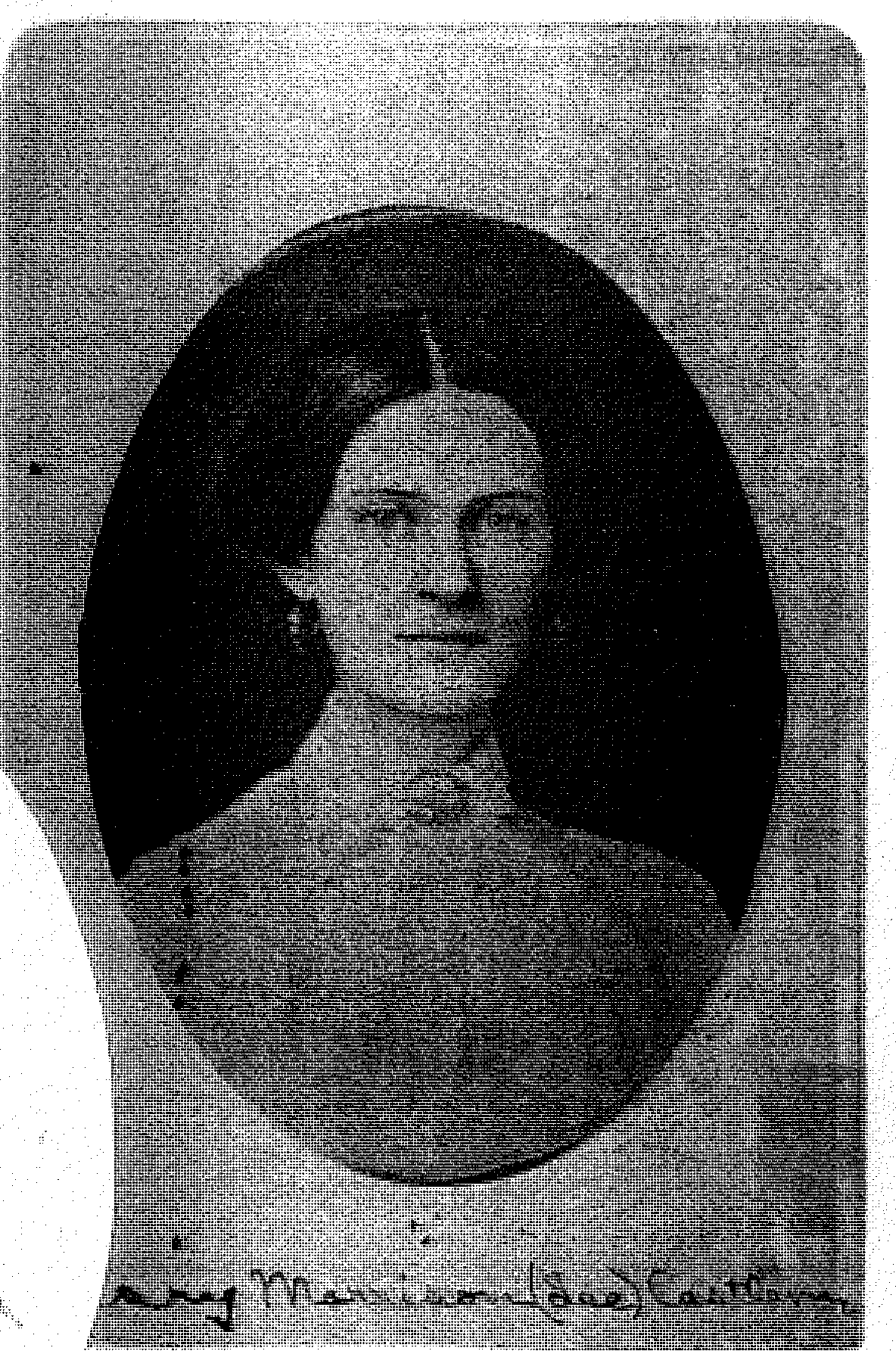


- Mary Lee Castleman, circa 1854. Photo from Mrs. Elizabeth Tabbott.
- The original St. Timothy’s Episcopal Church at the corner of Elden and Grace Streets, consecrated in 1881, now Herndon’s Masonic Lodge. Photo from the J. Berkley Green Photo Collection.
- The former St. Timothy’s Church in 2014. Photo by Barbara Glakas.
- The Herndon Female Seminary at 763 Grace Street. Photo from the J. Berkley Green Photo Collection.
- Herndon Seminary students, 1906. Photo from the Herndon Historical Society.
- 763 Grace Street, the former Herndon Seminary. Photo by Barbara Glakas.
By Barbara Glakas
An early of resident who had a significant impact on the Town of Herndon was Mrs. Mary Lee Castleman.
Ann Ward Crocker, an author of the book, “Mary Morrison (Lee) Castleman: Our Woman of History,” spoke to the Herndon Historical Society in 2002. Ms. Crocker described Mrs. Castleman’s life both before and after she moved to Herndon.
Find out what's happening in Herndonfor free with the latest updates from Patch.
Mary Morrison Lee was born in Richmond in 1830. She was one of seven children of an Episcopal Minister, Rev. William Fitzhugh Lee and Mary Catharine Simms Chilton. Mary Lee was a first cousin to Robert E. Lee. The family moved to Alexandria in 1837 and the father died shortly thereafter. The family was closely associated with the extended Lee family, who were involved with Alexandria’s Christ Church, Episcopal High School and the Virginia Theological Seminary. It was there that Mary presumably met her husband, Robert Allen Castleman, who went to Episcopal High School and also the Virginia Theological Seminary.
Mary and Robert married in 1853. Robert was soon after ordained as a Deacon. After performing missions in West Virginia (which was then part of Virginia), he was ordained as a priest. Two of their daughters were born in West Virginia. The family was transferred to Harrisburg, Pennsylvania, in 1857 to serve another church. It was there that a son was born and one of her daughters died in an accident involving scalding liquid. By this time her husband had established two ministries.
Find out what's happening in Herndonfor free with the latest updates from Patch.
In about 1860, the Castlemans moved back to southern Virginia, near the North Carolina border. Mrs. Castleman explained the move in a letter:
“His [Rev. Castleman] mother just died in Virginia and left him six slaves. He cannot conscientiously set them free; for he cannot tell what would become of them. He cannot send them to Liberia; he has not the means. He cannot bring them here [Harrisburg, PA] in the existing stare of feeling on the subject. His conclusion is, he must go back to Virginia, take a country parish and take care of these slaves.”
It was in Virginia that Mary had another baby girl. A fourth baby girl was born in 1862.
The years during and immediately after the Civil War were difficult for this large family. Practically destitute they were loaned a small farm which allowed them to feed their family. Both Mary and her husband sought out teaching jobs. Sadly, in 1865, Rev. Castleman was inexplicably shot and killed by an unknown person while returning home from a neighbor’s house. His obituary noted that, “He had no enemy, capable of such a deed, it is supposed he was the victim of an appalling mistake.”
An 1870 census showed Mrs. Castleman, her mother and her children, were living back in Alexandria. She taught there for several years. She was befriended by the Rev. John McGill, a minister in charge of small outlying churches, including one in Herndon, St. Timothy’s Mission. It was Rev. McGill who influenced Mrs. Castleman to settle in the village of Herndon. Various sources indicated that she moved to Herndon in about 1873/1874 along with her mother, Mrs. Lee, and her daughters Mary, Ida, Lucy, and Virginia. Her son, Robert Jr., remained in Alexandria as a boarding student at Episcopal High School.
In 1875 the Town of Herndon was still four years away from being incorporated. Herndon’s fledgling St. Timothy’s Episcopal congregation worshipped in what one former resident described as a former cheese factory at the corner of Grace and Vine Street.
End notes written in the back of Virginia Castleman’s book, “Reminiscences of An Oldest Inhabitant” said,
“St. Timothy’s Mission began in 1868 in an old building at what today is the corner of Lynn and Station Streets. Church records locate it ‘opposite Clark’s mill and next door of Henry’s [Simms] blacksmith shop.’ In 1871 it was relocated on a half-acre lot at the northwest corner of Grace and Vine Streets in a building which formerly housed a cheese making operation. Church records show that services were not held in the Mission after Easter 1880 when St. Timothy’s Episcopal Church was completed at the corner of Grace and Elden.”
The upper part of the cheese making building housed a home school for boys. Mrs. Castleman sought to establish a proper school for young ladies.
Mrs. Castlmen organized local women in to a society called “The Gleaners” to help the church. They met weekly for 20 years, sewing and selling aprons, sunbonnets, children’s clothes and quilts. They sold these goods and paid for much of the construction and maintenance of St. Timothy’s church and rectory. The new church was built at the corner of Elden and Grace Streets and was consecrated in 1881. That building still stands today and is currently the home of Herndon’s Masonic Lodge.
That same year, Mrs. Castleman bought some land from Ancel St. John. She contracted for the building of a large two-story frame house which is located at what is now 763 Grace Street. Mrs. Castleman and her four daughters operated the Herndon Seminary for several years in this house, a private school which had formerly been held in the old mission building, prior to moving into the new Grace Street house. The seminary was both a boarding school and a day school for young ladies. Boys were allowed to attend up to twelve years old. Mrs. Castleman and her daughters taught a full curriculum including math, history, geography, English, Bible study, music and art. Each daughter either taught different subjects at the school or took responsibility for one of the logistical aspects of the school, such as housekeeping or the seminary’s business affairs. Several materials from the Herndon Seminary can be seen in Herndon’s Depot museum on Lynn Street.
According to Chuck Mauro’s book, “Herndon, A Town and Its History,” tuition at the seminary was about ten dollars per month for the younger day students, with additional fees for older students. Some students finished their education at the seminary at the age of fourteen or fifteen, while others continued their education into their upper teens and then went on to college. Girls basketball was the only organized sport conducted at the seminary.
Mrs. Castleman died at the seminary in 1891 and was buried in Christ Church Episcopal Cemetery in Alexandria. But her spirit of purpose and interest in education was carried on by her daughters.
The Herndon Seminary was the location of the first meeting of the Study Club, which first met in 1889. They decided to form for the purpose of “the mutual improvement of its members in literature, art, science, and the vital interests of the day.” The eleven ladies – the Castleman daughters and several other local women – collected forty books for their research. They decided to meet every two weeks and they named their group The Fortnightly Club.
By 1900 they had collected more than a thousand books. Virginia Castleman took a library science course at Drexel Institute in Philadelphia and then suggested they start a public library for the people of Herndon. This was the genesis of the Fortnightly Library, the first lending library in Fairfax County.
The Castlemans lived in the Grace Street house for several years. Failing health of one of the daughters made it necessary, in the mid 1920’s, to arrange for a dwelling separate from the school. It was at this time that a six room bungalow house was built next door by Mr. E. E. Gillette. This house is now 761 Grace Street.
The Seminary came to a close in 1926. All the Castleman daughters passed away between the years 1926 and 1940 and are all buried in Chestnut Grove Cemetery in Herndon.
In a tribute to their friend, The Gleaners Society remembered Mrs. Mary Lee Castleman as someone with, “careful forethought, strong personality, and devoted self-sacrifice,” with a “conscientious, systematic and liberal consecration of her means to her Master’s service.”
About this column: “Remembering Herndon’s History” is a regular Herndon Patch feature offering stories and anecdotes about Herndon’s past. The articles are written by members of the Herndon Historical Society. Barbara Glakas is a member. A complete list of “Remembering Herndon’s History” columns is available on the Historical Society website at www.herndonhistoricalsociety.org.
The Herndon Historical Society operates a small museum that focuses on local history. It is housed in the Herndon Depot in downtown Herndon on Lynn Street and is open every Sunday from noon until 3:00. Visit the Society’s website at for more information.
Note: The Historical Society is seeking volunteers to help keep the museum open each Sunday. If you have an interest in local history and would like to help, contact Charlie Waddell at 703-435- 2520 or charliewaddell@cox.net.
Get more local news delivered straight to your inbox. Sign up for free Patch newsletters and alerts.