Community Corner
Remembering Herndon's History: A Survey Of The Town's Hidden Gems
Historian Barbara Glakas gives a photographic tour of Herndon's many interesting and unique historic gems.


By Barbara Glakas
Maybe you have seen some of these. Or maybe not. As you walk through Herndon, you may have noticed some hidden – and sometimes not so hidden – interesting historic “gems,” which harken back to Herndon’s past. For instance …
Spring Houses
On the west side of the Herndon Centennial Golf Course are a couple of turn-of-the-century stone spring houses that can be seen from the Washington and Old Dominion (W&OD) trail. One has been renovated. These represent the days before the Town had its own water system, when residents had their own cisterns, wells, and spring houses. These spring houses were formerly associated with homes that were once located along a gravel road (Old Heights Road) that runs parallel to the W&OD Trail, near the Folly Lick stream branch, which is now part of the golf course.
Find out what's happening in Herndonfor free with the latest updates from Patch.

Train Whistle Post
Next to the Herndon caboose on Lynn Street is a tall iron whistle post, painted white with black dashes and dots. The sign is next to the W&OD Trail which, and dates to when the Southern Railway ran the railroad, from 1894 to 1912. The black marks signify how many times a locomotive engineer was to blow the train whistle, and whether the duration of the whistle should be long or short. The two long and two short whistles warned that the train was approaching a crossroad.
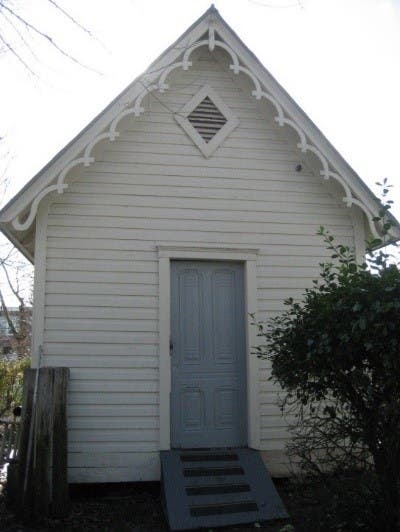
Cemetery Caretaker’s Shed
A cemetery caretaker’s shed was once located on the property of the Herndon’s Chestnut Grove Cemetery. The cemetery is located at the intersection of Dranesville Road and Herndon Parkway and was formally established sometime between 1872 and 1874. The caretaker’s shed is believed to date from that same time period. The shed was in danger of being lost due to development near Herndon Parkway. Herndon residents, Harlon and Midge Reece, who formerly lived in a historic home at 905 Elden St., made arrangements to have the old shed relocated to their back yard, in c. 1989-1990. The carpenter gothic style shed remains in that yard today.
Find out what's happening in Herndonfor free with the latest updates from Patch.
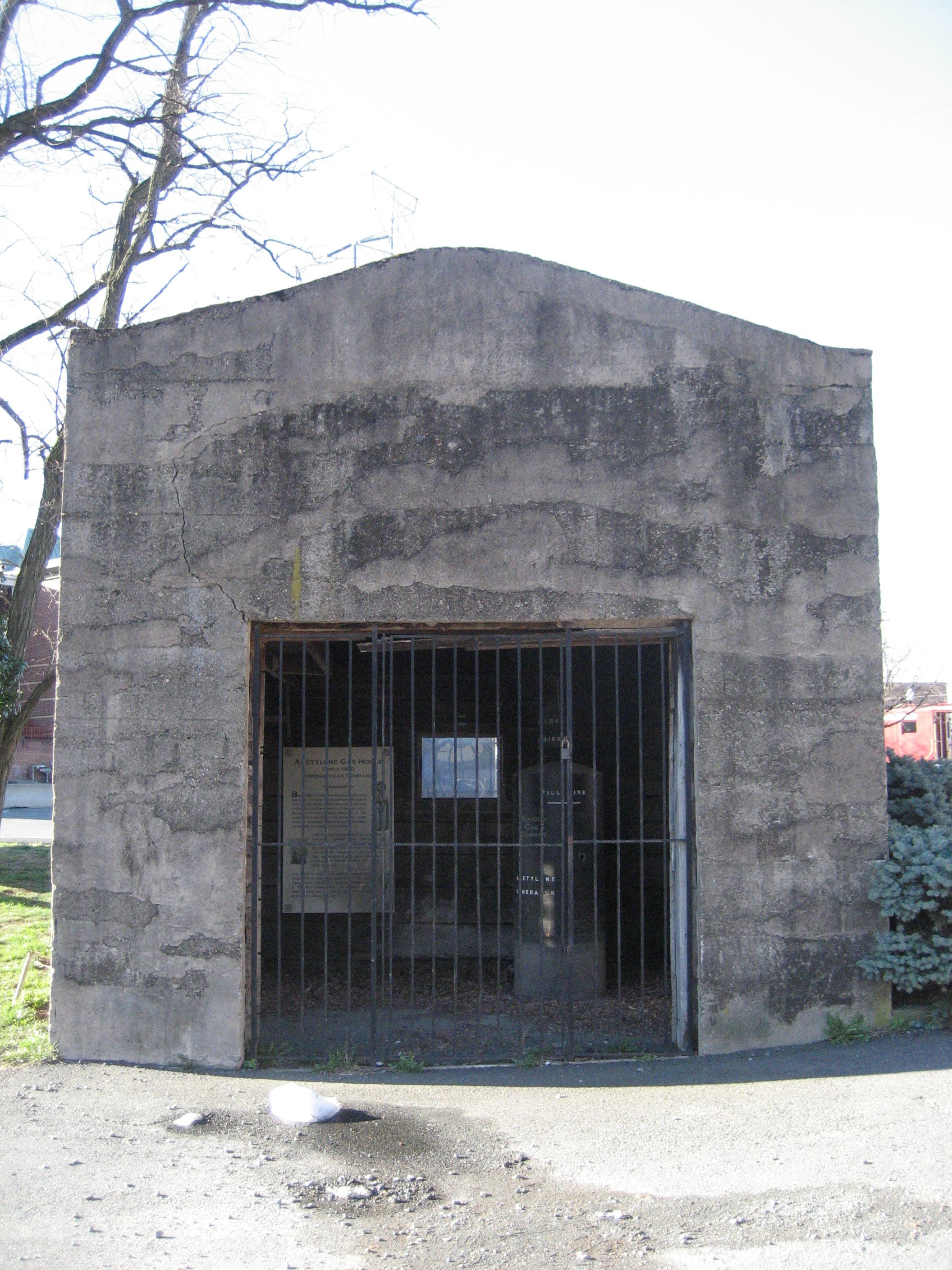
Gas House
There is an old gas generating station that is located across the street from the Herndon Municipal Center at 777 Lynn St. It dates to about 1900. It was part of the Herndon Gas Company that was formed to provide gas for the streetlights in downtown Herndon, and for the lights in a few of the town’s more affluent homes. The black marks on the outside are remnants from Herndon’s 1917 Big Fire. Next to the gas house is the foundation of Moffett’s Blacksmith shop (built in 1906) which was moved to Frying Pan Park in the 1970s.
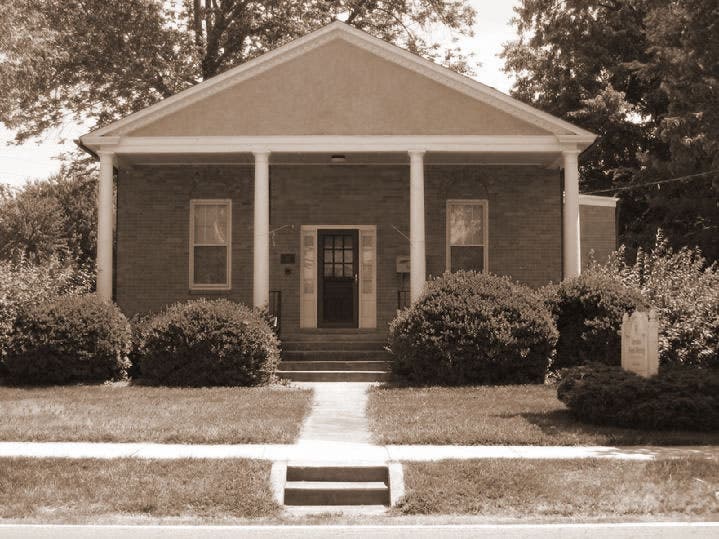
The Original Fortnightly Library
The Herndon Fortnightly Club, which formed in 1889, started Fairfax County’s first lending library. The club members stored their books in various buildings around town, but lost many of them in the 1917 Big Fire. With insurance money from the fire, they were able to build their own library building in 1927. The club ran their library out of this little cream-colored building at 660 Spring St. until the 1970s when it was absorbed into the Fairfax County Public Library system. The building is now a Quaker Friends Meeting House.
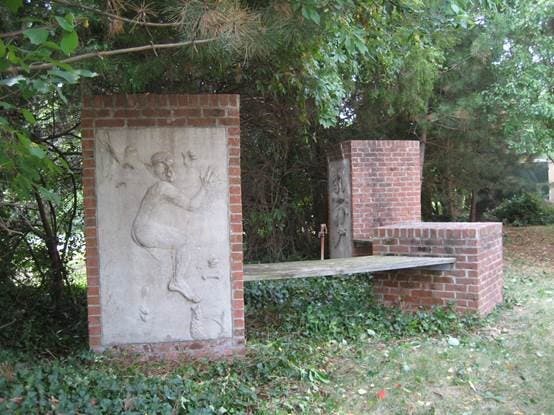
Troll Sculptures
Two large cement sculptures of whimsical trolls can be found in a small patch of trees between the W&OD Trail and the Herndon Harbor House. They can best be seen from the parking lot of 871 Grace St. The sculptor was Mary Larue Wells who was hired in the 1980s by the Fairfax County Housing Authority to create some art work for the play area of a subsidized housing project in Reston. The molds for her sculptures were later reused at the Harbor House. Wells used the likenesses of two county officials for the faces of the two trolls: Walter Webdale and Jack Herrity.
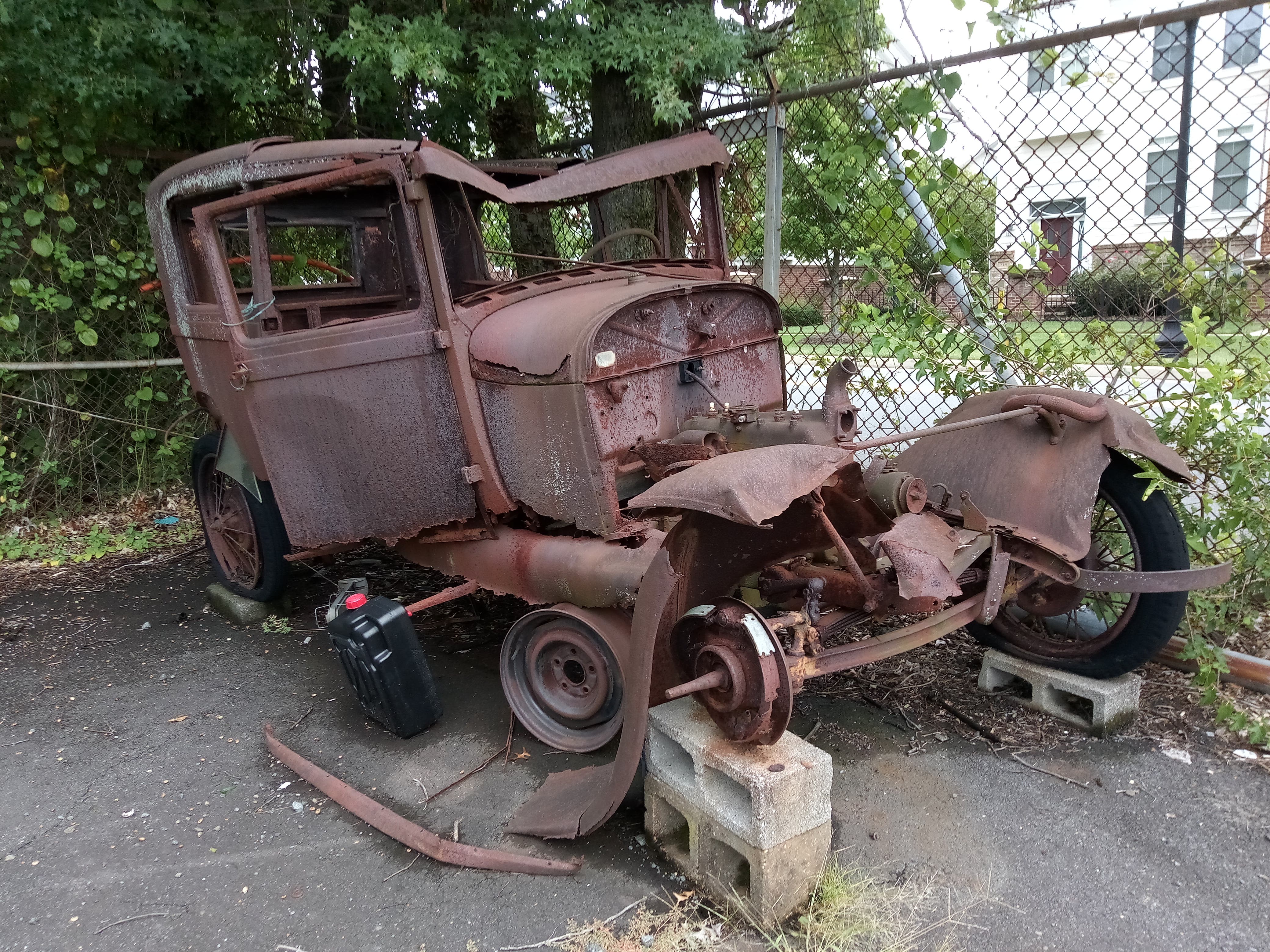
The Rusty Old Car
Parked in the rear parking lot of the Elden Street Service Center at 602 Elden St., is a rusty antique car sitting upon cinderblocks. The car is a former Model-A sedan from c. 1928-1931. The car is believed to have been there since that building housed the Herndon Motor Company in the 1960s. What is the significance of the car? You will have to ask the business owner.
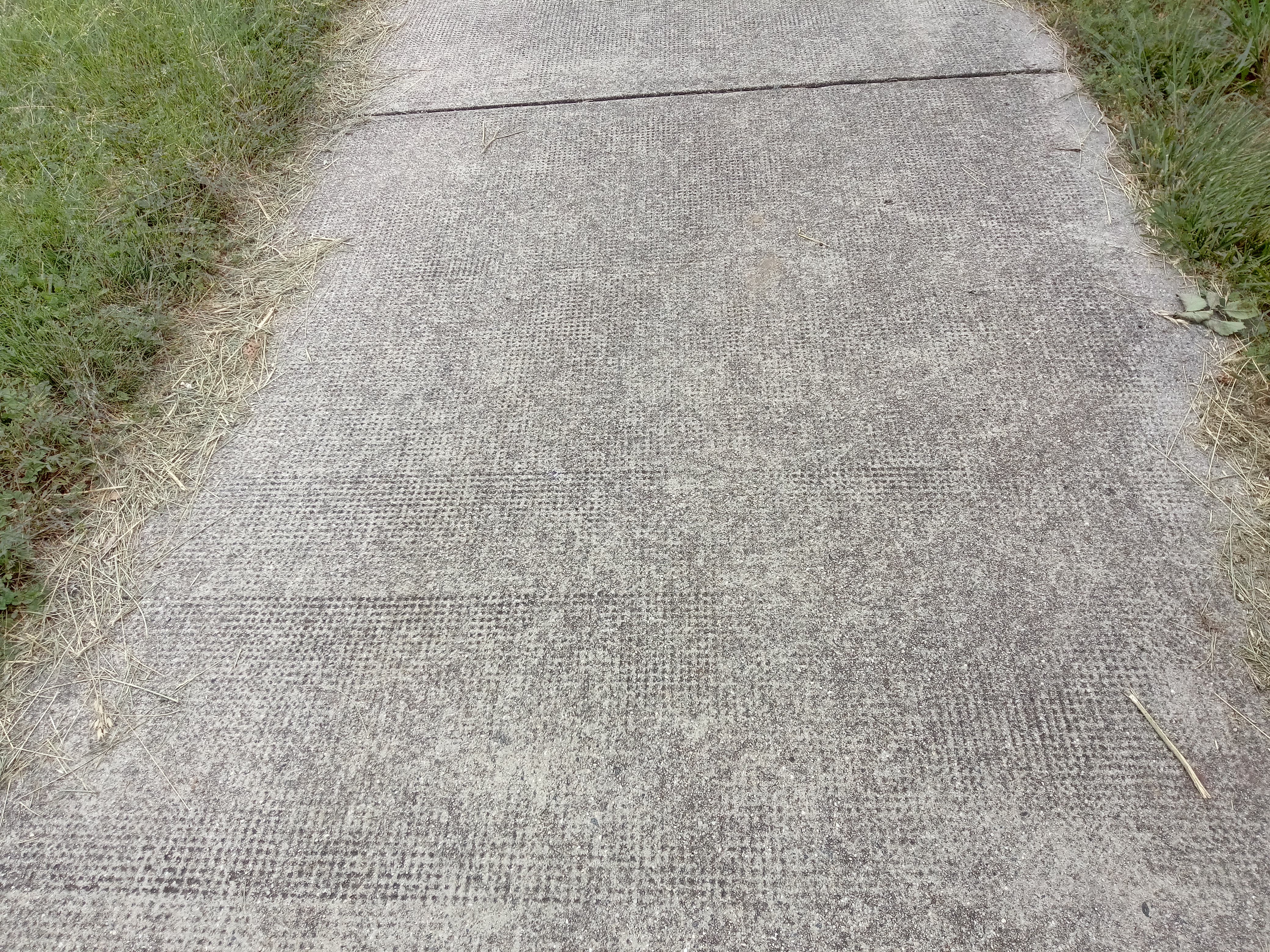
Dimpled Sidewalks
Some sections of old sidewalk in a few of Herndon’s older neighborhoods have a dimpled pattern on them. This design was made with a hand-held roller and represents some of the older sidewalks in town. One of these rollers is located in the Herndon Historical Society’s Depot Museum. Some sections of dimpled sidewalks can still be seen on Grace Street and Oak Street.
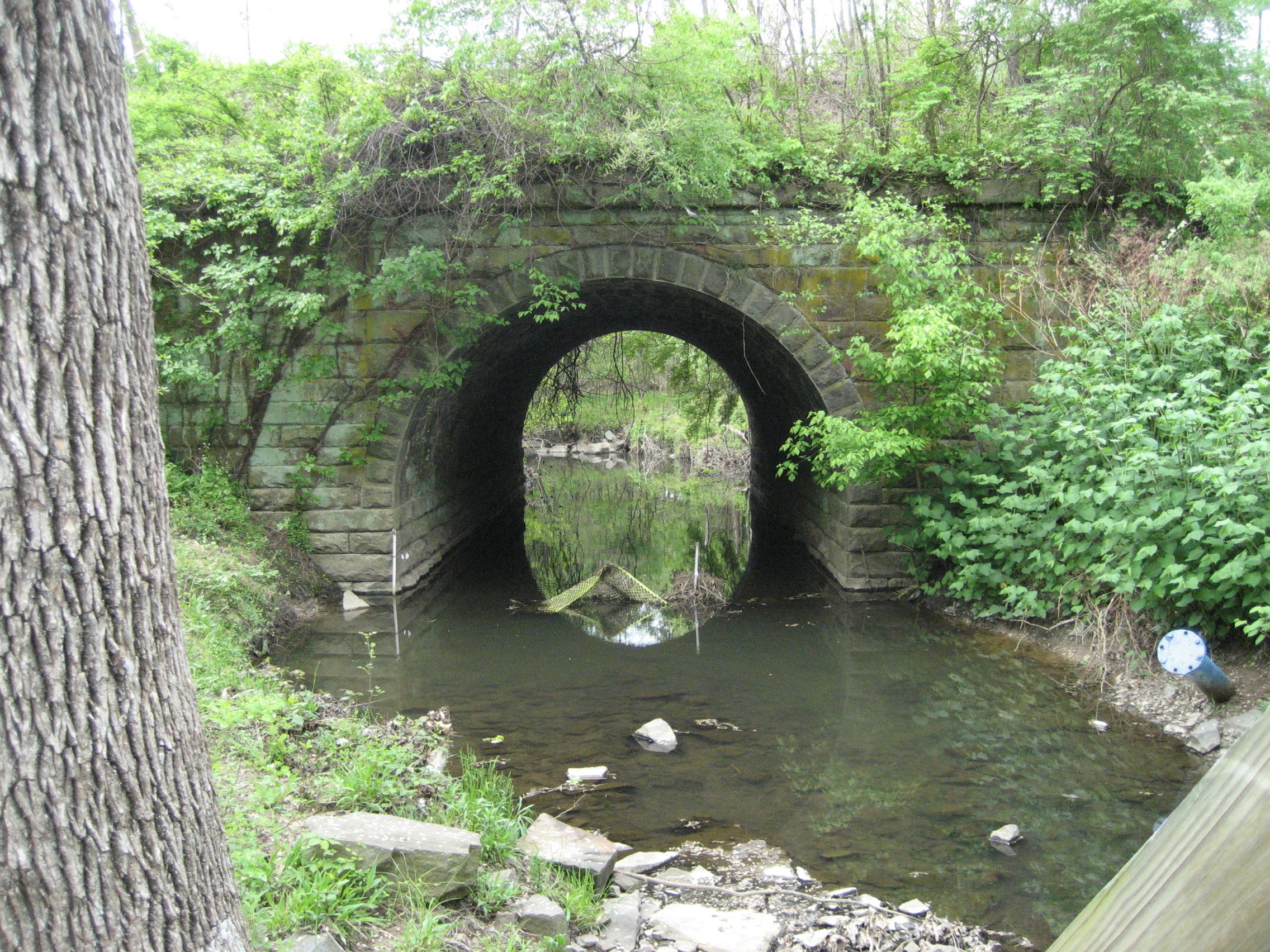
Sugarland Run Bridge
The Alexandria, Loudoun and Hampshire Railroad (later named the W&OD Railroad) was being built through what is now the Town of Herndon in the late 1850s. A stone railroad bridge was built over the Sugarland Run Stream in c. 1857. This stone bridge can still be seen underneath the W&OD Trail, where it intersects with Herndon Parkway on the east side of Herndon.
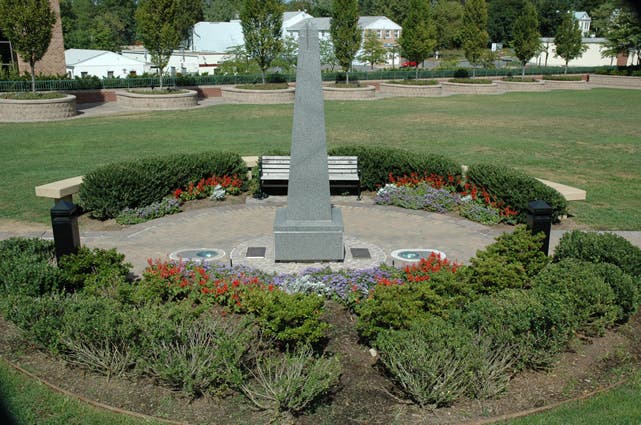
Veteran’s Memorial Obelisk
A tall granite obelisk is on Herndon’s town green, located behind the Municipal Center at 777 Lynn St. This is Herndon’s veteran’s memorial and is a half-size replica of the 21-foot Herndon Monument located on the grounds of the U.S. Naval Academy in Annapolis, Maryland. The original obelisk was erected in Annapolis in 1860 in honor of Navy Commander William Lewis Herndon, the namesake of the Town of Herndon. The town’s obelisk was a project of the Wayne M. Kidwell American Legion Post 184 and was dedicated in 2002.
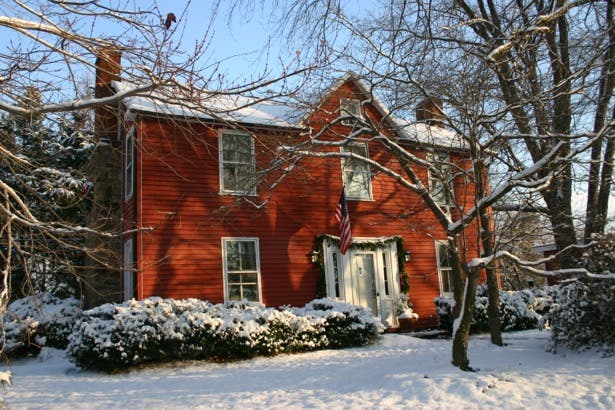
The Oldest House
The oldest house still standing in Herndon is at 744 Dranesville Road. It was built in c. 1783 and originally belonged to George Payne. It includes a chicken coop and root cellar. It was originally a rectangularly shaped house, but an addition was constructed during the Civil War period, making it a T-shaped house.
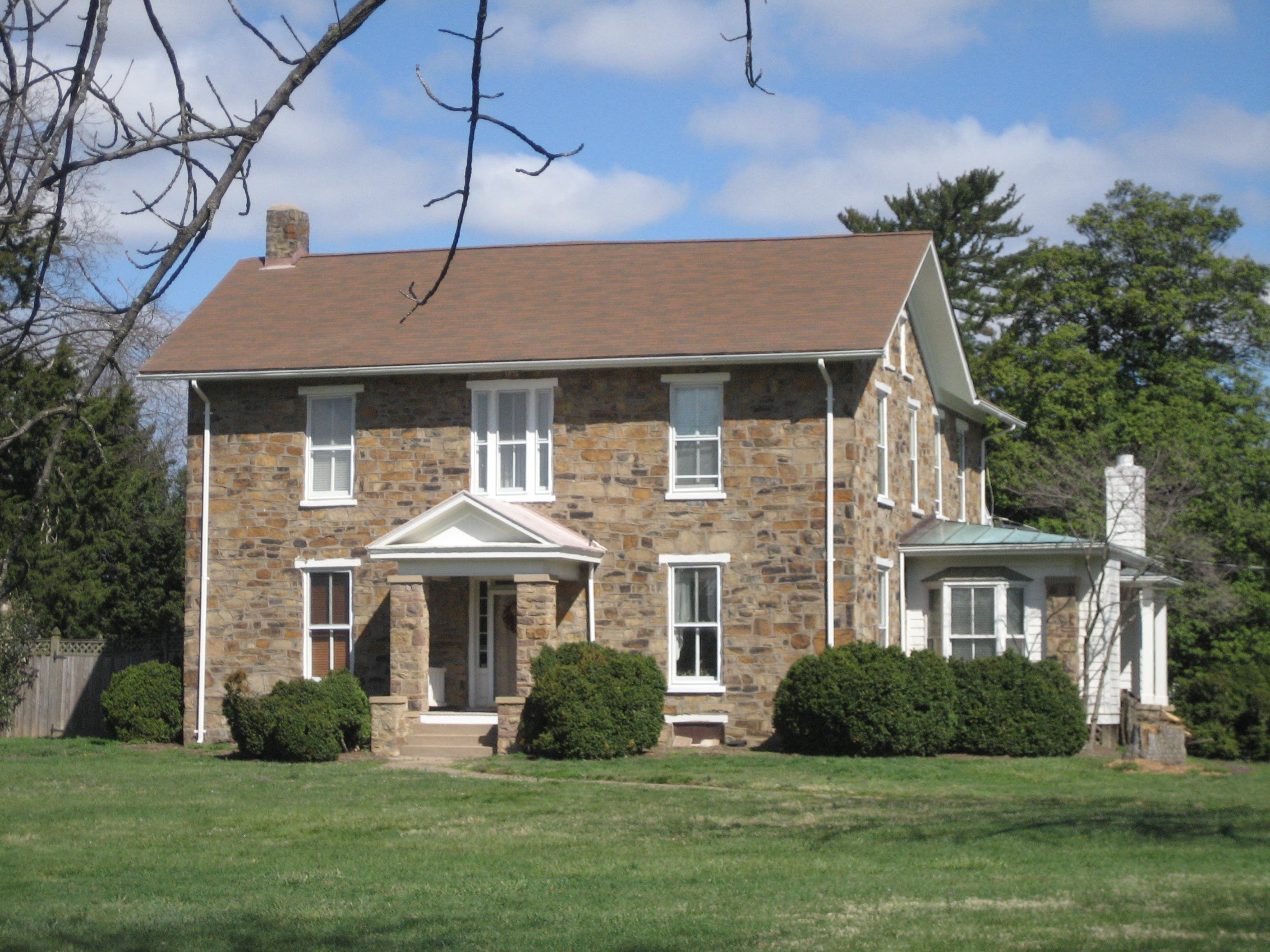
Stone Homes
There are two fully stone homes remaining in Herndon. One is the Carroll House, built c. 1909 and located in Runnymede Park, Herndon’s 58-acre natural park on the east side of Herndon Parkway. The other is Mayor Isaiah Bready’s home near St. Joseph Catholic Church, at the intersection of Ferndale Avenue and Vine Street. The Bready family moved to Herndon in the 1850s and lived in a wood frame house on their property. In 1876, Isaiah Bready built this stone home. He was elected as Herndon’s first mayor in 1879.
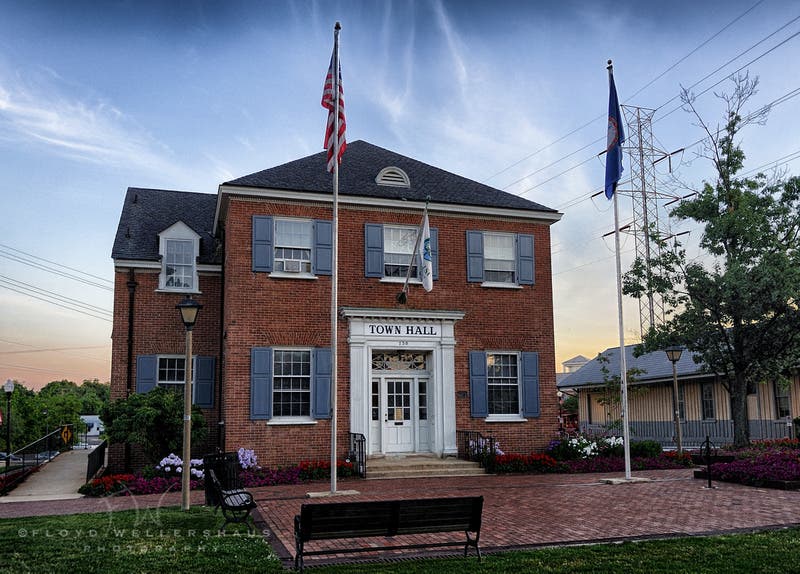
Town Hall
Herndon’s old Town Hall, located at the intersection of Elden and Lynn streets, was a Works Progress Administration (WPA) project, built in 1939. The WPA was one of President Roosevelt’s New Deal programs to help put people back to worked during the Depression. When it first opened, it housed the mayor’s office, the Herndon Post Office, and the town’s jail.
About this column: “Remembering Herndon’s History” is a regular Herndon Patch feature offering stories and anecdotes about Herndon’s past. The articles are written by members of the Herndon Historical Society. Barbara Glakas is a member. A complete list of “Remembering Herndon’s History” columns is available on the Historical Society website at www.herndonhistoricalsociety.org.
The Herndon Historical Society operates a small museum that focuses on local history. It is housed in the Herndon Depot in downtown Herndon on Lynn Street and is open every Sunday from noon until 3:00. Visit the Society’s website at www.herndonhistoricalsociety.org, and the Historical Society’s Facebook page at https://www.facebook.com/HerndonHistory for more information.
Get more local news delivered straight to your inbox. Sign up for free Patch newsletters and alerts.