HERNDON, VA — Have you ever wondered about the origins of some of the street names in Herndon? Some are obvious. We have, for instance, a “president’s neighborhood,” where many streets are named after 18th and 19th century U.S. presidents. Such streets include George Washington Crossing, as well as Adams, Jefferson, Madison, Van Buren, Jackson, Grant, Fillmore, Tyler, and Monroe streets.
We also have a “golfer’s neighborhood,” where streets are named after golf professionals, such as Floyd and Snead Place, Elder and Nicholas Court, and Trevino and Player Way.
There are other streets in Herndon, however, that specifically relate to the town’s history. Some of these streets are listed below:
Find out what's happening in Herndonfor free with the latest updates from Patch.
- Ballou Street: Lyman Ballou (1824-1890) was a farmer and a large landowner, with most of his 195 acres of land in Herndon extending from the vicinity of the north side of Park Avenue and the west side of Monroe Street.
- Barker Hill Road: William Barker (1789-1863) was also an early land owner, owning hundreds of acres. His land included the Sugarland Run tract along Dranesville Road and also the area around the current Pines Shopping Center. Barker’s heirs sold part of their land to help establish Herndon’s Chestnut Grove cemetery.
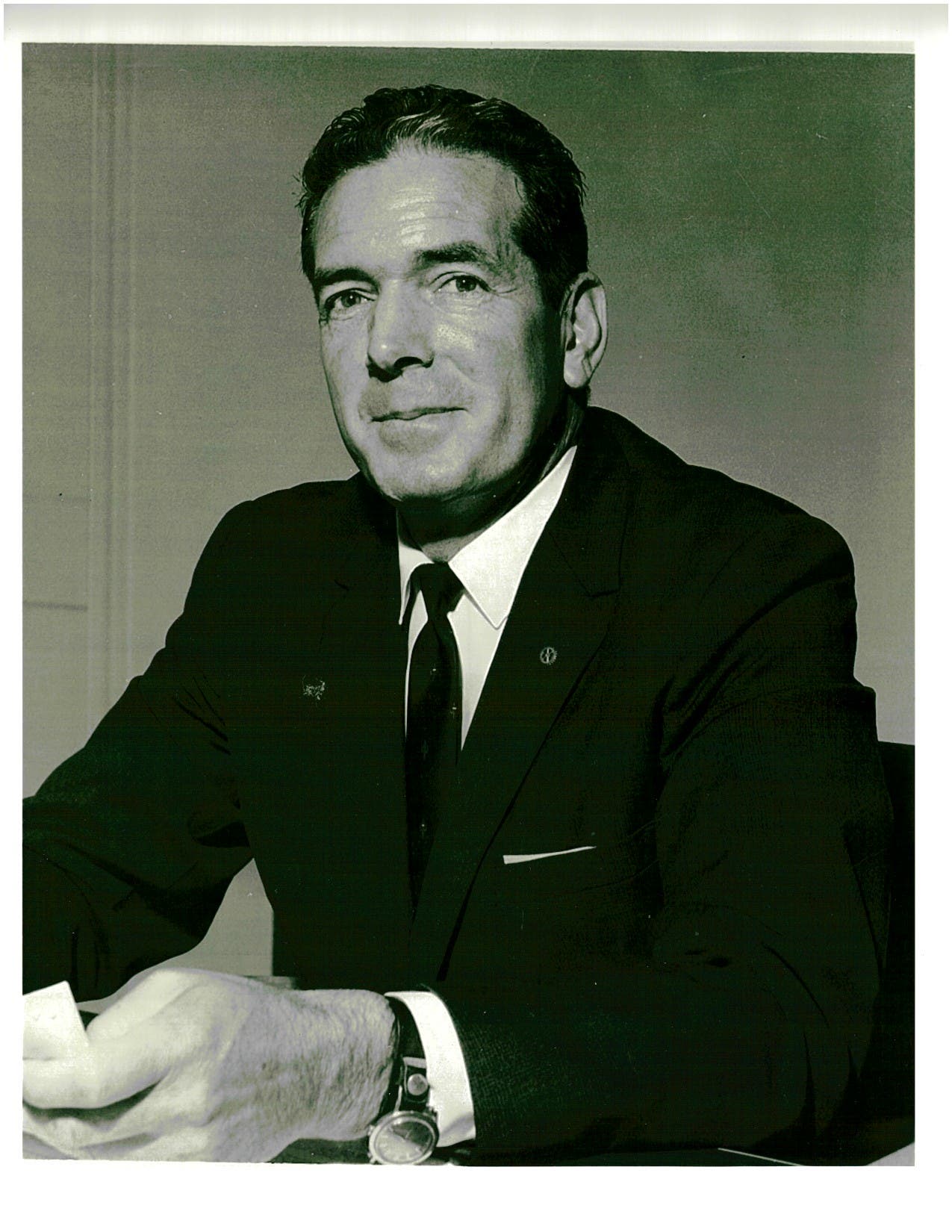
- Bennett Street: This street is named after Richard J. Bennett (1918-2003), who served as Herndon’s mayor from 1965 to 1971. He was an airline pilot.
- Bicksler Drive: Various members of the Bicksler family date back in Herndon’s history as early as the mid-1800s and have owned various lots of land around town. Henry Bicksler bought land on Lynn Street in 1869. Herndon’s earliest map, dated 1878, shows “Bicksler’s Store” on Lynn Street.
![]()
Alice and J. Luther Bowers, c. 1870s. (Courtesy Richard Crouch)
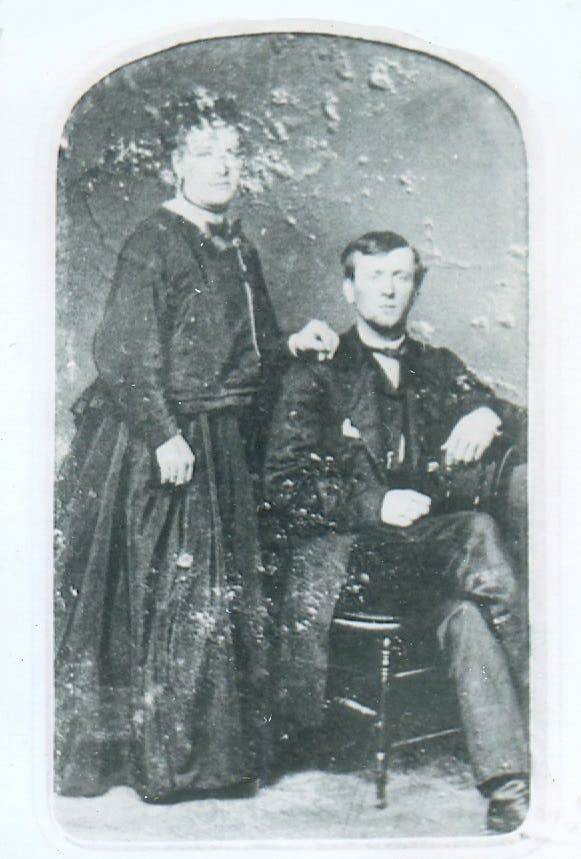
- Bowers Lane: Alice and J. Luther Bowers owned about 165 acres of land that centered in the vicinity of Herndon Middle School, beginning in 1886. The Bowers subdivision was created in 1911.
- Bready Street: This street is named after Herndon’s first mayor who took office in 1879, Isaiah Bready (1830-1913). He was a dairy farmer. Most of his land was in the vicinity of Herndon’s Centennial Golf Course, the Herndon Community Center, and Saint Joseph’s Catholic Church. Bready Park is also named after him. His family’s grand stone home still stands at the corner of Vine Street and Main Drive.
- Branch Drive: The word “branch” refers to a lateral extension or subdivision of a body of water. In this case, Sugarland Run travels in a north/south direction on the east side of town, through Herndon’s Runnymede Park. There is a stream branch that runs off of Sugarland Run in a south westerly direction through the middle of Herndon called Folly Lick Branch, not far from where Branch Drive is located.
%20Castleman,%20Our%20Woman%20of%20History,%20diff.,%20(B).jpg)
- Castleman Terrace: Mary Castleman (1830-1891) and her daughters spent most of their lives in Herndon from the 1870s until they died. They were instrumental in getting St. Timothy’s Episcopal Church established and operated the Herndon Seminary on Grace Street. The daughters also started the Herndon Fortnightly Library, the first lending library in Fairfax County.
- Cooper Station Road: Charles S. Cooper (1878-1938) was Herndon’s stationmaster from 1905 to 1938.
- Dranesville Road: The unincorporated area of Dranesville along Leesburg Pike (Route 7) was a thriving area — prior to the town of Herndon being incorporated — with homes, churches, schools, blacksmith shops and the famous Dranesville Tavern. The tavern was opened by a gentleman named Washington Drane (c. 1775-1842). It was a midway point for travelers between Alexandria and Leesburg. The railroad that was later built through Herndon in the 1850s spurred the development of the Town of Herndon. Dranesville Road connected the Herndon Station to Dranesville.
- Elden Street: “Elden” or “Eldon” was the name attributed to Herndon’s earliest known home and its associated farm or plantation, which used to be located behind Herndon Middle School. There is debate, however, as to whether that house was named by its first owners (the Coleman family) in the late 1700s, or if it was named by John McKeldon who owned the house and property from 1855-1866, the time period when the road was being constructed.
- Fortnightly Boulevard: The word “fortnightly” means “every two weeks.” Beginning in 1889, sisters Ida, Lulu and Virginia Castleman, along with several other Herndon women, formed a study club that met every two weeks “for the mutual improvement of its members in literature, art, science and the vital interests of the day.” It became known as The Fortnightly Club. They slowly collected books and began lending them out to the Herndon townspeople. Ultimately, they created the first lending library in Fairfax County, a library the club members ran for many decades.
- Florence Place: The first home built on Florence Place was a 1920s stately white four-square home and was once owned by a family by the name of Florance. Mrs. Florance’s first name was coincidentally “Florence.” Mr. Florance was a clerk at a lumber company. For many years Florence Place did not exist and the house was considered part of Oak Street. A long driveway, about 80 yards long, used to lead from Oak Street to the house. Since then a few other homes have been built on this cul-de-sac. At some point in time the long driveway was re-named Florence Place.
![]()
Arnold and Virginia Greear, c. 1930s. (Herndon Historical Society)
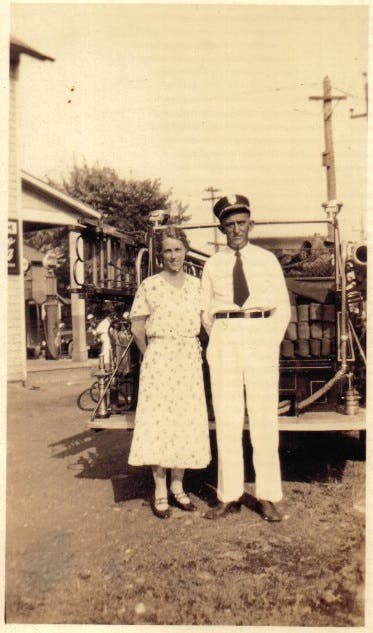
- Greear Place: Charles (1863-1951) and Sarah (1876-1967) Greear used to live in the vicinity of Greear Place. Their old farm house is still nearby. Their son, Henry Arnold Greear (1895-1968), married Virginia McFarland Greear (1893-1991) in 1945. They continued to live in the Greear family farmhouse until they moved into a new house on Oak Street in 1967. Arnold Greear was mailman for Herndon’s rural route. Virginia was an informal town historian.
- North & South Gunnell Courts: The Gunnell family of Fairfax County dates back to the 1700s. Part of their land holdings included land along the Sugarland Run area on the east side of town, along Dranesville Road.
![]()
Haley Smith, c. 1991 (Herndon Historical Society)
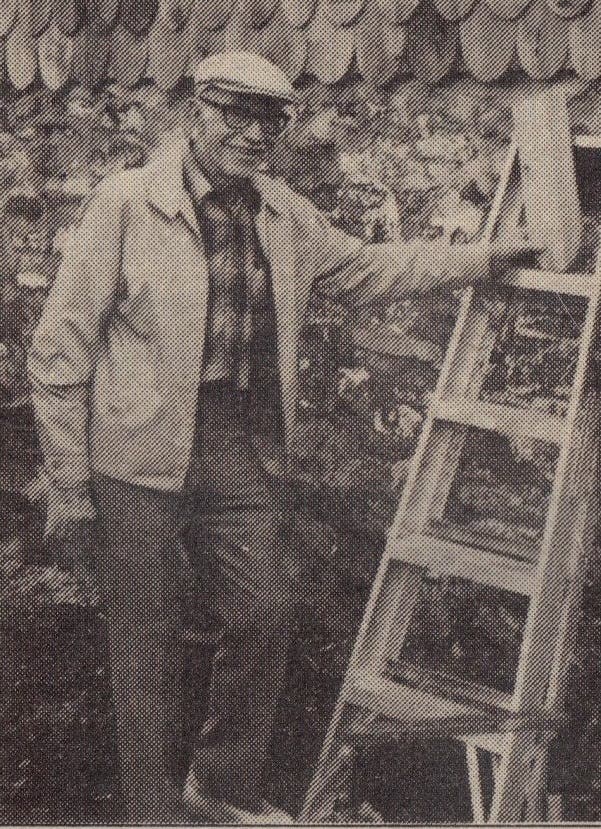
- Haley Place: This small “finger” of a street runs about 200 feet from the east side of Grace Street to the Washington and Old Dominion hike and bike trail. Its original name was “Calyer Street,” named after an early Herndon land owner named Daniel K. Calyer (1805-1892). Later, Haley M. Smith (1917-1994), a Herndon town council member in the 1970s and 1980s and a youth sports advocate, owned a nearby property along Grace Street. At some point, Haley Smith had his own street sign made and changed the name of this street from Calyer Street to Haley Place. Haley Smith Park is also named after him.
- Herndon Station Square: Herndon Station Square, located about two blocks from our old train depot by the town hall on our town square, is a reference to our former train station and its surrounding public square.
- Hollingsworth Terrace: William W. Hollingsworth was appointed Herndon’s first postmaster in 1858. He served until 1865.
- Lopp Court: Lopp Court is named after former Herndon Mayor Roy Gary Lopp (1937-2018), who served as mayor from 1971 to 1976. He was a Navy pilot in the Vietnam War and later went on to work for American Airlines.
- Lynn Street: Lynn Street was named after Mayor Russell A. Lynn (1869-1947). He and his wife were both teachers and they lived on Elden Street. He also served as a bookkeeper at a local flour mill and was a bank cashier. He served as mayor from 1937 to 1945.
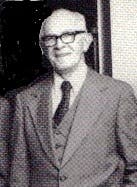
- McDaniel Court: John B. McDaniel (1907-2002) served as Herndon’s mayor from 1951 to 1953. He was a bank employee and was also a member of Herndon’s Chamber of Commerce.
- Moffett Forge Road: William Henry Moffett (1897-1984) was a fifth-generation blacksmith. He operated the last blacksmith shop in Herndon, formerly located between Station and Lynn streets, next to the old gas house. The word “forge” refers to blacksmithing, meaning to make or shape with metal.
- Mosby Court: Col. John Singleton Mosby (1833-1916) was a Confederate cavalry officer who worked for Gen. J.E.B. Stuart. Mosby led his group of Partisan Rangers to conduct guerilla operations around the Northern Virginia area. He conducted a raid in the town of Herndon in 1863, the only Civil War action to occur in town.
- Nachman Way: This street is adjacent to Lynn Street in the new Junction Square development. In 1919, Julius Nachman (1894-1969), a retailer from Baltimore, bought an interest in Cohen’s store located on Lynn Street in Herndon (now the Green Lizard Cycling shop). They sold clothing and dry goods. Nachman bought Cohen’s interest in the store in 1928. Through the years, the store continued to be operated by Julius’ son (Philip) and grandsons (Howard and Arthur). The clothing store closed in the 1990s. The Nachman grandsons continue to own the property.
- Park Avenue: “Block 1” of the Van Vleck subdivision measures about 6.5 acres and is currently surrounded by Park Avenue, Monroe Street, 1st Street and Van Buren Street. An 1880s plat noted that the southern boundary was referred to as “The Road to Dranesville.” In deeds dating to the 1890s, Block 1 was referred to as “Van Vleck Park.” It is speculated that that this may be why the east-west section of the “The Road to Dranesville” that bordered the southern boundary of the Van Vleck subdivision was named Park Avenue.
- Post Drive: This street is named after Nelson (1914-2000) and Katherine Friant Post (1917-2000), whose family home used to be located at the southeast corner of Elden Street and Post Drive. They were local volunteers, community leaders and philanthropists.
- School Street: This small street is situated between Elden and Locust Streets. Where School Street intersects with Locust Street used to be the location of the original Herndon High School, which opened in 1912 and housed all grades.
- Station Street: Station Street refers the road way which runs from Herndon’s train station on Lynn Street, northward.
- Sugarland Meadow Drive: This road is located close to Sugarland Run, the stream that runs through Herndon on its east side. “Sugarland” refers to the sugar maple trees that were prevalent in that area.
- Young Dairy Court: The family of Freeland G. Young Sr. (1895-1980) operated the Follylick Farm, a dairy and later a horse farm that was located on the north end of town in the vicinity of Monroe Street, north of Herndon Parkway.
About this column: “Remembering Herndon’s History” is a regular Herndon Patch feature offering stories and anecdotes about Herndon’s past. The articles are written by members of the Herndon Historical Society. Barbara Glakas is a member. A complete list of “Remembering Herndon’s History” columns is available on the Historical Society website.
The Herndon Historical Society operates a small museum that focuses on local history. It is housed in the Herndon Depot in downtown Herndon on Lynn Street and is open every Sunday from 12 p.m. until 3 p.m. Visit the Society’s website and the Historical Society’s Facebook page for more information.
Find out what's happening in Herndonfor free with the latest updates from Patch.
Note: The Historical Society is seeking volunteers to help keep the museum open each Sunday. If you have an interest in local history and would like to help, contact HerndonHistoricalSociety@gmail.com.
Get more local news delivered straight to your inbox. Sign up for free Patch newsletters and alerts.