Community Corner
Remembering Herndon's History: Civil War Troops In Herndon
Barbara Glakas of the Herndon Historical Society writes about some of the significant moments that occurred in Herndon during the Civil War.


By Barbara Glakas
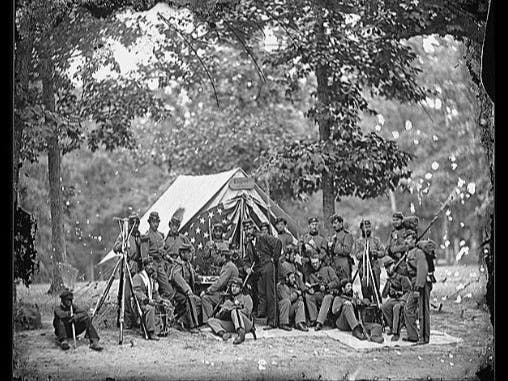
During the Civil War, there were many instances of troops being in Herndon, both Union and Confederate. In this article we will describe a few of those instances.
Find out what's happening in Herndonfor free with the latest updates from Patch.
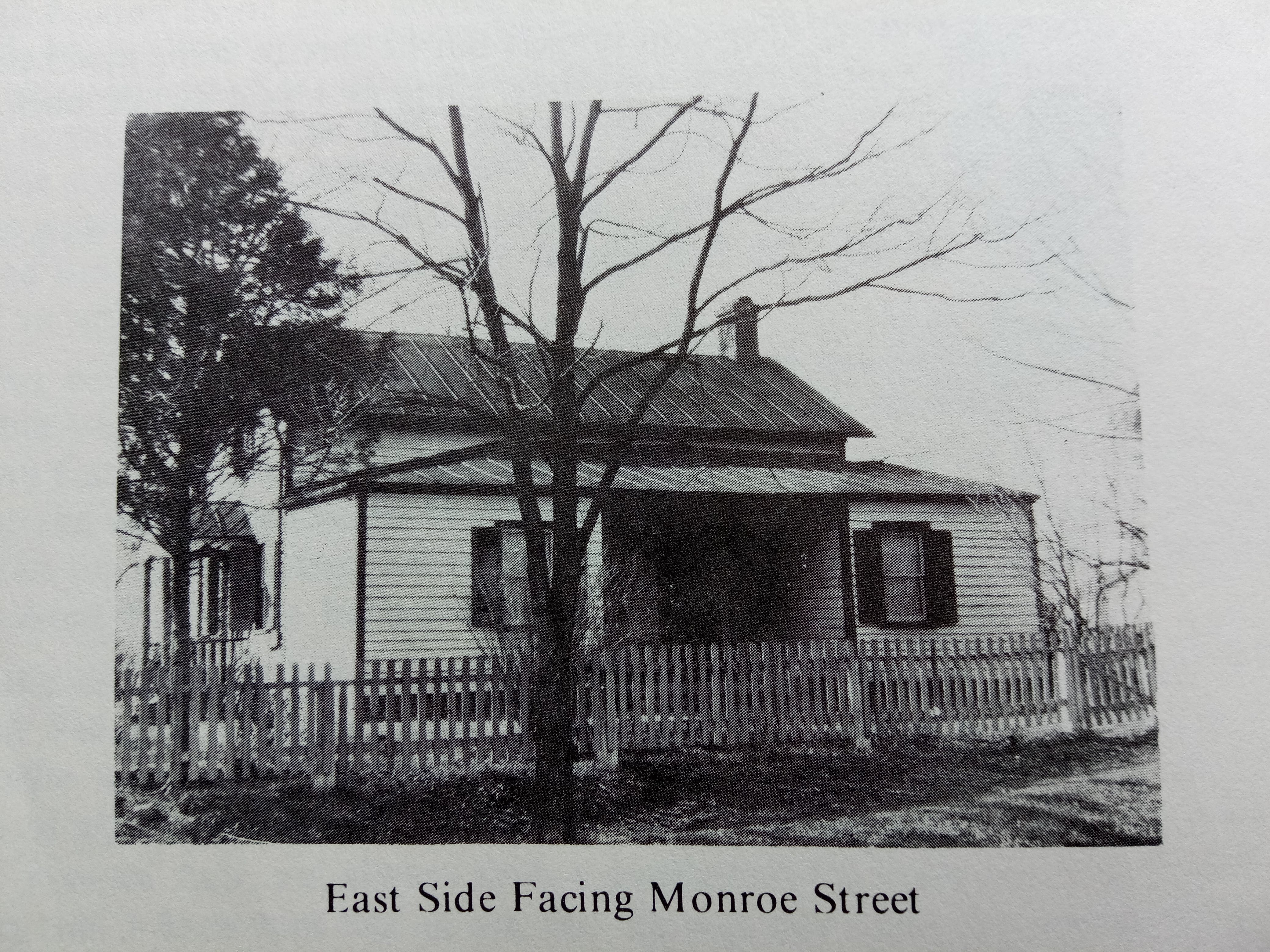
We get significant insight about what Herndon was like during the Civil War from former Herndon resident Catherine “Kitty” Kitchen Hanna (1830-1907). Kitty, who witnessed many local events going on during the war, recounted her memories in a book entitled “Reminiscences of an Oldest Inhabitant, A Nineteenth Century Chronicle.” In the 1860s, there were not many homes in town, and hers was located about 200 yards from the Herndon Depot, which allowed her to witness the many comings and goings of troops through the center of town. Consequently, her home also seemed to become a target of many military visitors, both friendly and unfriendly.
Mosby’s Raid
Find out what's happening in Herndonfor free with the latest updates from Patch.
Many of our readers know about Confederate Capt. John Singleton Mosby’s raid in Herndon on March 17, 1863, in which his band of partisan rangers attacked a mill in downtown Herndon and captured a small Union unit from the 1st Vermont Calvary who were manning a post here. They also captured three Union officers who were visiting in town that day and got captured while having lunch in a Herndon home. Although there were many troop movements through Herndon during the Civil War, Mosby’s Raid was the one combative action that occurred in what is now the Town of Herndon.
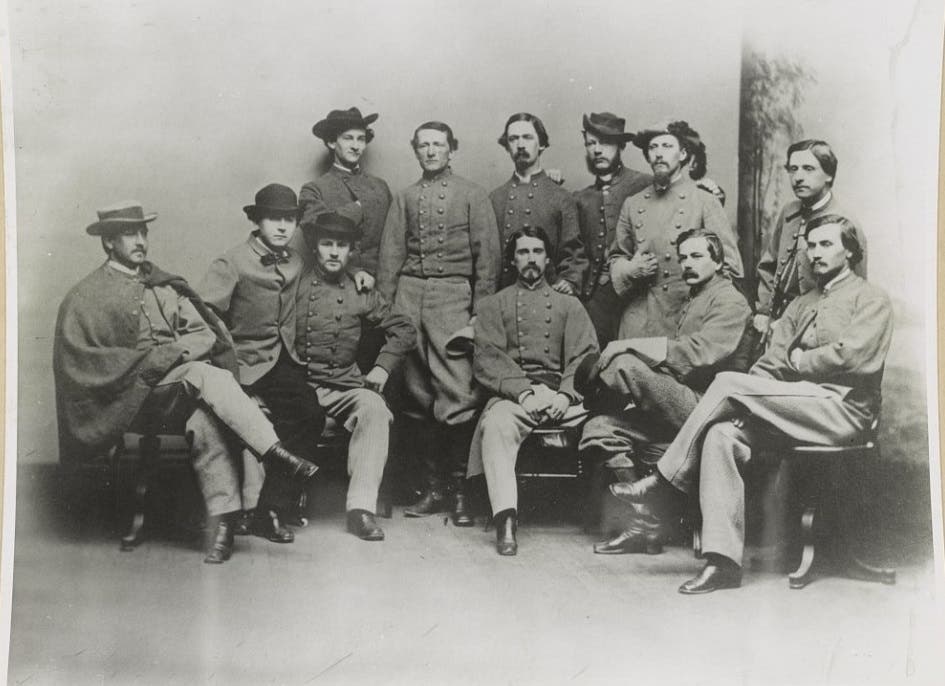
The three Vermont officers who were captured in Mosby’s Raid were having lunch in the home where Kitty Kitchen was staying. Although Kitty was a southerner, her northern husband was a friend of one of the Vermont officers, so she felt obliged to host the lunch when she was asked. After Mosby’s Raid, some Union soldiers were angry that their officers had been captured. Kitty recalled:
“The Yankees were angry with us and blamed my husband for letting the officers get caught, though [he] wasn’t even at home. So some of the Union men came and searched our house, taking everything we had, including the money out of [my husband’s] pocket. And they carried him [as] a prisoner to the Fairfax Court House, but he was released soon afterwards.”
A week later Mosby, showed back up in Herndon at the house where the lunching Union officers had previously been captured. Knocking on her front door. Mosby said to the Kitty,
“Madam, I come to apologize to you for my men shooting at your house a week or so back.”
“So they did,” she replied.
He asked, seeing a pile of newspapers on her table, “Can you let me have a newspaper to read, Madam?”
“No sir, I can’t,” she replied.
She said Mosby was too polite to insist, so he turned and walked away.
Visitors from Georgia
On another occasion, Kitty reported a time when five Georgia soldiers showed up at her door one Saturday night. Kitty’s mother was with her that evening. Kitty said, “The captain stepped forward, saying, ‘Madam, we’re Georgia boys, worn out with fighting and tramping. Will you give us food and shelter?’
“While he was speaking, I was studying the men, who looked so young and like our own boys. I couldn’t see harm in helping them so I said cautious-like, ‘Come in, sir.’ In they walked, to the surprise of [my mother]. We had plenty to feed the soldiers since it was hog killing time. [We] cooked a fine supper for the men who ate hearty. Then I brought down feather beds and quilts to spread on the floor in the big east room. The men retired real quiet-like. All night there was no stirring amongst them. In the morning we cooked more sparerib for the men, and gave a good breakfast. They behaved like gentlemen, those Georgia boys, and when it was time to go, the captain took out a five-dollar bill — Confederate money, of course — and offered it to me in recompense for bed and board, he said. But I refused saying that I was a Southerner too, and the food was gratis.”
“’Madam, you are a widow!’ cried the captain, urging the money on me.
“Being naturally truthful, I cried out, ‘No sir, I am not a widow, but a Virginia woman, and my husband’s a Yankee – he’s joined the Union army and is gone away from these parts.’
“The captain looked thoughtful and he said sort of loud to his men, ‘That’s the way it is in Georgia too.’ He didn’t say anything more about the money.
“Mother was so touched to the heart, she fixed up sausage and other things for Christmas for the Georgia boys, [being] so far from home, and they left after, thanking us for our kindness.”
The Battle of Chantilly
Another instance of a military presence in town was after the Battle of Chantilly in September 1862, which occurred on the vicinity of the present-day location of Fair Oaks Mall. After the battle, units of Confederate soldiers, led by Gens. Stonewall Jackson and James Longstreet, left the battle site and cut through Reston, Herndon and Sterling to get to Leesburg Pike (Route 7), as they made their way out to the Town of Leesburg in order to cross the Potomac into Maryland, where they would soon fight in the Battle of Antietam.
Deserters
Sometimes individual deserters would be seen in Herndon. After the Second Battle of Manassas in August 1862, Kitty, who was working at a small store inside the Herndon Depot, said:
“Looking up the railway, I saw about a dozen bluecoats coming. They rode without a word … and left us wondering what’s next. We found out later they were deserters from the Union Army, heading for the river toward Seneca.”
Hooker’s Army on the Road to Gettysburg
Another example of a very large presence of troops in Herndon was in the summer of 1863, again reported by Kitty Kitchen. Kitty lived in a small house near the southwest corner of Monroe and Elden streets. She remembered the presence of Maj. Gen. Joseph Hooker’s VI Corps in Herndon that summer. Hooker was then the commander of the Army of the Potomac. Kitty recalled:
“It was still ’63 in the summertime, that Hooker’s 6th corps encamped for four or five days in our midst. … First thing, far up the road, we could see clouds of dust rolling; then the whole country was black with men, horses and cattle. They came in a clash of noise; it wasn’t no more peaceful, but bedlam let loose. The men walked through our yard, and in one door and out another, asking for a drink of water. And when they drunk up all the water, they begged for milk. I had a big pantry and lots of milk pans full, and I gave and gave until not a drop of milk was left. Still, they came crowding around. … I felt wrathy that I had given all I had to the men… so I took a cup and went myself to [the] spring and I told the guard what I had done for the soldiers who’d come to my house. So he let me get some muddy water to carry home.
“Next day there come to the house the finest dressed man I’d ever seen in wartime. He was an officer and he walked into the room where I sat sewing, the baby being freshly dressed in his lovely white muslin, such I put on him every day, making every stitch with my own hands. Well, this officer had the most jewelry hanging on him; it was ridiculous, it seemed to me, but I said nothing.
“’Madam,’ asked the officer, ‘Have you any friends in the Southern army?’
“As he stood there questioning me, I could hear flames crackling, where they’d set fire to fences outside. I was nervous, but not cowed, understand? ‘Yes, sir, I have,’ I answered looking him in the face. Then he asked the question I’d heard so many times —
“‘Are you Union or Secesh?’
“‘We pass for Union,’ said I.
“‘There’s a difference between passing and being,’ said he.
“‘Yes, I allow as much, but when come call the militia to go to Manassas, my husband and brothers went to Union lines instead. My man joined Hancock’s army.’
“‘I shall place a guard around this house, then,’ was his parting words. And he did like he said he would.
“What a time it was for noise and dirt and cooking! … The soldiers begged for griddle cakes made of flour instead of cornmeal, like what they had up north, I suppose. …. We made money out of Hooker’s encampment. It was all in greenbacks and [it] came so fast we had three hundred took in that week. You see, [my husband] happened to have some barrels of flour in an empty room and we used every dust of that flour baking bread for hungry soldiers.
“I must tell you of my little drummers, they were just boys, slender boys, like enough for twins, but only cousins, it turned out. One day they knocked on my door and asked to come into see the baby. So I let them come in, and they took turns holding baby Johnny, first one, then the other. Then they asked if I would set them a table all to themselves, so they could pretend they was at home. After Hooker’s 6th Corps moved on, I looked out one day and saw one of my little drummer boys coming back again, and with him was a Zouave all dressed in red and white, like they do. And my drummer boy laughs and says, “’Madam, we couldn’t find nothing to suit us elsewhere. May we get some milk for our canteens?’
“I gave them bread and milk, but asked them not in, fearing the Zouaves.” [French infantrymen].
According to Craig Swain, who wrote an article entitled, “Edwards Ferry – Sixth Corps Crossing,”Hooker’s VI Corps had been posted around Germantown, Centreville and Bristoe Station. From there, on June 26th, they proceeded, “using a route from the above-mentioned bivouacs to Chantilly Church; thence to Frying Pan; and on to Herndon Station; continuing to Dranesville; then follow the Leesburg Pike to Edwards Ferry ... thus, for two days of marching, the Sixth Corps covered between 25 and 30 miles of well-worn roads.”
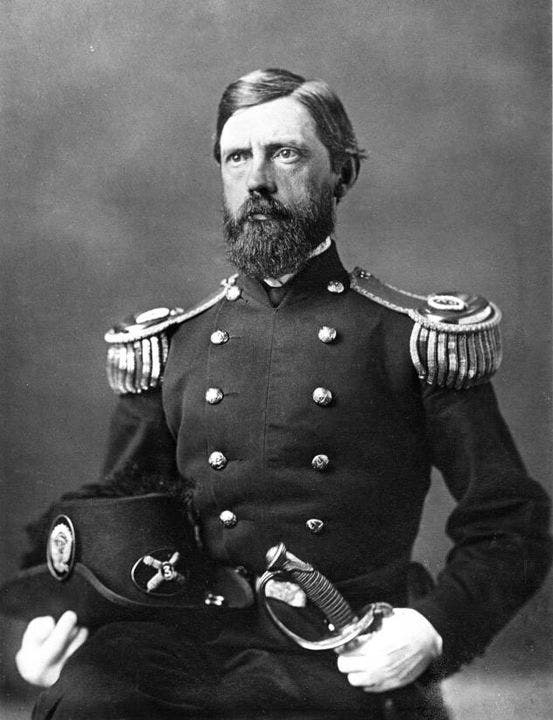
We question whether or not it was Hooker’s VI Corps that had encamped in Herndon, as sources seem to indicate that the VI Corps simply marched through Herndon on its way to Leesburg. However, we found a document in the special collections at the Chicago Public Library that may explain what Kitty saw in June 1863. The library had a collection of Union daily reports from the Army of the Potomac. One of those was a consolidated morning reports was written by Hooker’s I Corps commander, Maj. Gen. John F. Reynolds, who wrote his report from Herndon Station, Virginia, dated June 20, 1863. (Herndon Station refers to the Herndon Depot and/or the village surrounding it. In the 1860s, our village had a post office in the train depot that was named the Herndon Post Office, but the town had not yet been incorporated and was not yet named).
The morning report that Reynolds wrote from Herndon Station on June 20 showed an accounting of how many troops and equipment he had with him that day. In addition to his I Corps command staff, he also had a cavalry company, three infantry divisions and one artillery brigade. Other than the artillery brigade, these were volunteer units that came from all over different parts of the United States, including Indiana, Pennsylvania, New York, Massachusetts, and Maine. All total, he had 9,893 troops, as well as 2,307 horses and 28 artillery guns.
Although Kitty refers to Hooker’s VI Corps encamping in Herndon in the summer of 1863, it is possible that the unit that actually encamped there was Hooker’s I Corps. The Union’s I Corps, II Corps, III Corps, V Corps, VI Corps, XI Corps and XII Corps all fought under Hooker’s command of the Army of the Potomac at the Battle of Chancellorsville in May 1863. We discovered that on June 20 — the day Reynolds wrote his report from Herndon — the VI Corps (commanded by Maj. Gen. John Sedgwick) was still in Germantown, Virginia.
Eventually, both Reynold’s I Corps and Sedgwick’s VI Corps moved through Herndon, crossed the Potomac River and fought in the Battle of Gettysburg. Reynolds died in Gettysburg on July 1. Reynolds was loved and respected by his men and peers. Acclaimed Civil War historian, Shelby Foote, once described Reynolds as being, “not only the highest ranking but also the best general in the army.” Over 3,000 Union soldiers died in the Battle of Gettysburg. We can only wonder how many of them may have once knocked on Kitty’s door.
Epilogue
It is hard to imagine what Kitty and other Herndon residents went through during the war, with the many instances of Union and Confederate troops either attacking, passing through, or encamping in Herndon, asking for — or taking —food and supplies. Although Kitty often indicated her stress or fear during these days, she must have been a kind-hearted woman, as she took care of all soldiers who came to her door and were in need.
About this column: “Remembering Herndon’s History” is a regular Herndon Patch feature offering stories and anecdotes about Herndon’s past. The articles are written by members of the Herndon Historical Society. Barbara Glakas is a member. A complete list of “Remembering Herndon’s History” columns is available on the Historical Society website at www.herndonhistoricalsociety.org.
The Herndon Historical Society operates a small museum that focuses on local history. It is housed in the Herndon Depot in downtown Herndon on Lynn Street and is open every Sunday from noon until 3:00. Visit the Society’s website at www.herndonhistoricalsociety.org, and the Historical Historical Society’s Facebook page for more information.
Note: The Historical Society is seeking volunteers to help keep the museum open each Sunday. If you have an interest in local history and would like to help, contact HerndonHistoricalSociety@gmail.com.
Get more local news delivered straight to your inbox. Sign up for free Patch newsletters and alerts.