Neighbor News
Remembering Herndon's History: Early Education in Herndon
An overview of the earliest schools in Herndon
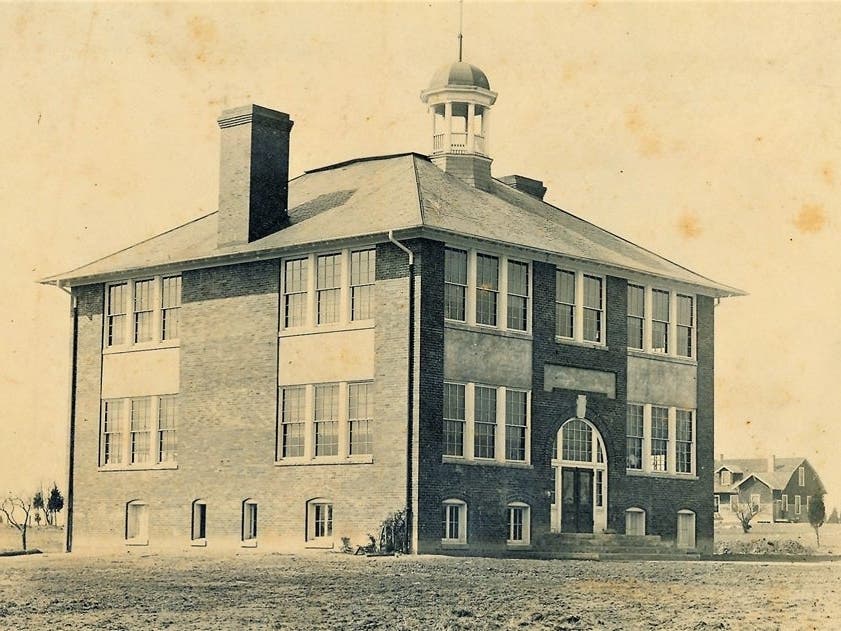
Early Education in Herndon
By Barbara Glakas
Organized education in the town of Herndon dates back to at least the 1820s, prior to the town being incorporated in 1879.The first home built it Herndon is believed to have been built in the 1770s.Another one followed in circa 1783.By the early 1800s there was still only a small handful of homes in Herndon’s vast open land, not yet even a village.
Find out what's happening in Herndonfor free with the latest updates from Patch.
According to the history page of the Fairfax County Public Schools website:
“Fairfax County Public Schools (FCPS) was established in 1870 following the Civil War when Virginia was readmitted to the Union, with the passage of the Virginia Public Free Schools Act as part of the new Virginia constitution. This constitution instituted a system of free education for all children in Virginia for the first time. Prior to 1870, education was primarily done at home or at private schools.”
Find out what's happening in Herndonfor free with the latest updates from Patch.
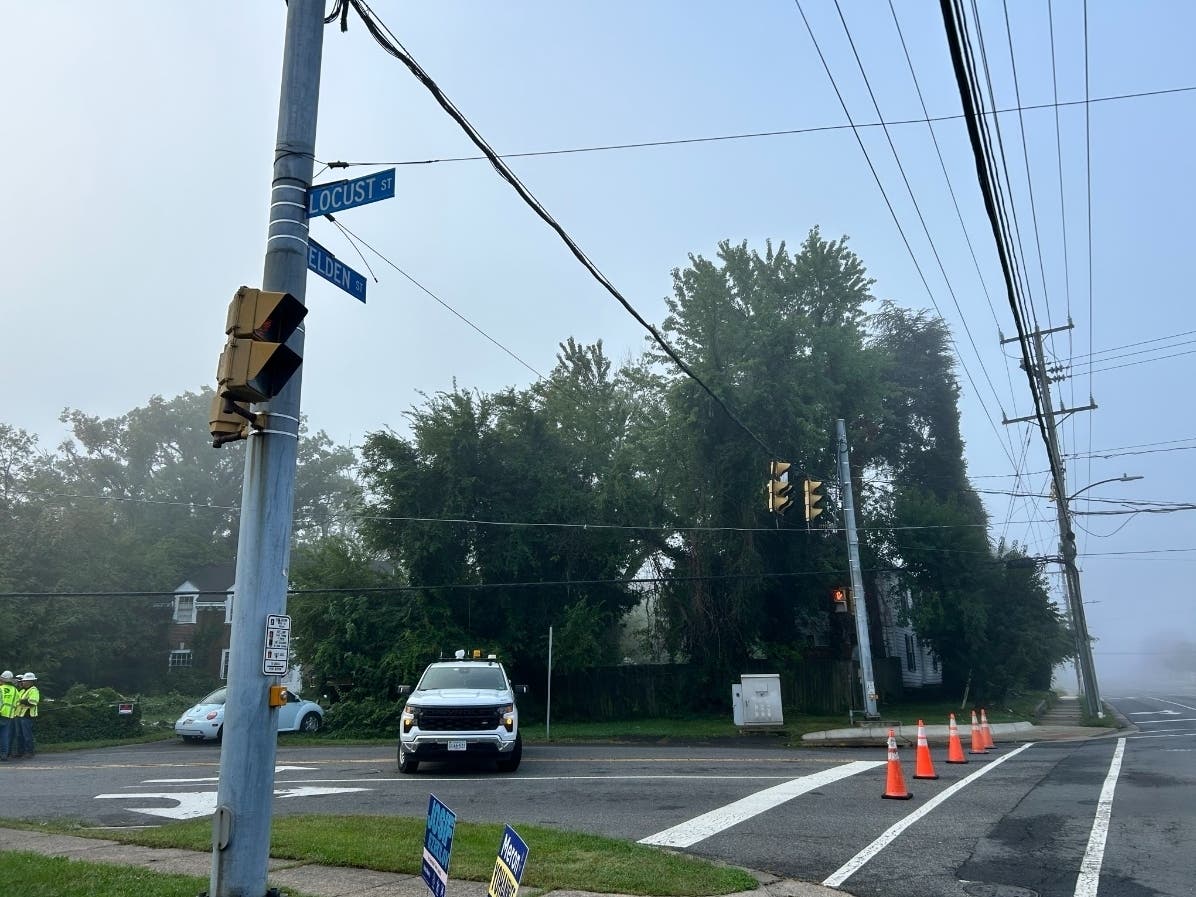
First-hand accounts of primary documents show evidence of some very early schools in our Herndon area. For instance, one land deed dated 1824 – in which James Govan sold 577 acres of Herndon land to Richard A. Cockerille – indicated that one of the boundary markers was: “a: begin at a stone near William D. Bell's school house, corner to Coleman." Boundary marker “a” would have been located near the present-day intersection of Elden Street and Ferndale Avenue. We do not know many details about who William D. Bell was, but we did find him on an 1820 census document. These early census documents lack much information, but it did indicate that he lived in “Fairfax County (Truro Parish),” and had nine free white people and five enslaved people living with him.
The Truro Parish boundary included much of Fairfax County, but we are confident that this William D. Bell (or possibly, DeBell miswritten) in the 1820 census that may be the same man mentioned in the Herndon deed because the next name on the census below Bell’s name was William Kitchen (1789-1850), a known early resident of Herndon. Two Gunnell names were also listed on the same page; a large family by that name was known to live in the Herndon/Dranesville area.The deed book index in the Fairfax County Historic Records Center has a couple of entries for a William DeBell from around 1817, but the deeds are unfortunately missing. Regardless, nothing else is known about Bell’s school.
Katherine “Kitty” Kitchen Hanna, daughter of William Kitchen) was born in 1830 and lived in the town of Herndon all of her adult life. She was interviewed by Virginia Castleman in 1906-07, and talked about her early schooling, which became a book entitled Reminiscences of an Oldest Inhabitant, a Ninetieth Century Chronicle. She said that at the age of eight years old she attended Mr. Johnny Fitzhugh’s school, which she described as being located along Ox Road. (According to notes in the back of the Reminiscences book, “Much of the old Fitzhugh place now lies within the boundaries of Dulles Airport. Remains of the family burying ground can still be seen near the bed of old Ox Road at the point where Sully Road, Horse Pen Road, and the Loudoun County line approach each other near the boundary of Dulles Airport.”)Kitty said,
“The old Fitzhugh place is, back to sunset, a little more than a mile from the Big Spring. I used to trip through the woods all along many a morning to Mr. Fitzhugh’s. Yes, it was a private school, we had no other kind here abouts. I loved my books and my school. In summertime we went to school in the sharp-topped meat house. The only trouble I had was to get books, for books were scarce; there was not a railroad, nor a store near Dranesville, and it was months before the books would come when ordered. The English Reader was my was my first book and I did love it.”
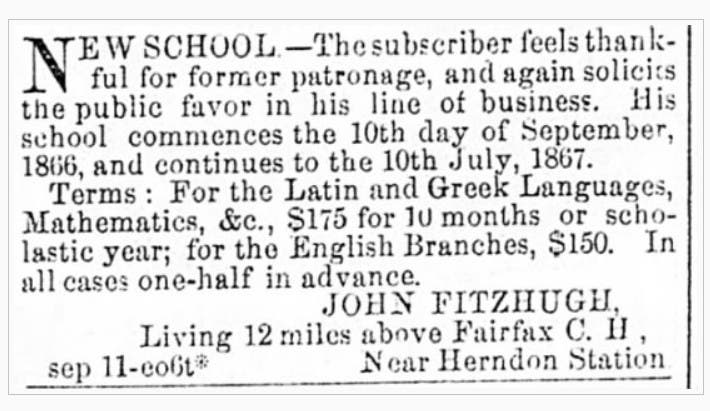
Mr. Fitzhugh's ad from the Alexandria Gazette, September 1866.
The English Reader was first published in 1799. It contained prose and poetry that were excerpted from popular literature. It also taught some general principles of grammar, but mainly attempted to strengthen the reader’s vocabulary (and morals) with stories of virtue.
Kitty next described a new school:
“After a year or two, the folks got together an’ decided to build a new log schoolhouse a mile the other side of our place, in Nannie Jordan’s field it was, what’s now called Herndon Heights. My father built it, the new log house. I went every day at noon to across the field to carry him his dinner pail. The first year after that, Mister Johnny Fitzhugh taught in the new log schoolhouse. The second year the teacher was Pressley Gunnell. Yes, we had a spelling book, leastways, it was a dictionary, like we used in old times. I think it was Walker’s – the English Dictionary. It was the very best book I had to learn from when going to the log schoolhouse at The Heights.”
Although we do not know who Nannie Jordan was, we do know where Herndon Heights is located. It is the area on the western side of the town golf course, along Crestview Drive, and also near what is now the Tralee townhouse subdivision. Much of that land would have once belonged to the Keene and later Orrison families. Kitty said she walked a mile from her house to the new log schoolhouse, which would have possibly put her in the vicinity of the intersection of Crestview Drive and Old Heights Road, or in the middle of the back nine of the golf course. Since Kitty was born in 1830 and her father died in 1850, the school was likely built between about 1840-1850.
These types of early local subscription schools were called “field schools,” because they were built on worn out farm fields. These old field schools were set up on a local basis, either by parents or by teachers. The only other school option – short of home schooling - would be private schools or academies.
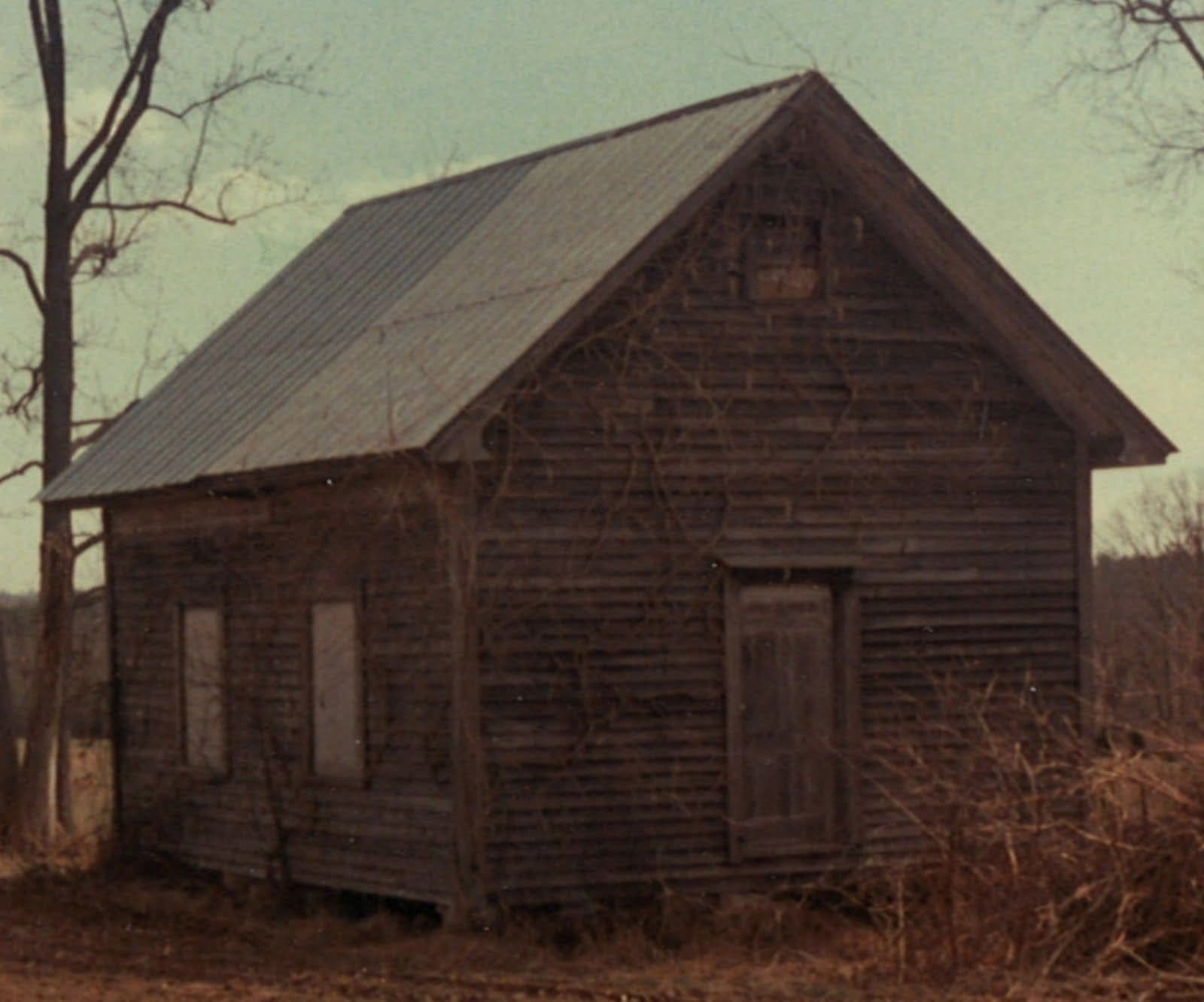
Example of a field school. (ncperdia.org)
With so few people living in the area, we wondered who might go to these schools. Kitty mentioned some of her schoolmates’ names in the school her father built, including Betty Kane “and the other Kanes,” Al Bates, and the Cockerille children. She also mentioned Nance and Johnny, her siblings.
Another first-hand source was a memoir written by John Ford Hazard, who was a boy when his family lived in Herndon during the 1850s.John said that he attended two private schools and,
“…then Mr. Orrison built a log school house on his land which I attended until we moved. The small schools had slab benches; the larger ones sat on plank seats facing a board desk built against the sides of the house.”
We surmise that this school may have been the same one that William Kitchen built in c. 1840-1850. In 1845, Joseph Orrison once owned 541 acres of land in the current Kingston Chase neighborhood, and on the western side of Herndon in the vicinity of the golf course, Bond Street and what is now the Tralee neighborhood. Some of his land was in the area now considered to be Herndon Heights; therefore, it is unknown if John did not realize that William Kitchen had actually built the school (not Orrison), or if the school house that was once on Orrison’s land was a new school he built himself in the 1850s, or if Orrison possibly added on to the log schoolhouse that William Kitchen had built.
Lottie Dyer Schneider, who was born in the town of Herndon in 1879, wrote a 1962 book called Memories of Herndon, which included her memories her memories of her early school years. Most likely, not knowing about the very early field schools, Lottie thought that the first school in Herndon “was probably a little building erected on property now owned by Dr. Myers.” Doctor William Meyer’s home was at 810 Monroe Street. Lottie continued:
“The Younts owned this property and previously Mr. Downing was the owner. This little school was built in 1869 before I was born. W.D. Sweetzer and George Howard taught at this school and I knew both of these men. The building was burned down before I remember it.”
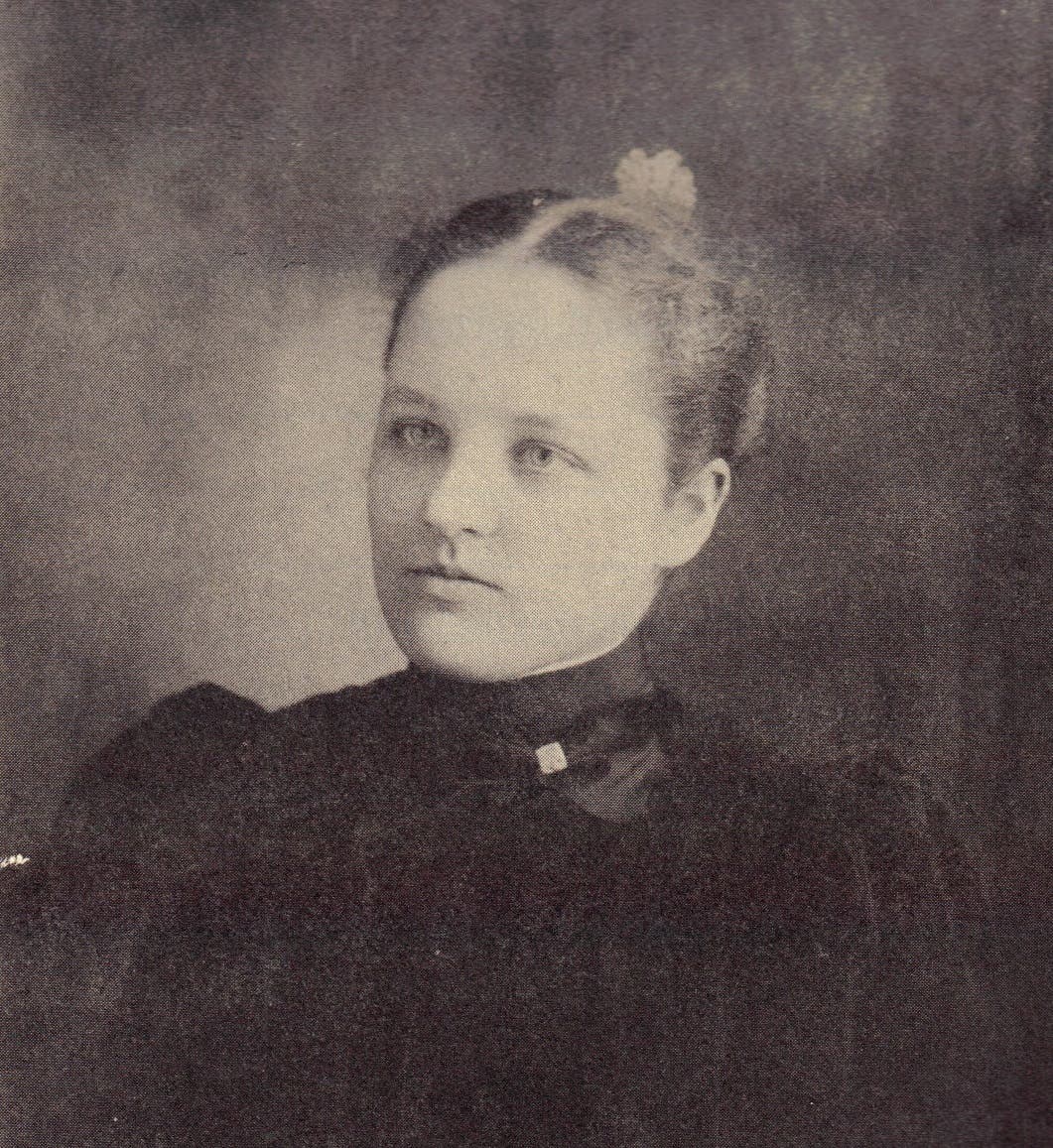
Lottie Dyer, c. 1890s (Herndon Historical Society).
William Drinkwater Sweetzer lived on Station Street in a house that used to be located near where the Dominion Animal Hospital is now located. He was a house carpenter and joiner and served on the first town council in 1879.George Howard was a farmer. In the 1860s this land on Monroe Street belonged to Alonzo Downing, who later sold it to the Smiths in 1877, who sold it to the Younts the following year. Downing worked for the U.S. Treasury Department and became a prolific landowner in Herndon. Could it be that a field school was built on the Downing’s property in 1869?
Lottie talked about how she found receipts amongst her father’s papers which were receipts from:
“…Annie Barlow and Georgia McKeen for tuition for teaching my sister, Edith. Tuition was not expensive in those days. Miss Annie Barlow’s receipt read for one month’s tuition for one child $1.00, for one half month’s tuition for one child $.50.Miss Georgia McKeen’s receipt was dated June 29, 1866, and was for $2.60 for tuition for seven weeks.”
Confusingly, the receipt was dated 1866 when the school on Monroe Street was supposedly built in 1869.However, then she went on to mention yet another school…
“Then there was the school I referred to that was held in the old yellow building in which Howard Blanchard and Susan Killam taught.”
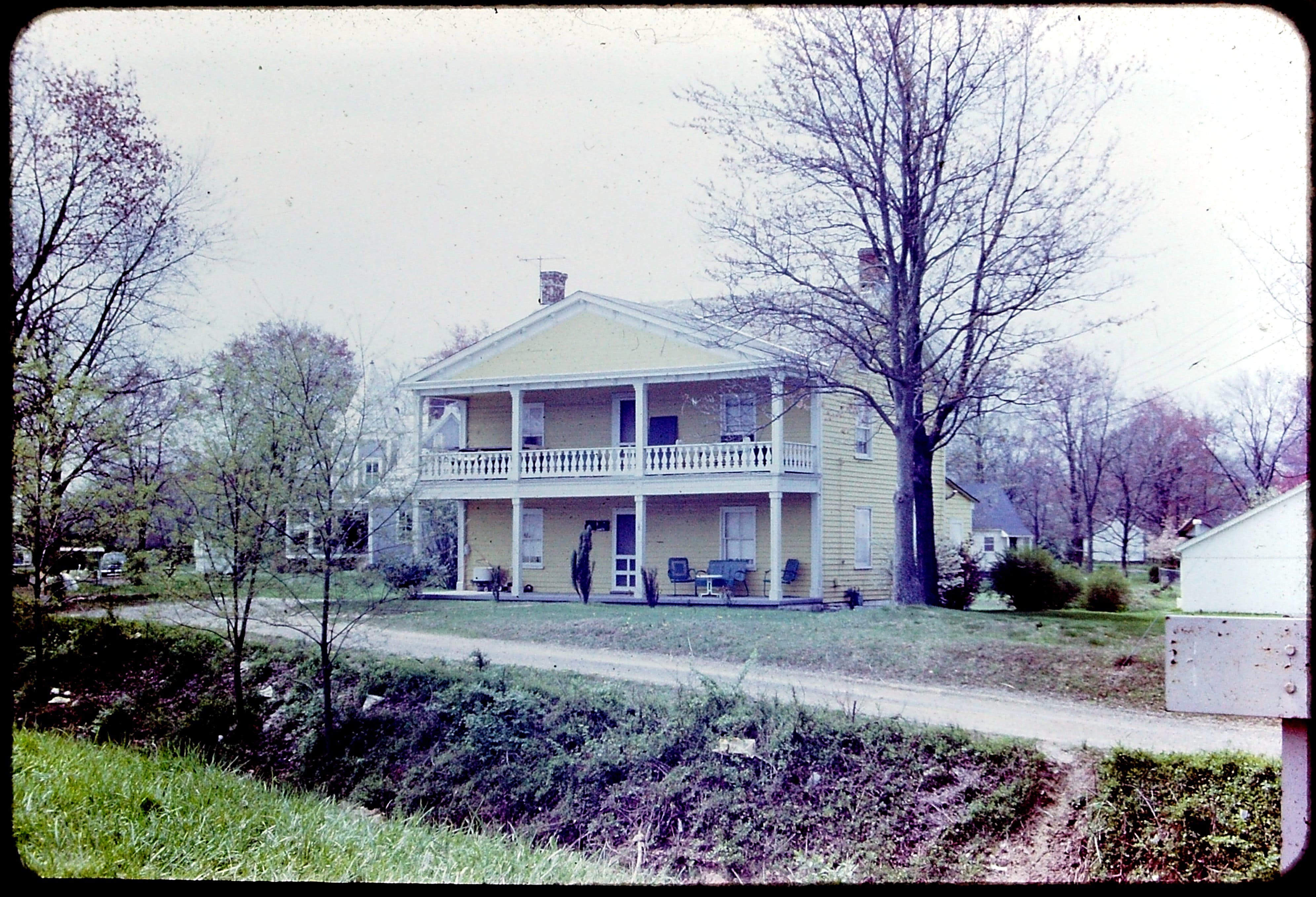
The Yellow House in c. 1972. It was previously located on Elden Street. (Herndon Historical Society)
This yellow building is believed to be what is commonly referred to as “The Yellow House,” a house that was built by the Lesters in the early/mid 1860s. The Lesters sold it to Madison and Sarah Whipple in 1967. The Yellow House was once located on Elden Street on the same site that is now occupied by the current Adams-Green Funeral Home. The Yellow House has since been relocated to Oak Street. It later (in the 1880s) became home of the Thomas Reed family, the town’s first undertaker. Minutes from the Herndon School Association dated 1872 indicated that the Association members once met “in the school room in Mr. Whipple’s house.” It is unknown how long school may have been conducted in the Yellow House.
In 1870 Howard W. Blanchard and Susan Killam were both 18 years old and were living at home with their respective parents in Herndon. As a teenager, Susan worked as a store clerk. Howard and Susan got married in 1874.It appears – based on what Lottie said – that Howard and Susan may have also acted as teachers in the Yellow House prior to being married. Howard later served as Herndon’s first Town Clerk beginning in 1879. It is hard to know if the little school on Monroe Street and the school in the Yellow House on Elden Street were in existence at the same time, or possibly if after the school on Monroe Street burned down, classes were temporarily moved over to the Yellow House.
Another thing happened in the late 1860s. A group of citizens met in Mr. Killam’s store in the evening of July 14, 1868, for the purpose of, “the immediate actions of the building committee in constructing a suitable School House at this place.” Stephen Killam was a town merchant, was Susan Killam’s father, and would later become one of Herndon’s first Town Councilmen in 1879.The group that gathered in his store passed a resolution which stated,
“That in view to alleviate the embarrassments of the building committee, they be and are hereby instructed and empowered to use their own discretionary powers to construct said School House either by contracted or by the day’s hire, and that they begin the work thereon immediately.”
It appears some kind of building committee had previously been established before this meeting took place. How early is unknown; however, the minutes start in the summer of 1868.This appears to be the genesis of the Herndon School Association, a town committee that oversaw the town’s public schools until they were incorporated into the Fairfax County Public School system. It is unknown what “embarrassments” the resolution refers to. But they started collecting subscriptions in earnest to build the new school. Many townspeople donated money, supplies and labor for the new school. This school would become known as the Herndon School and was located on Center Street, at the present location of 725 Center Street. This old school is now a private residence.
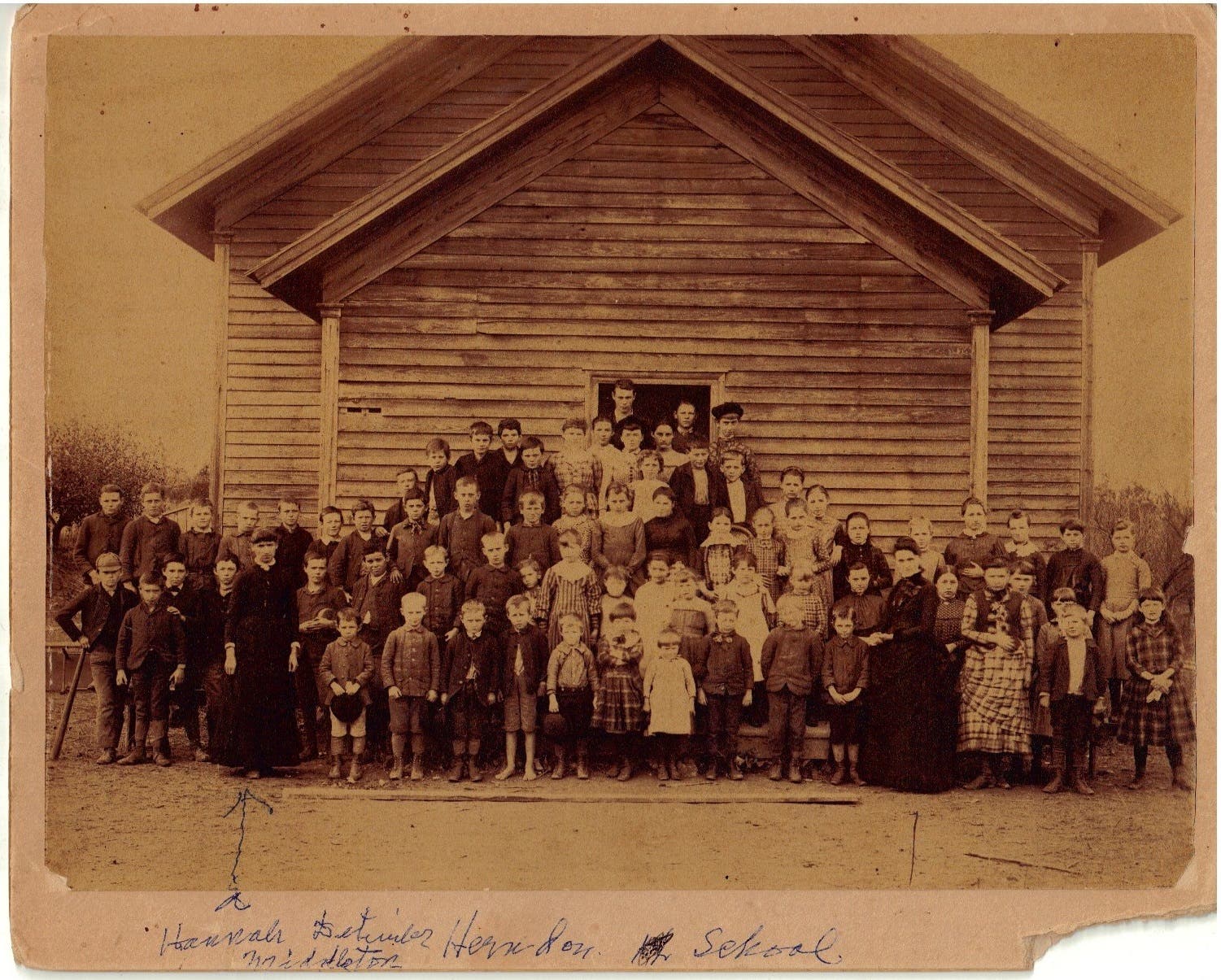
The Herndon School on Center Street, c. 1887. (Herndon Historical Society).
The first section of the Herndon School was a rectangular-shaped wood frame building. It was built on land donated by Ancel St. John, who also would later become one of Herndon’s first councilmen in 1879. The School Association minutes showed that by December 2, 1868, the Association members were meeting in the schoolhouse. Plastering and other details still needed to be completed, but it was evidently complete enough for the Association to have their meetings there. The school was for White students of all ages in town, although the minutes did not explicitly state when classes started there.
On the west side of town, also in 1868, another school got started: The Oak Grove School which was a school for African American students. This school started in a log building that was believed to have initially been a combination church and school. Once the town was incorporated in 1879, the town government appeared to oversee this school as well. Town Council minutes from the early 1880s indicate that the town council was making expenditures for wood and for salaries for teachers at the town’s “colored school.” It is believed that later (c. 1891) a one-room schoolhouse was built in the Oak Grove area, on land belonging into Isabella Hood, which was condemned by the Town of Herndon School Board for the purposes of “erecting a schoolhouse for Colored children.” Hood was compensated $25 for her land.
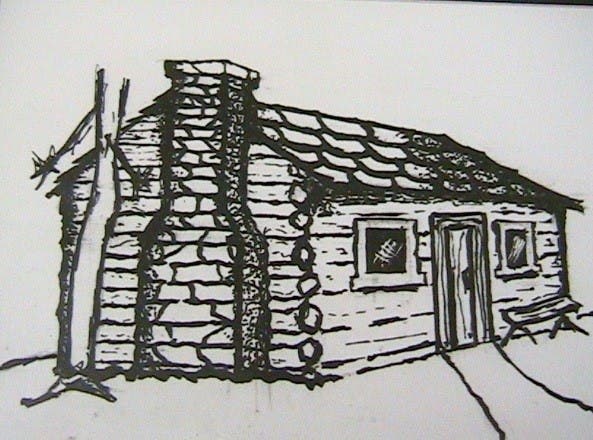
The first Oak Grove School, c. 1868. (Oak Grove Church).
Even later, in 1930, another two-room wooden schoolhouse was built in Oak Grove, funded by the Town of Herndon and by Rosenwald School Funds, money from a school building fund for rural Black schools, a fund started by philanthropist Julius Rosenwald and Booker T. Washington. In 1953 that last Oak Grove school was built, made of brick and located on Rock Hill Road. The Oak Grove School only served students up to seventh grade. Once the Oak Grove students reached high school age, they would have to travel to either to Washington, D.C., or to Manassas in order to attend high school. (In 1954 Fairfax County Public Schools opened its first high school for African American students, Luther Jackson High School in Merrifield, Virginia).
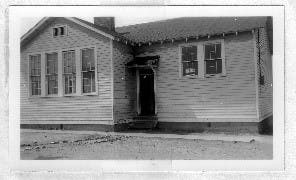
The 1930 Oak Grove School (Fairfax County School Board).
Back on Center Street, the Herndon School must have become too small for its students within just a few years. The Herndon School Association was looking to collaborate with Fairfax County Public Schools to erect a new building. The Herndon School Association minutes dated October 7, 1875, noted that they voted to “transfer their interest in the school lot to the district trustees.” Those “district trustees” refer to the trustees of the county public school system. Then the minutes went on to say that “a committee of three was appointed to solicit subscriptions to assist the district trustees in erecting a suitable building for school purposes.”
That was the last entry in the Herndon School Association minutes. But a new school building would not come about any time soon. Instead, an addition was constructed onto the existing school on Center Street, making it a T-shaped building. We think that addition was constructed sometime around 1875 and by that time the school was considered a Fairfax County school.
Lottie and her sisters, Ruth and Edith Dyer, attended the Herndon School. But the town’s children must have later outgrown that school building as well. Lottie described how in 1887-88 she had first attended primary school in Garrett’s Hall. That building was owned by Herndon resident and town councilmember, Enos L. Garrett. It was also located on Center Street, across the street from the school, on the northeast corner of Elden and Center Street, where an empty grassy lot is now located. Lottie said:
“The upstairs [of Garrett’s Hall] was used for lodge meetings and other public gatherings. The lower part had been furnished with crude desks and benches for primary school.”
In the early 1870s, David Johnson organized the St. Timothy’s Home School for Boys which was called Rawson Lodge. This school was in a small mission building formerly located near the northwest corner of Grace and Vine Streets. It was a private boarding school. Not to be outdone – and out of concern for the proper education of girls - another private school was created by Mrs. Mary Castleman nearby on Grace Street. It was also a private boarding school for girls called the Herndon Seminary. That school accepted boys up through 12 years old and girls up through high school age. It was run by Mrs. Castleman and her daughters. The seminary was located at the present day 763 Grace Street and closed in 1926.
Eventually a new public school was built for the town of Herndon in 1912. The former Herndon School on Center Street later became a private residence. The new school was called Herndon High School and was built on Locust Street. This school – despite its name – housed all the white children of Herndon of all grades. Tragically, that school building burned down in 1927 and another one was immediately built in the same location in the same year. By 1952 new additions to the school building were built on Locust Street, just east of the school building that had been built in 1927.The children eventually outgrew this school as well, with some students having to attend classes on the second floor of the old fire house on Spring Street.
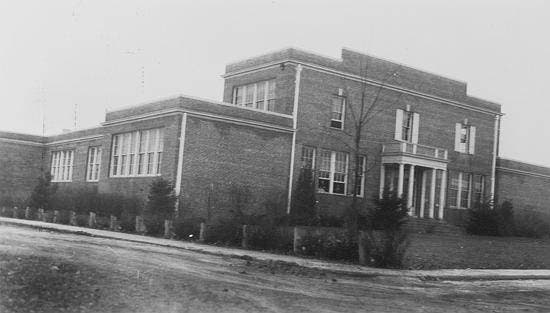
A 1937 photo of the Herndon High School that was built in 1927. (Virginia Department of Education).
In 1961 Herndon Elementary School was built on Dranesville Road and the town’s elementary students started attending school there. A few years later, a new Herndon High School was built on Bennett Street in 1967.That school would become the new Herndon High School and the previous school on Locust Street became Herndon Intermediate School (later changed to Herndon Middle School). Between the years that those two schools were built, the integration of public schools began. Oak Grove School closed in 1964 and all the town’s White and Black children started attending school together.
From the 1820s, about 60 years before Herndon was an incorporated town, the local inhabitants appeared to value education and would go to great lengths to make sure their children were educated -- either at home, at locally created field schools, or at private schools. The nascent village that later became the Town of Herndon formed its own School Association. The Herndon School was later absorbed into the Fairfax County Public School system.
This article reviewed the schools we are aware of that once existed in Herndon in the earliest years, but we acknowledge that there may have been other small, rural, field or private schools in the town’s early history that we are not aware of.
------------------------------------
About this column: “Remembering Herndon’s History” is a regular Herndon Patch feature offering stories and anecdotes about Herndon’s past. The articles are written by members of the Herndon Historical Society. Barbara Glakas is a member. A complete list of “Remembering Herndon’s History” columns is available on the Historical Society website at www.herndonhistoricalsociety.org.
The Herndon Historical Society operates a small museum that focuses on local history. It is housed in the Herndon Depot in downtown Herndon on Lynn Street and is open every Sunday from noon until 3:00. Visit the Society’s website at www.herndonhistoricalsociety.org, and the Historical Society’s Facebook page at https://www.facebook.com/HerndonHistory for more information.
Note: The Historical Society is seeking volunteers to help keep the museum open each Sunday. If you have an interest in local history and would like to help, contact HerndonHistoricalSociety@gmail.com.