Community Corner
Remembering Herndon's History: The End Of The Herndon Seminary
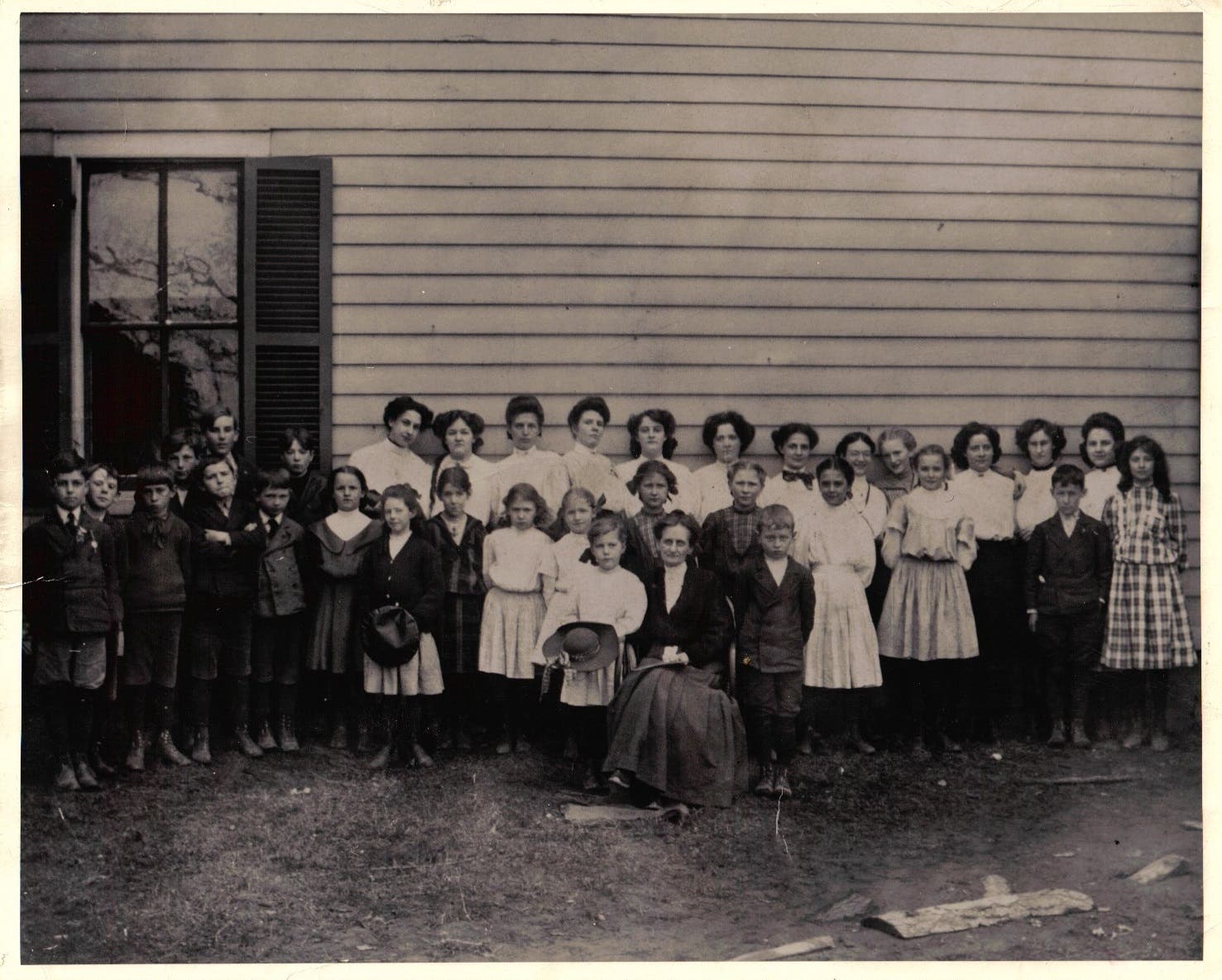
In 1881, Mary Lee Castleman buys land and builds a home where she an her daughters would also operate their Herndon Seminary school.


By Barbara Glakas
HERNDON, VA — Recently, a descendent of Herndon’s Crounse family found a letter among his grandmother’s things. The letter was written in 1930 by Maria R. Bready to the descendant’s great grandmother, Leona Crounse Kidwell. Maria was thanking Leona for her donation to the Herndon Seminary fund.
Find out what's happening in Herndonfor free with the latest updates from Patch.
The Herndon Seminary was located at 763 Grace St. It was a boarding school for girls up through high school age, although it also admitted boys up to age 12.
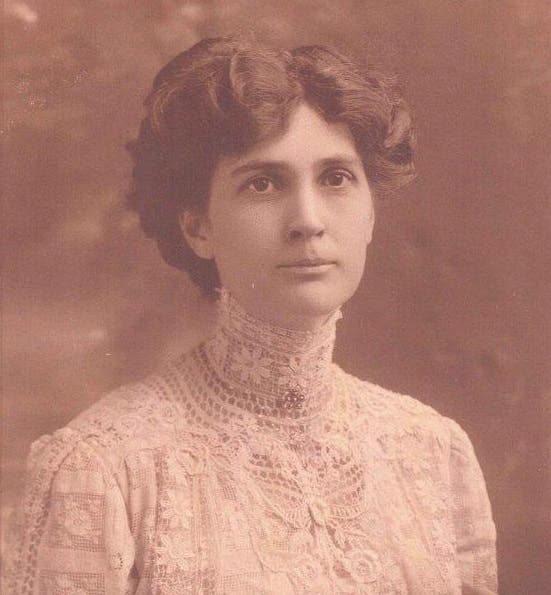
Mrs. Mary Lee Castleman was a Virginian, a widow and a devout Episcopalian who came to Herndon from Alexandria in the mid-1870s with her daughters, Virginia, Lucy “Lula,” Ida and Mary E. Castleman. Her son, Robert, remained in Alexandria as a boarding student at Episcopal High School. Mrs. Castleman was instrumental in raising the money to build Herndon’s St. Timothy’s Episcopal Church at the corner of Elden and Grace streets. The old church building is still at that corner today and is now occupied by the Herndon Masonic Lodge.
Find out what's happening in Herndonfor free with the latest updates from Patch.
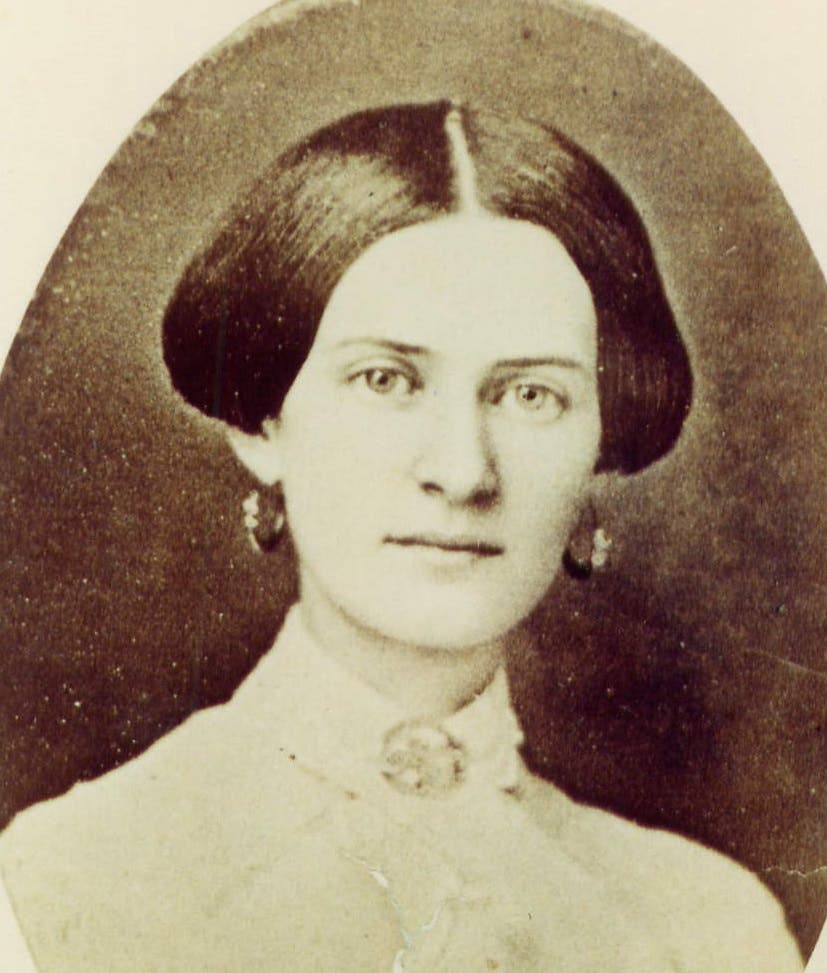
In the 1870s, St. Timothy’s already had a mission school for boys. Mrs. Castleman was concerned about the need for a suitable school for girls, so she bought three lots of land in 1881 on Grace Street and built a large home for herself and her daughters, where they would also operate their Herndon Seminary school.
Mrs. Mary L. Castleman died in 1891 and left her land and home to her children. The daughters continued to run the Herndon Seminary for many years. By 1925, however, the Castleman sisters were getting older, ranging in age from 61 to 71. Lula was sick and the family built a small bungalow house on the lot next door to the Seminary for her to live in. Lula died in 1926. During this time, sisters Virginia and Ida were the two primary sisters involved with running the Seminary. It is unknown how involved sister Mary E. Castleman was with the Seminary in its later years.
Articles and ads in the local newspaper — the Herndon News Observer — give a hint as to the fate of the Herndon Seminary from the mid-1920s to the mid-1930s. On June 4, 1925, the newspaper had an announcement that indicated the Herndon Seminary was closing. They planned to have a closing program that involved singing, dancing and a science contest. However, on June 11, there was another announcement saying that the Seminary would conduct a six-week course of summer school.
On Aug. 27, 1925, there was a newspaper ad saying that the Seminary was re-opening on Sept. 23 as a “Boarding and Day School for children with thorough instruction, careful training, and modest terms. A limited number. Apply to The Misses Castleman (associate principals).” That same ad ran through Nov. 12.
But by December 1925 there was an ad in the paper saying that three rooms were for rent in the Seminary.
In August 1926, a lengthier notice appeared in the newspaper which announced that the Herndon Seminary was for sale or lease. It described the property as:
"A 12-room house; porches with modern improvements; shade and fruit trees; poultry; suitable for a residence, boarding house, sanitorium or children’s home; near a post office, electric railway, stores and churches; cement walks; fine water. Terms moderate. Apply to The Misses Castleman (owners), Herndon, VA.”
(In the late-1800s and early-1900s, sanatoriums were considered a medical facility for long-term illness, most typically associated with the treatment of tuberculosis (TB) before the discovery of antibiotics).
And yet, on Sept. 9, 1927, there was yet another announcement in the Herndon News Observer saying that the Herndon Seminary would be re-opening on September 28: “Day school for the Grades, special classes for high school students. Apply to the Misses Castleman.” This ad ran through October 20th of that year.
In another ad that ran on September 13th and 20th of 1928, it said that Ida would be reopening the Seminary “for a limited number of pupils in primary grades on September 28.”
It appears that in the late 1920s, the Castlemans were closing and then reopening their Seminary in fits and starts. Why was this? Were they just hesitant about letting go of their beloved Seminary school that their mother had started and they ran together for so many years? Was their attempt to rent or sell the building unsuccessful? Were they trying to keep it open — even if at a minimal level — to figure out a way to stay financially stable? We may never know.
However, it is known that in 1925 the Castleman sisters placed a lien on the lot where their house was located, the building they used as the Seminary. The lien secured a $2,500 debt owed to the Bank of Herndon. The sisters agreed to repay the debt (with 6 percent interest) within three years. E. Barbour Hutchison, a Herndon resident and prominent educator who was once the principal of the public Herndon School on Center Street, was the trustee and he did not release the lien for 14 years.
By the early 1930s, the Great Depression started taking hold. There was one last newspaper ad that ran in April and May of 1930 saying, “Kindergarten (Child’s Garden) is now open for the little ones under seven years, Hours 8:30 to 11:30. Afternoon session if desired. Apply to The Misses Castleman.”
December 1930 is when Maria R. Bready (1869-1951) wrote her letter to Leona Crounse Kidwell (1871-1956). The letter indicates that the Herndon Seminary and bungalow house next door still had not yet been sold. The letter speaks of a Seminary Fund to which Leona had donated.
Leona was from a prominent Herndon family. Her father, a Civil War veteran, had worked for the Treasury Department and served on the Herndon Town Council from 1880 through 1885. Their family lived at 642 Madison St.
Maria R. Bready, who wrote the letter, was also from a prominent Herndon family. Her father was Herndon’s first mayor in 1879, Isaiah Bready. Their family lived in the big stone house at the corner of Ferndale Avenue and Vine Street. Isaiah Bready’s land abutted the Castleman’s Seminary property on Grace Street. Like the Castleman sisters, Maria remained single all her life. She lived in the Bready home with her brother, George, and his family.
The letter Maria wrote to Leona is reprinted in full below:
“Herndon, VA
17 Dec., 1930
“Dear Leona,
“Your letter with one dollar enclosed for the Miss Castlemans came this morning. You are certainly most generous toward them and we certainly do appreciate it. I am ashamed not to have answered your letter in which you offered to interest yourself in trying to sell their property. It is splendid in you to do this. I spoke to the Miss Castlemans about your plan and they were very much pleased and very appreciative. Miss Virginia wrote a description of the house and grounds which I am enclosing. I feel sure if anybody can do anything with real estate in these hard times you can.
“I do not know exactly what we have in the treasury. I plan to call Marjorie up tonight after she gets home from the city and find out just how much we have. It has been proposed (the Miss Castlemans like the plans) that we keep the money till spring and then use it to put water and a small bathroom in the bungalow. Every bit of water for use in the bungalow has to be carried from a pump half way between the latter and the Seminary. They try to get a boy to do it but he is not always available and then they have to do it themselves.
“It is snowing hard now. I hope it will do it aplenty. We will take water in any form, be it rain or snow. A great many wells are still dry and people are having to haul water. We were very fortunate, however, our well never failed but continues to furnish water for both the house and the barn.
“I will let you know later just what we decide to do with the Seminary Fund, whether we use it for a Xmas gift or keep it till the spring for the improvements.
“With best wishes for Xmas and The New Year.
“Sincerely,
“Maria R. Bready.”
In 1930, Leona Crounse Kidwell would have been 59. She was a widow and had spent 25 years working at the Justice Department. By 1930, she no longer lived in Herndon, but lived with her daughter. Her daughter cared for her because Leona was bound to her wheel chair due severe rheumatoid arthritis, although she still had a sharp mind. Leona’s descendants are unaware of any knowledge that Leona may have had with regards to selling real estate. We also do not know what Leona’s suggested plan was for helping to sell the Castleman property. Leona’s one dollar donation to the Seminary fund would have been equivalent to about $16 today. Leona was on disability by this time and the Great Depression was in full swing.
The letter indicates that Maria Bready may have been involved with the Seminary in some way, possibly helping to manage the Seminary Fund. Maria mentions contacting Marjorie. We surmise that Marjorie could have been Marjorie B. Reed (1891-1932) who was also a single woman from a prominent Herndon family. Her father was Thomas Edgar Reed, Herndon’s first undertaker since 1885. In 1930, at 39, Marjorie was still living with her parents on Elden Street. Census records indicate that Marjorie was a government clerk, which might explain why Maria said she would call Marjorie that night after Marjorie “gets home from the city.”
We found the answer to those questions about Maria and Marjorie in a 1924 article in the Fairfax Herald newspaper that explained how the former students of the Herndon Seminary had formed an alumni association for the purpose to “keep alive recollections and acquaintances of school days at the Seminary.” They elected officers at their first meeting. Maria R. Bready was elected corresponding secretary and Marjorie B. Reed was elected treasurer. Maria Bready had long associations with the Castleman sisters as she was one of the founding members of the Herndon Fortnightly Club (and later the Library Association) that Virginia, Ida, and Lula Castleman had started — along with a handful of other Herndon ladies — back in 1889.
In 1932, the oldest sister, Mary E. Castleman, died. Land deeds show that the Herndon Seminary lot was sold to Bernice Summers in 1933, who agreed to accept responsibility for the 1925 lien. The lien was released in 1939. Bernice D. Summers was the wife of Richard P. Summers, an accountant for the U.S. Department of Commerce, and she was a file clerk for the U.S. Department of Agriculture. The 1940 census records indicate that the Summers were living on Grace Street that year.
The Castleman’s adjacent bungalow lot was sold to Eugene and Ida Bicksler in 1936.
A newspaper obituary announced that Virginia Castleman died in 1937. The obituary said she was “associated with her sister for a number of years at the Herndon Seminary,” and was survived by her sister, Ida, and her brother, Robert. Three years later, in 1940, another obituary indicated that Ida passed away in an infirmary in Baltimore.
The Herndon Seminary was started by Mrs. Mary Lee Castleman and continued to be operated by her daughters for many decades, providing an important source of education for young women in the town of Herndon. The old seminary building remains a private residence today.
About this column: “Remembering Herndon’s History” is a regular Herndon Patch feature offering stories and anecdotes about Herndon’s past. The articles are written by members of the Herndon Historical Society. Barbara Glakas is a member. A complete list of “Remembering Herndon’s History” columns is available on the Historical Society website at www.herndonhistoricalsociety.org.
The Herndon Historical Society operates a small museum that focuses on local history. It is housed in the Herndon Depot in downtown Herndon on Lynn Street and is open every Sunday from noon until 3:00. Visit the Society’s website at www.herndonhistoricalsociety.org, and the Historical Society’s Facebook page at https://www.facebook.com/HerndonHistory for more information.
Note: The Historical Society is seeking volunteers to help keep the museum open each Sunday. If you have an interest in local history and would like to help, contact HerndonHistoricalSociety@gmail.com.
Get more local news delivered straight to your inbox. Sign up for free Patch newsletters and alerts.