Community Corner
Remembering Herndon's History: First Hand Accounts Of A Civil War Raid
Historian Barbara Glakas reveals the details of the only skirmish to occur in the Town of Herndon during the Civil War.


By Barbara Glakas
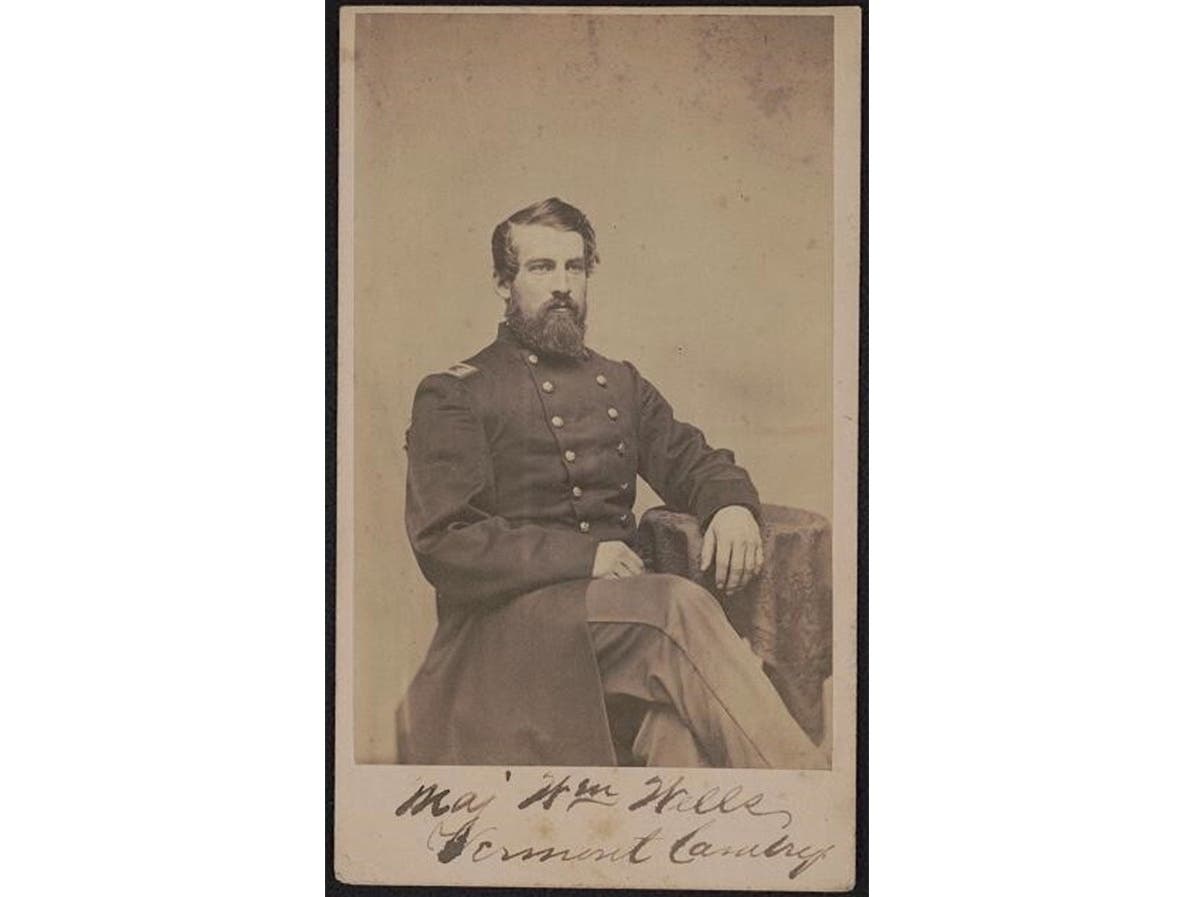
During the Civil War, the only skirmish that occurred in the Town of Herndon was a raid that was conducted by Confederate Capt. John S. Mosby and his band of rangers against a Union outpost comprised of soldiers from the 1st Vermont Cavalry Regiment. The Vermont unit in Herndon was led by Lt. Alexander Watson. Visiting in Herndon that day was Union Maj. William Wells and two other officers — Capt. Schofield and Lt. Cheney — who were also from the 1st Vermont Cavalry. The day was March 17, 1863.
Find out what's happening in Herndonfor free with the latest updates from Patch.
In 1863, the Town of Herndon had not yet been incorporated. However, since its new railroad depot had just been built in 1860, with a new post office inside named the Herndon Post Office, the surrounding area became known as “Herndon station.”
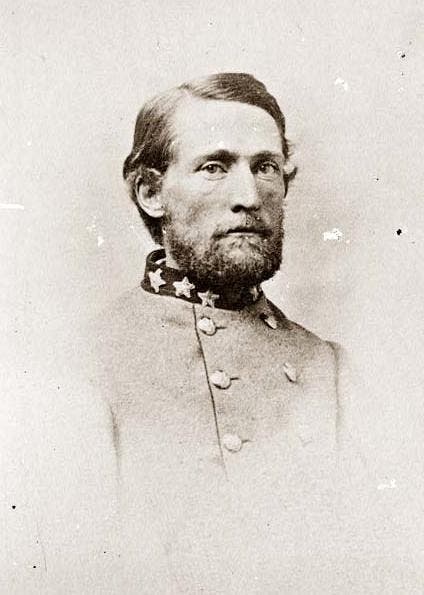
Found in a 1904 Fairfax Herald newspaper was an article that described what occurred in Herndon on March 17, 1863. It was a firsthand account written by Mosby himself, who then would have been 71. In his account, he mentions John Underwood, a Herndon area resident who was highly familiar with the local backwoods and became an invaluable scout and guide for Mosby.
Find out what's happening in Herndonfor free with the latest updates from Patch.
Mosby also mentions a Herndon sawmill, which was built in the 1850s and was formerly located between Elden and Locusts streets, on the block where Jimmy’s Old Town Tavern is now located.
The following is an excerpt from that article:
“Only a few days after the capture of General Stoughton and his headquarters [in Fairfax City], one of my scouts reported, greatly to my surprise, that an outpost of thirty or forty men had been established at Herndon station on the railroad leading from Alexandrian to Loudoun County. The place is only six or eight miles from the Potomac, and was at the time easily open to attack, the nearest support being at Dranesville, some miles away — the camp of the First Vermont cavalry. The news was a surprise to me and I remarked that the outpost seemed to have been put there to get caught. The commander in Fairfax had apparently learned nothing by experience.
“Heretofore my attacks had been at night. I concluded that they would not expect me in the day time, and the chances of surprise would be better. We camped that night about ten miles from Herndon, and started off early in the morning. John Underwood, who was a second Kit Carsen, guided us through the pines. It was bright sunshine; the soft snow favored the enterprise. We reached the road leading from Dranesville to Herndon in the rear of the picket post without being discovered.
“Soon we came upon a vidette; he was not looking for an enemy to approach from the direction of his own camp, and was a prisoner before he could fire or give the alarm. We rode toward the station, when we got within a hundred yards of it we saw the Green Mountain boys lounging around a sawmill taking a sun bath, with their horses hitched by halters to the fence. They were expecting relief from camp every minute, and until we raised a yell and dashed on them, they probably mistook us for friends, though we were all dressed in gray.
“The numbers on each side were about equal; but, as my men used to say, we had the bulge on them. The Vermonters had no time to mount. They ran into the sawmill and then up the steps to the top floor, we following on their heels. As I started up the steps, I have the order in a loud tone which could be heard all over the building, to set fire to the mill. It was full of dry wood and shavings. A spark of fire would have sent it up in a roar. The, rushing up to the head of the steps, I shouted again for surrender. As the Vermont men did not care to be burned alive, they surrendered. Soon we had the whole [group] captured [except] one who was too badly wounded to the carried off, and took them with us.
“Meanwhile we had noticed four horses standing at the front gate of a neighboring house. The equipment showed they were officer’s horses. Some men went to bring them and their owners. They found three of the officers but the other was missing. I ordered another search. Two of my men went upstairs; there was a garret with no floor, only laths and plastering. They called; there was no answer. One of them, Ames, who had recently deserted from the Fifth New York Cavalry, thought that a shot in the dark would do no harm; so he fired. There was a stir and a crash, and a man came tumbling down through the ceiling among the men in the room below. It was Major Wells. We [dusted the white wash off our clothes, mounted the rest of our prisoners and] having meanwhile disposed of a nice lunch which the woman of the house had set for the officers.
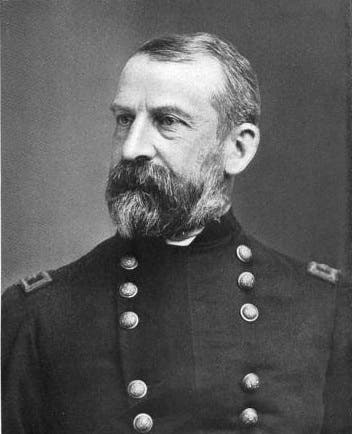
“Major Wells was exchanged in time to take part in the Gettysburg campaign, where he won a great deal of distinction and was made a brigadier general. (The next time we met was in August, 1885, in San Francisco, on the day I arrived from Hongkong where I had been consul for nearly seven years).”
Herndon resident Catherine “Kitty” Kitchen Hanna, was also present during the raid. Hers was the house where some of Mosby’s men conducted their follow-on attack. At the end of their visit — but before the raid — the Vermont officers stopped to have lunch at the Hanna’s house on Elden Street.
Kitty recalled:
“Never shall I forget that St. Patrick’s Day, March 17, 1863 – or them pies. As I turned from servin’ the pies, I cast my eyes out’n the window toward that lone cedar tree – by the Fitzhugh’s house on the hill ‘tis now – an’ I saw comin’ a squad of grays! The rebel yell was no louder than my scream, “the Southerns!” as they came tearin’ down the hill, an’ every man at the table ran to the front door – the wors’ thing to do, to show themselves! – an’ then the bullets jes’ rained on our house. The Yankees ran inside an’ I thought they was goin’ to fight it out, but though they buckled on sabres, they followed my brother-in-law up the stairway, till I cried out in terror – ‘Gentleman, go outside, or I’ll be murdered in my own house!’ Watson couldn’t stand that, so he rushed out, firin’ all the time, an’ so did Lieutenant Chiny; an’ I never saw either on’em again.”
The only known firsthand account from Wells that we could find regarding the affair at Herndon station came in the form of a letter we found in the University of Vermont’s Special Collections Library. Wells wrote the letter to his brother, Charles, as he was riding on his way to a Richmond prison after his capture in Herndon.
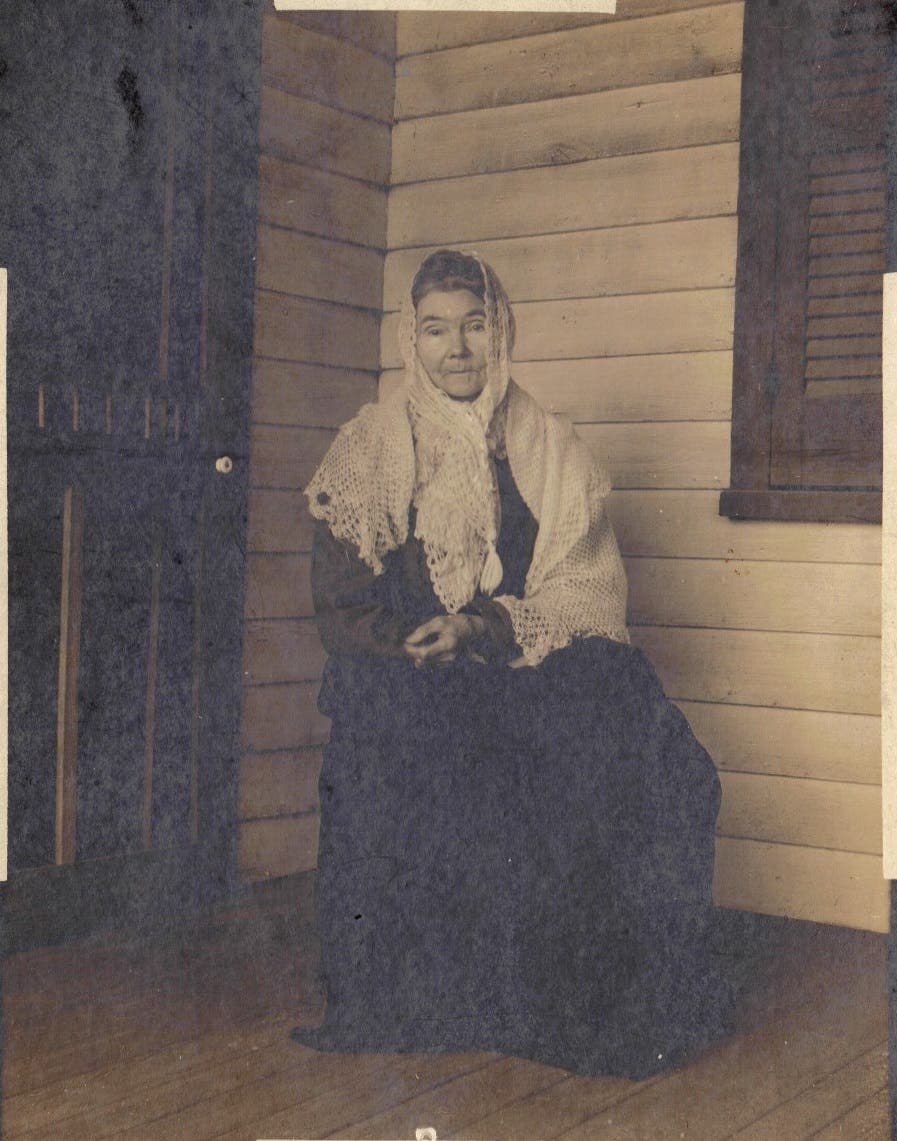
In his letter he mentions “Mr. Hanna,” who was a Herndon Union-supporting civilian whose sister-in-law, Kitty Kitchen Hanna, was staying at a house on Elden Street. Below is an excerpt from Well’s brief letter:
“On the Road to Richmond, March 17, 1863, 10 PM.
“Bro Charles,
“Today about 1 P.M. Cap. Scofield Co F, Lt. Cheny Co C & myself [started] to visit pickets at Herndon. Just as we got ready to leave, Mr. Hanna offered to give us some dinner. Just as we got through eating, we heard a yell & pistol shots. Upon looking out the window we saw about 50 men Confederates. Mosby. Lt. Watson had only 18 men at post. We are on the road to Richmond. They let us ride our horses thus far. Guess they will as far as Culpeper [when] we take the [cars]. We have been well treated.”
“Cars” likely referred to railroad cars, as the prisoners would be taken on the railroad from Culpepper to the Richmond area.
After Wells was released from Richmond’s Libby prison, he went on to fight in the Gettysburg campaign, commanding the 2nd Battalion of the 1st Vermont Cavalry. He was later awarded the Medal of Honor for his distinguished gallantry at the battle of Gettysburg, leading his battalion in a daring charge at Big Round Top. He was a combat officer for the entire war and left military service in 1866 as a brevet major general. After the war he lived in Vermont, becoming a partner in a wholesale druggist firm. He also served in the Vermont state legislature and was later elected as the adjutant general of Vermont. He died of a heart attack in 1892 at the age of 54. He is buried in Burlington, Vermont.
John Underwood was killed a few months after the raid in Herndon, by a Confederate deserter near Oatlands, Virginia, south of Leesburg. He is buried in Middleburg, Virginia.
Kitty and several members of the Hanna family continued to live in Herndon for many years.
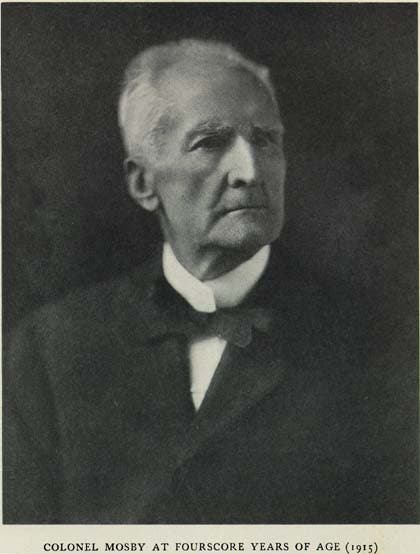
Mosby disbanded his rangers after the war, leaving military service at the rank of colonel. He re-established his law practice in Warrenton, Virginia, and became Ulysses S. Grant's presidential campaign manager in Virginia. Mosby served in various appointed positions under several presidents. Some of the jobs he held included: a lawyer for the Southern Pacific Railroad, a U.S. Consul to Hong Kong, a special agent for the Department of the Interior, and an assistant attorney in the U.S. the Department of Justice. After a series of physical debilitations, Mosby died in a Washington hospital in 1916 at the age of 82. He is buried in Warrenton, Virginia.
As Mosby previously mentioned in the 1904 newspaper article, he and Wells met in San Francisco in 1885. Oh, to have been a fly on the wall for that conversation.
About this column: “Remembering Herndon’s History” is a regular Herndon Patch feature offering stories and anecdotes about Herndon’s past. The articles are written by members of the Herndon Historical Society. Barbara Glakas is a member. A complete list of “Remembering Herndon’s History” columns is available on the Historical Society website at www.herndonhistoricalsociety.org.
The Herndon Historical Society operates a small museum that focuses on local history. It is housed in the Herndon Depot in downtown Herndon on Lynn Street and is open every Sunday from noon until 3:00. Visit the Society’s website at www.herndonhistoricalsociety.org, and the Historical Society’s Facebook page at https://www.facebook.com/HerndonHistory for more information.
Note: The Historical Society is seeking volunteers to help keep the museum open each Sunday. If you have an interest in local history and would like to help, contact HerndonHistoricalSociety@gmail.com.
Get more local news delivered straight to your inbox. Sign up for free Patch newsletters and alerts.