Community Corner
Remembering Herndon's History: Herndon's Gold Star Boys
Service Members Lost in WWI & WWII. By Barbara Glakas


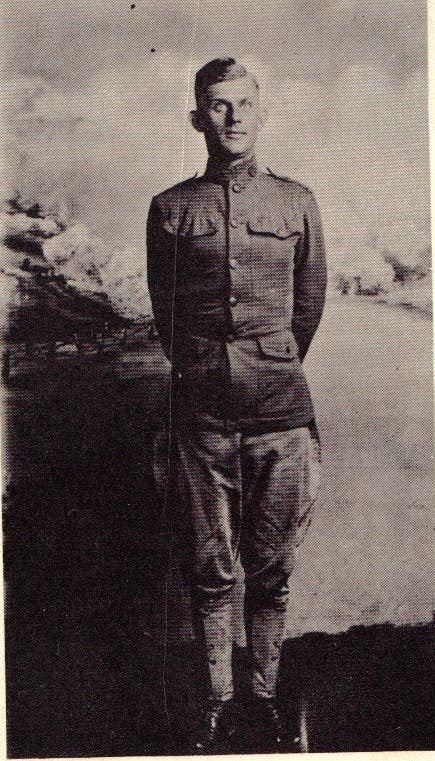


Corliss M. Fox, WWI, from Service Record Book of Men and Women of Herndon, Va.
George W. Frame, from Service Record Book of Men and Women of Herndon, Va.
A World War II era service flag.
Find out what's happening in Herndonfor free with the latest updates from Patch.
By Barbara Glakas
Like many localities across the nation, Herndon had many residents who served -- and died -- in World Wars I and II.
Find out what's happening in Herndonfor free with the latest updates from Patch.
In 1949 the Herndon American Legion Post 91 and its Auxiliary group sponsored the publication of a book called Service Record Book of Men and Women of Herndon, Virginia. The book lists the names of Herndon Gold Star Boys as well as other Herndon area men and women who were veterans of World Wars I and II. But what exactly is a Gold Star Boy and how did that tradition come about?
During World War I families started displaying banner flags to show their support for their husbands and sons fighting in France. In 1917 an Army Infantry Captain from Ohio named Robert L. Queisser designed and patented a banner that would come to be called the service flag. He had two sons serving in the war. The service flag idea was quickly adopted by other members of the public. An Ohio Congressman read a statement into a 1917 Congressional Record indicating that the Mayor of Cleveland and its Chamber of Congress had adopted the service flag.
The service flags were about a foot long, displayed vertically, and were often hand made from cotton or wool. The flags were usually displayed in a window for the public to see. Some businesses and places of worship also adopted the service flag in support of their employees or members who were serving in the war.
The outer boarder of the flag is red. Stars are displayed in the center on a white background. The number of stars on the flag represents the number of family members in the war. The various colors of the stars came to represent different things to those who displayed the flags. Blue stars represented each family member who was on active duty service. Gold stars represented a service member who was killed in action. Silver stars represented a family member who was wounded and discharged as a result of his/her injury. A red star represented a captured or missing service member.
The service flag continued to be popular in World War II. During that war the U.S. Department of War created manufacturing specifications for the flag as well as guidelines on how the flag was to be flown. By 1967 the Department of Defense authorized the service flag.
With the acknowledgment that the Service Record Book of Men and Women of Herndon, Virginia list may not be fully complete, we nevertheless list the names of Herndon’s Gold Star Boys here.
World War I:
- Corliss M. Fox – U.S. Army. Died during overseas duty, September 29, 1918.
World War II:
- Alexander Evan Campbell – Army Air Corp. Died in glider pilot training, June 13, 1942.
- Julian Ira Columbus – Air Corps. Bombardier. Died when plane bombed over Germany, June 20, 1944.
- Thomas W. Bridges – Marine Corps Reserves. Wounded at Iwo Jima, died on Guam, April 10, 1945.
- Eugene Gordon Farr – Medical Corps. Engaged in Battle of the Bulge. Died December 24, 1944.
- George W. Frame – Air Force, 483rd Bomb Group. Died June 5, 1945.
- Robert J. Girard – Army. 90th Division. Died July 25, 1944.
- Warren Hawley – Army. Infantry. Died November 17, 1944, during an invasion between Holland and Germany.
- Edwin Barbour Hutchison, Jr. – Army. Paratroopers. Died June 13, 1944 during action in Normandy, France.
- Harry H. Kanmermier – Army. Infantry. Died March 27, 1943 in action at Foudouk, Africa.
- Joseph Kennedy Linkins, Jr. – Army Airforce. Died June 10, 1944 in a plane crash.
- William L. Mullen - 99th Infantry Division. Died December 27, 1944 in Belgium.
- Ross Robey Poole – Infantry. 88th Division. Missing in action since May 12, 1944.
- Carl Eugene Niswander – Marines. Died June 8, 1945 in a plane crash.
- Louis Kirk Robey – Naval Air Corps. Died January 31, 1944 in Puerto Rico.
- Harry Raymond Stutsman – Army. Service Supply. Died November 18, 1943 at Walter Reed General Hospital.
- Roy Allen Tate – Infantry. 26th Division. Died December 30, 1944 in the Battle of the Bulge.
- Robert Thompson Watt, Jr. – Army. Infantry. Died April 29, 1945 on Negros Island while leading his platoon, assaulting a hill.
----------
About this column: “Remembering Herndon’s History” is a regular Herndon Patch feature offering stories and anecdotes about Herndon’s past. The articles are written by members of the Herndon Historical Society. Barbara Glakas is a member. A complete list of “Remembering Herndon’s History” columns is available on the Historical Society website at www.herndonhistoricalsociety.org.
The Herndon Historical Society operates a small museum that focuses on local history. It is housed in the Herndon Depot in downtown Herndon on Lynn Street and is open every Sunday from noon until 3:00. Visit the Society’s website at www.herndonhistoricalsociety.org, and the Historical Society’s Facebook page at https://www.facebook.com/HerndonHistory for more information.
Note: The Historical Society is seeking volunteers to help keep the museum open each Sunday. If you have an interest in local history and would like to help, contact HerndonHistoricalSociety@gmail.com.
Get more local news delivered straight to your inbox. Sign up for free Patch newsletters and alerts.