Community Corner
Remembering Herndon's History: How The Depot Was Saved
Barbara Glakas explains how community efforts helped to save the historic Herndon Depot from destruction.


By Barbara Glakas
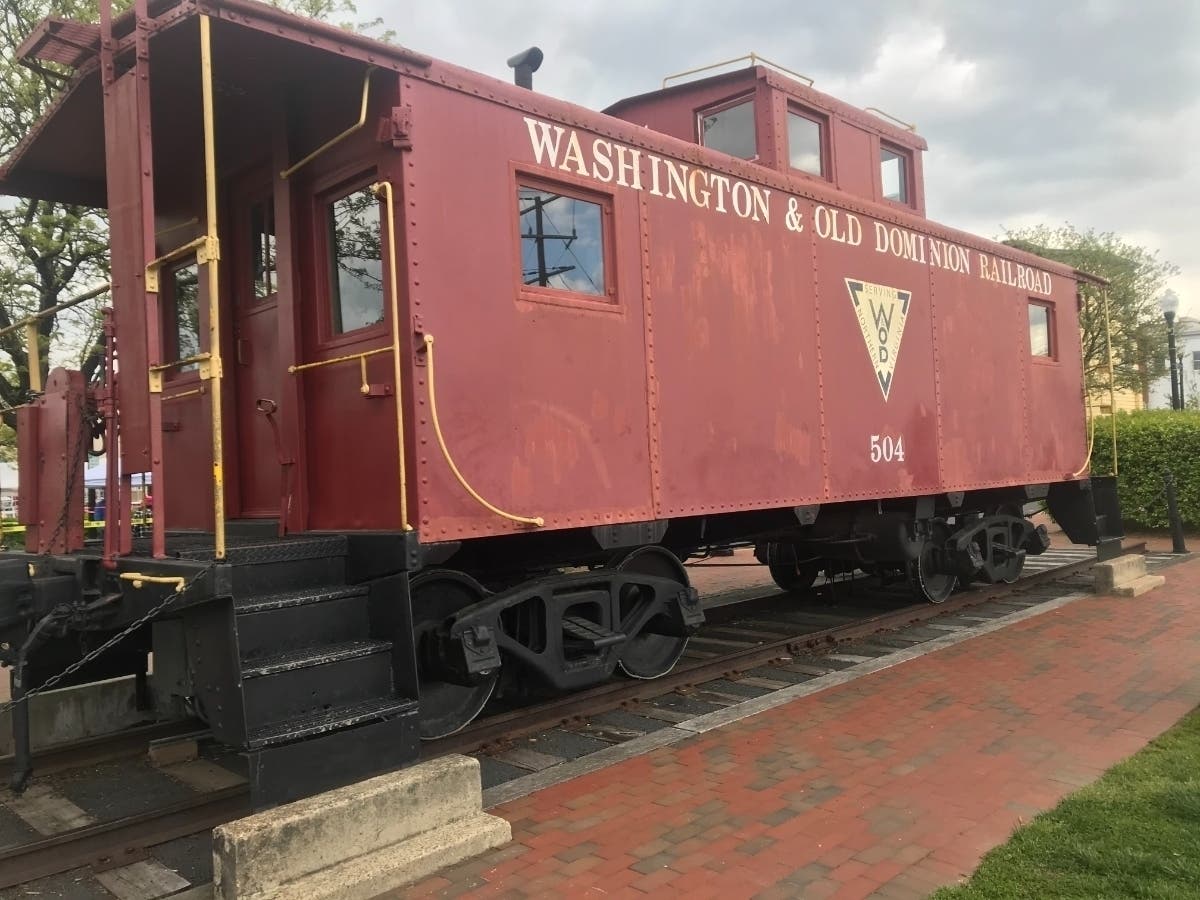
The Washington and Old Dominion Railroad stopped service in 1968. Soon after, a debate ensued in Herndon as to what to do with the Town’s historic — and then abandoned — circa 1857 train station building, commonly called the Herndon depot.
In 1970, a town discussion was going on about the possibility of tearing the depot building down in order to use that area for additional parking, something that would benefit the businesses along Lynn and Station streets.
Find out what's happening in Herndonfor free with the latest updates from Patch.
Herndon resident Richard Downer had lived in town since 1953. He was also a downtown business owner and member of the town’s Park and Playground Committee. He felt that the depot building was the reason why the Town of Herndon existed. He was correct, of course. Up until the 1840s, Herndon (which had not yet been named) had no more than a handful of homes, and no known businesses, other than farming. Once the railroad and depot were built, development started occurring around the train station — much like what occurs around Metrorail stations today — and the town was essentially born.
The railroad and the depot served the people of Herndon, and especially the local farmers, for over 100 years. The rail hauled the farmer’s dairy products into Washington, D.C. The rail also hauled freight, and it served as a commuter rail as well.
Find out what's happening in Herndonfor free with the latest updates from Patch.
Downer organized a campaign to save the depot. There was a lot of pressure at the time to tear down the building. The depot had been abandoned since the rail service stopped and it was in poor shape. There was also still a square brick building on the east side of the depot that had once served as the electric power station when the trains were electric from 1912 to the 1940s.
It was realized that some type of organizational vehicle was needed to work on the depot project, and that is where the idea of forming the Herndon Historical Society came from. Such a group could start recording the history of the Town of Herndon. In November 1970, Downer organized a meeting of several interested community members at Herndon Intermediate School (now Herndon Middle School) for the purpose of organizing the Herndon Historical Society.

In an effort to find a new use for the depot building the idea of using the depot for teen center was briefly considered. But ultimately the idea of a museum took hold much later and gained strong support from the community.
Bill Hanes, an attorney who was a member of a long-time Herndon family, helped with the incorporation papers. The incorporation articles were filed in December 1970 and the Herndon Historical Society become incorporated as a non-profit group shortly after that in 1971. There were 24 charter members of the Society. Allen Smith was elected as its first president. Other initial Board members included Richard Peck, Elizabeth Bennett, Holden Harrison, William Jackson, Charles Liddle, and Phillip Thienel.

Downer was also a member of the Jaycees, which was a very active group in town during the 1970s. The Jaycees group got behind the idea of saving the depot and they organized various activities to try to keep the building from being torn down, such as erecting an information kiosk next to the depot.
Downer said they were also lucky to have been able to work with a supportive Virginia Electric and Power Company (VEPCO) Manager named Bill Slayton who helped to fend off groups in Richmond that wanted to tear the building down to protect the power lines that ran over the building. VEPCO had bought the railroad right-of-way for its electric power transmission lines.
One potential plan that Downer and his cohorts had considered was moving the depot to another location in town. Downer made an appointment with a man who had moved many homes from the Dulles Airport site into Herndon when the airport was being planned. Downer said he would never forget when the contractor pulled up to the depot in his pastel colored Cadillac that had two huge longhorn steer horns mounted on the hood of his car. The man noticed that the some of the brick supports on the west side of the depot building had washed out and yet the extremely strong timbers of the floor of the building were still standing. The man told Downer, “You should save that and leave it where it is.” That helped convince Downer to save the building and leave it in place.

The Town of Herndon eventually obtained ownership of the Herndon depot building. Finally, the Herndon Town Council brought the issue of the fate of the depot to a vote. Town Councilman Holden Harrison, who was a friend and mentor of Downer’s, told Downer that he really wanted to see the depot building stay, but he also had a lot of friends who wanted to see the building taken down, so he planned on abstaining from the vote when the issue came before the Town Council. Harrison was aware that if he abstained the pro-depot group would win, because Harrison was already aware that the votes on the council were split and a tie vote would result in no action, thus saving the building. And that’s what happened. That strategy was a secret between Downer and Harrison for many years. Harrison died in 1981.
Although the town owned the building, the Northern Virginia Regional Park Authority had obtained the right to the land below VEPCO’s power lines in 1978. Therefore, the Park Authority controlled the land that the depot sat on.
In 1979 the Town nominated the depot building for inclusion on the Virginia and National Registers of Historic Places. And in 1982 the Town entered into a memorandum of understanding (MOU) with the Park Authority in which it was agreed that the depot building could only be used for “public recreational, historical or cultural purposes consistent with the Historic Landmark designation of the Depot Building (such as a museum, public visitor or information center or park station).”
At that point the Society had an empty dilapidated building on their hands, and they had to figure out what to do with it. The first order of business was to make the exterior of the depot look presentable. The Society approached various people around town asking for help with the building. Paint was purchased from Murphy and Ames, a lumber and millwork company that used to be located on Station Street across from the depot. Holden Harrison again helped out and “was the impetus for getting some paint on the building,” according to Downer. Harrison brought his ladders and helped scrape and paint the building even though he was about 70 at that time.
In 1971, the Town of Herndon did not have an Architectural Review Board or a Heritage Preservation Review Board. The people working on the depot were just trying to make sure the old depot looked better, to make it look as nice as it could.
The Sterling Concrete Company, which was formerly located in downtown Herndon on our current town green, volunteered to take down the old brick electrical power building on the east side of the depot. In a letter to Downer, the company said they had been following the recent proposals for restoring the abandoned depot and would be willing to remove the brick annex building at no cost to the town “as a gesture to the community.” Since the railroad electrical wires had been taken down in the 1940s brick building had been used for storage. Many felt the brick building’s presence prevented people from getting a good idea of what the original train station looked like.
With the help of some student interns at the Fairfax County Park Authority, Downer arranged for some designs to be drawn up for the area around the depot. Those designs were the basis of the grounds that can now be seen around the depot today. It helped make the depot a signature piece of the town.
In the early 1970s, Spring Street ended at Elden Street and was not yet connected to Station Street. “The Harrison Plan” was a modified version of the interns' design. Holden Harrison had determined that traffic flow would be much better if Spring Street connected to Station Street, as it does today. However, in order to execute that plan several feet of the west end of the depot would have to be removed. At one point there was some discussion to move the depot several feet eastward so that its west end would be even with the Town Hall. One company estimated that this could be done for $2,000. But many feared the old 1857 building would not withstand such a move without considerable damage. It was decided to keep the depot in place and remove a few feet from the west end instead.

In the process of removing the west end of the depot, it was discovered that there were two floors in the freight room of the building. At some unknown point in time, a second elevated floor had been constructed in order to make the floor align with the height of the railroad box cars. Using carts, freight could then be easily taken to and from the depot and box cars, via a freight door on the north side of the depot, which is now closed off.
The Society then moved forward with making plans to sublease the building from the town and to turn the depot into a museum, which would be managed by the Herndon Historic Society. The creation of the museum took several years. Many townspeople donated artifacts to the museum, with Society member, Tony DeBenedittis, leading the way on coordinating the museum displays. In the meanwhile, the new town square improvement project around the depot and the connection of Spring Street to Station Street was completed in 1974.
For years, the Society worked on collecting Herndon artifacts and planning the museum. The Herndon Department of Public Works renovated the interior of the building and, for a time, temporarily occupied it.
The Herndon Historical Society Depot Museum officially opened in 1981 and still occupies the old train depot today. The saved depot is now an iconic symbol of the town of Herndon. And after 50 years, Richard Downer is still an active member of the Herndon Historical Society.
About this column: “Remembering Herndon’s History” is a regular Herndon Patch feature offering stories and anecdotes about Herndon’s past. The articles are written by members of the Herndon Historical Society. Barbara Glakas is a member. A complete list of “Remembering Herndon’s History” columns is available on the Historical Society website at www.herndonhistoricalsociety.org.
The Herndon Historical Society operates a small museum that focuses on local history. It is housed in the Herndon Depot in downtown Herndon on Lynn Street and is open every Sunday from noon until 3:00. Visit the Society’s website at www.herndonhistoricalsociety.org, and the Historical Society’s Facebook page at https://www.facebook.com/HerndonHistory for more information.
Note: The Historical Society is seeking volunteers to help keep the museum open each Sunday. If you have an interest in local history and would like to help, contact HerndonHistoricalSociety@gmail.com.
Get more local news delivered straight to your inbox. Sign up for free Patch newsletters and alerts.