Community Corner
Remembering Herndon's History: Miss Harris’ Poems of Oak Grove
Barbara Glakas of the Herndon Historical Society writes about Ida Harris, who taught at Herndon's all-black school in the 1940s and 1950s.


By Barbara Glakas
HERNDON, VA — Oak Grove is a historically African American community that dates back to the 1860s. Located near Herndon’s western boundary line, Oak Grove was once considered part of the Town of Herndon but, due to boundary changes over the years, much of Oak Grove is now considered part of eastern Sterling.
In segregated Herndon, Oak Grove was once the center of African American community, having its own church, school, store, Odd Fellows lodge and cemetery. Community members remember the many lawn parties in Oak Grove. Frederick Washington, a former African American resident of Herndon, recalled the festivities at the lawn parties were “big time.” He said, “They would cook, and sell it, and they danced. Then you would have some of the older people that played string music, like guitars or mandolins, whatever, and they would dance.”
Find out what's happening in Herndonfor free with the latest updates from Patch.
Schooling in the Oak Grove community in the 1800s was originally held within their early log Oak Grove Baptist Church building. At some point in time, a one-room schoolhouse was built near the church. That was eventually replaced with a “new” two-room schoolhouse that was built in the same area in 1930, about 200 yards east of the church. That school closed in 1952 and was replaced with a newer school constructed of brick that was built on Rock Hill Road, near the intersection of Sterling Road. That building still stands but is now the Town of Herndon’s Zoning Enforcement building.
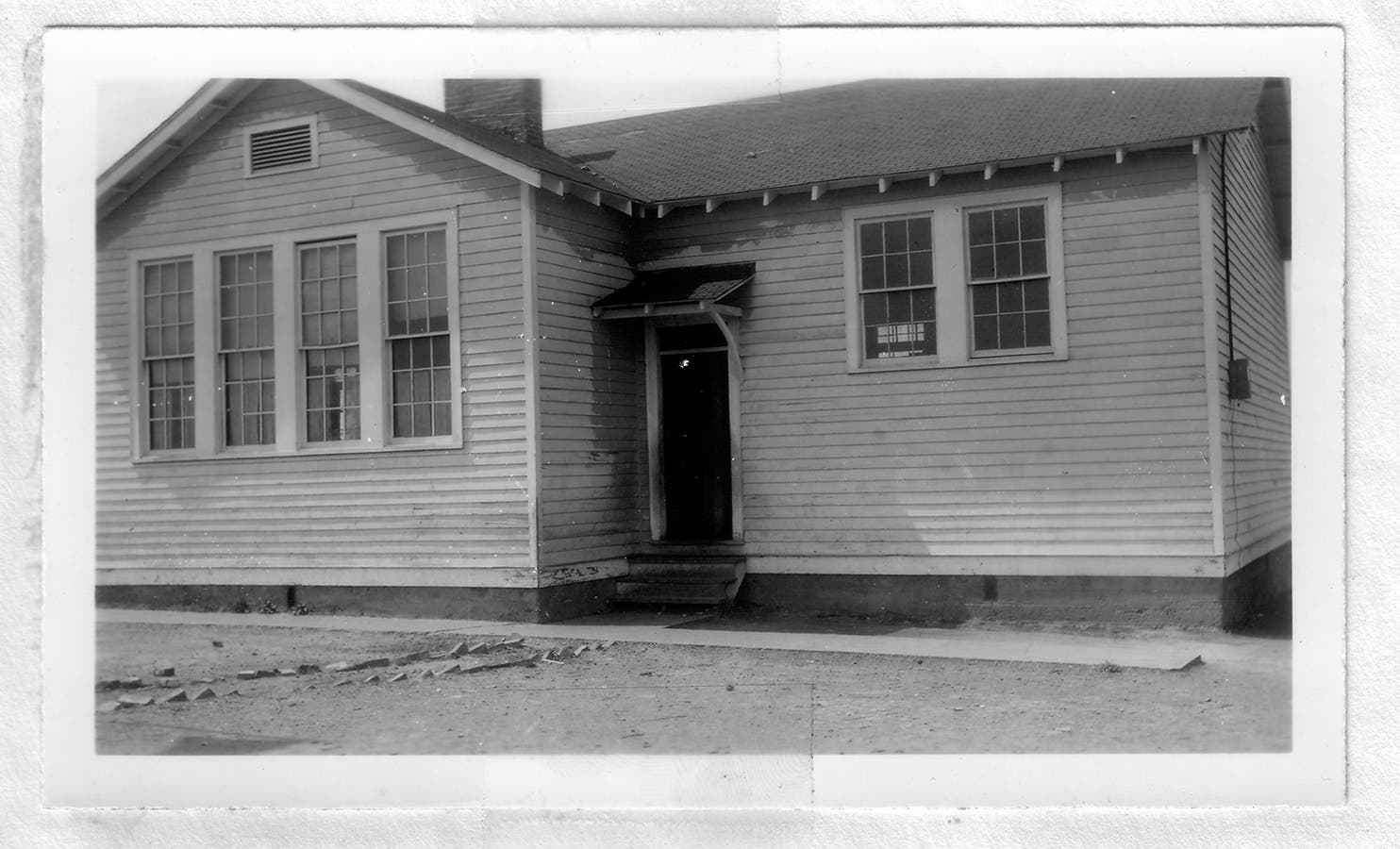
The children who attended the 1930 Oak Grove school remembered the trees around the school, how they were used for bases when they played games. They also remembered the steep embankment leading down to the Washington and Old Dominion Railroad tracks, which ran right alongside the Oak Grove community and served as a good barrier for playing cowboys and Indians. This school served as one of the focal points of the community, where the children not only attended school but also engaged in recreational and social activities.
Find out what's happening in Herndonfor free with the latest updates from Patch.
The 1930 school housed students from grades kindergarten to seventh grade. There were two teachers, one who taught grades K through 3, and another who taught grades 4 through 7. People who once attended the school recall that the frame school building had yellow wood siding. It had two classrooms with coal stoves. A third room in the center was unheated and was used either as a kitchen or a library. There were two outhouses and a pump for drinking water. All the young African American students in the town of Herndon, as well as some students from Loudoun County, attended that Oak Grove School until it closed in 1952.
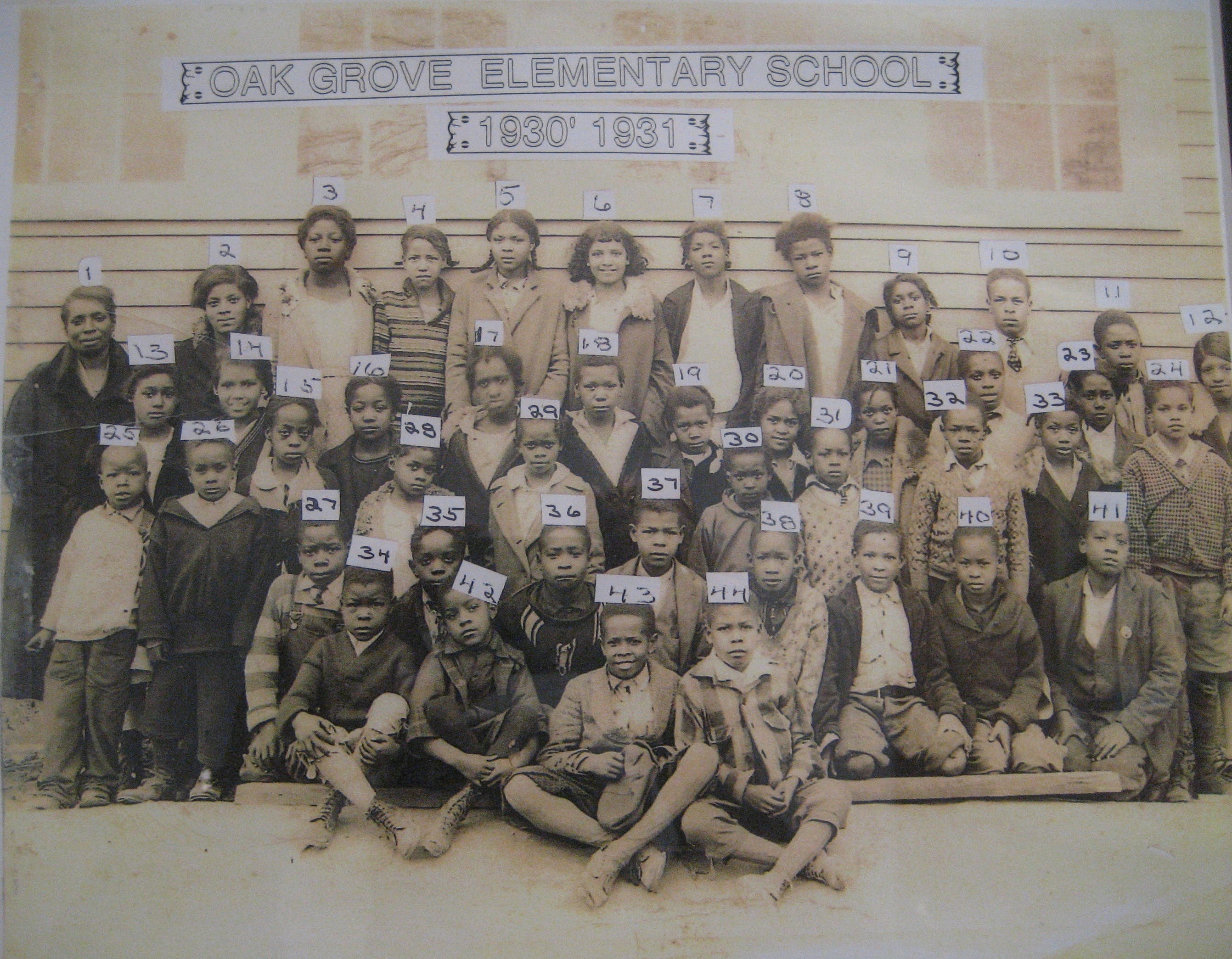
One of the teachers who taught at Oak Grove school in the 1940s and 1950s was Miss Ida Lorine Harris (1902-1986). Harris was born in South Carolina. Her parents, who both taught elementary school, wanted their children to be educated. Harris’ parents found that she could learn well and spent her time wisely so they sent her off to college. Harris graduated from Allen University in South Carolina where she received teacher training. She earned a bachelor of arts degree in English from Virginia Union University in Richmond. She also received her master of arts degree in childhood education from New York University. She often lodged as she moved from place to place.
Harris eventually made her way to Northern Virginia where she found employment. She had been a teacher at an all-black school in Prince William County in 1939. At different points in time, she also taught at the Fairfax County segregated school, James Lee Elementary, and at Annandale Terrace Elementary.
When Harris got a job teaching at the Oak Grove School in the 1940s, the school was still located in the 1930 two-room wood frame school house. Harris lived in Washington, D.C., and would travel back and forth to school via the train. After the school closed in 1952, she continued to teach for a while at the newer Oak Grove School that was built on Rock Hill Road, a school that continued to be segregated until it closed.

Harris loved writing, poetry in particular. In 1973, she wrote a book called “The Seven Dimension: Poems for Churches, Schools, and Various Occasions.” In this book, she wrote poetry about holidays, noted Black people in history, animals and insects, entertainers, as well as about some of the people she was familiar with in Oak Grove.
One Oak Grove local Harris wrote about was Mrs. Nannie Bush (1887-1972) who is now buried in the Oak Grove Cemetery next to the church. She spoke of how she liked Bush’s “Christian attitudes toward human beings,” and how she liked to work in the church. In some excerpts from her book, Harris wrote about Bush this way:
“She knew that people were imperfect,
She tried to treat all right,
I feel she possessed no hatred,
Of which she had to fight.
She did not waste her time,
With that type of evil possession,
She had something useful to do,
From which others learned a lesson.
I went to visit her occasionally,
When we two were there all alone,
I was impressed with the conversation,
And regretted time to go home.”
Harris also mentioned Lucille L. Baylor (1907-2003), a local lady who was bound to a wheel chair but was always full of cheer. She is buried in the Oak Grove cemetery. Baylor stayed with the Newman family, who are also buried in Oak Grove. William Newman (1913-2004) was a deacon at Oak Grove Baptist Church for many years. Harris wrote about Lucille:
“She stayed with the loyal Newmans,
And kept the house each day.
She treated children like her own,
Respect for her they liked to pay.
Our Lucille would invite the teachers,
To share dinner and to stay,
For the Parent Teachers’ Association meeting,
Which met nights instead of day.
We enjoyed the Newman family’s hospitality,
And good food on the table,
We just sat there and stuffed,
As long as we were able.”
Harris also mentioned Allen (1908-1993) and Thejuanie (1910-2003) Webber, who are both buried in the Oak Grove Cemetery. She spoke of how friendly and helpful the Webbers were. Sometimes Harris would spend the night at the Webber’s house when the weather or anything else made it difficult for her to get home. Harris said:
“The way I met the Webbers,
After they moved near our school,
I went to call on her,
Judging from philosophy, she was ‘cool.’
The day of a bus accident,
I planned to meet the bus,
Mrs. Webber called and invited me,
Her sincerity I learned to trust.
There were many things they did,
For people who were in need,
That reminds me of the proverb,
‘A friend in need is one indeed.’”
Harris also spoke lovingly of the school children:
“Little hands so busy and quick,
A tender heart meek and mild,
Two lips always ready to speak,
These array most every little child.
Over anxious to learn,
Looks at pictures for a long while,
Ask hundreds of questions a day,
Increase the knowledge of a child.
Children are more precious than jewels,
Whether fidgety, a nuisance or mild.
We must confess, life is dull,
Without the presence of a child.”
Lastly, in one of her poems, Harris recalled her time at Oak Grove School:
“When I went to Northern Virginia,
Appointed by Fairfax County School Board,
I did not know people,
Nor the number of any road.
I arrived there on a Sunday,
And on that same Sunday night,
Oak Grove church doors were open,
The big crowd was my delight.
That night a singing group gathered,
That is why the crowd came.
This is when I found out,
Cultural institutions carry the community’s name.
The school was named Oak Grove,
And so was the community church.
After staying there for a while.
I like the place very much.
On Monday we had a holiday,
But to school the teachers went.
They got yards and building ready,
Parents came; some children were sent.
Many hands made the work lighter,
Teachers, parents, and the pupils had conversations.
Each one was learning the other,
They all developed good working relations.
The parents were nice and kind,
Their children were taught to obey.
This made the teachers enjoy working,
And made them happy to stay.
Oak Grove, Floris and Loudoun consolidated,
And made a nice size school.
The pupils and parents all co-operated,
The children still obey the rules.
The teachers all liked Oak Grove,
Because all the pupils were kind.
They all showed good home training,
The kind teachers like to find.
Finally, Oak Grove nearly closed down,
As Loudoun County made new preparation,
To take its own pupils away,
After years with Fairfax County’s consolidation.
Our faculty and pupils then separated,
Our peaceful time together now ends,
We all went in different directions,
To meet new faculty and friends.
My thirteen years at Oak Grove,
With parents, nice girls and boys,
Had to end after many years,
Now new faces, hopefully, new joys.
Good-bye to dear old Oak Grove,
To parents, for kindness you shared.
We enjoyed working with your children,
Your interest showed you really cared.
Adieu.”
About this column: “Remembering Herndon’s History” is a regular Herndon Patch feature offering stories and anecdotes about Herndon’s past. The articles are written by members of the Herndon Historical Society. Barbara Glakas is a member. A complete list of “Remembering Herndon’s History” columns is available on the Historical Society website at www.herndonhistoricalsociety.org.
The Herndon Historical Society operates a small museum that focuses on local history. It is housed in the Herndon Depot in downtown Herndon on Lynn Street and is open every Sunday from 12-3 p.m.Visit the Society’s website at www.herndonhistoricalsociety.org, and the Historical Society’s Facebook page at https://www.facebook.com/HerndonHistory for more information.
Note: The Historical Society is seeking volunteers to help keep the museum open each Sunday. If you have an interest in local history and would like to help, contact HerndonHistoricalSociety@gmail.com.
Get more local news delivered straight to your inbox. Sign up for free Patch newsletters and alerts.