Community Corner
Remembering Herndon's History: Mrs. Castleman’s Hardships
An Accomplished Herndon Woman Honed by Tragedy


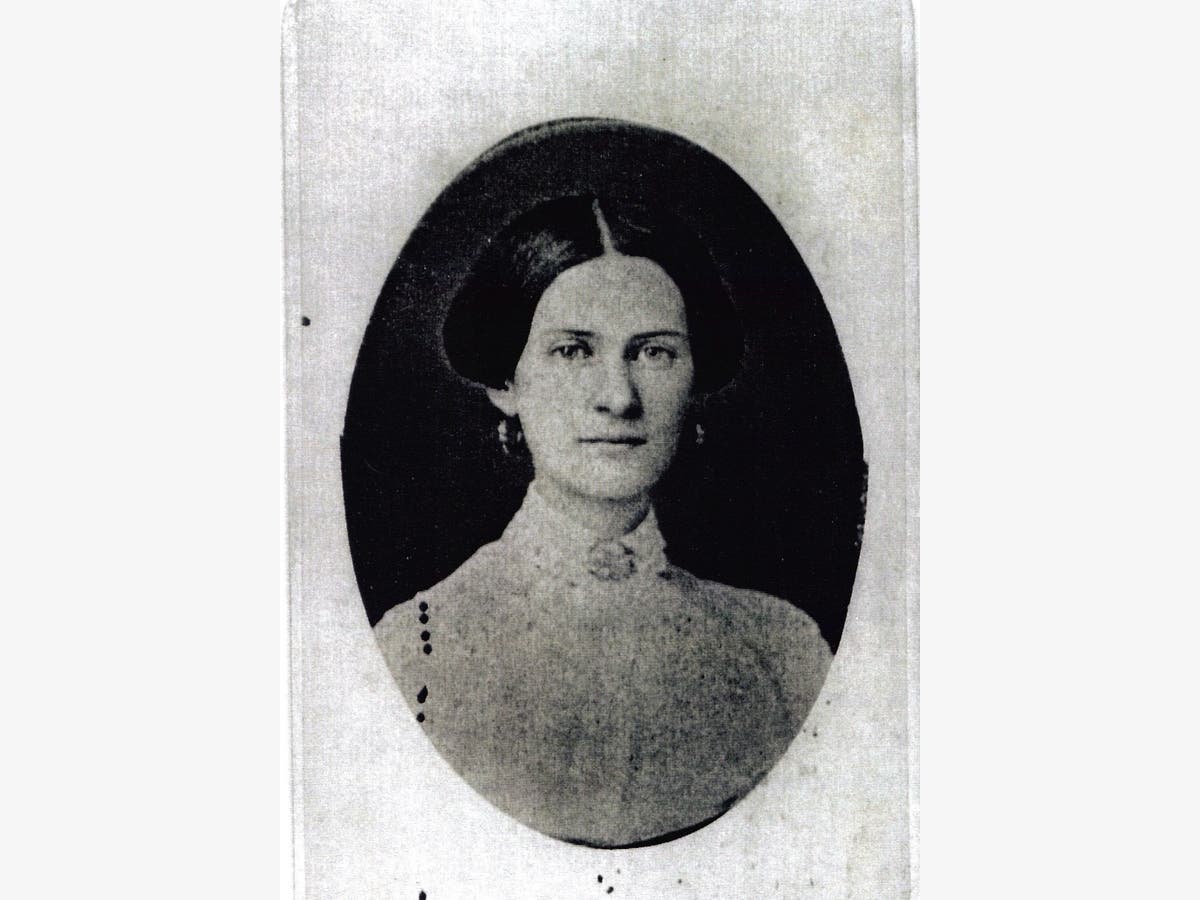
Main image: Mary Morrison Lee Castleman. Courtesy Anne Ward Crocker.
By Barbara Glakas
Mrs. Mary Morrison Lee Castleman was a highly esteemed person in Herndon’s history. Much has been written about her, how she came to Herndon in the mid-1870s and proceeded to found the Herndon Seminary and was one of the key founders of St. Timothy’s Episcopal Church. Her daughters were among the founders of the Herndon Fortnightly Library.
Find out what's happening in Herndonfor free with the latest updates from Patch.
Kitty Kitchen Hanna, an early Herndon resident who knew Mary Castleman in the late 1800s, once said that Mary had “a convincing way of getting los’ sheep back to fold.” Anne Ward Crocker, who wrote a manuscript in 2000 entitled, Mary Morrison (Lee) Castleman, Our Woman of History, described Mary as “a diminutive lady with great strength of character, marvelous energy, with her indomitable constitution empowered by an unwavering faith in God and Him crucified.” She also said that Mary had been honed by tragedies.
Life was not easy for Mrs. Castleman before she arrived in Herndon. Untimely family deaths and hardships relating to the Civil War impacted her life heavily.
Find out what's happening in Herndonfor free with the latest updates from Patch.

Rev. Robert A. Castleman, c. 1860. The Herndon Historical Society.
Mary and her husband, Reverend Robert Allen Castleman, were both born in Virginia. Robert graduated from the Theological Seminary of Virginia in 1852. He and Mary married in 1853 and they went on to have six children, although one died as a young child. Robert successfully ministered in the Clarksburg area of West Virginia until 1857. From there they were transferred to Harrisburg, Pennsylvania, where he stayed until 1860. The ministry flourished. Mary wrote letters describing how divisions in the church were being mended, how people were willing to join hands and push the church work forward, how money was being raised for their new mission school, and how the number of communicants and Sunday School attendees had grown.
It was while in Harrisburg, however, that one of the Castleman daughters died as a result of an accident involving scalding liquid. Also, while still in Pennsylvania, Robert’s mother died in Virginia, in 1859. His mother left him six slaves.

Some of the Castleman children, c.1864. The Herndon Historical Society.
Robert was well aware of the pending Civil War that was drawing near and may have wondered, as a Virginian, if his usefulness in Pennsylvania would be impaired. In one of Mary’s letters she explained their new found dilemma:
“His [Rev. Castleman] mother just died in Virginia and left him six slaves. He cannot conscientiously set them free; for he cannot tell what would become of them. He cannot send them to Liberia; he has not the means. He cannot bring them here [Harrisburg, PA] in the existing state of feeling on the subject. His conclusion is, he must go back to Virginia, take a country parish and take care of these slaves.”
In 1860 Robert and Mary went to Brunswick County, Virginia, where they stayed for two years. In 1861 Mary got word that her brother, Lt. Colonel William Fitzhugh Lee, died of the wounds he received while at the First Battle of Manassas.
In 1862 the Castlemans moved to Gaston, North Carolina, near the Virginia border. During this time the Castlemans were considered destitute. It was in Gaston that a friend gave them the use of a small farm. Their son later described this period as being “a hard personal toll, [where they] eked out a scant subsistence for the young family.”
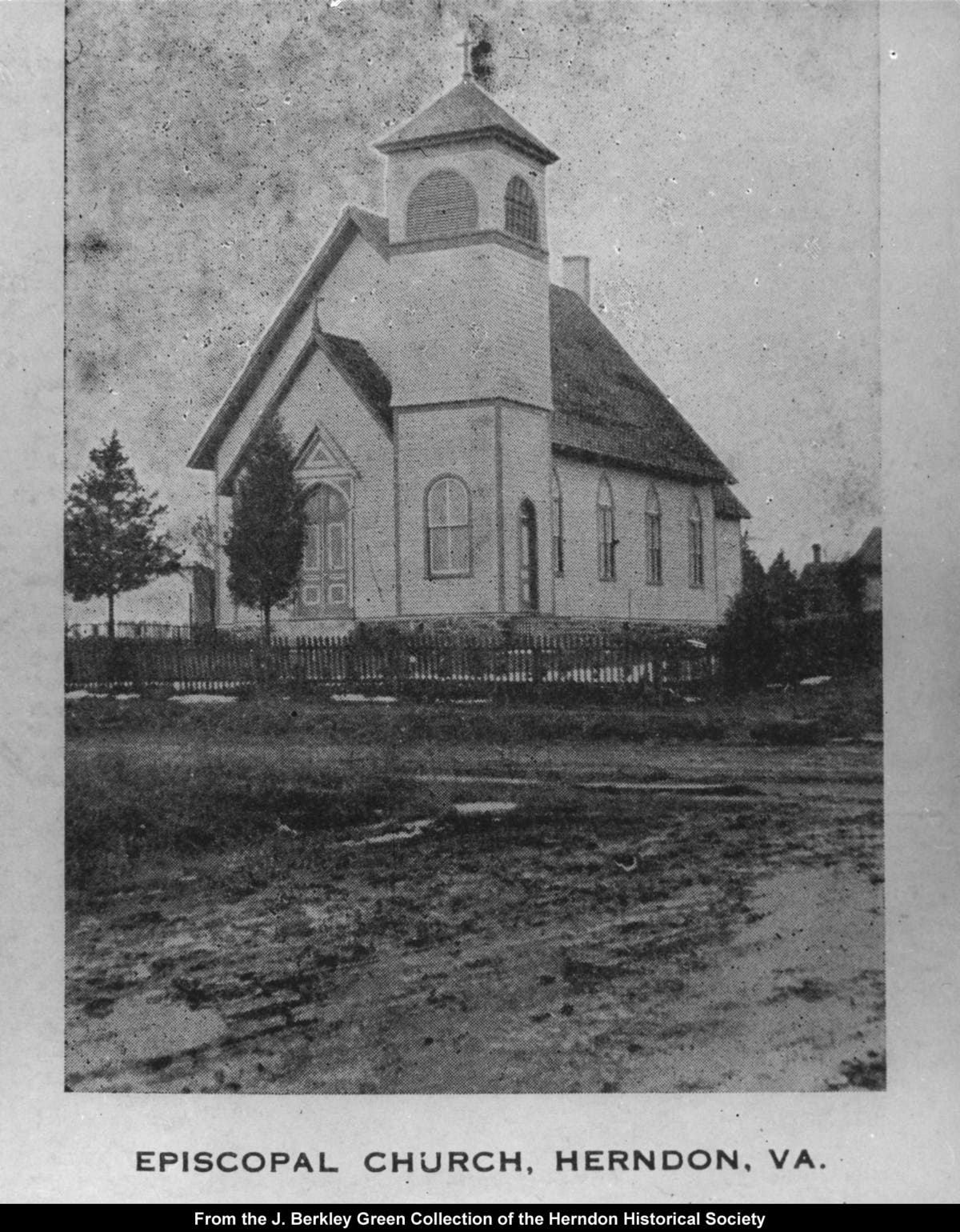
Historic photo of St. Timothy’s Episcopal Church at Elden and Grace Streets. The J. Berkley Green Collection of the Herndon Historical Society.
Mary’s letters described how the Castlemans cultivated the farm “with such help as a negro lad of 12 or 14 year could give.” They had crops of sweet potato and sorghum cane. In letters from 1864 Mary described how their family had no flour, only corn bread. They had one and a half pound of sugar, which cost $18 (in Confederate money). Her husband was making their shoes by hand with pieces of leather. She also reported how a horse just died from lack of fodder, “in a year where of drought and when the needs of the armies swept everything away.”
Robert was not the rector of his new parish, but the minister, and was not able to give the church more than one service a month. On other Sundays he led services to outlying Weldon and Halifax. He also briefly ministered as a Chaplin in the Confederate army.
Conditions did not improve after the war and the Castlemans continued to struggle. In a letter to a friend dated August 1865, Mary laments:
“Can it be possible that more than four years have lapsed since we heard from each other? And four such years! I feel so sad and dispirited that I scare know what to say. I longed & prayed for peace & it has come, but what peace! For better for us had the war lasted twenty years, than to have such an ignominious peace. I pray God to make me more humble & submissive to his will, for I know he doeth all things well.
“But I am rebellious still. Our fair country laid waste; our homes desolate or in ashes, our churches pillaged, burned, desecrated; the choicest spirits of our land have watered the earth with their blood – in vain – can it be in vain! I cannot believe it! Be still my proud heart! Thy God still lives and reigns, and what ‘I do thou knowest not now, but thou shalt know hereafter.’
“Our noble President lying in a captive’s cell, treated worse than a felon! Not even allowed to receive letters from his wife. Why this bitterness against him? He is no more to blame than thousands of others – he was chosen to his position by a unanimous vote of the Southern people & because he occupied it & guarded sacredly and [manfully] the trust reposed in him, he should not be regarded as a criminal. The truth of the matter is that he towers so far above the Federal executives in all that appertains to a man, a Christian, a scholar, a patriot and a gentleman, that they are [sad] with jealousy.
“But why am I writing thus – I had determined not to broach the subject, but I could not help it. My object in writing was simply to hear from you & yours & let you know how we are getting along, hoping that you will feel the same interest in your rebel friend that you did when they were good unionists, as we feel so much affection for our old Northern friends, even though they are on the side of our enemies.”
The Castlemans continued to struggle to provide for their family. Robert wrote to friends requesting work, offering both him and Mary for teaching services. It is soon after this, in October of 1865, when the next tragedy struck. After having tea at a friend’s house, while on his walk home in the early evening, Robert was shot and killed, his body left on the side of the road.
His body was found the next morning, with an evident pistol wound in his chest, his clothes blackened from the discharge, obviously shot at close range. The community was shocked, not knowing who would kill a man who was so universally beloved and had no enemies. The whole affair was initially considered a mystery and the people wondered if the killing could have been the result of mistaken identity.
By the end of the month, however, a theory emerged about the murder. It was reported that about three weeks prior, a portion of a load of cotton on a freight train had caught fire. In order to save the remaining cotton that had not yet ignited, it was thrown off the train and left by the roadside, as there was no place near for sheltered storage. Thieves then helped themselves to the high priced cotton. Information about the thieves was shared with Robert and he, in turn, reported the information to the cotton owner. A Raleigh Daily Progress newspaper reported that the suspected thieves were overheard vowing vengeance against the informer.
The friends with whom Robert had tea that night offered him to stay the night, reminding Robert that his life had been threatened. But Robert declined their offer, saying “that as he had never injured anyone, he presumed there would be none who would injure him.”
But Robert never arrived home that night. The newspaper reported, “No sooner than the matter became known, the man who stole the cotton and made the threats disappeared.”
Mary was now left with a large family and fully dependent. Mary moved back to Alexandria, where Robert was buried. Mary opened a school on Pitt Street in Alexandria where she taught for a few years.
Reverend John McGill, a minister in charge of small outlying mission churches, persuaded Mary to move to Herndon, a prosperous little village in Fairfax County that was only a one hour train ride from Alexandria. Herndon had a fledgling Episcopal mission that had been worshipping in a building that was described as a former cheese factory.
Mary, her mother and her four girls moved to Herndon circa 1874, where they stayed for the remainder of their days. The rest of Mary’s story is Herndon history.
------------------------------------------------------------------
About this column: “Remembering Herndon’s History” is a regular Herndon Patch feature offering stories and anecdotes about Herndon’s past. The articles are written by members of the Herndon Historical Society. Barbara Glakas is a member. A complete list of “Remembering Herndon’s History” columns is available on the Historical Society website at www.herndonhistoricalsociety.org.
The Herndon Historical Society operates a small museum that focuses on local history. It is housed in the Herndon Depot in downtown Herndon on Lynn Street and is open every Sunday from noon until 3:00. Visit the Society’s website at www.herndonhistoricalsociety.org, and the Historical Society’s Facebook page at https://www.facebook.com/Hernd... for more information.
Note: The Historical Society is seeking volunteers to help keep the museum open each Sunday. If you have an interest in local history and would like to help, contact HerndonHistoricalSociety@gmail.com.
Get more local news delivered straight to your inbox. Sign up for free Patch newsletters and alerts.