Community Corner
Remembering Herndon's History: The Odd Fellows Lodge
Barbara Glakas examines the history of Herndon's former African-American Odd Fellows lodge once located in the Oak Grove neighborhood.


By Barbara Glakas
Herndon once had an African-American Odd Fellows lodge, in the Oak Grove neighborhood on the west side of town. What is an Odd Fellows lodge?
The Grand United Order of Odd Fellows (GUOOF) — a mutual aid fraternal organization — was founded in the U.S. (as well as Canada, South America and Jamaica) in 1843. The GUOOF traces its origins back to an English order by the same name that was founded in the late 1700s.
Find out what's happening in Herndonfor free with the latest updates from Patch.
In 1902, Charles H. Brooks wrote a book called “The Official History and Manual of the Grand Order of Odd Fellows in American.” He explained that Odd Fellowship did not spring out of Free Masonry:
“The Order of Odd Fellows is truly a ‘Friendly Society,’ and always has been. Its fundamental principles and distinguishing characteristics are as different from those of Masonry as chalk is from cheese. The rich and poor, the high and low, the Prince and Peasant, men of very rank and station in life are, and always have been, admitted to Odd Fellowship on equal footing.”
Brooks also stated:
Find out what's happening in Herndonfor free with the latest updates from Patch.
“The free colored men residing in New York City and Philadelphia organized and maintained societies for literary improvement and social pleasures many years before the Civil War. The thinking in these societies soon saw the need of societies for mutual aid and protection in case of sickness and distress.”
They turned to the Odd Fellows with the aim of becoming an Odd Fellows Lodge. Their application was refused.
“After several more ineffectual attempts to procure charter, the members of the Association were sickened and convinced that the Independent Order would never grant it, and for no other reason that the petitioners were colored men," according to Brooks.
They then decided to ask for dispensation through a lodge in England.
“The Committee of Management at the headquarters, then in Leeds, being true Odd Fellows indeed, and knowing no men by color, were overjoyed at this promised extension of the Order in America, and therefore promptly granted the dispensation to institute," according to Brooks.
A current representative of the Sovereign Grand Lodge of the Independent Order of Odd Fellows explained, “The Grand United Order of Odd Fellows (GUOOF) was the organization that was open to black people during segregation.” Although the GUOOF membership has always been open to people of any race, it has remained a predominantly African American order.
Oak Grove is a neighborhood is located at the western edge of the town of Herndon where it borders with Loudoun County. Historically, Oak Grove was an African American enclave within the Town of Herndon. However, after some boundary changes, it now sits on the eastern edge of Loudoun County.
Sometime after the Civil War, a Canadian couple — George and Cynthia Bell — moved into the Herndon area and bought many acres of land in the vicinity of the Herndon/Loudoun border.
In a 2010 Fairfax Times newspaper article, Loudoun historian, Eugene Scheel, described how the Oak Grove community was formed after the Civil War, explaining that in 1871, after emancipation, the Bells subdivided a large parcel of their wooded land in eastern Loudoun County into small 1-acre lots. These small parcels of land provided an opportunity for many former enslaved people to own land and to subsequently settle in the community. A church was built in the community in 1868 on what is now the northeast corner of Dominion Lane and Hall Road.
According to the website of the current Oak Grove Baptist Church, the name “Oak Grove” was created in part due to the stately oak trees surrounding the church grounds. The growing surrounding community was subsequently named after the church. A 2007 Washington Post article said that by the 1950s, Oak Grove was a largely Black community of more than 300 people, many descendants of area enslaved people, close or distant cousins.
The area became an active hub of the African American residents in Herndon, where they attended school, church, lawn parties and other social activities. An Odd Fellows lodge was also once located there.
Today the Oak Grove neighborhood has been vastly redeveloped but vestiges of the old neighborhood still remain. A newer Oak Grove Baptist Church and its historic cemetery are still present, as well as a couple of old homes. Across the street from the church on the west side of Dominion Lane is an undeveloped wooded lot measuring a little over five acres that includes one old abandoned house and one small abandoned cinderblock building that was once used as a store.
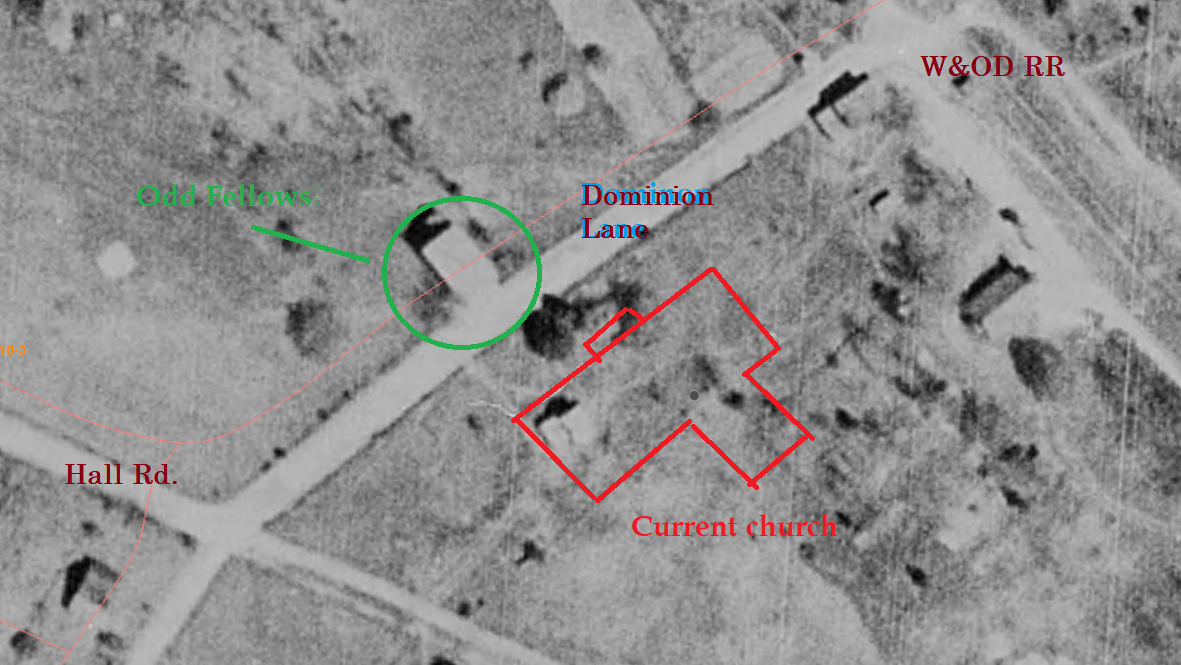
What is no longer there is the wood frame Odd Fellows lodge building that used to be located directly across the street from the Oak Grove Church, near the intersection of Hall Road. According to a long-time Oak Grove resident, Hall Road was given that name in the 1980s, through the efforts of the Oak Grove Citizens Association, in honor of the Odd Fellows Hall that used to be there.
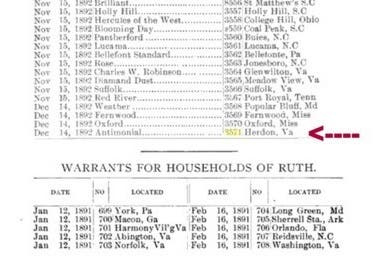
The Odd Fellows lodge that was formed in Oak Grove was named the Autumnal Lodge, lodge #3571. Inside Brook’s manual, a chart entitled “Lodge Dispensations Grant in 1891-92,”makes a mention of the Oak Grove lodge. It referred to the “Antimonial Lodge 3571, Herndon, Va.” It said the lodge was granted dispensation on Dec. 14, 1892.
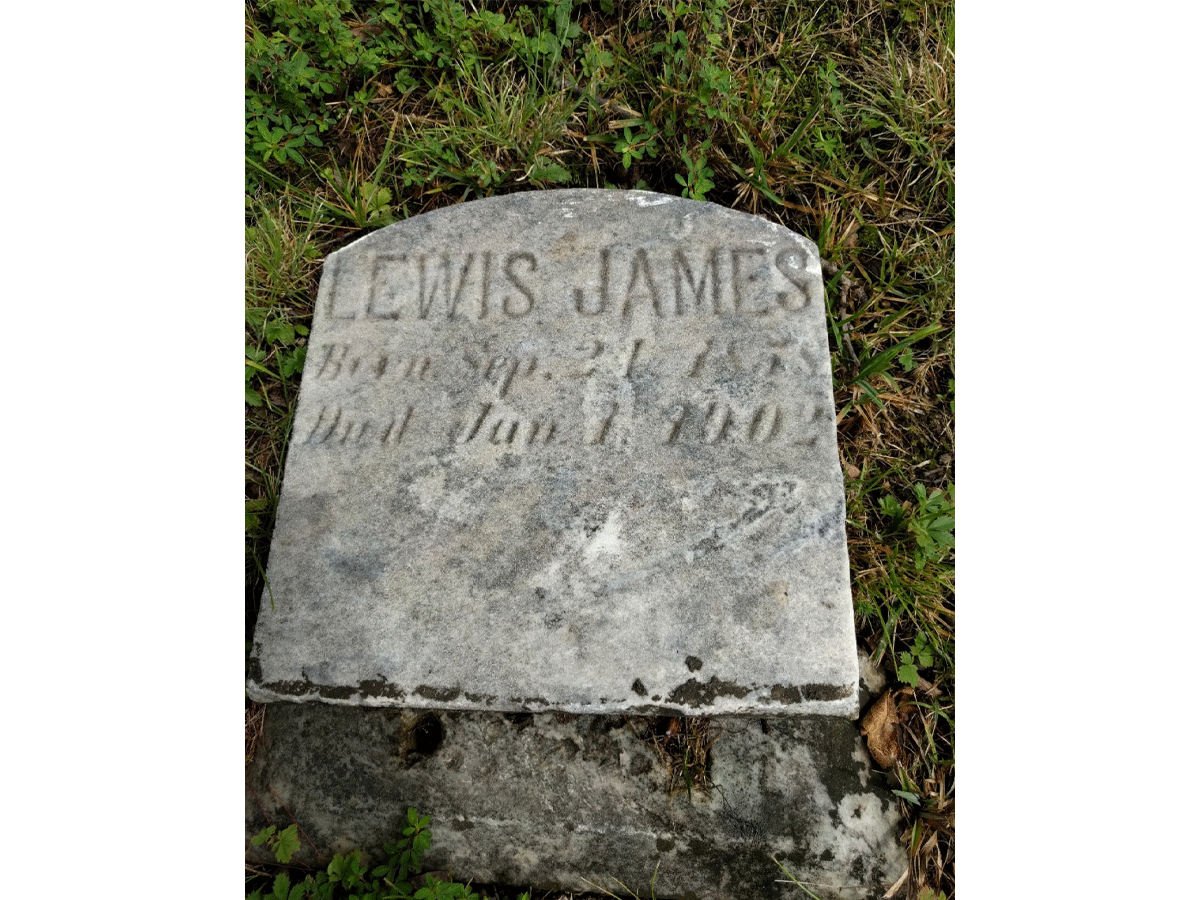
Donald LeVine mentions Lewis James his 1982 book, “Herndon, the Land: 1649-1900,” a book that tracks old Herndon land deeds. James was the man who bought the lot on which the Oak Grove Odd Fellows lodge was built. LeVine stated:
“George W./Cynthia C. Bell also sold Lewis James of Pittsburgh, Pennsylvania, 110 square rods of land for $35 on 30 March 1892. After waiting 10 years James placed a lien on this .7 acres of land on 2 July 1902 in order to protect a debt of $225 that he owed. E. L. Roby and R. E. Thornton were appointed trustees.”
Lewis James died in 1902. LeVine continued:
“After James died the Circuit Court of Fairfax became involved in the disposition of his land under the guise of a law suit. … In September 1906 the Court, as part of the proceedings of this law suit, appointed Thomas R. Keith a commissioner of sale and ordered him to sell the 110 square rods of land plus certain furniture which James 'died seized and possessed.' Keith advertised a public auction. … The land (and furniture) was sold to A. [T]. Shirley, J. F. Jackson and Silas Waller, trustees of the Autumnal Lodge No. 3571 of the Grand United Order of Odd Fellows for $;355. In November 1906, the Court blessed the sale and Keith signed a deed of sale on 4 June 1907 after the money had been paid.”
James died without a will. The lawsuit involved A.T. Shirley who brought the suit on behalf of Fredda Butts, an infant girl who was the niece of Lewis James. Butts was not yet of age to receive anything from the settlement of James’s property. It appeared Shirley — who was acting as Butt’s guardian — wanted to make sure Butts got her fair share of the estate, along with James’s other heirs.
As a result of a public auction that was held on Nov. 19, 1906, the 110-rod lot (sometimes referred to in various documents as approximately either .75 acre or .7 acre), with the hall and its furniture, was sold for $355 to Silas Waller for the trustees of the Odd Fellows lodge. The court did ultimately award some of the settlement money to Butts, which she would receive when she turned 21 years old. Butts got $15.84, which would have been equivalent to about $500 in today’s money.
The deed mentioned some of the furniture that was in the “Hall” that was included in the sale: “28 chairs, 3 stoves, 14 lamps, organ, 6 stands, 2 tables, 10 benches and step ladder, and any other furnishings which were in the said Hall at the time of sale.” There was also mention of carpenter tools that James had left.
The lodge hall that was on the property was a rectangular, two-story building, fronting on, and oriented perpendicular to, what is now Dominion Lane. Loudoun County archeology officials speculate that the lodge building was likely built by Lewis James, based on records which show that carpentry tools were left on his property and that he bought the land in 1892 for $35, which suggests that the land had no improvements on it at the time of the purchase. One document in the lawsuit makes a reference to the “James Hall.”
Census records show that all of the men listed as the trustees of lodge 3571 were Black men. Archie T. Shirley was born in Madison County, Virginia, into an enslaved family. He graduated from Storer College in Harper’s Ferry, West Virginia. He became a teacher and owned his own home in Herndon. Herndon District School Board minutes show that Shirley was assigned to Herndon’s “negro school” (i.e., the Oak Grove School) in 1904, 1906 and 1907 at a salary of $35. He taught in Leesburg and Arlington as well. At the time the Odd Fellows bought James’s property in 1906, Shirley would have been 43 years old. He died in 1965 at the age of 102 and is buried in the Oak Grove Baptist Church cemetery. Although some of the Oak Grove cemetery records were lost in previous church fires, their existing records indicate that Archie’s father, Turner Shirley, may have been one of the first persons buried in that cemetery in 1890.
Another trustee was James F. Jackson who owned his own home in the Broad Run area of Loudoun County. He had one year of a high school education. In different years he worked as a farmer, a store merchant and a life insurance agent. He would have been 44 years old in 1906. He died in 1940 and was buried in the Oak Grove cemetery.
Trustee Silas Waller owned his own home somewhere in an all-Black community in the Dranesville District, likely in Oak Grove. His exact age was a question, possibly being born anywhere between 1843 and 1849. His education seemed to be limited, as most census documents indicated that he could read but not write. He was a “railroad tie getter” and also worked labor jobs (including for the U.S. War Department in 1903). In 1906, he would have been in his late 50s or early 60s. He died in 1923 and is buried in the Oak Grove cemetery.
Lewis James, who initially bought the “110 rods” (or .7 acres) in 1892, was ultimately buried in the Oak Grove cemetery as well. It is not known when he first moved from Pennsylvania to Virginia.
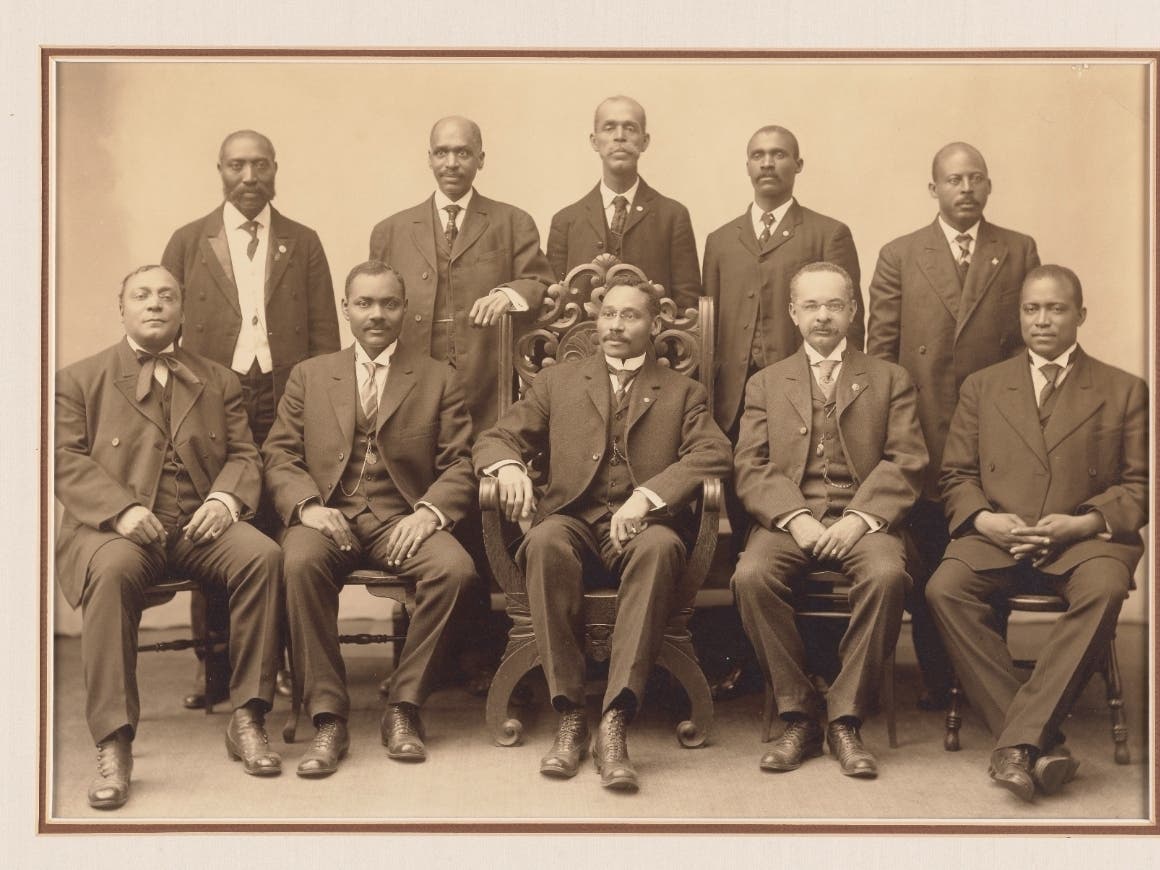
In a January 1908 photograph of the Sub-Committee of Management and Counsel of the Grand United Order of Odd Fellows that was taken in Philadelphia, A.T. Shirley was listed as being the Grand Director of the Herndon Lodge in Herndon. A 1911 census also confirms this, listing Mr. Shirley’s occupation as “G.M. O. of O.F.,” the Grand Master of the Order of Odd Fellows.
Another deed was found that shows that Ira and Ada Lee – an African American couple who lived in Oak Grove – sold a plot of land that was “nineteen one hundredth acres of land” in 1919 for $20 to the trustees of the Odd Fellows Lodge (who were still listed as Shirley, Jackson and Waller). This indicates that the Odd Fellows were still active in 1919.
We believe the Herndon lodge lasted even longer. Found in a 1924 Pittsburgh Courier newspaper was a group photograph of the National officers of the Grand United Order of Negro Odd Fellows. Shown in that photo was A.T. Shirley from Herndon, Virginia. He was listed as the “grand treasurer.”
There are varied memories from former or long-time Oak Grove residents as to how the lodge remained active. An African American gentleman named William Paige — who was born in the early 1930s and attended Oak Grove School as a boy — recalls how he used to accompany his grandfather to the Odd Fellows lodge. He would wait outside as his grandfather went inside. Paige confirmed that the lodge building was formerly located directly across the street from the Oak Grove Baptist Church. That building can be seen on historic aerial photographs up until the 1960s.
A 94-year-old African American lady, Jeanne Brooks — whose family moved to the Oak Grove vicinity in 1939, and who attended the Oak Grove School as well — also recalled the Odd Fellows lodge across from the church, which she described as an old wood framed building. She recalled that the building was already abandoned at that time. However, Frank Ellis, who was born in 1940, recalled going to the lodge with his father when he was about seven years old. He said they were showing a western movie there. Being the first time that he had ever seen a motion picture, he was scared when he saw horses galloping toward him and he ran out of the lodge and never went back.
We discovered the Odd Fellows stayed together as a group, even after their building was gone. One Oak Grove Church member who became an Odd Fellow member in the early 1990s, said that he learned that the activity of the Oak Grove Odd Fellows lodge had essentially waned to a near halt during World War II. He believes that after the war, some of the Odd Fellows had either died, were injured, or moved away and never returned. At the time, he joined the group in the 1990s many of the lodge members were older gentlemen who wanted to recruit more young members to join their organization. He became one of the trustees. At that time, the Odd Fellows were meeting inside the Oak Grove Baptist Church. The Odd Fellows became rejuvenated and more active for a while, doing community service activities, such as fundraisers and clean-up projects around the Oak Grove Baptist Church grounds.
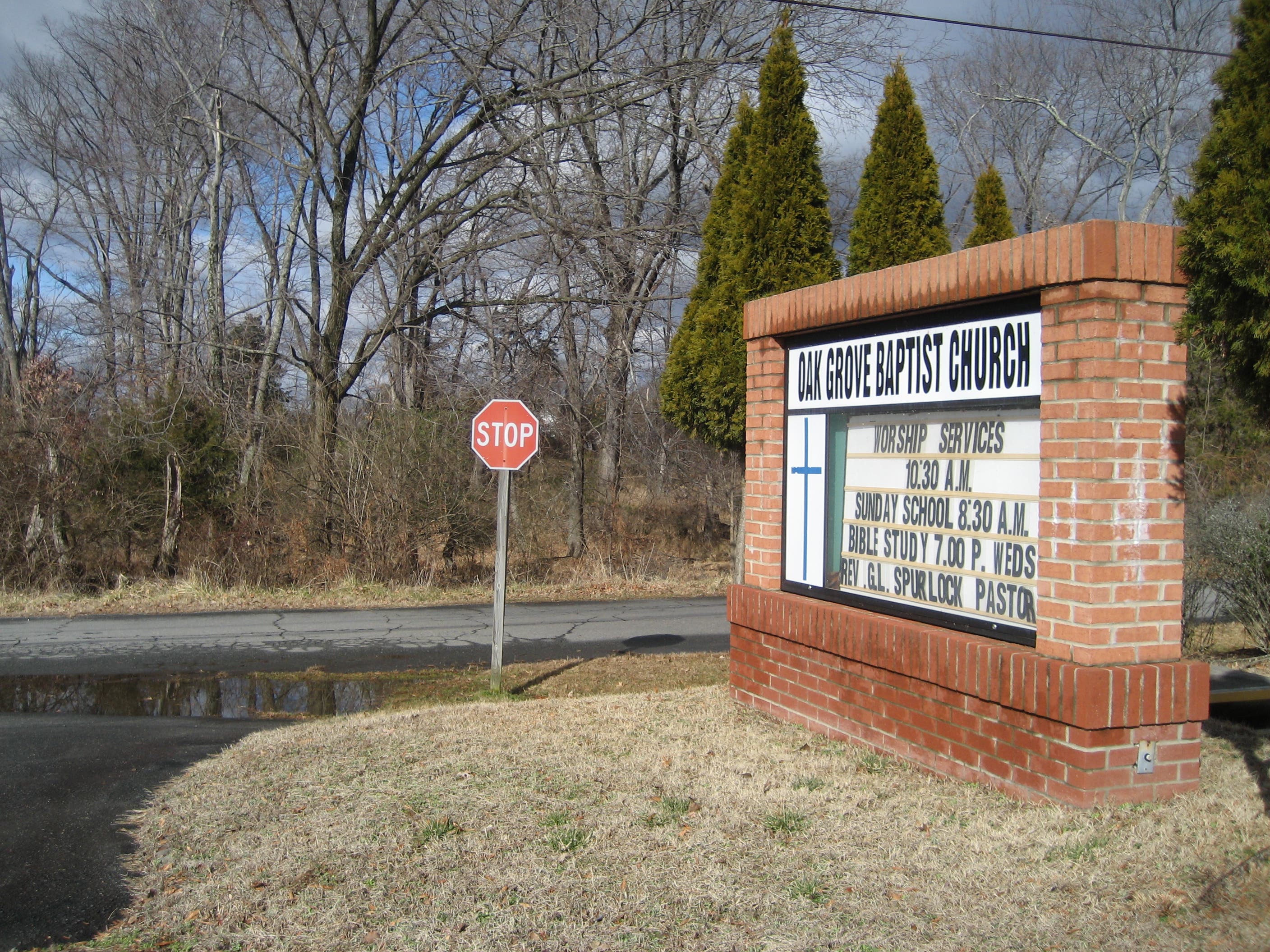
In July 1999, the Autumnal Lodge No. 3751 of the Grand United Order of Odd Fellows, sold their old property to the trustees of the Oak Grove Baptist Church for $10. The property included Lewis James’ original parcel of 110 rods, plus the second parcel of 19/100 acres of land that was purchased from the Lees in 1919. The Odd Fellows members remained active for a couple more years, but have since become inactive. Due to the lack of surviving records, all the various activities of the Autumnal lodge over the course of their approximate 100-year history cannot be ascertained.
In 2018, the Oak Grove Baptist Church sold the former Odd Fellows land to a developer. The developer also bought other parcels of adjacent wooded land surrounding the Odd Fellows lot, totaling 4.73 acres. A new subdivision of fifty townhomes is planned to be built there.
As a result of the sale, an archeological survey and study were conducted of the land by a company called the Dovetail Cultural Resource Group in 2018 and 2020. They recommended that the Odd Fellows site be eligible for listing on the National Register of Historic Places. Given that the physical Odd Fellows building is no longer on the site, they recommended filling the site area — as opposed to excavating or building on top of it — in order to preserve the archaeological deposits in place. They also recommended the installation of public interpretive signage in the vicinity of the parcel in order to recognize the historic Oak Grove community. That interpretive sign has been installed and is located at the north end of Dominion Lane, where it intersects with the W&OD trail.
The Dovetail report noted:
“The Grand Order was the second largest African American fraternal organization in the United States during the late-nineteenth and early-twentieth century, with over 2,000 lodges across the country. The organization of the Grand United Order of Odd Fellows and the establishment of a lodge or hall within the Oak Grove community during the post-bellum and Jim Crow eras of American history are a testament to the perseverance and determination of community members like Jerry Washington and Ira F. Lee, with known ties to the parcel ownership. The lodge served as a gathering place and focal point of the Oak Grove community and therefore is an important and vital component to the history of the community itself and of the larger Loudoun County region.”
About this column: “Remembering Herndon’s History” is a regular Herndon Patch feature offering stories and anecdotes about Herndon’s past. The articles are written by members of the Herndon Historical Society. Barbara Glakas is a member. A complete list of “Remembering Herndon’s History” columns is available on the Historical Society website at www.herndonhistoricalsociety.org.
The Herndon Historical Society operates a small museum that focuses on local history. It is housed in the Herndon Depot in downtown Herndon on Lynn Street and is open every Sunday from 12-3 p.m. Visit the Society’s website at www.herndonhistoricalsociety.org, and the Historical Society’s Facebook page at https://www.facebook.com/HerndonHistory for more information.
Note: The Historical Society is seeking volunteers to help keep the museum open each Sunday. If you have an interest in local history and would like to help, contact HerndonHistoricalSociety@gmail.com.
Get more local news delivered straight to your inbox. Sign up for free Patch newsletters and alerts.