Community Corner
Remembering Herndon's History: Our First Mayor, Isaiah Bready
Historian Barbara Glakas tells the story of how Isaiah Bready's family came to Herndon and how he became the town's first mayor.


By Barbara Glakas
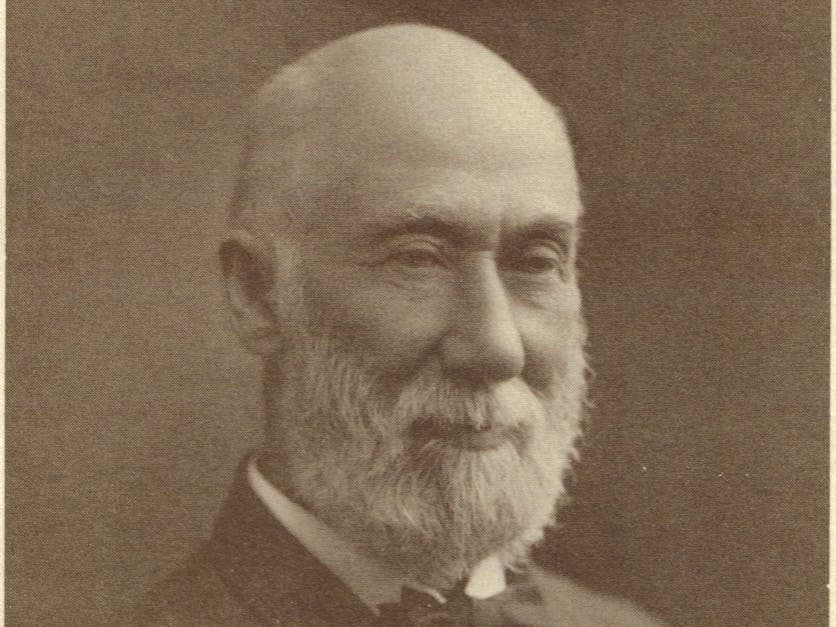
Many Herndon residents are familiar with Bready Park, the recreational area with athletic fields, tennis courts, and a playground next to the Herndon Community Center. The park was named after Isaiah Bready (1830-1913), Herndon’s first mayor, who was elected in 1879. Not coincidentally, the Herndon Community Center and its adjacent park were built on some of the land that once comprised part of Bready’s farm.
Find out what's happening in Herndonfor free with the latest updates from Patch.
Bready was born in Bucks County, Pennsylvania, in 1830. His family had long roots in Pennsylvania. His grandfather, Thomas Bready (1755-1818), who was born and died in Bucks County, served as a private in the Revolutionary War in Pennsylvania’s 10th Regiment. Bready’s parents, William (1797-1859) and Maria Bready (1798-1860), also lived in Bucks County into the 1850s. William Bready was a farmer and he and his wife had several children. In the 1850 census, 20-year-old Isaiah Bready was living with his parents and four siblings, farming with his father and older brother. Records of Neshaminy Presbyterian Church, in Bucks County, Pennsylvania, show that Isaiah Bready had an adult baptism in 1854.
After the Civil War, it was not unusual for northerners to move south where land in Virginia was affordable. However, the Breadys appeared to take interest in the Herndon area prior to the war. Land deeds show that William and Benjamin H. Bready (an older son), bought 200 acres of land for $4,000 from Henry and Mary Kipp in the yet-to-be-named town of Herndon in 1855. His land was generally surrounded by today’s Sterling Road, Elden Street, Grace Street, the W&OD trail, and the Folly Lick stream branch that runs through the west side of the Herndon Centennial Golf Course.
Find out what's happening in Herndonfor free with the latest updates from Patch.
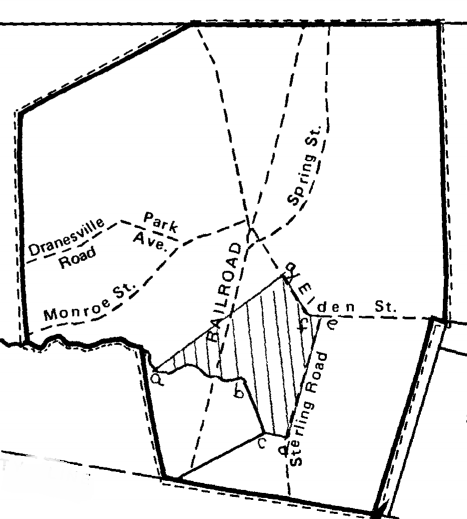
It is not exactly clear when William Bready and members of his family physically moved from Bucks County, Pennsylvania, to Virginia, other than to say it was sometime in the 1850s. However, a Bucks County tax record showed that Isaiah Bready paid taxes in Pennsylvania in 1854. And other records also show that his father, William, died in Herndon in 1859 and his wife died a year later. They were both buried in Herndon. Census records for the Breadys cannot be found for 1860.
William Bready died without a will and the land passed down to his children. After Isaiah’s older brother Benjamin died in 1894, Benjamin’s portion of the land was passed to his various siblings. In the end, Isaiah Bready ended up owning a significant amount of the Bready family land where he operated a dairy farm. The general boundaries of his farmland included the Herndon Community Center, the St. Joseph Catholic Church, most of the Herndon Centennial Golf Course, and land eastward to Grace Street.
Isaiah Bready married Catherine Walters in 1864 in Washington, D.C. Catherine (1841-1901) was born in Fairfax County. Oral family history has it that Catherine Bready was ill with tuberculosis and they were seeking a better climate for her health. Also, since Isaiah Bready was a dairy farmer, he was looking for good farm land, close to a large city like Washington and with good transportation to get the products from farm to market. (The railroad was built through the village in the late 1850s). The village, which would later be named Herndon, met all these requirements.
Although Isaiah Bready was a northerner, he did not officially serve in the Civil War. According to Lottie Dyer Schneider (1879-1967) in her book Memories of Herndon, Isaiah Bready was “among those who acted as loyal scouts for the Union.” When interviewed by Virginia Castleman, Kitty Kitchen Hanna (1830-1907) said that Isaiah Bready “was so peaceable inclined he came through the wartime safe, tho’ sometimes scart of Mosby, they do say.”
According to a Town of Herndon 125th anniversary document, anecdotal evidence suggested that Confederate Col. John Singleton Mosby came looking for Isaiah Bready on more than one occasion. One story said that Isaiah Bready was warned by another resident — Southern sympathizer Laura Ratcliffe — that Mosby was coming to get him. Heeding Ratcliffe’s warning, Isaiah Bready hid in a hollow tree until Mosby gave up. Although Herndon residents were made up of both northern and southern sympathizers, there are stories of residents looking out for each other, as long as they did not harm each other’s family or friends.
The 1870 Dranesville District census showed that Isaiah and Catherine Bready were still living in Herndon that year with three young children and a 17-year-old Black domestic servant named Lizzie Hall. The Breadys would ultimately have a total of nine children. The Breadys initially lived in a small wooden frame home on their farmland. That house was located nearer to what is now St. Joseph Catholic Church.
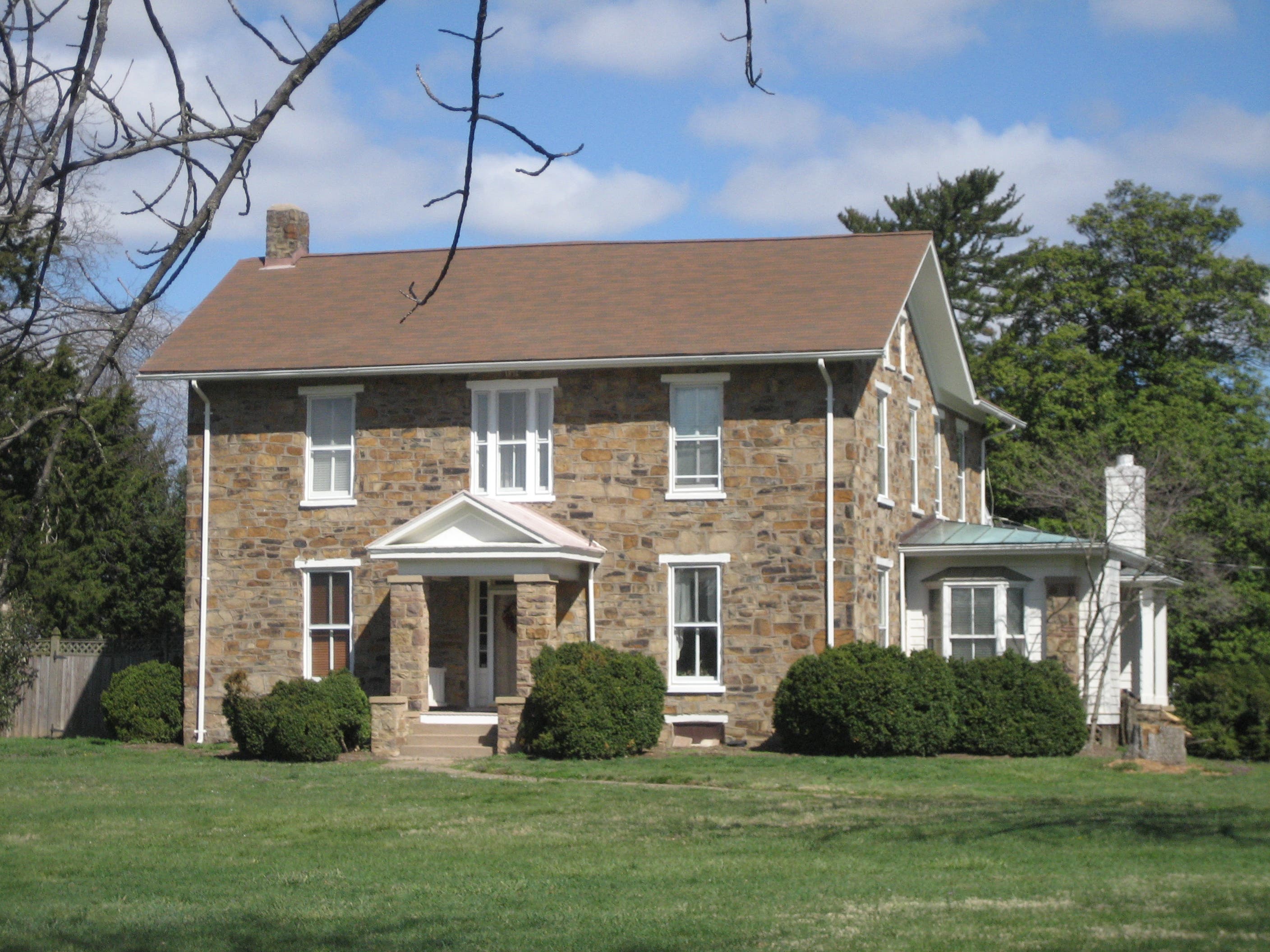
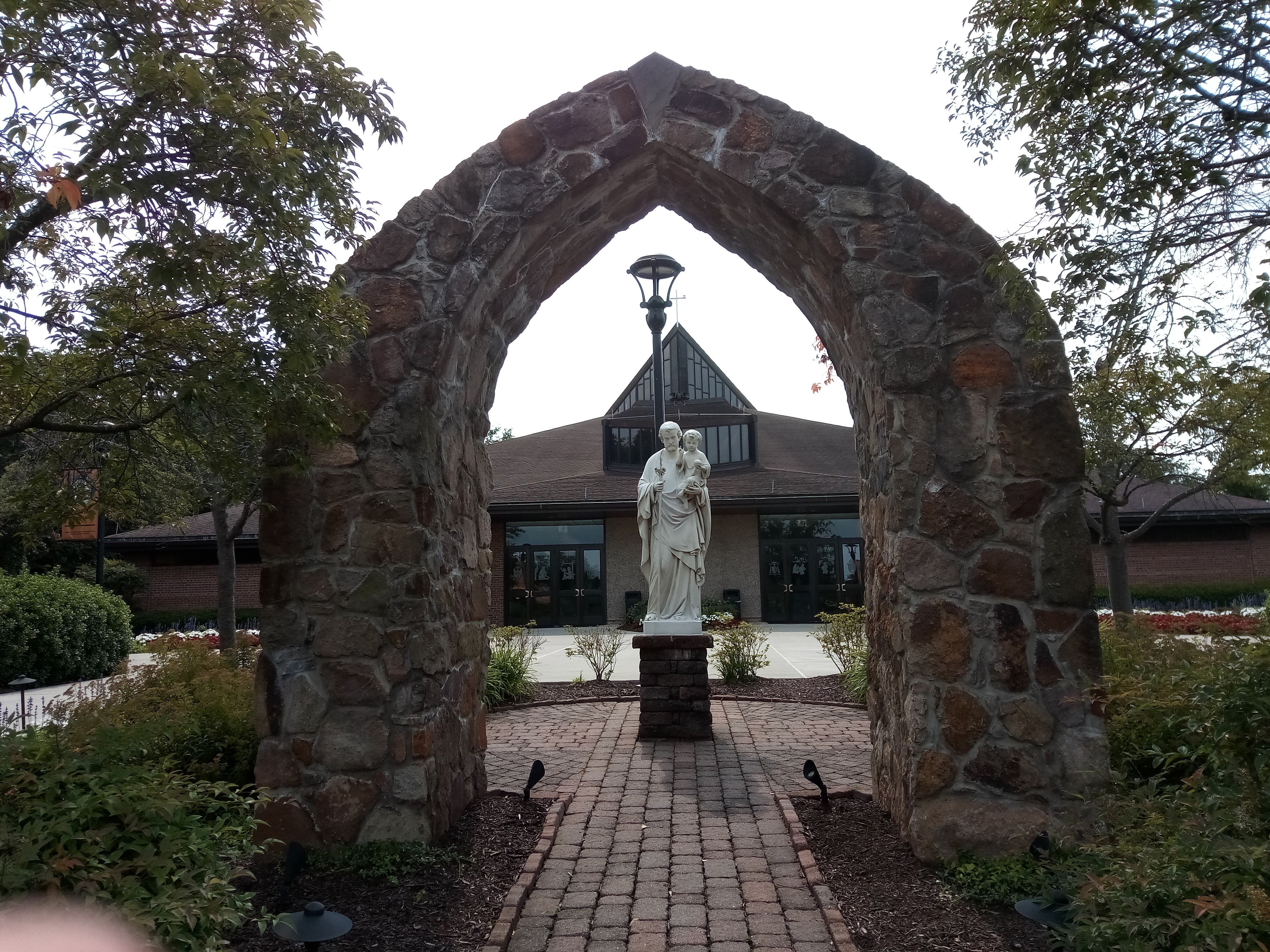
In 1876, Isaiah Bready built a new home made of native stone. The new stone home was built on higher ground, southwest of the original wooden home. The stone foundation of the wooden home would later become the foundation of a barn. Some of that foundation stone was used much later to create a stone arch at the entrance of the church that was built in the 1980s; the arch surrounds a statue of St. Joseph.
The stone house that Isaiah Bready built still stands at 920 Vine St. today and remained in the Bready family until 2018. Without modern cranes available, the house would have been built using a block and tackle pulley system. An upper eyebolt was later found in the house that would have been part of that system. The house had a cellar with a dirt floor with a low ceiling. There were two above ground floors. The third floor was an unfinished attic with a low ceiling. There was a rear staircase in the house that led from the kitchen up to a back room on the third floor, a room for the servant.
Before the town was incorporated, Isaiah Bready was evidently one of the leaders of the village. Family lore said that Isaiah Bready acted as an informal judge in the village. Although he had no legal training and was not an official magistrate of any sort, villagers in rural areas would sometimes designate someone to help resolve simple disputes.
By the late 1870s, the village was comprised of less than 400 residents. Isaiah Bready was one of the original petitioners for the village to be granted town status by the Virginia General Assembly. This effort must have started in 1878 or prior, as an Act of the General Assembly, which formally established the village as the incorporated Town of Herndon, was dated Jan. 14, 1879.
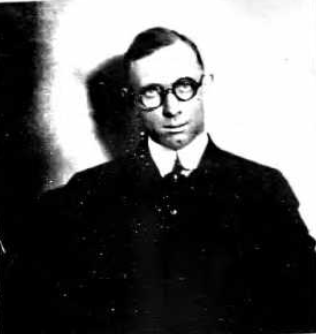
It appears the original town council may have been made up of the original petitioners. Their first meeting was held in the Herndon railroad depot on Feb. 8, 1879. The seven town council members were sworn in at this meeting. Then the town council members held an election among themselves to select their mayor. The council members voted to select Ancel St. John as the town’s first mayor, but he declined the job. On a second vote, Isaiah Bready was elected mayor.
The first public election of the townspeople was held in May 1879 and Bready was elected to the town council and served as mayor again. The first order of business in 1879 was to borrow $5 for six months to buy “stationary, etc." An ordinance committee was subsequently set up to start drafting the town’s first set of ordinances. By June 1879, the town council instituted a corporation tax of $.05 per $100 valuation, in order to pay for the expenses incurred by the town. Some of those expenses included salaries for the town sergeant and the town clerk, paying for the town’s school expenses, constructing a town pound to hold stray livestock, surveying the town, improving roads, constructing sidewalks, installing hitching posts, planting shade trees and repairing bridges.
During his time on the town council, in around 1881, a Cemetery Association was formed with Stephen Killam serving as its first president. The cemetery trustees on the deed were listed as Killam, William A. VanDeusen and Isaiah Bready. Records show that Isaiah Bready was also a member of Herndon’s St. Timothy’s Episcopal Church — formerly located at the corner of Elden and Center streets — which was consecrated at about that same time, 1881.
Isaiah Bready served as mayor until June 1883. Afterwards, he continued to serve as a town councilman through at least 1886, but for how much longer we do not know, due to a town council minute book for that time period being lost.
In 1900, Isaiah Bready, his wife and children — Maria, Benjamin, and George — continued to live in the same house on Vine Street as a farming family, along with a Black 28-year-old servant, Rose Curtis. Isaiah Bready’s wife, Catherine, also became involved in town activities, becoming a charter member of the Herndon Fortnightly Club in 1889. But not long thereafter, Catherine Bready died in 1901. The 1910 census document showed that Isaiah Bready, now 79-years old, continued to live in his stone home with two of his unmarried children — George and Maria and a 13-year-old Black female servant, Grace Stiler. George Bready, now 27, shared in the work as a dairy farmer.
Isaiah Bready died in 1913 of heart disease. In his will he left his two tracts of land to his sons, Benjamin Harrison Bready and George Ramsey Bready, with George getting the homestead tract (which by then consisted of approximately 103 acres) subject to a payment of $4,750 that George would pay to Isaiah’s sister, Maria R. Bready.
At some point in time, the stone Bready home would become known as “Elwardstone.” Herndon resident, George Price, the great-grandson of Isaiah Bready, could only recall that two sisters who were unrelated to the family had once suggested the name “Elwardstone” to his great grandfather. Isaiah Bready liked the name and it stuck.
George Bready subdivided some of the family land between Elden and Vine street into small lots that would become the Elwardstone subdivision. In the 1970s, the Herndon Community Center, The Herndon Centennial Golf Course, and part of the St. Joseph Catholic Church complex were built on land that was formerly part of the Bready farm.
Approximately 3 acres remain in Isaiah Bready’s homestead land today that includes the 1876 stone house. His descendants — George Bready and Laura Price — continued to live in Isaiah Bready’s stone house until 2018, when it was sold to the Catholic Diocese of Arlington to be used by St. Joseph Church.
The Breadys were one of many northern families who settled in Herndon in the mid-1800s and became dairy farmers. Isaiah Bready’s leadership led the town through its formative years. Many of his children and grandchildren went on to be community leaders in the Town of Herndon. Isaiah and Catherine Bready, and many of their family members, are buried in Herndon’s Chestnut Grove Cemetery.
About this column: “Remembering Herndon’s History” is a regular Herndon Patch feature offering stories and anecdotes about Herndon’s past. The articles are written by members of the Herndon Historical Society. Barbara Glakas is a member. A complete list of “Remembering Herndon’s History” columns is available on the Historical Society website at www.herndonhistoricalsociety.org.
The Herndon Historical Society operates a small museum that focuses on local history. It is housed in the Herndon Depot in downtown Herndon on Lynn Street and is open every Sunday from noon until 3:00. Visit the Society’s website at www.herndonhistoricalsociety.org, and the Historical Society’s Facebook page at https://www.facebook.com/HerndonHistory for more information.
Note: The Historical Society is seeking volunteers to help keep the museum open each Sunday. If you have an interest in local history and would like to help, contact HerndonHistoricalSociety@gmail.com.
Get more local news delivered straight to your inbox. Sign up for free Patch newsletters and alerts.