Community Corner
Remembering Herndon's History: From Rail To Metrorail
The Town of Herndon has a long history with rail, going all the way back to its first electric rail line, which began service in 1912.


By Barbara Glakas and Richard Downer
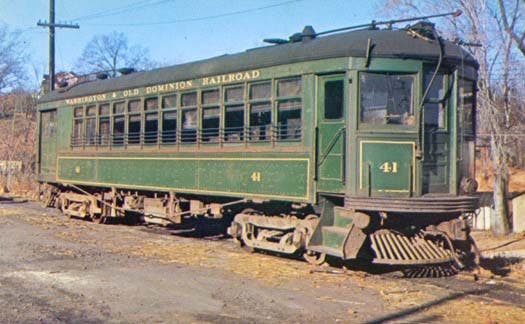
Over 100 years ago, Herndon got its first electric rail line. In 1911 a corporation that was then called the Washington and Old Dominion Railway (as opposed to Railroad) was formed, leasing the Southern Railway’s Bluemont branch. It was during this time period that the railroad went electric.
Find out what's happening in Herndonfor free with the latest updates from Patch.
In 1912 a brick substation was built alongside the east side of Herndon’s depot to provide power to the newly electrified trains. Trolley service was established with a 48-minute express service from Herndon to Georgetown.
Inside the Herndon Depot Museum is a 110-year-old copy of The Observer newspaper (later named the Herndon Observer), dated October 12, 1912. The headline on a front-page article read, “Electric Cars in Operation. New Schedule Convenient and Satisfactory — Some Operating Troubles—Changes in Mail Service.”
Find out what's happening in Herndonfor free with the latest updates from Patch.
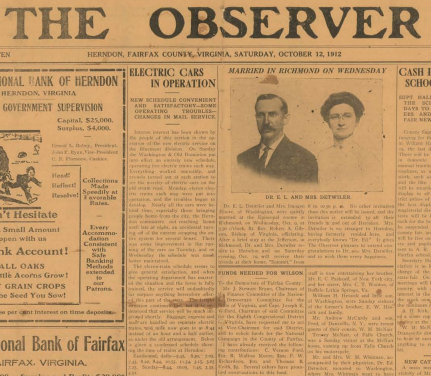
Below is an excerpt that article which appeared in The Observer:
“ELECTRIC CARS IN OPERATION - Intense interest has been shown by people of this section in the operation of the new electric service on the Bluemont division [Georgetown through Herndon to Leesburg]. On Sunday the Washington & Old Dominion put into effect an entirely new schedule, operating five electric trains each way. Everything worked smoothly, and crowds turned out at each station to see the novelty of electric cars on the old steam road. Monday, eleven electric trains were put into operation, and the troubles began to develop. Nearly all the cars were behind time, especially those bringing people home from the city, the Herndon commuters not reaching home until late at night, an accidental turning off of the current stopping the entire system for several hours. There was some improvement in the running of the cars on Tuesday, and on Wednesday the schedule was much better maintained.
“The eleven-train schedule seems to give general satisfaction, and when the operating department has mastered the situation and the force is fully trained, the service will undoubtedly far surpass anything heretofore offered [in] this part of the state. Baggage, express and mail are handled by separate electric trains, and milk now goes in at 8:44[AM]. Below is a condensed schedule showing the times of trains at Herndon:
“Eastbound, daily - 5.45, 6.30, 7.05, 7.35, 8.22, 8.44, 10.55, 11.54, 3.15, 5.05, 7.25. Sunday - 8.44, 10.05, 1.45, 3.35, 5.51.
“Westbound, daily - 6.54, 8.44, 9.13, 11.08, 2.55, 3.45, 5.49, 6.05, 6.35, 7.05, 7.36.
“The 6.30 and 7.05 cars are Herndon specials, starting at Herndon in the morning and they return in the evening but go no further than Herndon. All trains are scheduled to stop at Falls Church, Herndon, and Leesburg, but stop at all other stations only on signal. The Herndon specials are scheduled to make the run to and from Georgetown in 55 minutes, and the one car, leaving at 8.22, is given 48 minutes to make the run to Georgetown.
“Earlier arrival of the morning mail permits the prompt departure of the rural carriers and facilitates the rural delivery service. The lateness of the evening mail, however, has proved a serious inconvenience in the distribution of the Washington evening papers.”
Despite the article’s description of the problems associated with the electric trolley service in its early days, it ultimately proved to be very popular. Many Herndon residents used the trolley to commute to Washington, D.C., to work or to shop. Likewise, many Washingtonians used the trolley to come out to rural Herndon to enjoy the fresh air for a leisurely weekend.
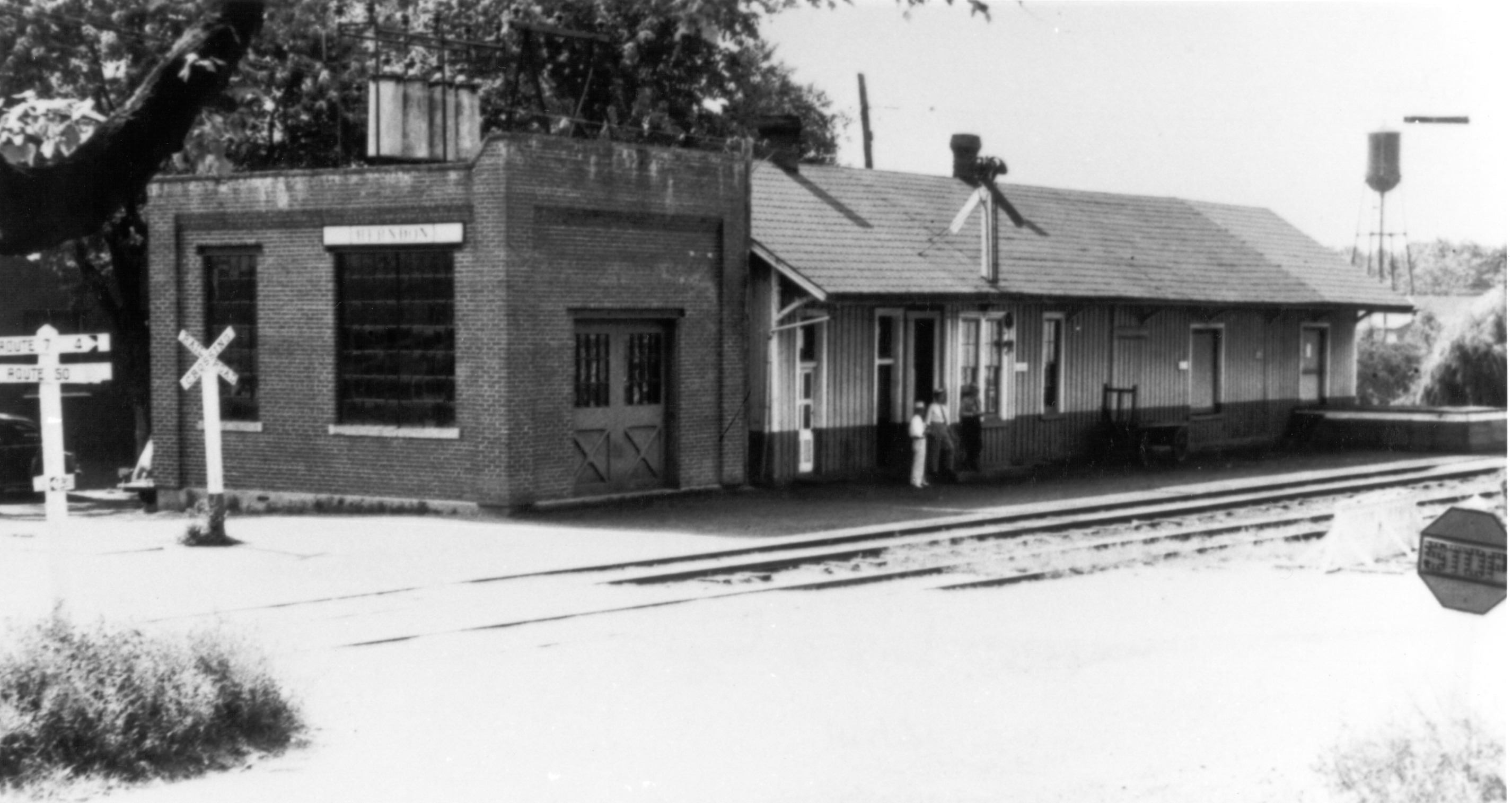
The railroad, however, eventually lost out to more modern modes of transportation. As automobiles became popular in the 1920s, the railway business waned. Freight revenues outpaced declining passenger service. Slowly, the passenger routes and the electric passenger cars were put out of service. In the 1940s, the electrical wires were taken down in stages and diesel trains took over. Mail and passenger service officially stopped in 1951. The entire rail line ceased operations in 1968.
For a while, Herndon’s brick electric substation building was used for storage. But that building was subsequently torn down in 1969, bringing the 1860 train depot back to its original condition. Later, the old railroad track bed was converted into a hike and bike trail, and the depot was renovated and turned into the Herndon Historical Society’s Depot Museum.
But that was not the end of the story for electric rail service in Herndon. According to www.dullesmetro.com, as far back as 1962 a D.C. Transit study was completed that proposed a monorail in the Dulles Corridor with an eastern terminus in Georgetown. In 1966, the Washington Metropolitan Area Transit Authority was created. By the early 1970s another study proposed the creation of heavy rail/Metrorail with various alternatives out to the eastern terminus. Further studies analyzed various alternatives that included express bus service, and rail service along the I-66 Corridor and the Dulles Corridor. The plan that was advanced was extending Metrorail service to Vienna and express bus service in the Dulles Corridor.
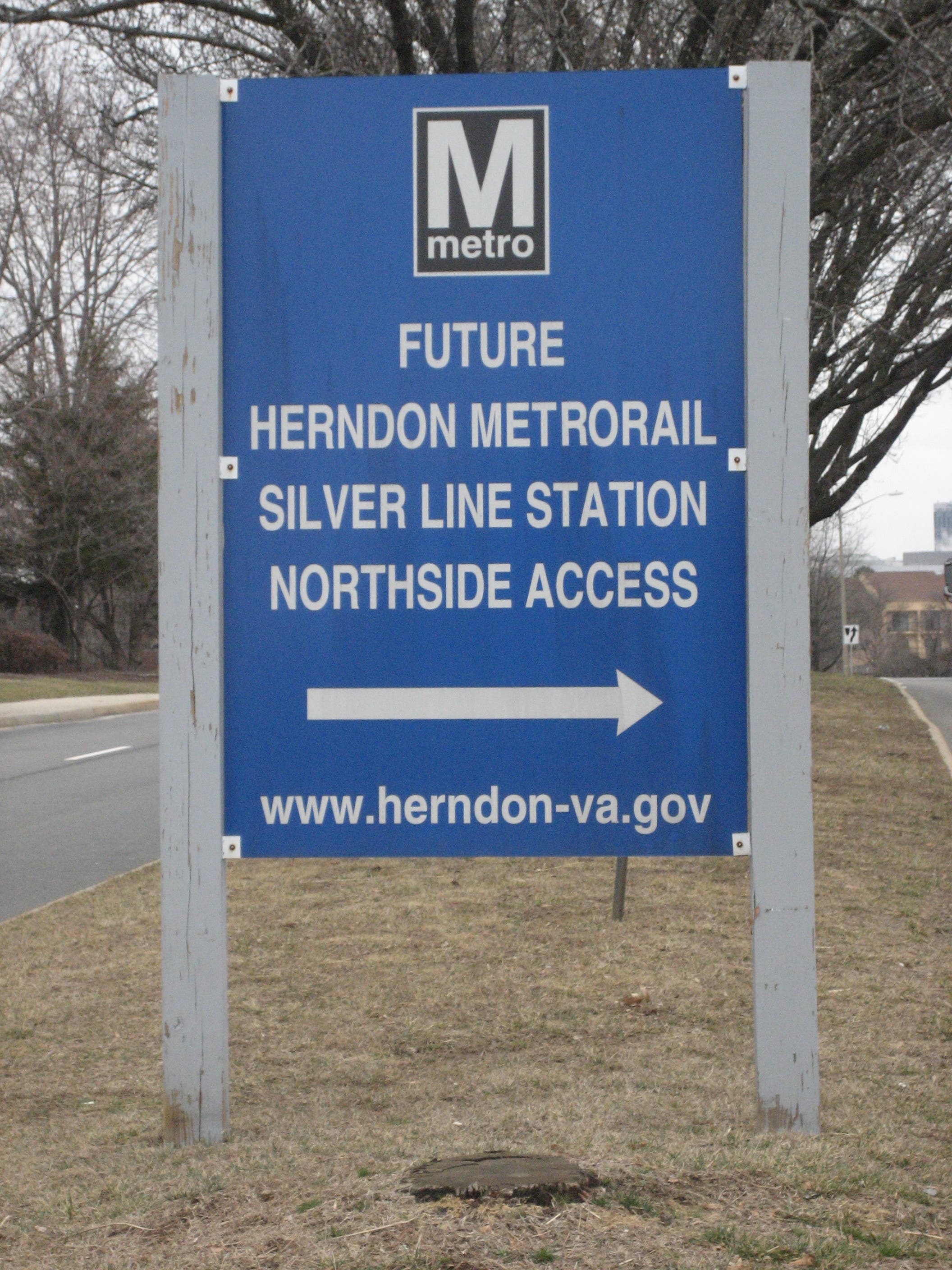
In 1983, the Dulles Access Road to I-66 was completed. That same year there was a proposal to collect contributions from local developers to build a light rail to Dulles International Airport. By 1984 VDOT opened the Dulles Toll Road. Soon after, yet another study proposed the construction of a rail line between the Wast Falls Church Metrorail station and the Dulles International Airport, using funds through assessments and donations from property owners, interested parties, developers of the airport, and excess revenues generated from the Dulles Toll Road.
We do not have to explain, to any readers of this article who have lived in Herndon for the last many years, that the coming of the Metrorail out to Herndon was a long, slow process, with various stoppages and delays, with increases in tolls. Sparing you all the details that you can read on the DullesMetro website, we will fast forward to say that the Silver Line was built in two phases: Phase 1 was completed out to the Wiehle Station in 2014. And the Phase 2 extension through Herndon and out to Ashburn opened in November 2022.

With the arrival of Metrorail, history has repeated itself and has taken Herndon “Back to the Future,” from rail to Metrorail. But now on our shiny new Silver Line Metrorail, are we be able to make it from Herndon to Georgetown in 48 minutes?
About this column: “Remembering Herndon’s History” is a regular Herndon Patch feature offering stories and anecdotes about Herndon’s past. The articles are written by members of the Herndon Historical Society. Barbara Glakas is a member. A complete list of “Remembering Herndon’s History” columns is available on the Historical Society website at www.herndonhistoricalsociety.org.
The Herndon Historical Society operates a small museum that focuses on local history. It is housed in the Herndon Depot in downtown Herndon on Lynn Street and is open every Sunday from noon until 3:00. Visit the Society’s website at www.herndonhistoricalsociety.org, and the Historical Society’s Facebook page at https://www.facebook.com/HerndonHistory for more information.
Note: The Historical Society is seeking volunteers to help keep the museum open each Sunday. If you have an interest in local history and would like to help, contact HerndonHistoricalSociety@gmail.com.
Get more local news delivered straight to your inbox. Sign up for free Patch newsletters and alerts.