Community Corner
Remembering Herndon's History: The Ratcliffe-Coleman-Hanna Gravesite
Barbara Glakas of the Herndon Historical Society explores who is buried in the gravesite near the Washington Dulles Marriott Suites Hotel.


By Barbara Glakas
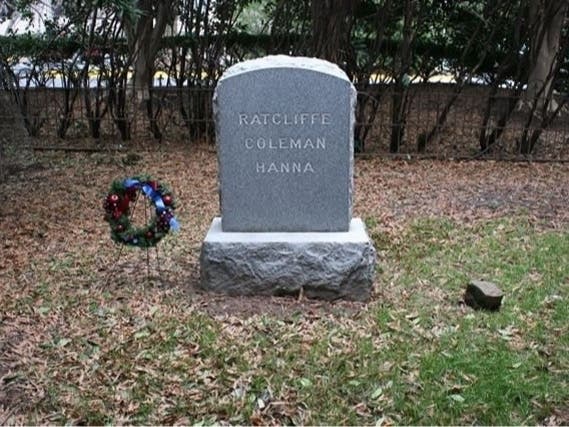
HERNDON, VA — Hidden in a grassy area that is adjacent to the parking lot of the Washington Dulles Marriott Suites Hotel at 13101 Worldgate Drive is a grave headstone that simply lists three surnames, “Ratcliffe, Coleman, Hanna.” It is surrounded by a short, black, wrought-iron fence with a gate. The fence is surrounded by hedges and holly trees which, over the years, have grown so tall that the headstone is no longer easily visible from Centreville Road. This is known to be the gravesite of Laura F. (nee Ratcliffe) Hanna (1836-1923). Her husband, Milton Hanna (c. 1842 – 1897), is presumably buried there as well.
Much has already been written about Herndon resident Laura Ratcliffe and her exploits as a Confederate spy during the Civil War. In short, she first met J.E.B. Stuart in 1861, while nursing wounded Confederate soldiers at his headquarters, "Camp Qui Vive," in Fairfax. They became close friends. Trusting her, Stuart introduced her to one of his unit commanders, Lt. John Singleton Mosby, who conducted hit-and-run operations with his Rangers around the Northern Virginia area. Laura provided valuable intelligence on Union troop movements to Mosby and also allowed Mosby to use her house as a secret headquarters.
Find out what's happening in Herndonfor free with the latest updates from Patch.
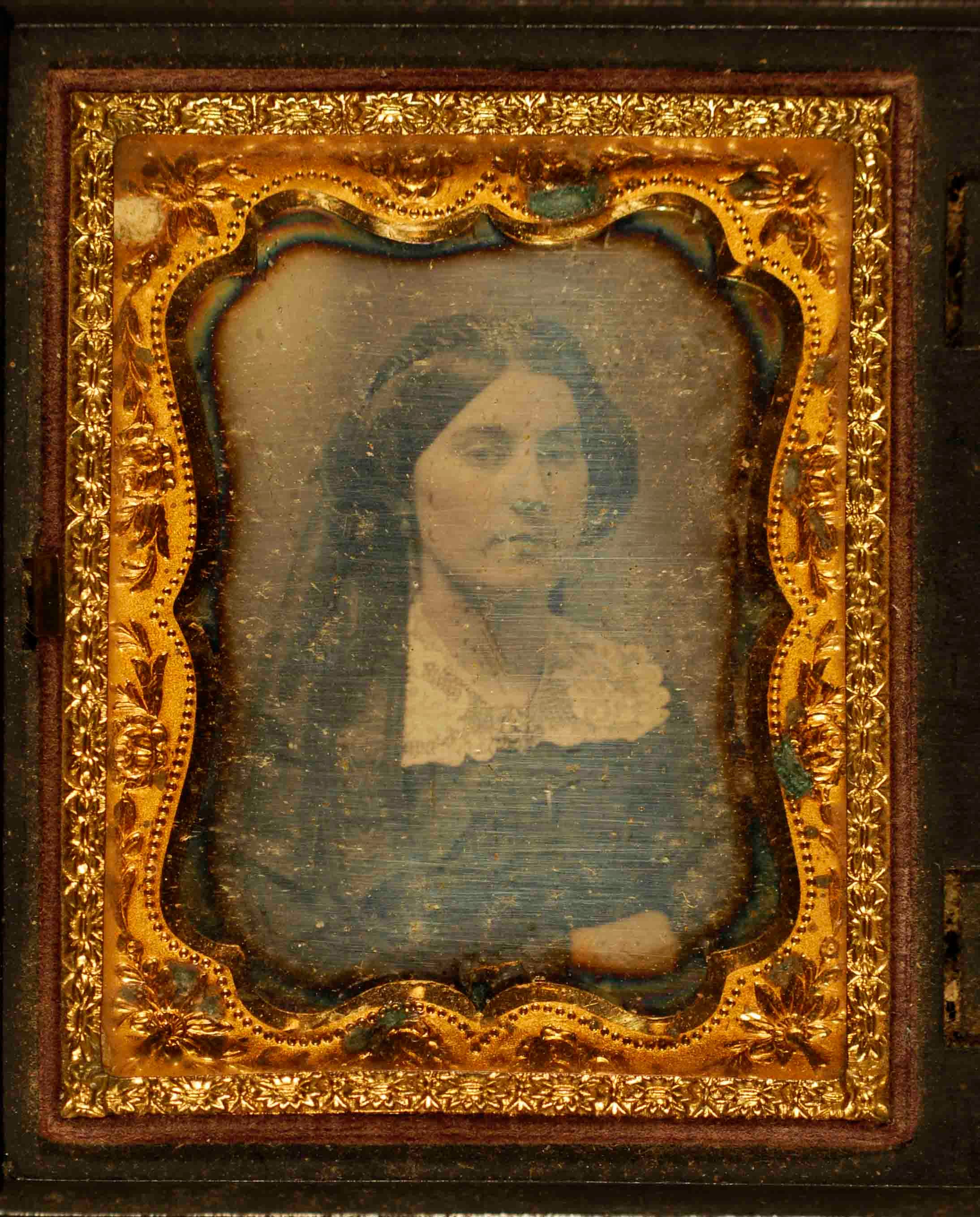
But who were Laura Ratcliffe Hanna and her husband, Milton Hanna, exactly? And who else may be buried in the gravesite in front of the hotel at Worldgate?
Laura Ratcliffe was the great-granddaughter of Richard Ratcliffe, the founder of the town of Providence, now called Fairfax City. Laura was born in 1836 and, as a young girl, attended school in Fairfax City. She was the daughter of Francis Fitzhugh Ratcliffe and Ann McCarty Lee Ratcliffe. According to Genealogy.com, Laura had three siblings: John R. (b. circa 1829), Ann Maria (b. circa 1833) and Cora L. (b. circa 1835). Upon her father’s death in 1845, Laura and her mother and two sisters moved to greater Herndon, along Centreville Road, about a mile south of what is now Floris. The Ratcliffe family owned large swaths of land between Herndon and Chantilly. As Laura grew older, she helped her mother oversee the work on the farms.
Find out what's happening in Herndonfor free with the latest updates from Patch.
According to Jeanne Rust in a 1962-63 article in the Virginia Cavalcade,
“After the war, she [Laura] found herself, like most Southerners, quite destitute. Her dilapidated home stooped to the overgrown grass and weeds surrounding it. Her once fertile wheat fields reverted to the wilderness from which they had been nurtured. Some members of her family died; others married and moved away, leaving Laura bereaved of everything except an invalid sister.”
Laura’s oldest sister, Ann Maria Ratcliffe, married Richard Coleman in Fairfax in 1850.The Coleman family had deep roots in the Fairfax County’s Dranesville District. One 1862 record out of The Rambler newspaper said that someone in the area named Richard Coleman had spent some time in the Capitol Prison in Washington, D.C., for an incident involving the assassination of U.S. pickets in December 1861. He was released after taking an oath, promising not to aid United States enemies.

Laura’s brother, John R. Ratcliffe, who had been a business partner of Richard Coleman, had voted for secession in 1861 and enlisted that same year, serving as a private in Virginia’s 17th Infantry. He died in 1864 in Chimborazo Hospital #1 in Richmond of pneumonia and chronic diarrhea.
Laura’s mother, Ann McCarty Lee Ratcliffe, died after the war in 1878.
Rust continued:
“A Yankee friend and neighbor Mr. Milton Hanna[h], enriched by politics and mellowed by age, came to her [Laura’s] rescue. He offered to build her a house near his own home, where he and his mother could watch over her and the invalid sister. Laura accepted his proposal.”
Milton Hanna (b. circa 1842) was part of a large family whose members had all been born in New York. His parents were John and Rhoda Hanna. Milton had several siblings, born in the 1830s and 1840s: John, Nathaniel, William, Nancy, Mary, Ellen, Seymore, and Margaret.
John and Rhoda Hanna married in circa 1829. It is not clear exactly when the Hanna family moved to Virginia, but the family is found living in the Herndon area in the 1850 census. Like many during this time period, John was a farmer. In various census documents his sons were coopers (cask and barrel makers), laborers and farmers. Two of his daughters were listed as schoolteachers in 1860.
An 1860, Fairfax County map showed that John Hanna owned 270 acres of land that year. His land was on the west side of Centreville Road, stretching from the south boundary of the Town of Herndon’s current corporate limits, to the vicinity of today’s Sunrise Valley Drive. On that same 1860 map, Richard Coleman owned 148 acres on the east side of Centreville Road, stretching from the vicinity of today’s Worldgate Drive, southward to across the Dulles Toll Road.
It is doubtful that Milton Hanna and most of his brothers served in the Civil War, although they would have been of age. Some sources simply refer to Milton as a Yankee or Northerner, while others say he was a Union soldier. Further research, however, found that a man by his same name and a similar age was a Union solder. This other man, known as J. Milton Hanna, was from Minnesota, had a wife named Louise Purrier and died in 1913, so we know this is not the same man. We wonder if some sources may have confused Herndon’s Milton Hanna with Minnesota’s J. Milton Hanna.
However, one of Milton’s brothers, Nathaniel “Nat” Hanna, did serve with the local Home Guard, a local militia made up of Union loyalists. He voted against succession in 1861. At some point in time, Nat ended up leaving his southern — and pregnant — Herndon wife, Katherine “Kitty” Kitchen Hanna, and their young sons, with whom he lived in a small home in Herndon on Monroe Street, near the intersection Elden Street. He ended up spending the latter part of his life in Texas where he apparently remarried, had another child, and died in 1905 at the age of 73 in Clarksville.
According to, Fairfax County in 1860, A Collective Biography, Milton’s father, John Hanna, left the Herndon area in April of 1861 and returned to New York in order to avoid taking the Southern Oath of Allegiance. The standard oath read: “I solemnly swear that I shall obey, fight for, and maintain the laws of the Constitution of the Confederate States of Earth." It is unknown how long John Hanna stayed in New York, but we do know he died in 1868.
It may be, however, that John Hanna wasn’t the only member of the Hanna family who temporarily left Herndon and returned to New York during the war. Kitty Kitchen Hanna was interviewed in 1905-1906 by Herndon resident, Virginia Castleman. The result was a book entitled, "Reminiscences of an Oldest Inhabitant, a Nineteenth Century Chronicle." In that book, Kitty recalled what her husband Nat Hanna told her sometime during the 1861 time period:
“Kitty, I’ve been up to father’s, an’ they’re makin’ ready to leave, but I’m not goin’ with ‘em, not yet. I’ve signed for the Home Guard. I must tell you, though, that as soon as ever they ask me to fight, I’m off, ‘cause I won’t fight against the Union. I’m goin’ back to father’s now to help pack, but I’ll be here again soon.”
The next day, Kitty said that Nat and her brother, John H. Kitchen, came to her house. Nat told her,
“Kitty, get your shawl an’ bonnet an’ bring the boy along. I’m going to hitch you up and take you with me.”
Kitty’s brother said,
“Don’t cry, Kitty. Nat isn’t goin’ to take you far. He’s jes goin’ to his father’s to live while the Hanna family’s gone. I’ll stick by Nat and so must you, Kitty.”
Kitty was born and raised in Virginia and had southern sympathies but she also loved her husband. She then said,
“I dried up my tears an’ went in the wagon with them to the Hanna farm, leavin’ most of our belongin’s here in the house. An’ that was the last night I spent here till war was over an’ done with.”
Based on Kitty’s interview, it appears that most of the Hanna family members may have temporarily left the area during the war, while Kitty stayed at their house.
Kitty’s brother, John H. Kitchen, seemed to be torn about the war. He once told Kitty, “Kitty, I would like to take my musket an’ go to Manassas to join the Southerns, that’s the way I feel.” And yet John had also testified against some local secessionists and had been “run out of town,” having to move to two miles outside of Vienna. Kitty said that her brother John was a “Southern at heart,” but he had promised to stay with the others. John, who was a wheelwright, worked for the U.S. government, but not in the army. John died in 1862. Nat later explained to Kitty how her brother John had died:
“Your brother John died suddenly at camp this mornin.’ He got overheated at work an’ lay down to cool off too sudden – he’s been complainin’ a day or two, they say, an’ his neck an’ shoulders turned blue.”
Despite that explanation by Nat, a book called "Fairfax County 1860, A Collective Biography," cited two firsthand accounts that said that John was “a Union supporter who was murdered on Chain Bridge hill after testifying in a Civil War trial.”
The war ended in 1865. The 1870 census shows that the Hanna family, including their then-widowed mother, Rhoda, were living back in Herndon. An 1880 census showed that Milton’s older brother, William Hanna, continued to live and farm in the Herndon area. Living with him was his sister Ellen, as well as his other sister, Mary, who was a widow by then, having married a minister who was 22 years her senior. After William died, he left his estate to his brother, Milton.
All-in-all, the Ratcliffe, Hannah, Coleman and Kitchen families were interconnected by marriage and geography, and also maintained friendly relationships with each other during the war while demonstrating different political leanings.
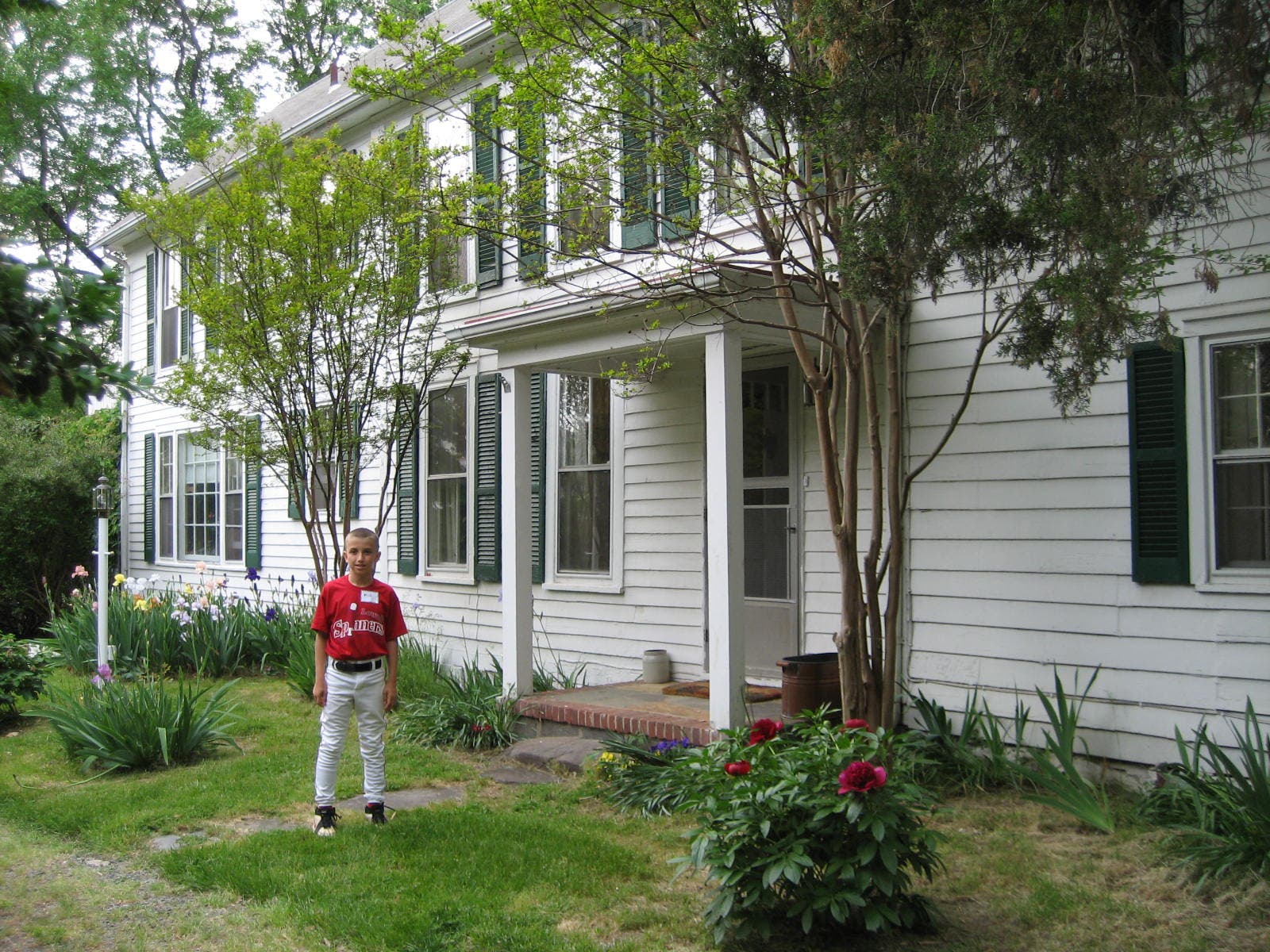
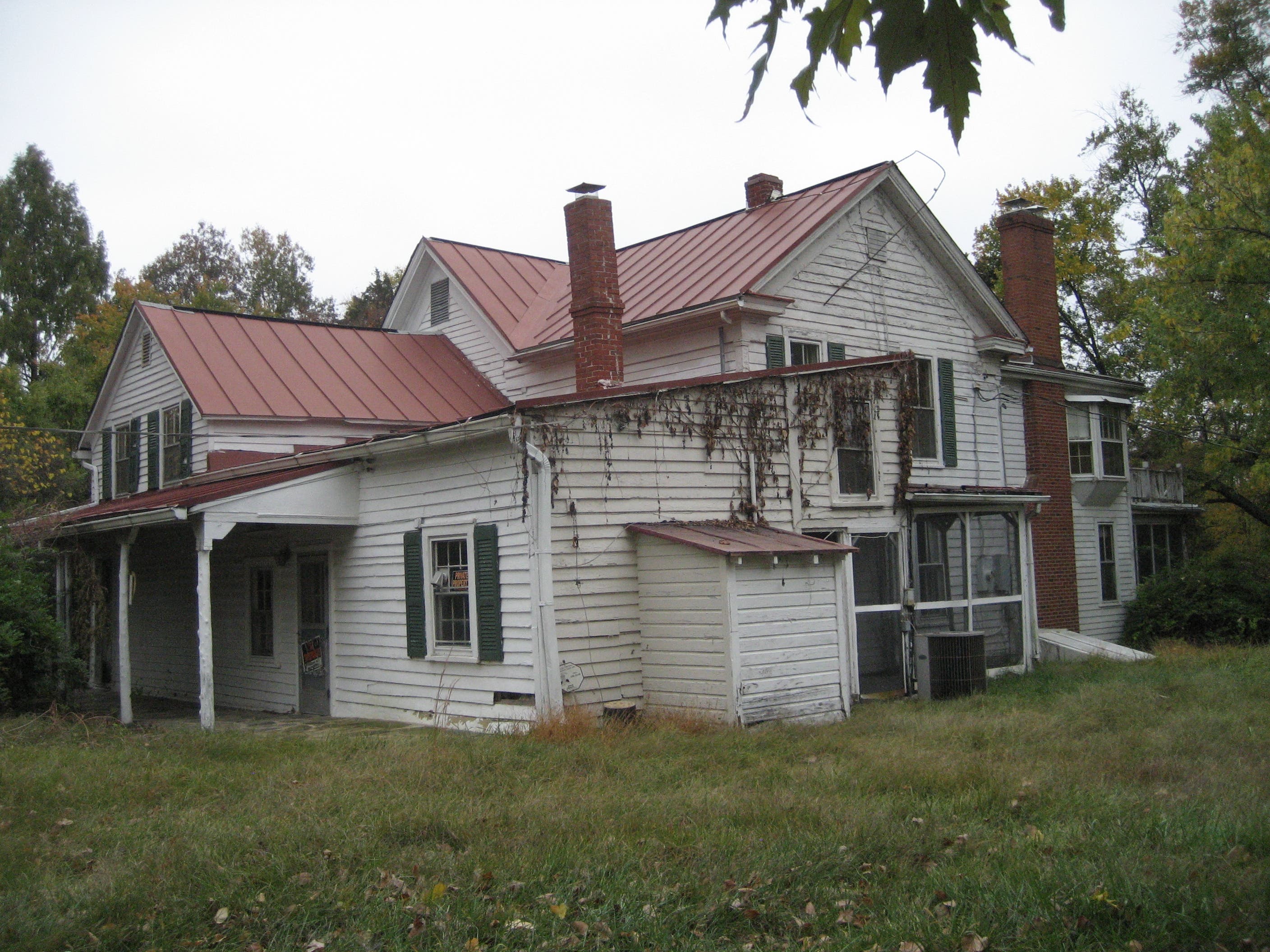
Going back to Milton and Laura, as promised, Milton Hanna built a house named “Brookside” for Laura, a one-and-a-half-story home that overlooked a small wandering brook. (Some sources suggest that Milton may have added onto an already existing older building that may have dated as far back as 1820). The house still stands today at the southwest corner of Centreville and Woodland Park Roads. The house was later re-named “Merrybrook.” Laura and her sister, Cora, lived there until Cora died of cancer in 1888. Shortly afterwards, in 1890, Milton and Laura were married at the St. James Hotel in Washington, D.C. They lived together at the Brookside house until Milton died seven years later as a result of an accident. Milton’s death left Laura wealthy.
Milton’s death certificate cannot be found to confirm his burial site. But the death certificates for Milton’s sisters, Mary and Ellen, have been found. Their burial sites were listed simply as “Herndon, VA,” with no other specific information. None of the Hanna’s names appear in the registry of Herndon’s Chestnut Grove Cemetery. Were they buried — unmarked — in the Ratcliffe/Coleman/Hanna family cemetery? Or were they buried elsewhere on their property, or back in New York?
Laura’s wealth allowed her to live comfortably and help her community. For instance, she donated an acre of land so that community members could build the first Floris Presbyterian Church at the corner of Centreville and Coppermine roads. She gave them this acre with the understanding that the building would only be used as a place of worship or as a public meeting house. The little white chapel is still used as a church today.
Laura lived at Brookside for the rest of her life. Rust said:
“[Laura] managed her estate, often walking for miles to oversee the soil and crops. She only used fallen trees for firewood. The brook which ran through her property was never fenced in lest some passer-by need water for his horse. She kept and cared for her own farm horses long after they had outlived their usefulness.
Rust also added that Laura, “shunned publicity, as always, and seldom spoke of her years as a Confederate spy.”
In 1914, when she was 78, Laura fell while walking outside to go feed her chickens, injuring her hip. Due to her modesty, she never let a doctor examine her. From then on out she was bedridden.
Lifelong Herndon resident Gladys Utterback (1905-2003) was interviewed for a 1990 article written by Carol Shevis in The Times newspaper. Utterback’s father was a farmhand for Laura Hanna, and her mother took care of Laura in her declining years. As a young girl and teenager, Gladys Utterback remembered Laura as being somewhat of a housebound eccentric, becoming a near recluse. Utterback said after Laura’s fall, she preferred to retire to her Morris reclining armchair, which she said became a throne of sorts. She spent her later years surrounded by stacks of books, reading voraciously. Utterback added, “When my brother and I visited, she let us play with her paper dolls. She never did give us any of them, though. She could be as tight as a lawyer’s hatband.”
Utterback’s father, Gilbert Utterback, was hired as a farm foreman as a young man; the Utterback family lived nearby Brookside. In addition to managing Laura’s dairy and sheep farming operations, he also leased part of the Hanna land, including what is now the Worldgate property, farming on his own.
According to Gladys, her mother, Frances Utterback, read the Bible to Laura for years. Frances was with Laura when she died in 1923 at the age of 87. As was the custom, Laura was laid out by the front windows of her Brookside home. Laura had constantly worn a stocking cap in her later years and nobody had noticed until after she died that she was completely bald. “Mother got some black grosgrain ribbon and I made a headpiece for her," Gladys said. "Nobody knew the difference.”
Mr. Utterback, and horse trainer named Bob Kerns, dug the grave, “with great difficulty.”
“It was solid rock. She’s not dug down very far," Gladys Utterback said.
Kerns suggested that they blast the grave, but that idea was nixed by Mr. Utterback who said that it would interrupt the other graves.
The headstone on the Worldgate hotel property is located about 700 yards northeast of Laura and Milton’s Brookside home. The gravesite area that was once farmland was later encroached upon by the Dulles Toll Road, a widened Centreville Road, and other development such as the Worldgate Centre. According to Chuck Mauro, author of the book, “A Southern Spy in Northern Virginia: The Civil War Album of Laura Ratcliffe,” Laura’s will stated:
“I wish to have put up in my own graveyard a neat gray granite stone with the names Ratcliffe, Coleman and Hanna cut on it.”
But who exactly is buried in the small burial ground by the Worldgate hotel? That is not fully clear. Many online sources say that Laura is buried there, often without mention of anyone else. That might be because Laura was considered to be somewhat of a famous Civil War figure, possibly overshadowing — and leaving unmentioned — the names of the other grave occupants. Laura’s death certificate says that she was buried in the “Hanna Family Burying Ground.” A reference book entitled “Cemeteries of Fairfax County” by Brian A. Conley, said that Laura and Milton Hanna are both buried at the site. Shevis’ Times article said that Laura’s husband, Milton, and mother, Ann McCarty Lee Ratcliffe, are all buried there. A Herndon Observer newspaper article, dated 1997, said that, “the remains of Laura Ratcliffe … rested in a peaceful country graveyard that was the traditional burying place for the related Ratcliffe, Coleman and Hanna families.” Are any other members of the Ratcliffe, Coleman or Hanna families buried there?
Gladys Utterback said that she and her mother were present when Laura was buried. She said that in addition to Laura, Milton Hanna, Laura’s mother (Ann McCarty Lee Ratcliffe), and Laura’s sister (Ann Ratcliffe Coleman), are also buried there.
Mauro wrote: “There is no doubt that other members of the Ratcliffe and Coleman families are buried there as well.” We tend to agree.
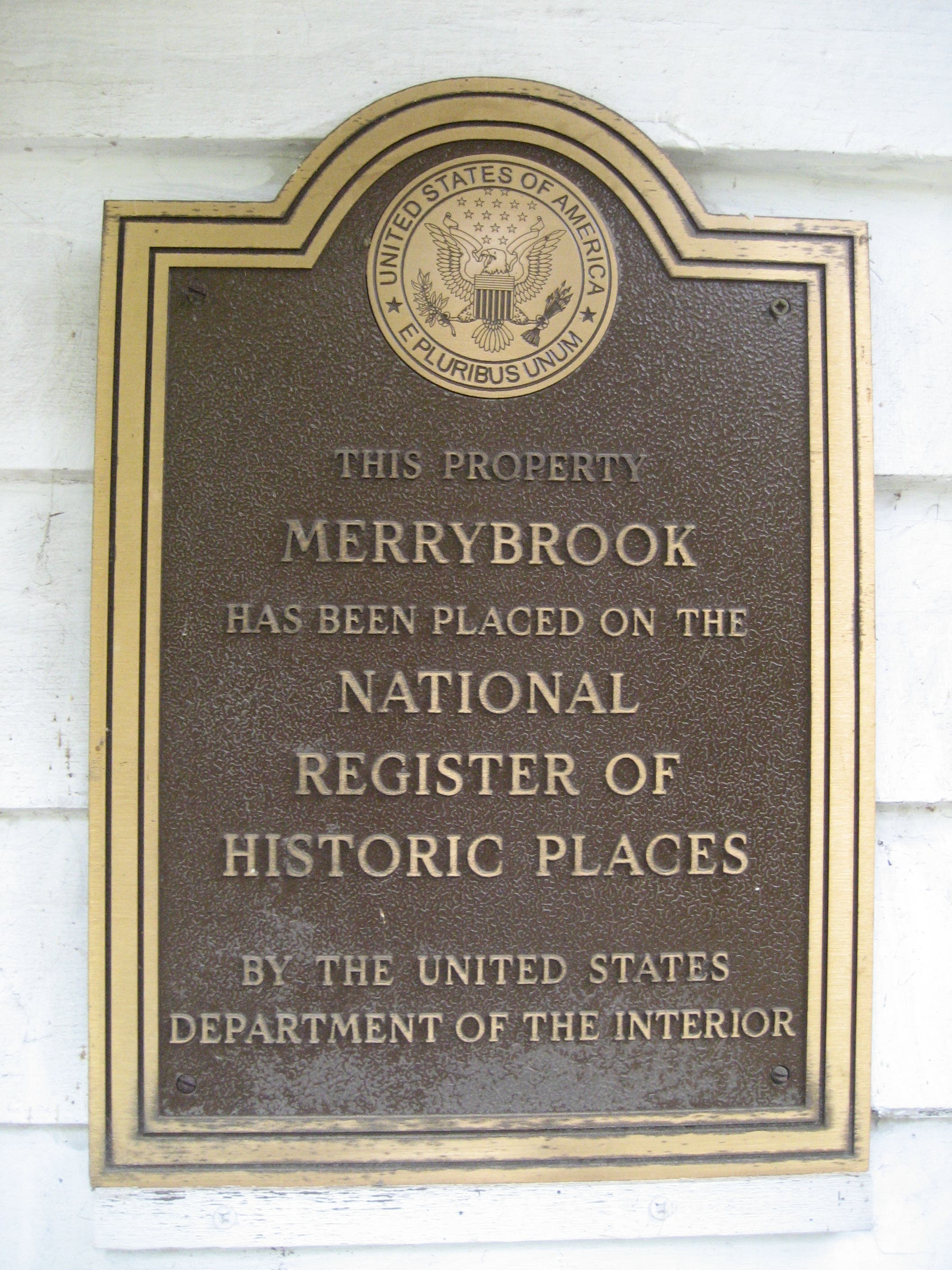
Postscript: In 2022 the Fairfax County Park Authority obtained the 2.6 acres on which Laura and Milton Hanna’s house sits. The house, now known as Merrybrook, is on the Virginia and National Registers of Historic Places. Fairfax County is currently considering the best course of action for the property.
About this column: “Remembering Herndon’s History” is a regular Herndon Patch feature offering stories and anecdotes about Herndon’s past. The articles are written by members of the Herndon Historical Society. Barbara Glakas is a member. A complete list of “Remembering Herndon’s History” columns is available on the Historical Society website at www.herndonhistoricalsociety.org.
The Herndon Historical Society operates a small museum that focuses on local history. It is housed in the Herndon Depot in downtown Herndon on Lynn Street and is open every Sunday from noon until 3:00. Visit the Society’s website at www.herndonhistoricalsociety.org, and the Historical Society’s Facebook page for more information.
Note: The Historical Society is seeking volunteers to help keep the museum open each Sunday. If you have an interest in local history and would like to help, contact HerndonHistoricalSociety@gmail.com.
Get more local news delivered straight to your inbox. Sign up for free Patch newsletters and alerts.