Neighbor News
Remembering Herndon's History: Richard Henry Lee
A little-remembered American Revolution hero.
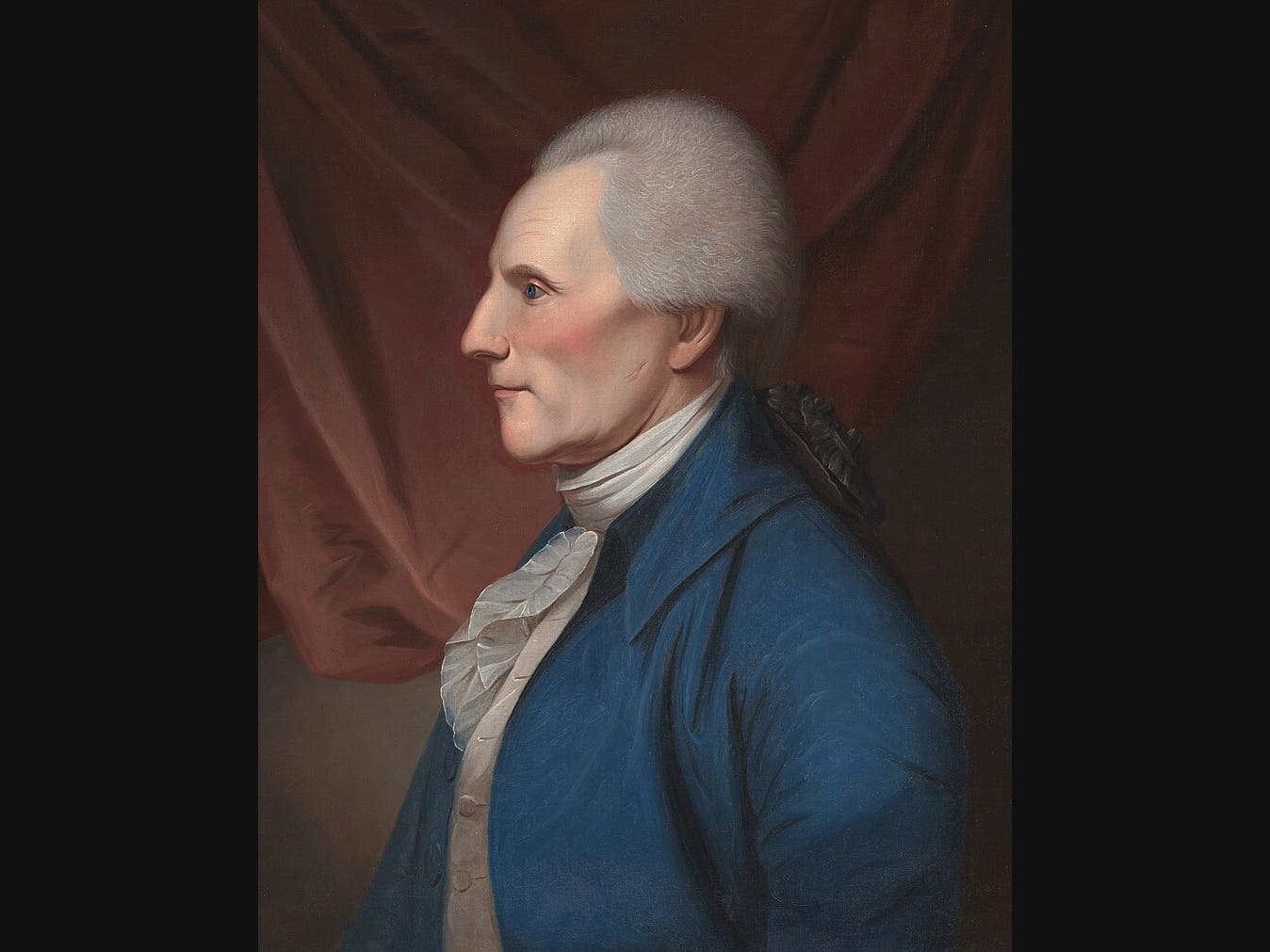
Richard Henry Lee
By Barbara Glakas
This month we are publishing an American Revolution-era story to help celebrate the nation’s 250th anniversary.
Find out what's happening in Herndonfor free with the latest updates from Patch.
There were 56 signers of the Declaration of Independence. You have likely heard of some of them, such as, John Hancock, Thomas Jefferson, John Adams, and Benjamin Franklin. But have you heard of Clymer George, Lyman Hall, Francis Lewis, and John Penn? About half of the signers were lawyers. But many of them were also farmers, doctors, ministers, and merchants. Many of these men are lost to history.
One of the most consequential signers whose contributions seem to have been lost to history was Virginian, Richard Henry Lee. When we hear the name Lee, we often think of Robert E. Lee. They are distant cousins, however, American statesman, Richard Henry Lee, was born at Stratford Hall, in Westmoreland County, Virginia, in 1732, 75 years before Robert was born. Richard was also a first cousin of the famous Revolutionary War officer, Henry “Light Horse” Lee III (b. 1756). The Lee family was huge and their prolific presence in Virginia dates to the early 1600s.
Find out what's happening in Herndonfor free with the latest updates from Patch.
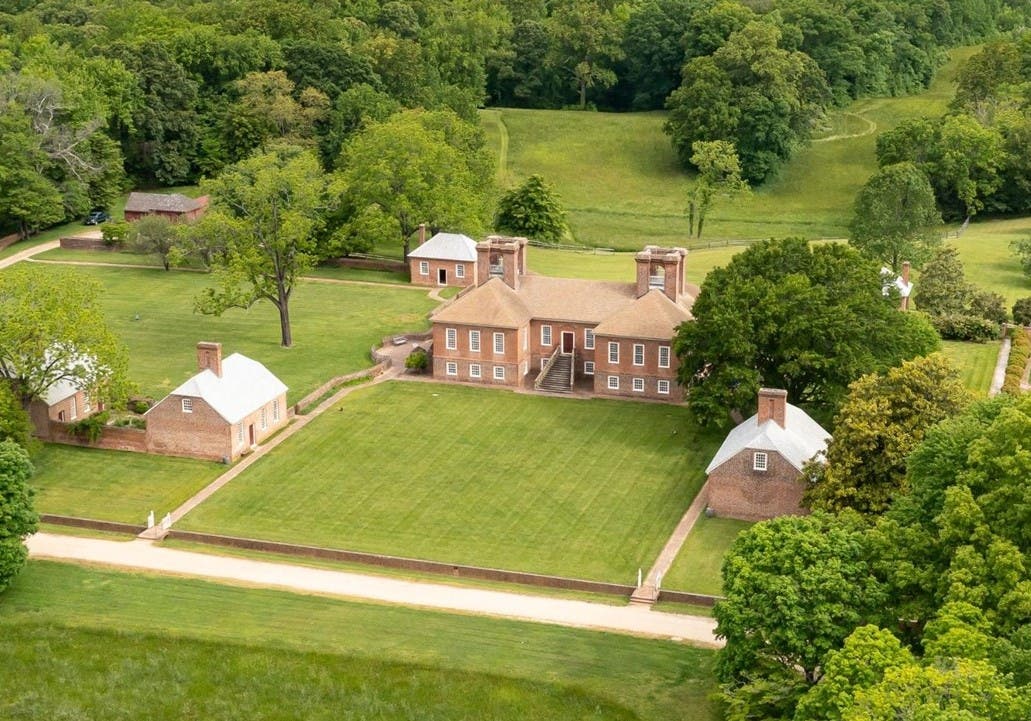
Stratford Hall (National Park Service)
Revolution period figures such as Thomas Jefferson, James Madison, and George Washington, often get much well-deserved credit for the establishment of our country. But the American Revolution never would have happened had it not been for the earlier groundwork of other men such as Samuel Adams (Massachusetts), Patrick Henry (Virginia), and Richard Henry Lee (Virginia), who were generally many years older than the other well-known men named in the previous sentence, some by a generation.
Samuel Adams is my personal hero when it comes to the Revolution. And please note that the next time you drink a Samuel Adams beer, it was Sam’s father – Samuel Adams Sr. – who was Boston’s well-known and successful producer of malt, used for brewing. Samuel Junior briefly took over the business when his father died, but that did not last long because Samuel Junior was not interested in that business. However, there is not enough space to write about Adams, Henry, and Lee, so this article will focus on only one of them, the lesser-known Virginian, Richard Henry Lee.
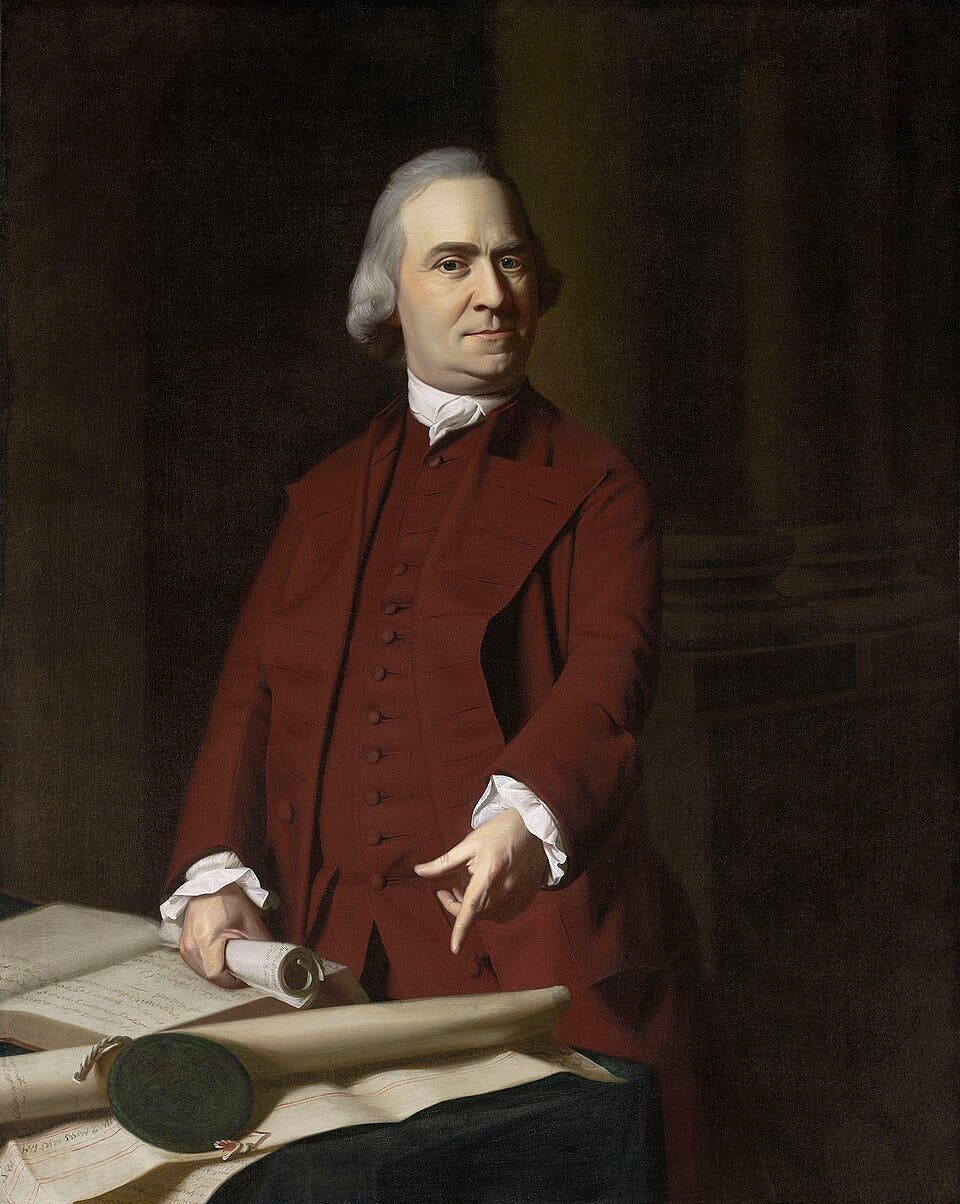
Samuel Adams (John Singleton Copely)
Richard Henry Lee dedicated much of his life to public service. His first public office was as Justice of the Peace in 1757 in Westmoreland County, Virginia, a county on Virginia’s Northern Neck. The next year he was elected to the Virginia House of Burgesses. Although a slave-owner himself, his first speech to the Virginia assembly was in support of slowing the importation of enslaved people, using his speech as an opportunity to condemn the entire institution. Obviously, that effort was unsuccessful, but Lee became known as one of the most eloquent, talented, and impassioned speakers in the Virginia colony.
It was Britain’s Stamp Act of 1765 (a tax on various forms of paper) that moved Lee into further action, turning him into one of the Stamp Act’s most vocal opponents. He was very adept at mobilizing popular sentiment as well. He wrote to Britain’s King George III and Parliament, arguing that the British Constitution guaranteed that British subjects could not be taxed without their consent.
Lee was part of Samuel Adams’s network of anti-British resisters and started employing some of the same type of radical tactics in Virginia that Adams used in Boston - street theater, selective rioting, show trials, strategically leaked documents, staged debates, and managed news. For example, in 1765 Lee staged a mock hanging of George Grenville, the British prime minister who introduced the Stamp Act. In 1766 Lee organized more than 100 of his neighbors to sign their names to the Leedstown (or Westmoreland) Resolves that he wrote, which said that signers would pledge to not comply with the Stamp Act, and that anyone who attempted to enforce it would face “immediate danger and disgrace.”This Westmoreland group is one of the first groups – much like Adams’s Sons of Liberty group in Boston - that organized to resist British policies.
Lee, who served as an officer in the Virginia militia, used his Westmoreland County militia to harass an uncooperative merchant in Leedstown, who vowed to use the hated tax stamps. Lee orchestrated a march on the merchant’s home, where the mob forced the merchant to renounce the Stamp Act.
In 1769 Lee joined with 86 others to sign on to George Mason’s non-importation association to protest the British Townsend Duties (taxes on glass, lead, paint, paper, and tea). George Mason was another consequential Virginia stateman. The association protested British taxation and encouraged economic pressure by restricting trade between Virginia and Great Britain, and by boycotting British goods.
The British were initially keenly focused on the resistance in Boston. Samual Adams was a key organizer of the Boston Committee of Correspondence in 1772.The committee sent letters to town leaders across Massachusetts about British threats, and sought to encourage the towns to create their own communication network.
Similarly, Lee was a key figure in the correspondence that fostered unity against the British, not just amongst Virginia towns, but among all the 13 colonies. Lee played a critical role in initiating a colony-wide communication network. Along with Patrick Henry and Thomas Jefferson, Lee was a key figure in Virginia's House of Burgesses which passed a resolution calling for all colonial assemblies to form Committees of Correspondence. These committees were able to share grievances, foster colonial unity, and eventually support the broader revolutionary cause against British policies.
Lee served in the First Continental Congress in 1774.On June 7th of 1776, while serving in the Second Continental Congress, he introduced a resolution for a declaration of independence. John Adams seconded the motion. The “Lee Resolution” read:
“Resolved, That these United Colonies are, and of right ought to be, free and independent States, that they are absolved from all allegiance to the British Crown, and that all political connection between them and the State of Great Britain is, and ought to be, totally dissolved.
“That it is expedient forthwith to take the most effectual measures for forming foreign Alliances.
“That a plan of confederation be prepared and transmitted to the respective Colonies for their consideration and approbation.”
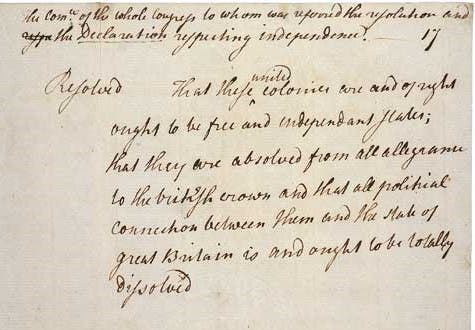
Lee's Declaration of Independence Resolution (National Archives)
The Congress debated and generally agreed to the resolution, but the formal vote on it was delayed. Then on June 11th the Continental Congress appointed three committees in response to the Lee Resolution: one to draft a more formal and embellished declaration of independence, a second to draw up a plan for forming foreign alliances, and a third to prepare and form a confederation. Thomas Jefferson was the main drafter of the new declaration, with the other four committee members making edits to his work. The committee poeticized and embellished the words of Lee’s declaration in calligraphy and on expensive parchment paper, which would also include a list of grievances.
Lee’s resolution was formally adopted on July 2, 1776, while the final embellished version of the Declaration of Independence was adopted on July 4th. Newspaper headlines of the day heralded Richard Henry Lee as the Father of American Independence. John Adams wrote to his wife that July 2nd 1776 would be,
“The most memorable epoch in the history of America. I am apt to believe that it will be celebrated by succeeding generations as the great anniversary festival.”
John Adams predicted that the American people would remember and eternally embrace Richard Henry Lee as the Father of American Independence. But that would not come to be. Given Thomas Jefferson was the main writer of the final version of the document, Thomas Jefferson is commonly remembered today as the Father of the Declaration of Independence, even though it was Lee who first wrote the original declaration that was proposed in June and formally adopted on July 2.
Although the colonies declared themselves independent from Great Britain, they still had no organized national government as the Revolutionary War raged on. This frustrated General George Washington’s ability to raise the money, troops, arms, ammunition, and supplies necessary to fight the British Army. Washington was commanding a comparatively smaller, untrained group of volunteer American citizen soldiers, and he was often unable to obtain clothing, food, and ammunition for his troops. There was no centralized federal government that Washington could go to get his needed supplies. Instead, there was a conglomerate of 13 different state legislatures that he had to go through.
Washington was in constant contact with his fellow Virginian, Richard Henry Lee. The Virginia colony was the most populated and one of the richest colonies. Lee was instrumental in working with Patrick Henry, then the governor of Virginia, to get needed supplies to George Washington.
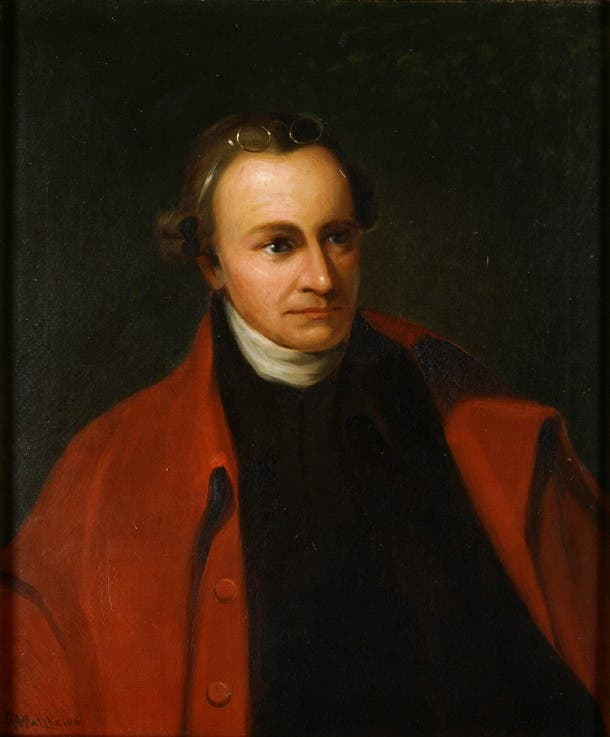
Patrick Henry (Thomas Sully)
Another thing that helped the war effort was that Richard Henry Lee’s brothers, Arthur and William Lee, who were in London and had friendly connections there. Serving as diplomats, they also acted as spies and were able to send valuable intelligence to their brother Richard back in America.
Lee served in the US Congress until 1779.During that time, he helped frame America’s Articles of Confederation, the country’s first constitution passed by the Constitutional Congress, that was in effect from 1781 to 1789.Lee served as the president of Congress from 1784 to 1785.
However, the weaknesses of the Articles of Confederation soon became apparent. It had a weak central government which lacked the power to tax, regulate trade, enforce laws, or address the needs of the military. It named the new country as “The United States of America,” but each state still maintained its sovereignty, with most power retained by the states, and with a very weak and limited central government, which had no executive or judicial branch.
The weakness of the Articles of Confederation prompted the Constitutional Convention of 1787, for the purpose of addressing the weaknesses and to write a new Constitution. Lee was elected to the Constitutional Convention, but he did not attend. He strongly believed that the new government needed a clear statement of individual freedoms. He openly expressed his objections across Virginia, advocating for an inclusion of a Bill of Rights as part of the Constitution, to protect against governmental overreach. He was concerned that a lack of a Bill of Rights might invite the type of tyranny and governmental abuse that originally led to the Revolution.
This was a core issue of the Federalist versus the Anti-Federalist divide within the Constitutional Convention. Lee argued that a Constitution without a Bill of Rights could create a “great and mighty president… with the powers of a king,” and might give congress unlimited taxation powers, and powers to suspend state laws.
Another significant issue that was argued in the Constitutional Convention had to do with representation in Congress. One method of representation by each states’ population made the smaller states fear that the larger states could easily out-vote them. Conversely, larger states argued that representation based on the number of states could put them at a disadvantage, allowing the smaller states to have too much sway. The problem was resolved by Roger Sherman, the Mayor of New Haven Connecticut, who proposed a compromise: the lower house (House of Representatives) would be proportionate to a state’s population, and each state would have parity in the upper house (Senate).
Lee and his Virginia friends, Patrick Henry and George Mason, worked together to try to defeat the proposed Constitution’s ratification in Virginia, fearing that the new Constitution created a central government with too much power. However, during the convention, James Madison approached the most moderate of Virginia Anti-Federalists, promising them that he would work with George Washington to pass Richard Henry Lee’s demand for a bill of rights in the First Congress if they would switch their votes in favor of ratification. Madison’s efforts worked and the first Constitution – without a Bill of Rights -- passed by a vote of 89 to 79.
Consequently, Patrick Henry worked to ensure that Lee was elected to the first U.S. Senate, where Lee was a strong advocate and instrumental figure for the adoption of the Bill of Rights. To promote his views, Lee authored a large series of anonymous newspaper essays which argued that the new Constitution would be incomplete without a Bill of Rights to protect individual liberties, much like George Mason’s Virginia Declaration of Rights, that he had authored in 1776, which outlined rights such as life, liberty, property, freedom of the press, and freedom of religion. Lee’s and Mason’s arguments were accepted, and in 1789, James Madison introduced a list of amendments to the First Congress, responding to the demands raised during the ratification process. These amendments became the Bill of Rights.
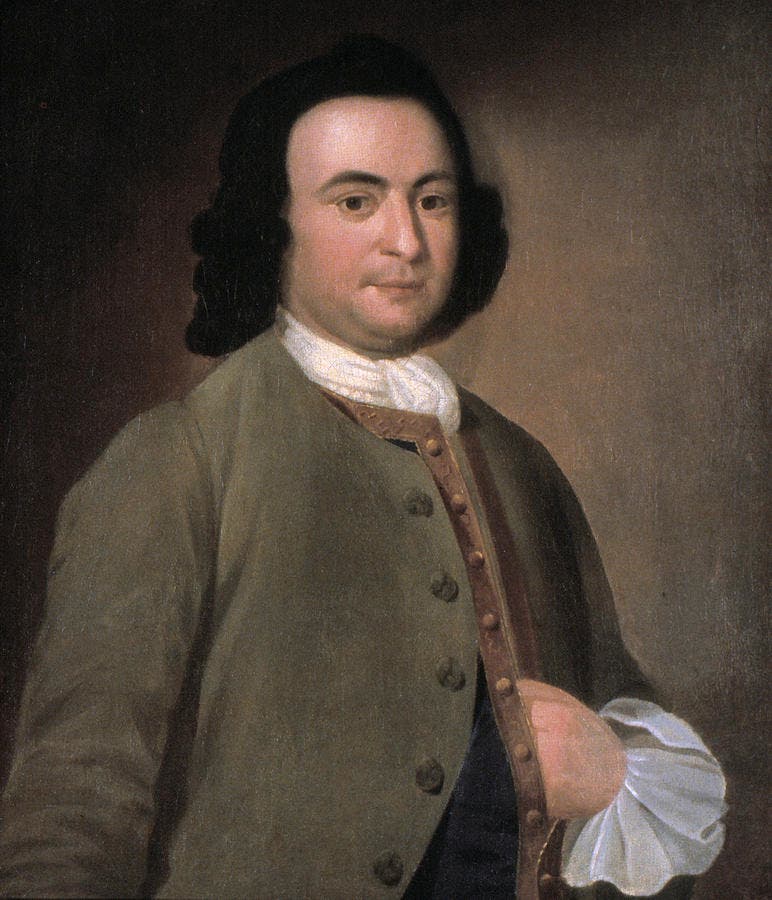
George Mason (John Hesselius)
Therefore, even though Madison is often referred to as the “Father of the Constitution” for his pivotal role in drafting, defending, and promoting the Constitution, it was people like Richard Henry Lee, Patrick Henry and Goerge Mason, who pressured Madison to include a Bill of Rights.
Ill health forced Lee to resign in 1792.He returned to Virginia and died in 1794 at his Westmoreland plantation.
Richard Henry Lee was an extremely consequential but little-remembered figure of the Revolutionary War period and during the birth of our nation.
I started off this article by talking about men who were signers of the Declaration of Independence who have been lost to history. One of those most significant of those men was Richard Henry Lee. His contributions to the founding of our country cannot be overstated. Lee’s life-long work ensured that the United States became an independent country and that its citizens enjoyed individual liberties. We should all remember Virginia’s Richard Henry Lee and his many contributions to the formation of The United States of America and its most important founding documents.
------------------------------
About this column: “Remembering Herndon’s History” is a regular Herndon Patch feature offering stories and anecdotes about Herndon’s past. The articles are written by members of the Herndon Historical Society. Barbara Glakas is a member. A complete list of “Remembering Herndon’s History” columns is available on the Historical Society website at www.herndonhistoricalsociety.org.
The Herndon Historical Society operates a small museum that focuses on local history. It is housed in the Herndon Depot in downtown Herndon on Lynn Street and is open every Sunday from noon until 3:00. Visit the Society’s website at www.herndonhistoricalsociety.org, and the Historical Society’s Facebook page at https://www.facebook.com/HerndonHistory for more information.
Note: The Historical Society is seeking volunteers to help keep the museum open each Sunday. If you have an interest in local history and would like to help, contact HerndonHistoricalSociety@gmail.com.