Politics & Government
Lower Occoquan Watershed Plan Moves Forward
The long-range plan benefits Lorton's waters and residents
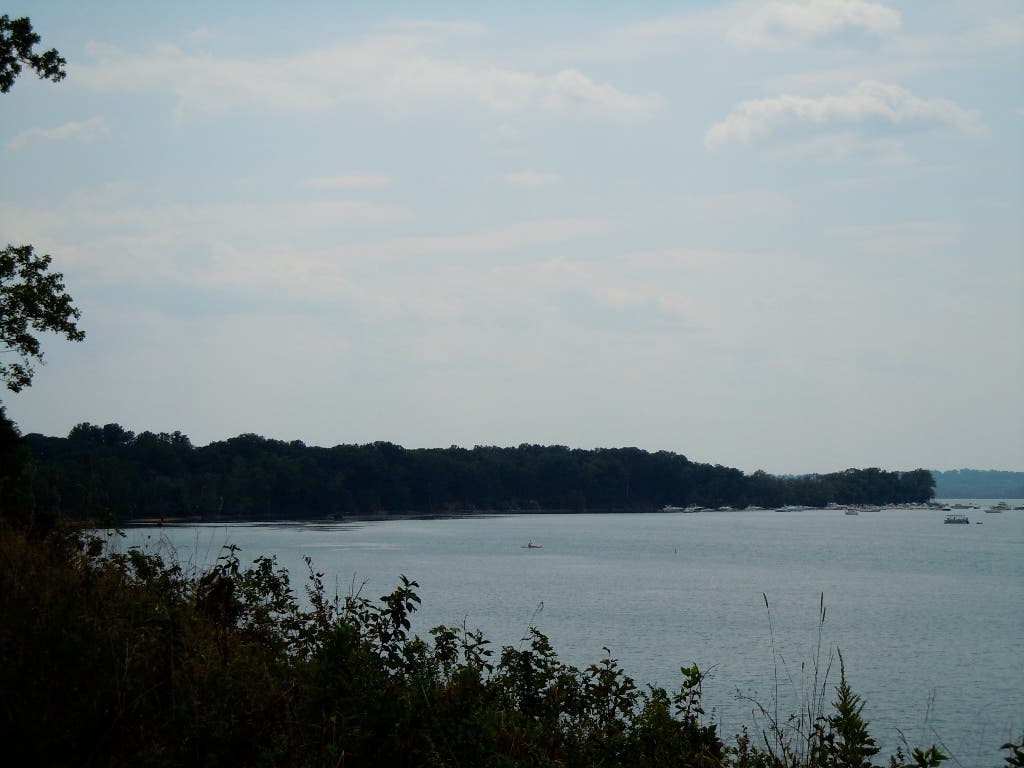
If you live in Lorton, the water that flows through your faucet comes from the Occoquan Reservoir, which is fed by the small streams and creeks scattered throughout the community. A 1999 study revealed that only 25 percent of streams in Fairfax County, including those in Lorton, were considered healthy, in that they supported a thriving biological community. Seventy-five percent were considered unhealthy. To address the problem, Fairfax County unveiled a $63 million plan which would span 25 years, to restore the health of streams in the Lower Occoquan Watershed.
A watershed is an area of land in which rainwater and runoff feed into a particular body of water, in this case the Occoquan River. The Occoquan watershed is, in turn, part of the Chesapeake Bay watershed, an interconnected system of streams and rivers across Virginia, Maryland, the District of Columbia, West Virginia, Pennsylvania, and New York covering 64,000 square miles. The entire Chesapeake Bay is now suffering from the effects of pollution generated across the region. Toxic runoff from development and industry has killed off massive quantities of aquatic life, threatening the livelihoods of watermen and jeopardizing the future of native species. Local jurisdictions are charged with alleviating the problem and restoring the health of the Bay. Fairfax County's overall watershed management strategy is aimed at supporting this objective.
Since drinking water is collected from local rivers and streams, public safety is directly impacted by the quality of water within these watershed areas. Maintaining a clean watershed reduces the risk of e.coli and other harmful bacterial outbreaks in the water supply.
Find out what's happening in Lortonfor free with the latest updates from Patch.
The policies that govern the health and maintenance of local streams date back to 1975, when the landscape of the Lorton community was quite different. Business development and an influx of new residents have put the community's watershed areas at greater risk. Chemical nutrients called nitrogen and phosphorus continuously run off land and into stream water. Erosion caused by changes in the landscape means sediment is swept into local creeks and streams, then into the Occoquan River, eventually reaching the Chesapeake Bay.
Nitrogen and phosphorus occur naturally, but are added to the water system in vast quantities due to fertilizers and other byproducts of the urban landscape. Nitrogen and phosphorus promote plant growth, and when they flow through the watershed in high quantities, they result in rapid growth of algae, referred to as algal bloom. The algae that forms on the water's surface cuts off sunlight to plants and animals beneath it, reducing photosynthesis and hampering the oxygen supply. Today, algal bloom from years of pollution has devastated the ecosystems of the Chesapeake Bay.
Find out what's happening in Lortonfor free with the latest updates from Patch.
A poorly functioning watershed also produces more sediment than usual, which is washed away from banks and shores, carried throughout the water system, and deposited into the body of water at the end. Sediment carries with it pollutants and causes the water to be cloudy, or "turbid," producing much the same effects as an algal bloom. Sunlight cannot reach the plant and animal life below who depend upon it. The drinking supply is contaminated in the process, and increased sediment requires costly upgrades to public filtration systems in order to filter out the harmful impurities.
The Lower Occoquan Watershed Management Plan calls for projects in each stream that flows into the Occoquan River. The project is planned in two phases: a 0-10 year timeframe and an 11-25 year one. If the full plan is implemented, the county estimates it would reduce the yearly load of nitrogen in the watershed by 1730 pounds. The yearly phosphorus reduction would be 680 pounds. 1070 tons of sediment per year will be removed from the Lorton area's streams and rivers. If these projections prove accurate, the benefits of the plan are clear: less pollution, and cleaner drinking water.
The Lower Occoquan watershed is comprised of 10 smaller areas known as Watershed Management Areas: Old Mill Branch, Wolf Run, Ryan's Dam, Sandy Run, Occoquan, Giles Run North, Mill Branch, Giles Run South, Kane Creek, and High Point. Each of these areas will receive improvements along the streams and creek beds in the coming years if the plan is approved. Structural upgrades include retrofits of storm water retention ponds to better absorb pollution before returning the water to nearby streams. In some cases, restoring eroded streams to a more natural form is in order, making the ecosystem better able to handle the pollution and increased runoff that comes through. Non-structural projects proposed as part of the plan include stream clean-ups and planting streamside vegetative buffers.
The current plan may be found on the Fairfax County government website and is open for public comment until September 25.