Community Corner
From Alexandria To Winchester: NoVA Jewish Community Overviewed In Book
After finding not much had been published about the Jewish community in Northern Virginia, one couple turned that history into a book.


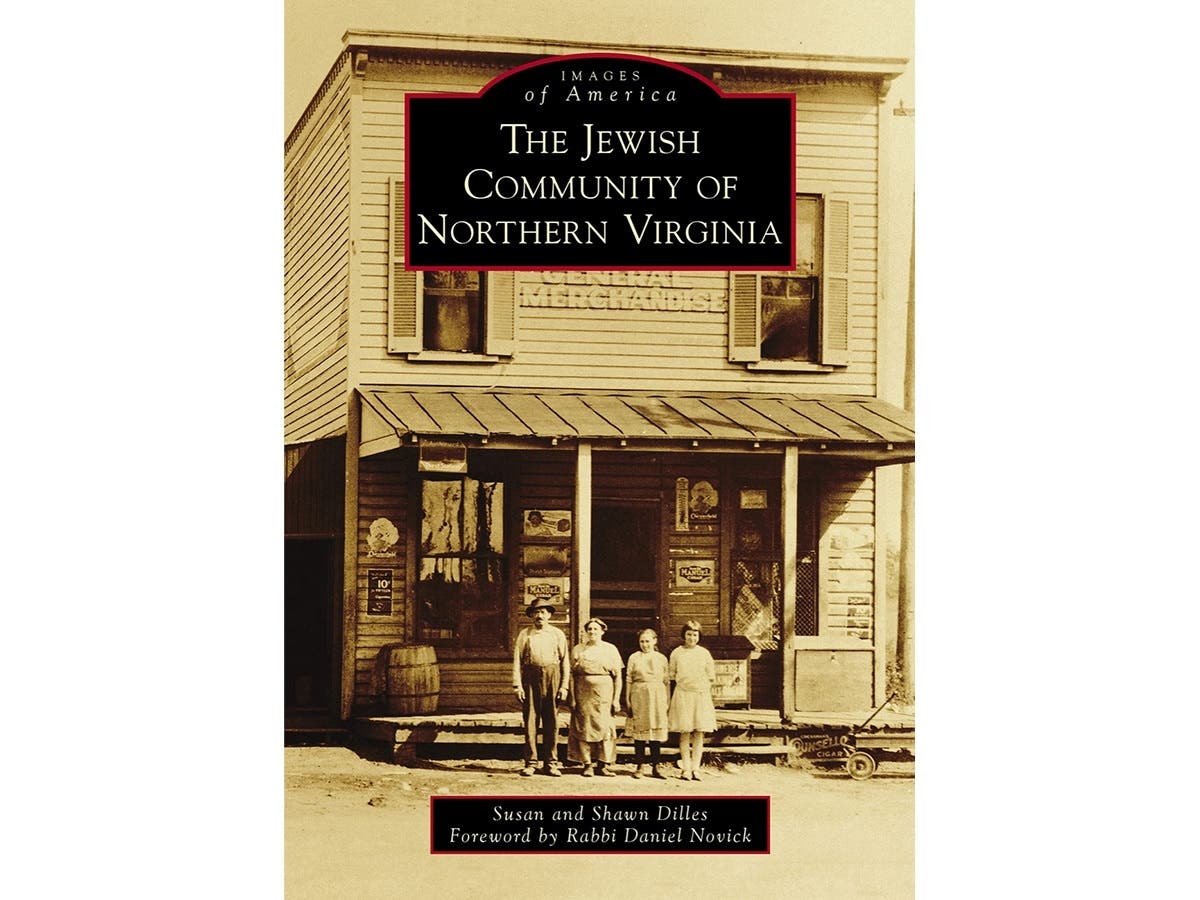
ALEXANDRIA, VA — Given the large Jewish community in Northern Virginia, Susan and Shawn Dilles were surprised there wasn't a book providing an overview.
Northern Virginia has a Jewish population over 120,000 in the present day, over 20 synagogues, and plentiful community programs, including the Pozez Jewish Community Center of Northern Virginia. In 2018, it was revealed through a regional survey that Northern Virginia's Jewish population exceeded those of DC and the Maryland suburbs. This growth of Jewish people in the region didn't happen suddenly, as they've been in Northern Virginia for more than 175 years.
The Dilleses, who have been involved with two congregations and the Pozez Jewish Community Center, decided it was time to give their faith community its own book. After two years of research, "The Jewish Community of Northern Virginia" was published Monday.
Find out what's happening in Old Town Alexandriafor free with the latest updates from Patch.
The book, a collection of photos accompanied by captions, examines the growth of the Jewish community over time starting in the 19th century to the modern day. Individual communities of Northern Virginia are spotlighted, from Northern Virginia's first synagogue — Beth El Hebrew Congregation in Alexandria — to growth in other areas such as Fredericksburg, Leesburg, Winchester, Warrenton and more.
Since the book launched Monday, Amazon has run out of stock multiple times, and it was temporarily Amazon's top book in the Jewish Social Studies category.
Find out what's happening in Old Town Alexandriafor free with the latest updates from Patch.
To mark the book's publication, Patch did a question and answer series with the author.
Patch: Why did you and your wife decide to write a book highlighting Northern Virginia's Jewish community?
Susan and Shawn Dilles: When we moved to Northern Virginia 40 years ago, our home was less than 20 minutes from two synagogues and the Jewish Community Center and only 30 minutes from four other synagogues. Since then, we have watched the Jewish community grow dramatically along with the entire region. We were surprised by how much was going on to serve the growing Jewish community. During this time, it often seemed that there was much more happening in the Northern Virginia Jewish community than we read or heard about.
When Jewish community population surveys were periodically conducted, we had the feeling that they were missing the mark regarding the Virginia Jewish community. We would say “someone should write a book to let folks know how much is happening here.” For example, a survey released in 2003 raised the estimated population from 35,000 (in 2000) to 67,000. The 2017 Greater Washington Jewish Demographic Study increased it another 80 percent to more than 120,000, suggesting that earlier surveys had likely undercounted the number of Jews in the area. When COVID-19 hit, we realized that still, no one had written about the community, and suddenly, we had time to undertake the time-consuming research needed…thus, we started working on the book.
[Note: The Charles I. and Mary Kaplan Family Foundation conducted the 2003 Survey with the assistance of the Jewish Federation of Greater Washington.]
Patch: How long did it take to research, and what kind of sources did you draw from?
Susan and Shawn Dilles: In a sense, we have been collecting parts of the story over the four decades we have lived and worked in Northern Virginia, all the while participating in the Jewish community as congregants and members of the Jewish Community Center.
We spent two years during the COVID pandemic researching the community’s history and filling in gaps.
We were totally blown away at how interested and supportive the community was to support this project.
We worked with archivists at congregations and community organizations across the area in a triangle from Fredericksburg to Alexandria and west to Winchester. Local libraries and the Capital Jewish Museum provided access to more photographs and records. We also worked with the “BAMA” (Beth Ahabah Museum and Archives) in Richmond, VA and other library archives as far away as Charleston, SC. During the research phase, the more we looked, the more we were surprised by the depth and breadth of the story.
Patch: What are some things about Northern Virginia's Jewish community you have learned from your research that you didn't know before?
Susan and Shawn Dilles: We learned how little we knew! There are three main areas that we learned much more about:
First, that there is a “Northern Virginia Jewish Story” that started in the 1850s and has continued until today. The area provided a haven and home for Jews fleeing religious restrictions, and political and economic turmoil first in Central Europe (1848 and following) and later in Eastern Europe and Russia (1870-1920s). Later generations lived, worked and contributed to the area, and by the 1950s, helped shape the region’s development.
Second, we gained insight into the evolution of the Jewish community itself. Building congregations and institutions – such as schools, fraternal organizations and even cemeteries – took time and effort in the late 1800s. Growing from a series of congregations to a regional community also took an extraordinary amount of work beginning in the last quarter of the 1900s and continuing today. Extraordinary people made this happen, and their story needed to be told.
Patch: How are individual communities (such as Alexandria, Fredericksburg, etc) spotlighted in the book?
Susan and Shawn Dilles: We trace the history of the Jewish community across the region. In the 1800s, the area was strongly influenced by long established Jewish communities in Baltimore and Richmond. While Alexandria had the most Jews (50 families in the 1850s) smaller communities formed in Fredericksburg, Arlington and Winchester. Individuals and families also lived in small numbers in Herndon, Leesburg, Warrenton, and elsewhere. Over time, each of these communities grew and eventually formed congregations. Each has a unique history, and together they make up the rich fabric of our Northern Virginia community.
Patch: How has growth of the Northern Virginia region affected the Jewish population?
Susan and Shawn Dilles: In the 1800s and early 1900s, the Jewish population in the area was small — under 1.5 percent of the general population. Today it is around 5 percent. Initially, the Jewish population growth in the area was driven by immigration to the U.S. from Europe and Russia. In this century, it is also driven by “pull” factors like the availability of skilled jobs, educational opportunities and quality of life. Patterns of regional development shaped the geographic locations of the Jewish community along with the general population.
In the 1930s, President Franklin Delano Roosevelt expanded the federal government significantly and created many new jobs in the area. Like other Americans, Jews moved from other communities across the U.S. to fill some of these positions. When the Pentagon was built in the early 1940s, the area expanded again, and so did the Jewish community. Finally the Beltway opened up Fairfax County and the region to development. Along the way, congregations have followed the movement of the general population, first from the Alexandria area to Arlington, then to Fairfax County and westward.
Patch: What kind of role do the local congregations and the Jewish Community Center play in making the region a good place to live for the Jewish community?
Susan and Shawn Dilles: Northern Virginia hosts a wide range of options and opportunities for Jews to express their heritage and religion. There are more than 20 synagogues located throughout Northern Virginia. The Pozez JCC serves as a community connector, working independently and in partnership with organizations and synagogues in the area to build community through social, educational, cultural, and wellness programming.
Congregations support a range of Jewish religious practice and provide social and cultural programs for Jews to express their beliefs and heritage.
For families raising children in a Jewish environment, there are a plethora of options including more than 12 preschools based on Jewish values; summer day camps; Growing Jewish Families programming; teen programs; Gesher Jewish Day School; and Hillel Student Centers at GMU and Mary Washington University, as well as Chabad on Campus centers. For special interests, there are many synagogue chavurah (“friendship”) groups, groups for young professionals, men’s and women’s groups, and more. In sum, the Jewish community in Northern Virginia is burgeoning!
Patch: What is one thing you hope readers will take away from reading this book?
Susan and Shawn Dilles: Northern Virginia has a vibrant, rapidly growing Jewish community with a rich and untold history. It is a great place to live and raise a family, with an excellent quality of life.
The book,"The Jewish Community of Northern Virginia," is available through Amazon, Arcadia Publishing, and other booksellers.
Get more local news delivered straight to your inbox. Sign up for free Patch newsletters and alerts.