Politics & Government
Virginia Dreamer: Ending DACA 'Would Be A Huge Blow'
A Dreamer tells Patch "it would be a huge blow" to immigrants studying and working in the U.S. if the Trump administration ends DACA.


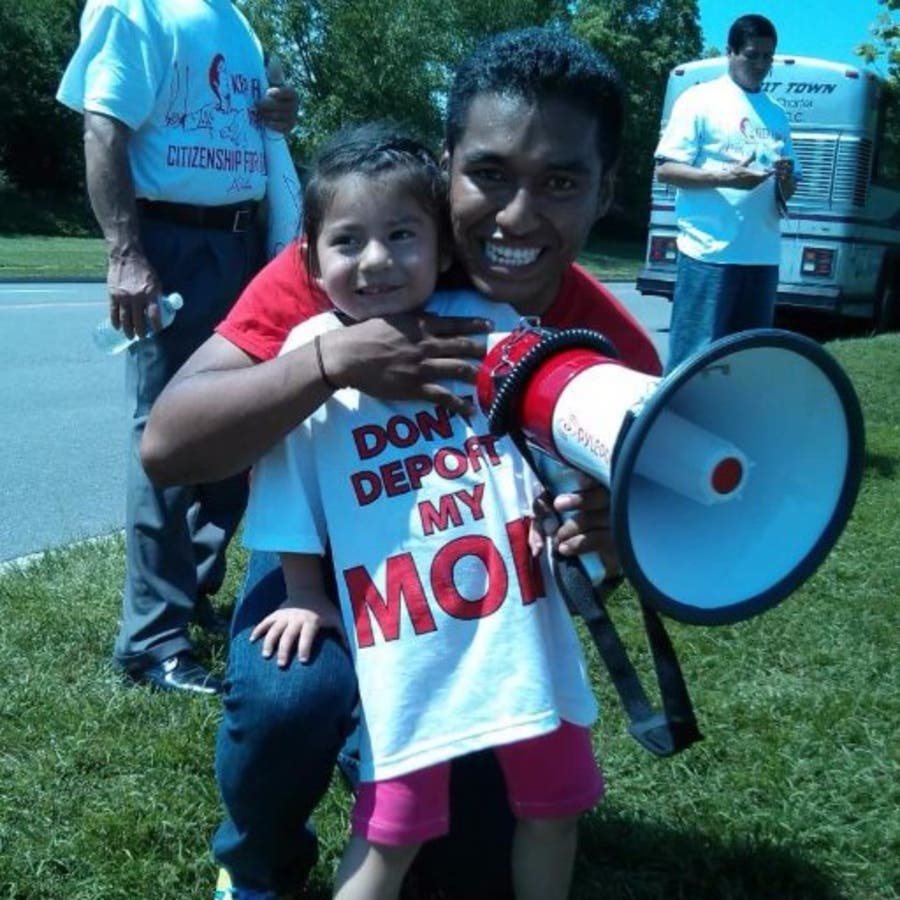
FAIRFAX COUNTY, VA—Like a good portion of people in the DC area, 29-year-old Luis Aguilar works in politics. It's been extra busy this year in Virginia with a governor's race this November. A transplant from Phoenix, he has lived in Northern Virginia for about a decade with his family.
He's also one of about 750,000 undocumented immigrants protected under the Deferred Action for Childhood Arrivals, an Obama-era program that the Trump administration could be looking to end. The program allows undocumented immigrants to receive renewable deferred action from deportation to work or attend school in the U.S.
Aguilar has been a part of DACA since the Obama Administration introduced it in 2012. It's made quite the difference, since wouldn't be able to do much besides attend public school, work under the table and attend college—if he could pay for it without federal loans.
Find out what's happening in Old Town Alexandriafor free with the latest updates from Patch.
Report: Trump Will Likely End Obama-Era Immigration Program
"I did go to high school...I did have all of those projects or goals that I had set for myself such as going to college like all of my peers," he told Patch. "But then I was hit with the reality that I was undocumented that I did not have access for in-state tuition...that I could not get a driver's license, that I could not get a job."
Find out what's happening in Old Town Alexandriafor free with the latest updates from Patch.
Aguilar tells Patch he had to meet the following criteria to enter DACA:
- Must have entered the U.S. before age 16.
- Must be under age 30 at the time of application.
- Must have entered the U.S. before 2012.
- Must show proof of residing in the area for five years.
- Must show proof of attending school or having graduated.
- Must pass a criminal background check.
SIGN UP: Subscribe to a Virginia Patch News Alert and Newsletter. Or, if you have an iPhone, download the free Patch app.
Aguilar arrived in the United States from Mexico when he was eleven. His father, formerly a teacher in Mexico, had already immigrated, working multiple jobs at restaurants, hotels and other places. Aguilar came with his mother and three siblings, and they lived in Phoenix before moving to Northern Virginia. Since then, he graduated from J.E.B. Stuart High School in Fairfax County.
Aguilar and his older siblings are protected under DACA. But he also has two more siblings that were born in the U.S. and are citizens. His 16-year-old brother is starting high school, while his 18-year-old sister is looking to attend college. His mother is still undocumented, making for some difficult conversations in the family if she is ever deported. And they know firsthand the worst case scenario; Their father was deported when Aguilar was 15.
DACA has allowed Aguilar to work at CASA, an immigrant rights group and has fielded questions like "why don't you just become a citizen?"
He tells people it can be difficult to meet requirements, such as obtaining a special skills visa back in their old country, getting sponsored by a business, or having a connection with a citizen. "If we could just apply, we would have done so. We do not have a line that we skip, because there is no line for us," he said.
So what happens to this group of undocumented immigrants if DACA ends?
During the 2016 campaign, then-candidate Donald Trump promised to end DACA on his first day. That hasn't happened, but Trump is facing continued pressure to end the program. Ten states—Texas, Louisiana, Alabama, Nebraska, South Carolina, Tennessee, Arkansas, Idaho, West Virginia and Kansas—have threatened a lawsuit if Trump does not start to phase out DACA by Sept. 5.
Citing multiple sources, ABC News reports that the administration could make a decision on DACA as early as this week. Even if the program ends, Trump has said these undocumented immigrants would not be a priority for deportation like criminals are. But there have been cases of Dreamers being deported since he took office.
If the program ended, Aguilar would lose his driver's license and Social Security card, which allow him to work legally. He could fall back on the safety net of skills to work under-the-table jobs, but he'd likely end up moving out of Virginia.
He believes keeping DACA alive is not only the moral choice but the economical choice for the country. Around 87 percent of Dreamers are employed, giving a boost to the tax base. According to a 2016 Immigrant Legal Resource Center report , ending DACA would reduce Social Security and Medicare tax contributions by $24.6 billion over ten years, with about half of that coming from employer contributions. The libertarian Cato Institute has also acknowledged that the U.S. could lose out on billions of tax revenue, whether the undocumented immigrants leave the country or work illegally.
"It would be a huge blow because I would not be able to work legally," he tells Patch. "This is what we were aiming to get out of. We were aiming to really become part of the society in a much more productive way."
Image courtesy of Luis Aguilar
Get more local news delivered straight to your inbox. Sign up for free Patch newsletters and alerts.