Weather
Updated Spring/Summer Forecast Released For VA: Here's What To Expect
See how shifting La Niña conditions will play a role in the 2026 hurricane season, as well as spring and summer temperatures in Virginia.


Spring is shaping up to be a warm few months in Virginia — and summer isn't likely to provide much relief, according to the latest forecasts.
The National Oceanic and Atmospheric Administration’s Climate Prediction Center released updated seasonal temperature outlooks for the spring and summer months, all of which show an increased likelihood of above-average temperatures across many of the mid-Atlantic states, including Virginia.
The temperature outlooks are part of NOAA’s long-range forecasting, which uses climate patterns and historical data to assess trends over several months.
Find out what's happening in Old Town Alexandriafor free with the latest updates from Patch.
Forecasters update the outlook regularly, meaning conditions and probabilities may shift as the seasons progress.
Here's a look at what temperatures could be like during the spring and summer months in Virginia:
Find out what's happening in Old Town Alexandriafor free with the latest updates from Patch.
.gif)
April-May-June
NOAA's newest outlook for the spring months expects temperatures to be above average throughout much of the state, except for far northern Virginia, where temperatures will be just slightly above average.
Precipitation is also expected to be slightly above-average, according to NOAA.
.gif)
June-July-August
The possibility of significantly warmer temperatures decreases heading into the summer months, according to NOAA; however, the state could still see slightly above average warmth.
Precipitation is also expected to be slightly above average throughout the eastern half of the Commonwealth, while the western half could see above-average rainfall, according to NOAA.
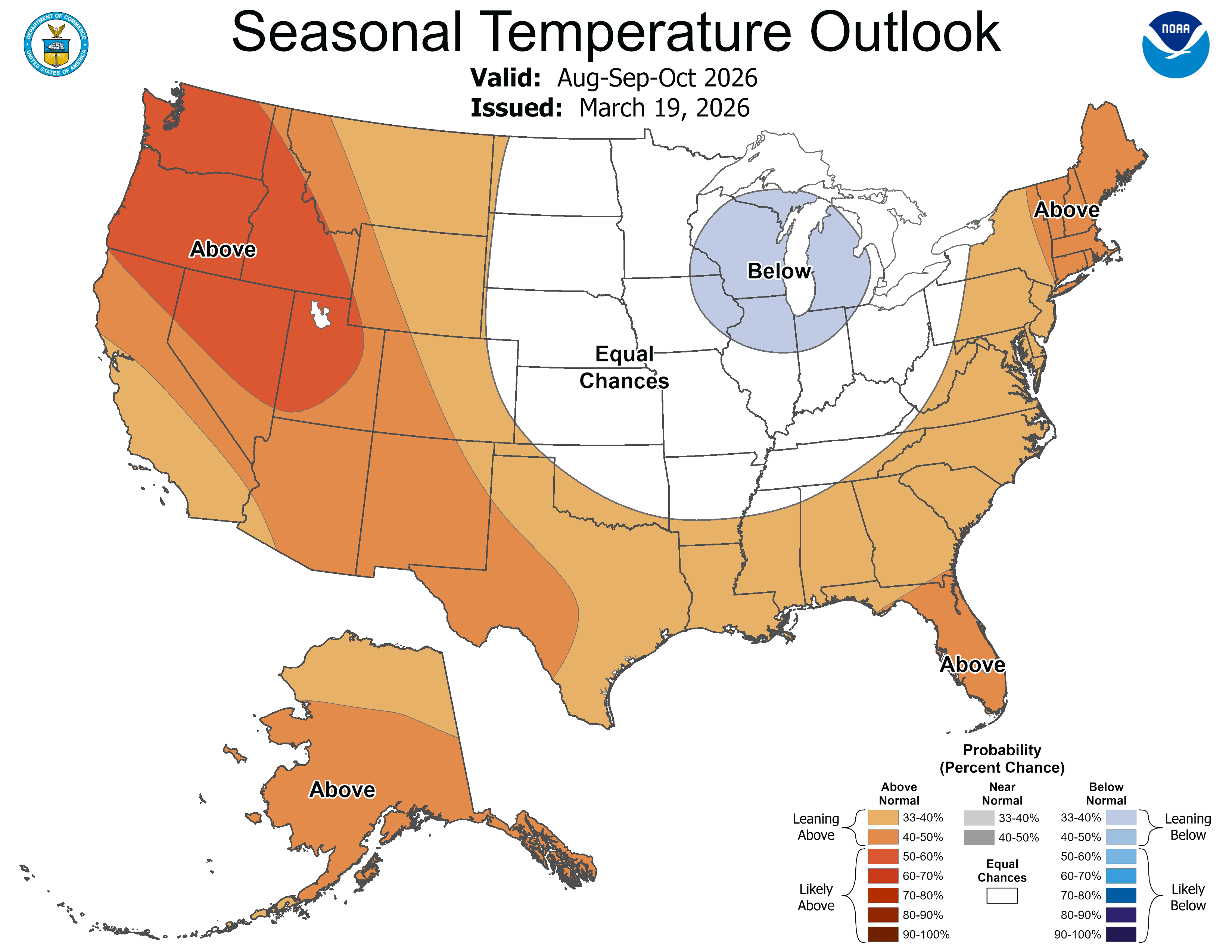
August-September
Expect much of the same temperature-wise as summer draws to a close, according to predictions. Temperatures should remain slightly above-average throughout Virginia.
Estimated precipitation also remains the same, NOAA predicts. Virginia is expected to see above-average to slightly above-average rainfall during the late summer months.
What's Behind Warmer Spring Temperatures
Despite the presence of La Niña in the tropical Pacific, NOAA predicts it will weaken and transition to ENSO-neutral conditions by April, likely lasting through May and June.
This transition, combined with long-term warming trends, contributes to the expectation of widespread warm conditions.
According to NOAA, El Niño conditions are likely to emerge and persist through at least the end of 2026. In the United States, El Niño is most associated with warmer, drier conditions in northern states as cool and wet patterns develop further south.
"El Niño can affect our weather significantly. The warmer waters cause the Pacific jet stream to move south of its neutral position," NOAA explains. "With this shift, areas in the northern U.S. and Canada are drier and warmer than usual. But in the U.S. Gulf Coast and Southeast, these periods are wetter than usual and have increased flooding."
El Niño can also impede Atlantic hurricane activity, especially during the second half of the season, AccuWeather forecasts said in their 2026 hurricane forecast.
AccuWeather is predicting “a near- to below-historical average” 2026 Atlantic hurricane season, which starts June 1 and runs through Nov. 30, of 11 to 16 named storms.
Of these storms, four to seven are expected to become hurricanes and two to four are predicted to strengthen into major hurricanes that are Category 3 or higher, AccuWeather said.
RELATED:
Get more local news delivered straight to your inbox. Sign up for free Patch newsletters and alerts.