Arts & Entertainment
This week at the movies: Battle of the Sexes, Stronger, and Birthright: A War Story
This week features battles and fights, for women's rights, reproductive rights, and the fight to survive a terrorist bombing. Reviews:



This week, it's all about battles. The battle back to healed after being blown up by in a terrorist bomb as in Stronger, the battle for women's rights, as in Battle of the Sexes, about the 1973 tennis match between Billie Jean King and Bobby Riggs, and Birthright: A War Story, a documentary about the ongoing war against women's body autonomy and right to choose. All three films are worth seeing for very different reasons. Battle of the Sexes is co-directed by a woman, and Birthright is female directed, written, and produced, which might inspire those who support women in film to head out to see them. Stronger features great performances by Jake Gyllenhaal and Tatiana Maslany, and is based on the experience of a real-life reluctant hero. Maybe these reviews will send you to a theater near you!
Also look for Cinema Siren's exclusive interview with Birthright director and award-winning journalist Civia Tamarkin at the end of this article.
STRONGER
Find out what's happening in Restonfor free with the latest updates from Patch.
Stronger, a bio-pic about Jeff Bauman, who struggled back after losing his legs in the 2013 bombing at the Boston Marathon, is another example that Jake Gyllenhaal, who plays the reluctant real-life hero, is drawn to scripts that don’t sugar-coat or shine experiences. He clearly likes to portray characters, whether based in reality or fiction, that aren’t always likable or making the best choices. Even more interesting, the movie, which is directed by David Gordon Green, is based on the book Stronger, co-written by Bauman himself. The audience gets a candid, unflinching view of Bauman’s personal disaster, weakness, and reconstruction, both on the inside and out.
Jeff Bauman (Gyllenhaal) is unreliable. At least, that’s what the girl he recently broke up with uses as her reason for their separation. He never shows up, she says. To prove he can be depended upon, he promises to be at the finishing line when she runs the Boston Marathon. While waiting and cheering her on, he sees someone suspicious. The world explodes, and he finds himself in the hospital, where his brother informs him both his legs have been amputated.
Find out what's happening in Restonfor free with the latest updates from Patch.
No doubt Gyllenhaal will create awards buzz, especially since stories of heroism always capture the attention of the Academy, but he allows himself to be vulnerable, angry, terrified, and go through a believable character arc, made all the better knowing it is something close to true life. Tatiana Maslany plays Erin Hurley, Bauman’s ex-girlfriend who struggles with guilt from being the reason he was at the marathon in the first place, standing by him during his convalescence. She makes the transition to co-starring with an A-list actor ably, and anchors the ensemble of friends and family taking the difficult journey through Bauman’s physical rehabilitation and understandable bouts with depression and PTSD. She too may be recognized for her authentic, understated performance. Other character actors who memorably round out the cast are Miranda Richardson as Jeff’s mom, Patty, Clancy Brown as Big Jeff, his dad, and Carlos Sanz as Carlos, the man that dragged Jeff to safety just after the bombing. There’s lots of cursing, like the F word is said more often than please and thank you, but that’s Boston working-class for you, or at least that’s how Bauman and screenwriter Pollono would have us think.
There’s a particularly poignant scene between Jeff and Carlos, when they finally meet again after Jeff has started getting physically better, but is obviously not in a great psychological state. Carlos, it turns out, was there in the aftermath in honor of his sons, both of whom had passed away. One son was a marine who died in the line of duty, and his other son killed himself after losing his brother. It’s a turning point for Jeff, who is shown to have difficulty being viewed as a hero, or the ultimate example of “Boston strong”. Carlos’s struggles are as compelling as Jeff’s, and that’s the point. The challenges of loss and choosing to continue are seen through a variety of people represented in the film, which is its best quality. Bauman’s own journey includes some truly dark, ugly moments, as no doubt getting back to living after having your legs blown off must.
This is no shallow, feel-good story. Bauman finds his way forward, but the audience sees the experience isn’t just hard, it’s excruciating. Sometimes just choosing to get up another day is heroic.
B
BATTLE OF THE SEXES
Battle of the Sexes is directed by Jonathan Dayton and Valerie Faris, the team that brought us the Oscar-winning Little Miss Sunshine, and is about the 1973 tennis match between the best female player in the world at the time, Billie Jean King (Emma Stone), against a hustling player and former Wimbledon champ, Bobby Riggs (Steve Carell). Many younger folks, even tennis fans, don’t know Billie Jean King, although she’s an important figure in sports, LGBTQ and women's history. Battle of the Sexes shows a time when women may have been working for equality, but were still seen as “the little lady”, and an adjunct to men, especially in sports. When 55 year old gambler and attention junkie Bobby Riggs challenged Billie Jean, who was at the top of her game, to a match to essentially prove any male player could beat any female player, she saw it as an opportunity to prove women in tennis were an important, vital part of the sport. This film goes through the events leading up to the storied match, and the match itself.
What is by far the best about the movie is the acting. Although Steve Carell is meant to be broad and flamboyant, he carries it off with some surprising subtlety. This is not a cast that showboats. Both he and Stone portray their characters ably, working chiefly to service the story. I think of a number of other actresses with more emotional heft could have cast before Emma Stone to play King, but she does rise to the challenge. In fact, Andrea Riseborough would have been a fascinating, compelling choice instead of Stone to play King. Riseborough co-stars as King’s hairdresser and real-life lover Marilyn Barnett, and she is one of many great costars that add to the film, including Alan Cumming, Bill Pullman, and Sarah Silverman. Directors Dayton and Faris are known for great ensemble casts that genuinely work as a unit to bring a film together, and Battle of the Sexes is no exception. It is a shame, though, that the plot follows such a traditional trajectory. It loses the quirk for which the directors are known.
As to the larger issue of gender equality touched on by the film, if you know recent history, they show how little has changed. Thank goddess for Billie Jean King founding the Women’s Tennis Association in 1973, which pioneered gender equality in sports, but we haven’t really come a long way, baby. While, in no small part due to her, the US Open offered equal prize money starting in 1973, the same year as her famed match with Riggs caused such a stir, the rest of the Grand Slam tournaments only followed suit in the 2000’s, with the Australian Open doing so in 2001, the French Open in 2006, and Wimbledon in 2007. Venus and Serena Williams still agitate for equality in tennis, and they are definitely the most famous American players currently in the field, male or female. They have to have been inspired, in multiple ways, by Billie Jean King.
Last year, 5 top players on the US Women’s Soccer Team filed a wage discrimination lawsuit after winning the World Cup and bringing in millions more in revenue than their male counterparts. The lawsuit claimed the female players were making 40% less. They negotiated a new and better contract this year, but they still won’t make as much as the men, even if the men have a another horrible season.
It’s also only days since Beth Mowins became the first woman to call a nationally broadcast football game in the US, doing the NFL play-by-play for Monday Night Football.
The point is, Battle of the Sexes is unfortunately well-timed, even if the events of the film happened over 40 years ago, which is galling. Still, it points to the power of women standing up for what they believe is right, and as entertaining and fun as the movie is, that should be the takeaway, especially with our current political climate. That is could have gone deeper into the experience of a famous female athlete coming to terms with her sexual orientation may be true, but that would have been a different movie. It might have included the lawsuit between her and Marilyn Barnett some years later, and the very clear struggle Billie Jean had coming out as gay, having grown up in a homophobic family. Doing research on the movie sent me down a rabbit hole that was so fascinating, I had to work hard to pull myself out of it. That’s a film I would have preferred, however entertaining this battle might be, but Battle of the Sexes is about one event, the circumstances surrounding it, how it came about, and how it went down. As such, it captures time and place, offers a diverting two hours, and asks us to consider how much or little things have changed for women in our own time.
B
BIRTHRIGHT: A WAR STORY
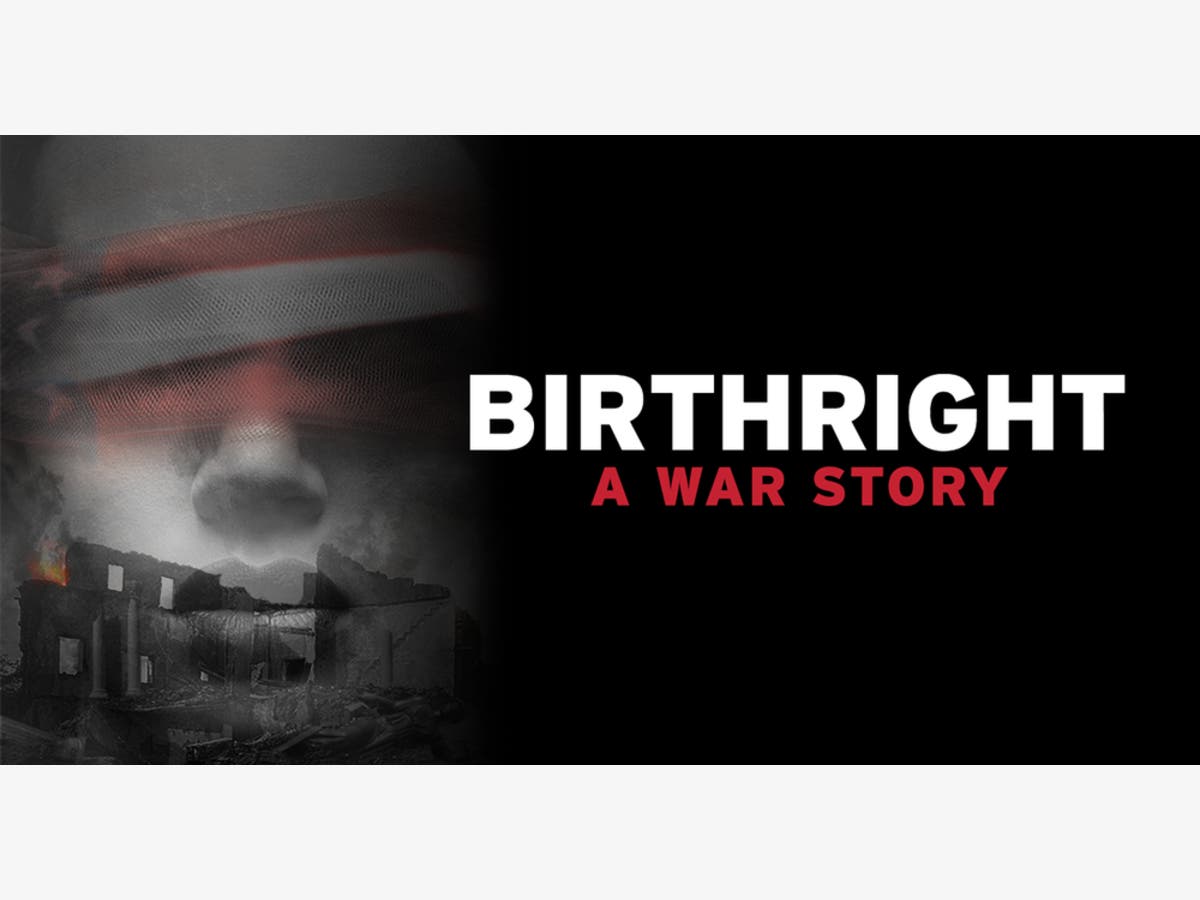
Coming to an art-house near you this weekend is the documentary, directed by award-winning journalist and filmmaker Civia Tamarkin, and co-written and produced by award-winning filmmaker Luchina Fisher, Birthright: A War Story. Why do we need another documentary on what seems to be about the pro-life verses pro-choice argument? Tamarkin, when I spoke to her, said she had set out to make the “Inconvenient Truth of Reproductive Rights”, and based on the film, it is very much needed. Birthright aims to expose just how much more is at stake in terms of reproductive rights than abortion, and does so to such a degree that it borders on terrifying, even for those who already know the subject. It is also very illuminating about how the attempts by the religious right to chip away at Roe v Wade, under the guise of fetal rights, or what is put forth with the label “personhood”, are creating an ever more dangerous environment for all women, regardless of political affiliation, or where they stand on the issue.
The most important question to ask, and what will inspire many to seek out this documentary for at least part of the answer, is why, if the vast majority of the public supports a woman’s right to choose and Roe v Wade remaining in place, are states around the country passing laws making it nearly impossible to end a pregnancy safely, or even for women to make their own decisions about care during their pregnancies and childbirth?
Director Tamarkin includes interviews with advocates on both sides of the issue, as well as women with experiences that highlight the danger of the changes happening across the country to the safety and wellbeing of women. Birthright: A War Story depends heavily on these first-hand accounts that include a variety of economic situations and ethnicities. These are stories in which their own rights were placed beneath the rights of their fetuses, even when they themselves were in imminent danger of death.
Particularly shocking and eye-opening is one scene with casual interviews of young women being asked to define what Roe v. Wade is, in which none of those questioned knew the answer. Several say it is some sort of legislation passed a long time ago that has little bearing on the present. They couldn’t be more wrong. A number of these women are people of color. The reproductive justice movement is about protecting all women, as women of color and poor women are further marginalized by the expansion of restrictions. One woman featured talks about the fact that to end her pregnancy she would have to go several states away, and it would cost thousands of dollars. It’s no exaggeration to say we are headed back to a time when women without financial means will resort to making the sorts of life-threatening choices best left in the past. This country has one of the highest mortality rates for any developed country, and these state-based law changes will only make that worse, although the right-to-life advocates don’t say that. Though they position themselves now as focusing on women’s health, they are really only representing fetal rights, which they inadvertently or not, are placed above the mother through the language of all the laws. President of the National Right to Life Committee Carol Tobias, who is a significant contributor to the film, says so directly, and unapologetically.
Tamarkin clearly shows that complacency and trust in federal and state laws to keep women safe and of the highest priority when pregnant has led us to an alarming place for all women, where we are once again made secondary citizens, this time to an unborn fetus. One story shared is of a woman who is against abortion but wanted natural birth but was first told to either get a C-section or leave the hospital, and was subsequently given a cesarean without her consent, which led to complications. It isn’t just women who declare themselves pro-choice whose rights are at stake.
Did you know the Catholic church is buying up hospitals and changing the policies about pregnant, and sexually active women? Between 2001 and 2016, the number of acute care hospitals that are Catholic owned or affiliated grew by 22%, while the overall number of acute care hospitals dropped by 6%, and there are 5 states where over 40% are operating under Catholic health restrictions, and five more have between 30% and 40%.
Birthright covers this change and some of what it means for women now. I remember my own mother telling me she gave birth to me in a Catholic hospital. When there were complications, they told my father I would be the one they would save, should it come to that. I’m glad everything turned out ok, but should they then or now have the power to make any decisions that compromise women’s bodily autonomy? It’s the height of systemic misogyny. In doing research, I’ve discovered that current Catholic directives for healthcare don’t value one life over the other, and that would be a relief, if the language of the directive wasn’t open to such interpretation. Do you want your hospital to decide what reproductive emergency constitutes a direct threat to the mother such that it calls for terminating a pregnancy?
I did also find that they can’t and won’t end an ectopic pregnancy unless it is an imminent threat to the mother, and that their directives on fertilization are less than ideal, and they will not offer any contraception, including inside marriage. There are many other directives that point to healthcare directly influenced by the laws of Catholicism, which, and I’m speaking as a former Catholic, isn’t exactly woman-friendly.
Why is it subtitled ‘a war story’? Based on the interviews these women, in is clear we are part of a real war, fighting for bodily autonomy. It was begun and is now spearheaded by the right-to-life movement, and aided by the conservative right they helped place in office.
Tamarkin says she was partly motivated to make this documentary when the Hobby Lobby Supreme Court ruling which said the company could deny coverage for contraceptives to their female employees didn’t set off alarms for women across the country. The fact that staunch anti-abortionist Tom Price and former president of Americans United for Life Charmaine Yoest have both been placed at the head of Health and Human Services by the new administration should only reaffirm the desperate times in which all of us who believe in reproductive justice find ourselves.
For women who believe they are the masters of their own fate, who watch A Handmaid’s Tale and believe it is fiction and always will be, Birthright: A War Story will be either galvanizing or motivating to get more involved and learn more about how we are losing rights for our own bodies every day. Many who see Birthright will ask themselves lots of questions, some will feel afraid, and some may even get involved, and that’s a good thing.
B
Cinema Siren interview with Birthright director Civia Tamarkin and writer Luchina Fisher
Cinema Siren: I had no idea so many Catholic hospitals were cropping up. Can you talk a bit about how that has had and continues to have an impact on reproductive rights?
Civia Tamarkin: It has happened over the last decade. When faced with econonomic problems, so many public and private hospitals faced insolvency and became primed for merger and takeover. Catholic healthcare, although there are several types of Catholic healthcare, but they all fall under the umbrella, has aggressively moving into communities, as the white knight, taking over these hospitals. One reason is it’s advantageous for them for tax breaks, but it certainly is a way of offering services to the community, while at the same time, being able to promulgate their religious doctrine. In the film the head of Catholic healthcare says even the pope considers it an important part of their mission. What has happened over the years is one in 6 acute care hospitals in this country are connected to the Catholic church, which means they are beholden to their directives. What’s so terrifying about that, is when the merger first takes place, not on the radar of many communities, many of the doctors do not realize the implications of it, and most of them think nothing is going to change. Then the merger happens and they begin receiving notices that they can no longer, in the OBGYN department, administer contraceptives, they can’t do in-vitro, or vasectomies, or prescribe the morning-after pill in cases of rape, or do tubal ligations at the same time as a C-section. But the worst involves miscarriage mismanagement, and the inability to terminate a non-viable pregnancy. What’s important about that is it’s the perfect example of the “fetus first” mentality, which is just exploding across this country. It’s entrapping women who are carrying a much-wanted pregnancy in many cases, not just those who wish to terminate, but those who are carrying a pregnancy, the mentality in this country, and we see it playing out in these Catholic hospitals, is that every woman capable of becoming pregnant, and 6 million women a year become pregnant in this country, is at risk. Whether she personally apposes abortion or not. It is a problem for the birthing process as well, because you now have this intervention by the Catholic church, and indeed by legislators, in the process of pregnancy and birthing. That’s what’s frightening.
CT: It’s open for interpretation but it’s very specific in the doctrine as laid out by the conference of catholic bishops.
CSiren: What is concerning is that what constitutes a clear and present danger to the mother is so subjective, and if the doctrine stipulates to only wait until then to offer care, it means much more stress and potential problems for the pregnant woman. Who decides when a woman is sick enough to terminate a pregnancy?
CT: Exactly. In our film, a doctor says “The question is at what point do you decide a mother’s life is at risk?” Of course also women are at risk of being arrested or prosecuted if they take any action to save themselves, under fetal endangerment. It’s really a matter of extrapolating child endangerment laws and manipulating them, in order to establish the personhood of the fetus. Women carrying a much-wanted pregnancy are caught up in this. It’s a frightening situation because there’s an agenda here. What started out as laws that were well-intentioned and necessary, in terms of child protection, are being distorted and manipulated, and are leading to women’s autonomy being taken away.
CSiren: Can you talk a little about personhood and how it is diametrically opposed to women’s autonomy? and again, great name—it even sounds noble.
Luchina Fisher: The opposition wanted a name that would work to make their cause resonate like women’s rights, or gay rights, as as you say, sound noble, but it’s impossible to, constitutionally, protect two individuals in the same body equally. What personhood does is establish the personhood of a fetus or the rights of the unborn and that causes by its very nature a number of serious problems for the woman carrying that fetus. It interferes with her own autonomy, of her ability to make decisions, and it means the government is intervening into her pregnancy and her body from the very start. From the moment that she conceived. There are all sorts of issues of establishing personhood, which is why no matter where the laws have been tried, it’s been defeated, because once people understood what “personhood” meant for the woman carrying the fetus, it was clear that it would remove all her rights of a living person. It’s impossible balancing act.
CT: They don’t stop trying. There are legislators right now drafting legislation that abortion would be aggravated homicide. With the strength of 33 Republican governors just waiting to sign bills, the opposition will keep trying to take the rights away from women. Personhood means that ultimately any decisions by a woman carrying a fetus can be analyzed and judged by the government as endangerment. There’s no limit to where that can go in terms of removing the constitutional rights of women. Beyond it being all that, it’s also a potentially life-threatening situation. As one of the doctors in our film says, “at what point do we say yes, you’re sick enough? at what point do we thing you are in danger of dying enough so that we will assist your body in evacuating this non-viable pregnancy?”
Why must a woman wait to become septic, why does she has to wait until she’s at death’s door, which is what has happened all across the country? It’s a public health issue. Yes of course, it’s a constitutional issue, and a human rights issue, but what people don’t address is, it’s a public health issue. There is a direct correlation between the states with the number of reproductive restrictions and high maternal and neonatal mortality. The maternal mortality rate is highest in the entire developed world in Texas, and it’s not surprising given how many more restrictions there are in that state.
I didn’t want to do an abortion film, I wanted to do a wake-up call to every woman, that shows every woman, regardless of her view on abortion, and regardless of her political leanings is at risk. There’s an extreme public health crisis attendant to all these restrictions. You start defunding family planning, and women who cannot safely carry a pregnancy for health reasons don’t have access to contraceptives or prenatal care or sterilization, so you are dealing with a fallout and collateral damage that is far-reaching. The reason people should sit up and take notice is that it’s not about abortion. Yes, it’s about a woman’s fundamental right to bodily autonomy, but it’s about a nation’s public health crisis. It’s outrageous that the US ranks 50th among developed countries. That our maternal mortality rate is higher than Iraq.
It’s so important for people to realize what’s happening. We set out to make the “Inconvenient Truth” of reproductive rights. It isn’t easy to know what’s happening, or to know how far the opposition has gotten in implementing their strategy to remove women’s rights, but we have to come together, unified, to take back and assure our autonomy.
about Cinema Siren:
I am Leslie Combemale, otherwise known as Cinema Siren, at www.cinemasiren.com, and am a movie lover and aficionado who aspires to get more people back into the beautiful alternate worlds offered in the dark at movie houses across the country. I am also the owner of ArtInsights Gallery of Film and Contemporary Art. I interview actors, directors, and production artists from all over the world, and often I’m invited to present at conventions such as the San Diego Comic-Con, where I have been a panelist and host for The Art of the Hollywood Movie Poster, Classic Film History, Disney & Harry Potter Fandom discussions, and now have a new panel at SDCC called "Women Rocking Hollywood". Visit my film and contemporary art gallery at www.artinsights.com and see more of my reviews and interviews on www.cinemasiren.com.