Weather
Florence Update: Remnants Bring Flooding Threat To Southwest VA
Areas of southwest Virginia are under flood warnings, watches and advisories as remnants of Florence turn north.


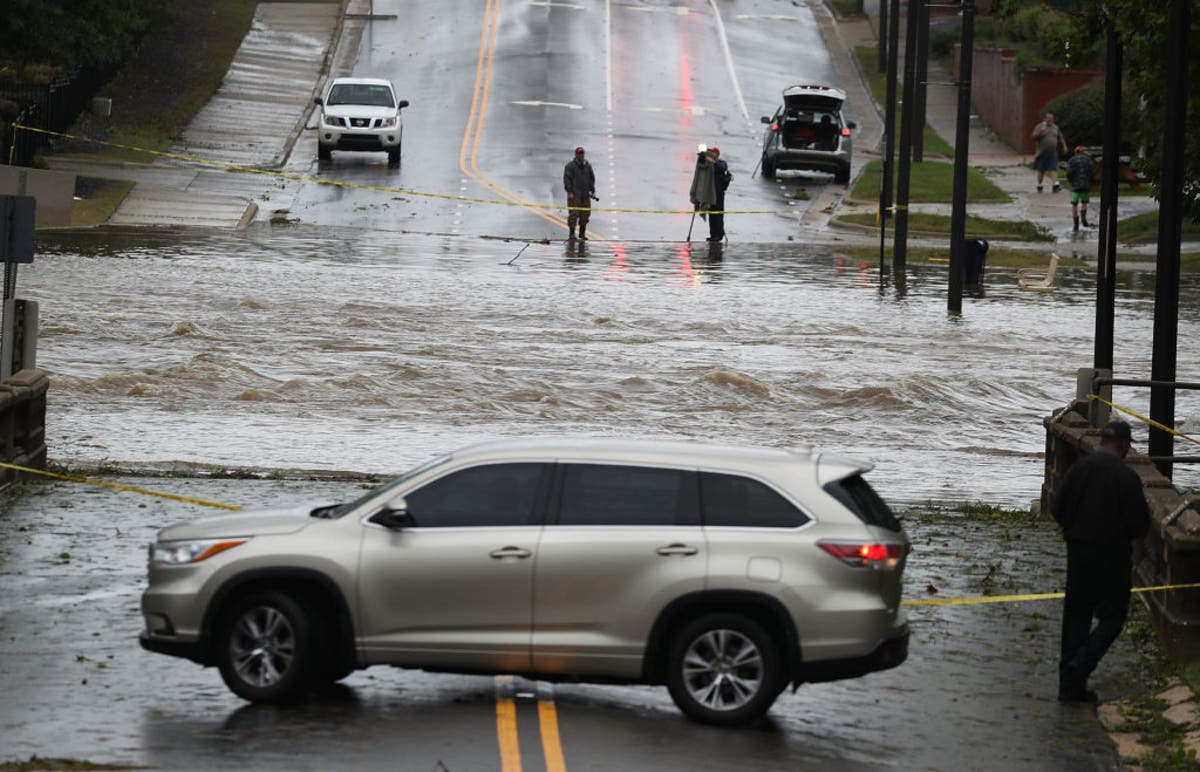

Florence, now a tropical depression, is moving north and continues to bring heavy rain and devastating flooding to much of North Carolina and part of South Carolina. Although the storm continues to weaken, the remnants are bringing flooding and landslide threats to southwest Virginia early in the week.
Flash flood watches or warnings have been issued for parts of western Virginia, much of North Carolina, northern south Carolina and southern West Virginia, reads the National Hurricane Center's Sunday evening update.
According to the National Weather Service in Blacksburg, heavy rains arrived in southwest Virginia Sunday, increasing the flooding threat through Monday afternoon or evening. As of Sunday night, Florence is moving north at 14 mph with maximum sustained winds of 35 mph, reports the National Hurricane Center. The remnants will then head eastward across Southern New England on Tuesday.
Find out what's happening in Restonfor free with the latest updates from Patch.
"In Virginia, we are still expecting up to 12 inches of rain in Southwest and up the I-81 corridor, and as a result are repositioning state and federal assets to prepare for flooding and possible landslides early next week," said Gov. Ralph Northam in a statement. "Virginia is still in the path of storm once it makes its expected northern turn and now is not the time to let our guard down."
Flash Flood Warning including Roanoke VA, Danville VA, Cave Spring VA until 8:30 AM EDT pic.twitter.com/HOVHJBu5l0
— NWS Blacksburg (@NWSBlacksburg) September 17, 2018
The Carolinas, as well as Mid-Atlantic and New England states will receive additional rain from Florence in the next few days. Rainfall totals from the storm could reach up to 40 inches in southern North Carolina, 20 inches in South Carolina and western North Carolina, 15 inches in southwest Virginia and five to 10 inches in the Mid-Atlantic and New England.
Find out what's happening in Restonfor free with the latest updates from Patch.
Swift water rescue teams have been stationed in southwest Virginia in preparation for potential rescues. These include swift water rescue teams from Virginia, Utah, California, Tennessee and Mississippi, as well as incident management teams from Colorado and California.
The National Weather Service in Blacksburg cautions residents that saturated grounds could bring down power lines and trees, causing outages.
Forecasters also warned of an increased risk of landslides in mountainous terrain in southwest Virginia and northwest North Carolina late Saturday to Monday. Landslides can entail falling rocks, water, mud, trees and other large debris and are most likely on steep slopes and small valleys draining steep slopes.
Residents in locations vulnerable to landslides are urged to move to a safe location on sturdy ground and away from streams and steep slopes.
The entire Blue Ridge Parkway, stretching more than 460 miles from Virginia to North Carolina, closed at 8 p.m. Friday in anticipation of high winds and heavy rains from Tropical Storm Florence.
09.16.18 UPDATE - The Parkway remains closed as remnants of Hurricane Florence impact the entire region. Closures are expected to continue until conditions improve and crews can safely address any damage. Please respect all closures for your safety and that of our staff. pic.twitter.com/oQFRoo3t17
— Blue Ridge Parkway (@BlueRidgeNPS) September 16, 2018
Over a dozen fatalities have been linked to the storm in North Carolina. Wilmington police said a woman and infant died after a tree fell on their home. In Pender County, officials said a woman who was having a heart attack died when emergency crews could not reach her because of downed trees that blocked the road. In Lenoir County, another two people were killed while one tried to connect two extension cords outside in the rain, and the other went outside to check on his dogs and was blown down by wind.
South Carolina recorded its first Florence-related death when a fallen tree on a highway struck a woman's car, officials say.
Virginia is sending additional aid to the Carolinas. According to a statement from Northam's office, Virginia shipped 4,000 meals to Clinton, North Carolina; the Virginia National Guard deployed 25 high-wheeled vehicles and 50 personnel to assist with rescue operations; and other personnel are helping with sheltering, healthcare and response operations in the Carolinas.
Early indications that the storm would quickly move into Virginia turned out to be unfounded. On Friday, Northam lifted the mandatory evacuation of residents in Zone A of Hampton Roads, the eastern Shore, Northern Neck and Middle Peninsula. The decision followed the National Weather Service lifting the tropical storm warning for coastal Virginia.
While Virginia has evaded the brunt of the storm, minor to moderate flooding is possible in local areas near the Chesapeake Bay and tidal rivers. Check your local NWS office for any watches, warnings or advisories by typing in your zip code at www.weather.gov.
(Stay on top of all the latest Hurricane Florence news with our free, real-time news alerts, find your local Patch here. If you have an iPhone, click here to get the free Patch iPhone app; download the free Patch Android app here. And like Patch on Facebook!)
SEE ALSO:
- Florence Causes 'Catastrophic' Flooding; Death Toll Climbs To 17
- Florence Update: VA Sends Aid To Carolinas, Southwest VA
- Hurricane Florence: Emergency Kit, Insurance Info To Know In VA
Flooding Preparation Tips
A statement from Northam's office urges southwest Virginia residents to prepare for flooding.
Here are some preparation tips from the Virginia Department of Emergency Management:
- Build an emergency kit and make a family emergency communications plan. Visit www.ready.gov/build-a-kit for recommended emergency kit contents.
- Elevate the furnace, water heater, electric panel and other utilities in your home if you live in an area that has a high flood risk.
- Consider installing "check valves" to prevent flood water from backing up into the drains of your home.
- If feasible, construct barriers to stop floodwater from entering the building and seal walls in basements with waterproofing compounds.
- Purchase flood insurance to protect your home, your business and your family's financial security from the costs associated with flood damage.
- Download the FEMA app. Receive weather alerts from the National Weather Service for up to five different locations anywhere in the United States. To search for open shelters (for disaster survivors): text SHELTER and to 43362 (4FEMA).
Make A Social Media Plan
- Use text messages, social media and email to connect with friends and family during emergencies.
- Mobile networks can become overwhelmed during emergencies, making it difficult to place and receive phone calls. Text messages require less bandwidth, which means they are able to be transmitted more reliably.
- Social media channels such as Facebook and Twitter can also be an effective way to update family and friends during emergencies.
- Register with American Red Cross's Safe & Well site to let family and friends know you're okay.
- Have an emergency charging option for your phone and other mobile devices. Smartphones have become a vital tool to receive emergency alerts and warnings,, so it's important to make sure you can keep them powered up in an emergency.
- At home: Before severe weather, charge all of your electronic devices. If the power goes out, preserve battery power by minimizing device use. Keep a back-up power source on hand to recharge your phone so that you can stay connected even during an extended power outage.
- In your car: Keep a portable phone charger in your vehicle at all times, and consider purchasing a back-up power supply to keep in your vehicle as well.
- Change the settings on your phone to low power mode or place it on airplane mode to conserve energy.
- Store important documents in a secure, password-protected jump drive or in the cloud.
- Capture electronic versions of important documents such as insurance policies, identification documents, and medical records. Don't forget to include your pet's information.
- Back-up your computer to protect photos and other personally important electronic documents.
- Scan old photos to protect them from loss.
- Keep your contacts updated and synced across all of your channels, including phone, email and social media. This will make it easy to reach out to the right people quickly to get information and supply updates. Consider creating a group listserv of your top contacts.
- Create a group chat via a texting app or a thread for family/friends/coworkers to communicate quickly during a disaster.
Sign up for Direct Deposit and electronic banking through your financial institution so you can access your payroll funds and make electronic payments wherever you are. Federal benefit recipients can sign up by calling (800) 333-1795 or at GoDirect.org.
Residents readying for a storm can get tips and advice on the federal government's Ready.gov website. To keep up with potential storms during hurricane season, bookmark the National Hurricane Center's website.
For local weather and severe weather alerts, visit the National Weather Service online.
Includes reporting by Patch editors Dan Hampton, Paul Scicchitano, and Adam Nichols.
Photos: A vehicle turns around at Cross Creek that has been turned into a river by the rains from Hurricane Florence as it passed through the area on September 16, 2018 in Fayetteville, North Carolina. (Photo by Joe Raedle/Getty Images)
Emmett Marshall, 4, from Norfolk, Va. wades in floodwaters, Friday, Sept. 14, 2018, in the Larchmont area of Norfolk, Va., as the effects of Hurricane Florence are felt. (Image via Alex Brandon/Associated Press)
Get more local news delivered straight to your inbox. Sign up for free Patch newsletters and alerts.