Community Corner
As Opioid Treatment Efforts Continue Across Fairfax, What Options Are Available Near Reston?
With overdose deaths declining, Fairfax-Falls Church's FY 2026 report highlights the importance of accessible, ongoing addiction treatment.


This is a paid post contributed by a Patch Community Partner. The views expressed in this post are the author's own, and the information presented has not been verified by Patch.
The Fairfax-Falls Church Community Services Board (CSB) released its FY 2026 Annual Report on October 30, 2026, documenting regional substance use treatment activity and changes in opioid overdose trends.
For Reston-area families, the findings raise a practical question: what treatment options are available after an initial intervention, and how can someone access continued clinical support?
What the FY 2026 Report Reveals About Fairfax's Opioid Response
The Fairfax-Falls Church CSB's annual report highlights regional treatment activity and changes in opioid overdose trends.
According to the FY 2026 report:
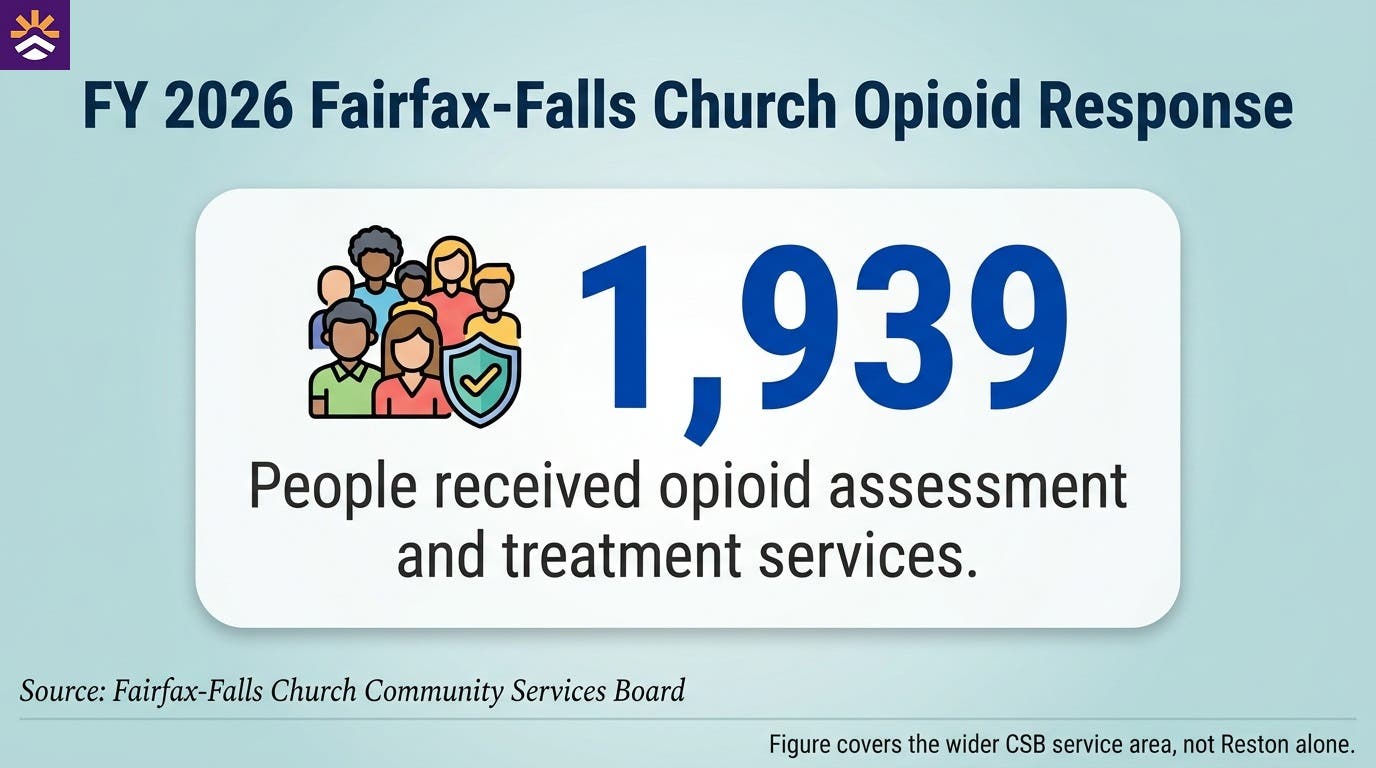
- 1,939 individuals received opioid assessment and treatment services.
- 1,478 individuals received substance use disorder treatment services.
- Fatal opioid overdoses in the Fairfax Health District declined 22% compared with 2024.
- Fatal opioid overdoses declined 52% compared with 2023.
- Non-fatal opioid overdoses declined 16% compared with 2024.
The treatment figures represent activity across the wider CSB service area, while the overdose comparisons refer specifically to the Fairfax Health District. These are regional figures, not Reston-specific statistics.
The figures show the scale of regional treatment activity and changes in overdose trends. For individuals and families navigating substance use concerns, the next question is how to access appropriate care and maintain clinical support beyond an initial intervention.
Why Ongoing Treatment Matters Beyond an Initial Intervention
An initial intervention connects someone experiencing substance-related difficulties with professional assistance. However, addressing an immediate crisis and treating a substance use disorder are different stages of care.
Withdrawal management, commonly called detoxification, addresses the physical and medical challenges of stopping or reducing substance use. Depending on the substance and withdrawal risks, medical supervision may be necessary.
Detoxification alone doesn’t constitute a complete course of addiction treatment. Individuals may still need counseling, medication management, relapse-prevention strategies and continued clinical support.
Once immediate withdrawal-related needs have been addressed, further assessment can help determine whether standard outpatient treatment, an Intensive Outpatient Program or a higher level of care is appropriate. The decision depends on the individual's substance use history, medical needs and clinical circumstances.
Understanding Outpatient Treatment Options
Outpatient treatment allows eligible individuals to receive professional care while continuing to live in the community. Different levels of care provide varying degrees of therapeutic structure.
Standard outpatient treatment generally involves scheduled counseling and therapeutic sessions. Intensive Outpatient Programs (IOP) provide more frequent sessions and additional structure.
Partial Hospitalization Programs (PHP) offer a higher-intensity outpatient level of care, with more extensive daytime programming while participants return home outside treatment hours.
For adults whose clinical needs can be managed outside a residential setting, outpatient addiction treatment in Fairfax offers different levels of structured care. A clinical assessment helps determine which program is appropriate.
When Intensive Outpatient Treatment May Be Appropriate
Some individuals need more therapeutic structure than standard outpatient care provides but don’t require residential treatment.
IOP can include recurring individual and group therapy, recovery education and medication management when appropriate to the treatment plan. These services can help participants recognize potential triggers, develop coping strategies and address challenges associated with substance use.
Novara Recovery Center's intensive outpatient program in Fairfax provides structured therapeutic support for individuals whose clinical needs are appropriate for this level of care.
Addressing Substance Use and Co-Occurring Mental Health Needs
Substance use disorders can occur alongside mental health conditions such as depression, anxiety disorders or post-traumatic stress disorder. When both concerns are present, treatment planning may need to address them together.
For example, someone may use substances to cope with emotional distress, while continued substance use may worsen existing mental health symptoms.
Not everyone with a substance use disorder has a separate mental-health diagnosis. Screening helps clinicians identify whether additional mental-health concerns are present and whether the treatment plan should address both conditions.
Novara offers co-occurring disorders treatment for individuals whose clinical needs involve both substance use and mental health conditions. Services are guided by individual assessment.
Continuing Treatment Options at Novara Recovery Center in Fairfax
Located near the Fairfax County Government Center, Novara Recovery Center serves adults exploring addiction treatment in Fairfax and surrounding communities, including Reston. Treatment options include Partial Hospitalization, Intensive Outpatient and standard outpatient programs, with clinical assessment determining the appropriate level of care.
Individuals requiring medical withdrawal management or residential inpatient treatment can be coordinated with appropriate partner providers. Novara doesn’t provide onsite medical detox or residential inpatient treatment at its Fairfax clinical address.
Reston-area adults and families can contact Novara Recovery Center at (703) 705-7870 to discuss available programs and admissions. Those traveling from Reston can use these directions to Novara Recovery Center to plan their visit to the Fairfax facility.
This post is an advertorial piece contributed by a Patch Community Partner, a local brand partner. To learn more, click here.