Politics & Government
Reston National Owners Seek To Force Redevelopment Via Legal Clause
Developers claim 60-year-old zoning rights allow 288 new homes in Reston, bypassing current golf course protections and county opposition.


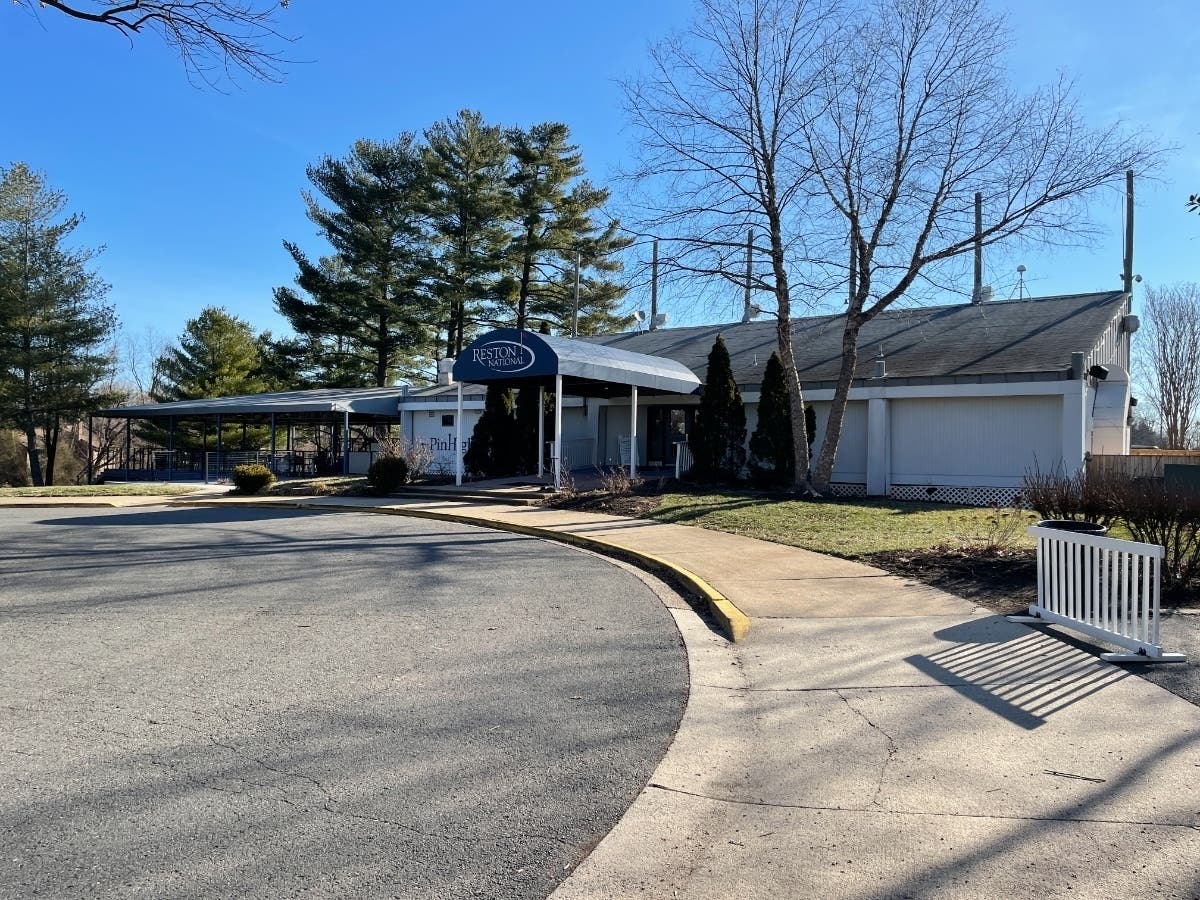
RESTON, VA — The owners of the Reston National Golf Course have submitted a formal application to Fairfax County to redevelop portions of the 166-acre property into residential neighborhoods, a move that has reignited a long-standing battle over open space in the planned community, Patch was first to report Sunday.
The proposal, filed by Virginia Investment Partners 2019 LLC and developer NVR Inc., outlines two potential paths for the site. The primary plan seeks to construct 288 townhouse units on about 14 acres of the course. The applicants contend that a 1966 zoning decision already designated those specific acres for medium-density residential development, effectively bypassing the need for a full rezoning of the entire property.
As an alternative "Plan B," the developers have proposed a more comprehensive rezoning that would convert the entire 166-acre golf course into a mixed-use environment. Under this secondary scenario, 86 acres would be developed into residential clusters, while the remaining 80 acres would be preserved as a permanent public park.
Find out what's happening in Restonfor free with the latest updates from Patch.
Mark Looney, an attorney representing the owners, said in the application that the nearly 60-year-old golf course is no longer financially viable. He argued the facility requires "substantial reinvestment" in its aging infrastructure to remain operational, which the current business model cannot support.
To address community concerns, the developers have offered the Reston Association a financial package totaling about $8.5 million. This includes an annexation fee estimated between $5,000 and $10,000 per new unit and ongoing monthly homeowner association fees intended to offset the cost of community services.
Find out what's happening in Restonfor free with the latest updates from Patch.
Also See ...
- Fairfax Supervisors Act On Controversial Reston National Redevelopment Proposal
- Nearly 800 Homes Could Be Built On Golf Course Thanks To $8.5M Payment
- Keep Reston Green: Preserve Reston National Golf Course
The proposal faces stiff resistance from local advocacy groups, including Rescue Reston, and has met skepticism from county leadership. Hunter Mill District Supervisor Walter Alcorn (D) has repeatedly said he would not support a change to the golf course’s current land-use designation without broad community consensus.
The Fairfax County Board of Supervisors recently moved to exclude the golf course from the 2025 Comprehensive Plan Amendment Work Program, a procedural step that effectively pauses the redevelopment efforts. However, the developers maintain that their primary plan relies on existing zoning rights that do not require a comprehensive plan change.
County planners are reviewing the legal merits of the developers' claims regarding the 1966 zoning documents. No date has been set for a public hearing before the Planning Commission.
Golf Course Owners City 1966 Zoning Documents
The legal argument regarding the 1966 Reston zoning decision is a central component of the redevelopment proposal for the Reston National Golf Course. According to the planning documents, the primary legal arguments are as follows:
- Existing Development Rights: The property owners, Virginia Investment Partners 2019, LLC (“VIP”), contend that a 1966 zoning decision already approved 14 specific acres of the 166-acre golf course property for residential use.
- Designated Density: The owners argue that these 14 acres were specifically approved for medium-density residential development, which allows for approximately 20 dwelling units per acre.
- By-Right Development: Based on this 1966 decision, the developers claim they have the right to build 288 townhouse units on those 14 acres without needing a full comprehensive plan amendment or a total rezoning of the entire golf course.
- Financial Viability and Reinvestment: The legal and planning justification for pursuing this interpretation is that the 60-year-old golf course is no longer economically viable. The developers argue the revenue from the 288 townhouses would provide the necessary capital to update the course's aging facilities and ensure its long-term survival as a community asset.
- Procedural Persistence: Attorney Mark Looney, representing the owners, has indicated they intend to continue pursuing this interpretation of the "PRC Plan" (Planned Residential Community) even if other broader redevelopment proposals—such as their "Plan B" mixed-use scenario—are rejected by the county.
The Fairfax County Board of Supervisors and community groups have challenged this interpretation, leading to ongoing legal and planning reviews of the original 1960s-era zoning documents.
The following timeline details the significant legal, planning, and community actions regarding the Reston National Golf Course from its inception to the current 2026 dispute.
The Formative Years (1966–1970)
- September 1966: Fairfax County approves RZ B-555, a zoning decision that the current developers claim designated approximately 14–25 acres of the property for medium-density residential use (up to 20 units per acre).
- 1970: Reston National Golf Course (originally Reston South) opens. It was designed by renowned golf architect Ed Ault as a centerpiece of Robert E. Simon’s "New Town" vision for Reston.
- 1971: Subsequent zoning approvals (RZ C-135 and RZ C-281) cover the remainder of the 168-acre property, largely designating it for golf course and open space use.
The First Redevelopment Battle (2012–2016)
- 2012: Then-owner RN Golf Management LLC (a subsidiary of Northwestern Mutual) asks Fairfax County if the land can be used for residential development without a Comprehensive Plan amendment. The county’s zoning administrator says "no."
- 2015: The Board of Zoning Appeals reverses the administrator's decision, briefly ruling in favor of the owners. This sparks the formation of the advocacy group Rescue Reston.
- 2016: The Fairfax County Circuit Court overturns the BZA ruling, reaffirming that the land is planned for a golf course. RN Golf Management chooses not to appeal to the Virginia Supreme Court, effectively ending this round of litigation.
New Ownership and Renewed Efforts (2019–2024)
- May 2019: War Horse Cities and Weller Development purchase the course for $23.75 million, a significant increase from its 2005 sale price of $5 million, signaling high speculative interest despite the previous court loss.
- 2022: The owners submit a nomination for the Site-Specific Plan Amendment process to change the land use designation. It is later withdrawn or stalled due to community opposition.
- Early 2024: The owners (now Virginia Investment Partners 2019 LLC) and developer NVR Inc. submit a new SSPA nomination for the 2025 cycle, proposing two options:
- Plan A: 288 townhomes on a small portion of the site.
- Plan B: Re-zoning the entire 168 acres for mixed-use, with 80 acres of dedicated parkland.
The Current Conflict (2025–2026)
- April–May 2025: Fairfax County planning staff recommend against the proposal, citing inconsistency with the area’s established character.
- June 4, 2025: In a surprising move, the Fairfax County Planning Commission votes 8-4 to recommend adding the project to the county's work program for further study.
- June 10, 2025: The Fairfax County Board of Supervisors unanimously rejects the Planning Commission's recommendation, removing Reston National from the 2025 SSPA Work Program. Supervisor Walter Alcorn cites his pledge not to support changes without community consensus.
- February 2026: Developers pivot to a "by-right" legal strategy. They file a formal application for 288 stacked townhomes on roughly 25 acres, arguing that the original 1966 zoning (RZ B-555) remains valid and grants them development rights that supersede more recent golf course designations.
- Present (March 2026): The county is currently reviewing the legal validity of the 1966 claim. This technical review will determine if the project can proceed as an "amended development plan" rather than a "Comprehensive Plan amendment."
Get more local news delivered straight to your inbox. Sign up for free Patch newsletters and alerts.