Politics & Government
Tysons Tax District Should Be Phased In, Advisory Board Says
Group recommended Fairfax Officials approve rate at $0.04 per $100 of assessed value, raising the tax each year, though projections show a higher, steady tax rate might help fund projects sooner.

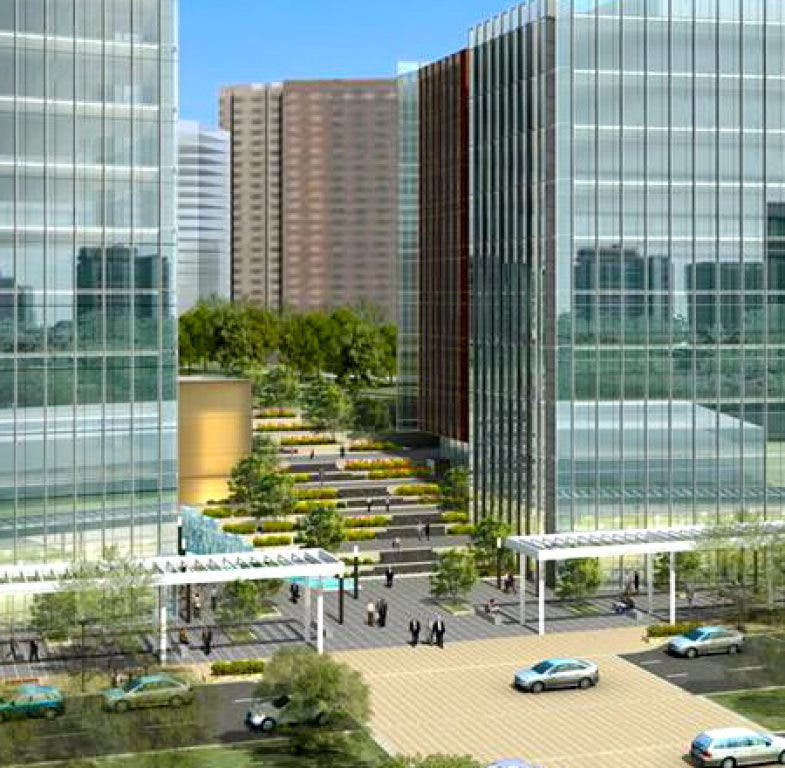
Tysons leaders and stakeholders have decided on an appropriate tax model for the tax district that will partially fund millions of dollars in transportation improvements over the next 40 years – now it’s in the hands of the Fairfax County Board of Supervisors.
The Tysons Transportation Service District Advisory Board voted Wednesday night to recommend phased approach to the tax — starting at $0.04 per $100 of assessed value for residents and developers in the Tysons Service District — instead of starting with a higher, steady tax rate from the start.
Collections would begin July 1.
Find out what's happening in Tysons Cornerfor free with the latest updates from Patch.
The rate would follow a “bell curve” model, increasing to $0.05 in FY2015 and to $0.06 in FY2016.
From there, it would remain at $0.06 until FY2033, when it would jump to $0.07 for five years.
Find out what's happening in Tysons Cornerfor free with the latest updates from Patch.
It would then decrease back to $0.06 until FY2045 and to $0.05 for FY2046 and FY2047, at which time the service district is projected to meet its obligation.
Advisory board members thought the model was much more appealing than rates of $0.07 or $0.09 that remained stable for the entirety of the tax district’s existence.
Stable rates would potentially allow the service district to meet its $253 million requirement by FY2035, almost 15 years sooner than the bell curve, which will raise the required funds by FY2048.
But advisory board members said the length of time in the bell curve model would allow generations of people to pay for improvements that they would be benefiting from, which seemed most fair.
Three advisory board members voted against the recommendation of the $0.04 to $0.07 bell-curve model.
Providence District representative Molly Peacock pushed for a lower starting tax rate – something near $0.02.
“I think $0.02 is not unrealistic, and I think if we go $0.04 it will be hard to go down,” she said.
The advisory board’s recommended rate will be delivered to the Board of Supervisors, who will set a final rate during this month’s budget process.
Keeping Tysons Revenues in Tysons
The Tysons Partnership, which represents developers, hotels, retailers and residential organizations, formally recommended new potential revenues from Gov. Bob McDonnell’s massive transportation bill should also go towards lowering the tax district’s obligation.
Fairfax County could generate a projected $125 million from taxes in the McDonnell’s bill, HB 2313.
According to information from county staff, the Northern Virginia Transportation Authority has control over $87.7 million, $12.8 of which would be generated in Tysons Corner. The county would control the other $37.5 million, $5.5 of which would also come from Tysons.
“That’s a significant amount of money that’s going to coming from us – added taxes that did not exist two months ago,” said Jon Cox, one of the Partnership's two representatives on the advisory board.
Allocating these funds towards the tax district would only be fair, Cox said.
“Tax monies generated in Tysons should be used on transportation improvements in Tysons,” he said. “These Tysons-generated funds should be counted as a private-sector contribution towards Tysons-wide road improvements.”
Michael Bogasky, president of the homeowners association at Rotunda Condominiums in Tysons, agreed.
“We don’t want a dime of our tax dollars going anywhere outside of Tysons,” he said. “It would be outrageous.”
But the money might not even become available, and if it does, it could take some time. The bill still needs to become law and will likely undergo a legal review, staff said.
Get more local news delivered straight to your inbox. Sign up for free Patch newsletters and alerts.